





Mahogany Nursery Chair
A mahogany nursery chair is a low seating piece made for children, offering sturdy timber construction and period character that collectors seek.
Mahogany Nursery Chair
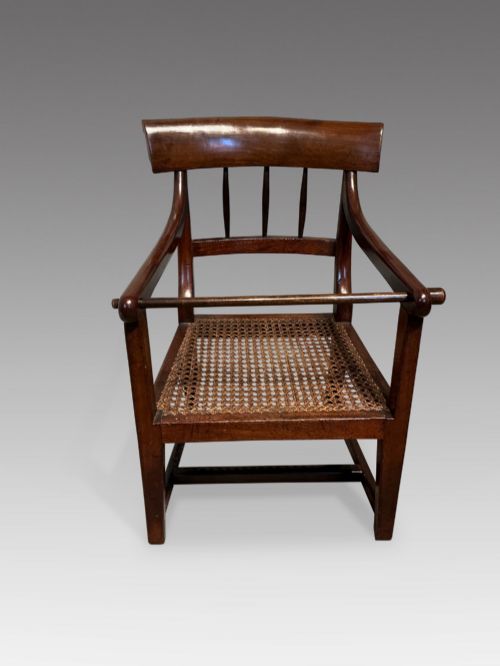
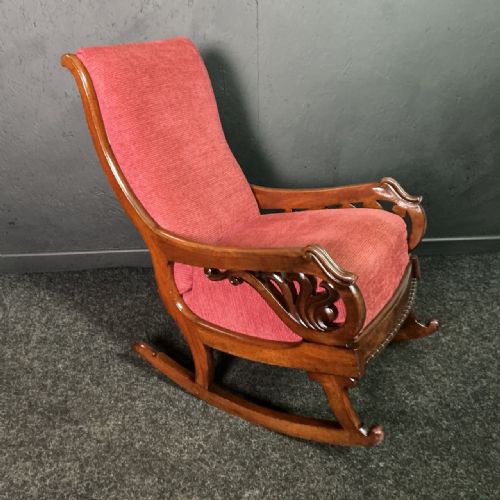
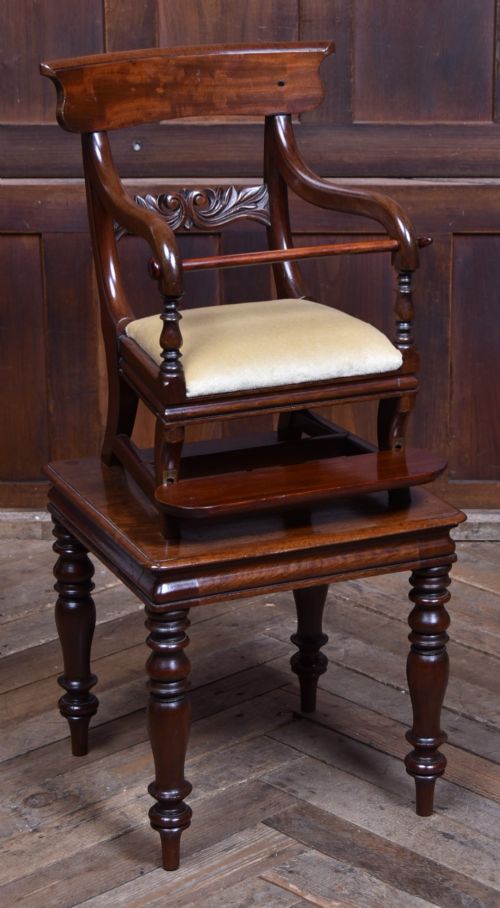
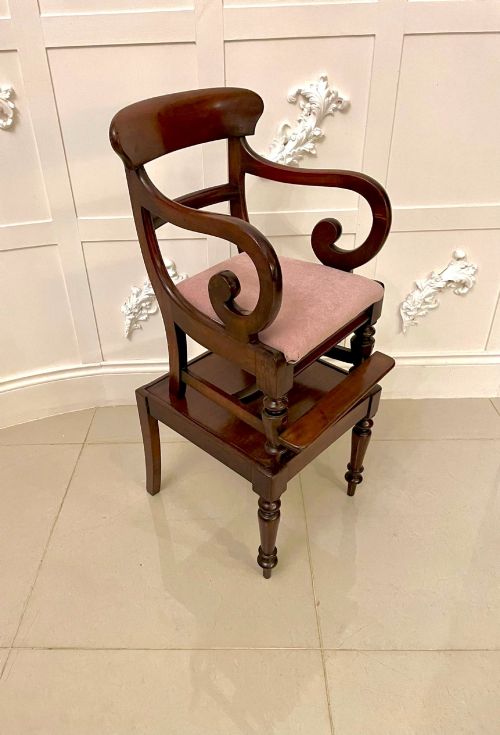
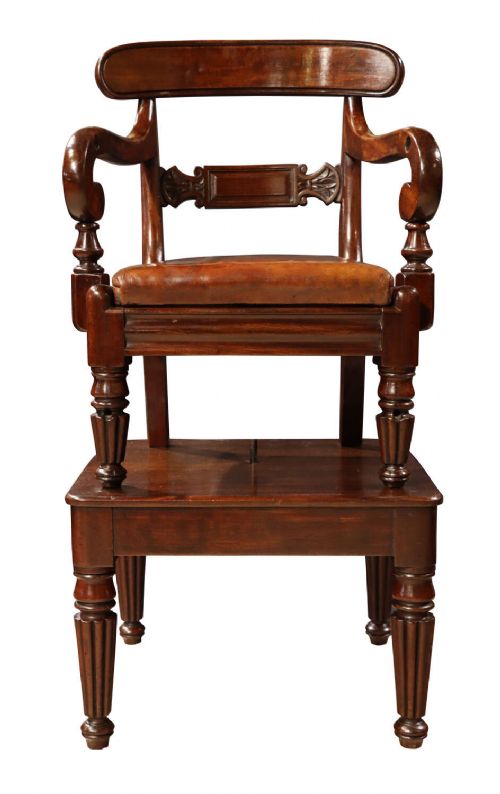
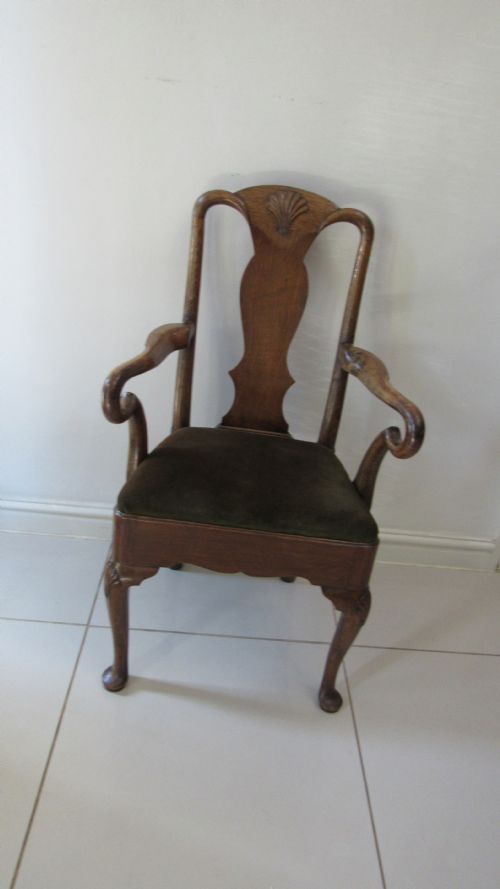
When you search for a mahogany nursery chair, you examine small-scale seating designed for young children across the Georgian, Regency, William IV, and Victorian eras. These pieces appear in forms such as high chairs, commode chairs, rocking chairs, and armchairs on stands.
The version you are most likely to meet on this page is a Victorian or Georgian mahogany child's chair, often featuring caned panels, leather upholstery, or a convertible stand. They combine domestic utility with the refined cabinet-making styles of their respective periods.
How they were made
Cabinet makers utilised solid mahogany timbers, shaping the frames to match prevailing stylistic shifts from George III designs through to Victorian production. Joinery methods relied on traditional mortise and tenon construction to withstand regular domestic use.
Surfaces were frequently completed with cane work, leather upholstery, or textile pads, while functional hardware incorporated brass fittings for swivel or metamorphic mechanisms.
Mahogany Nursery Chair Retail Price Guide 2026
Typical asking prices for mahogany nursery chair among the pieces listed under this phrase on Sellingantiques today, from the lower quarter to the upper quarter. They describe what is for sale here now, not the wider market.
What varies in quality
The distinction between standard examples and superior pieces rests on the crispness of the timber carving and the originality of components such as stands, cane panels, and leather inserts. Finer specimens retain their original finish and structural integrity without heavy restoration.
Proportion and design ambition also set pieces apart, distinguishing simple provincial workshop output from sophisticated urban cabinet work commissioned in the Georgian and Regency styles.
The Mahogany Nursery Chair Glossary
- Mahogany
- A durable tropical hardwood imported for quality cabinet-making. It provides the dark reddish-brown body characteristic of these chairs.
- Bergere
- An upholstered armchair with an enclosed cane back and sides. It appears frequently on Georgian and Victorian child seats.
- Metamorphic
- Describing furniture designed to transform from one function to another, such as a high chair converting into a low chair and table.
- Commode chair
- A seating piece incorporating a concealed chamber pot beneath the seat. These served domestic nursery needs in the Victorian period.
- Carver
- An open armchair, often styled to match a set of dining chairs. They appear in revival styles across the listings.
Mahogany Nursery Chair: Frequently Asked Questions
What is a nursery chair?
A nursery chair is a small seating piece built for children in domestic households during past centuries. They replicate the full-scale furniture styles of the Georgian, Regency, and Victorian periods.
These pieces served practical roles in family life, functioning as high chairs, rocking chairs, or commode seating for infants and toddlers.
How do I date a mahogany child's chair?
Dating relies on identifying the prevailing stylistic traits, such as George III lines, Regency curves, or Victorian turnings. Timber patination and construction methods also offer clues to the age of the piece.
Makers adapted contemporary adult furniture fashions into miniature proportions, making stylistic parallels the primary indicator of the period.
Were these chairs meant for everyday use?
Original examples were built for daily use in affluent households, constructed from solid mahogany to endure the demands of children. Their survival demonstrates the robust nature of the joinery.
Today, collectors tend to treat them as decorative display items or retain them for light domestic use rather than robust nursery routines.
What does chair on stand mean?
A chair on stand describes a design where the seat unit detaches from a separate wooden base frame. This configuration frequently allowed a high chair to convert into a low chair and table combination.
Such dual-purpose items provided versatility in the Victorian or Georgian nursery, saving space in domestic interiors.