
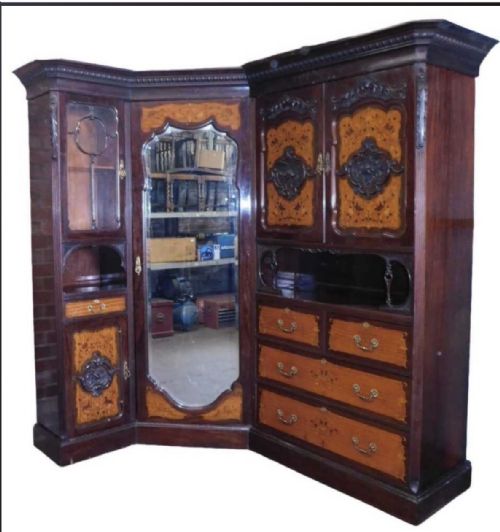


Mahogany Mirrored Armoire
A mahogany mirrored armoire brings generous scale and rich timber grain to a bedroom, combining practical hanging space with full-length glass.
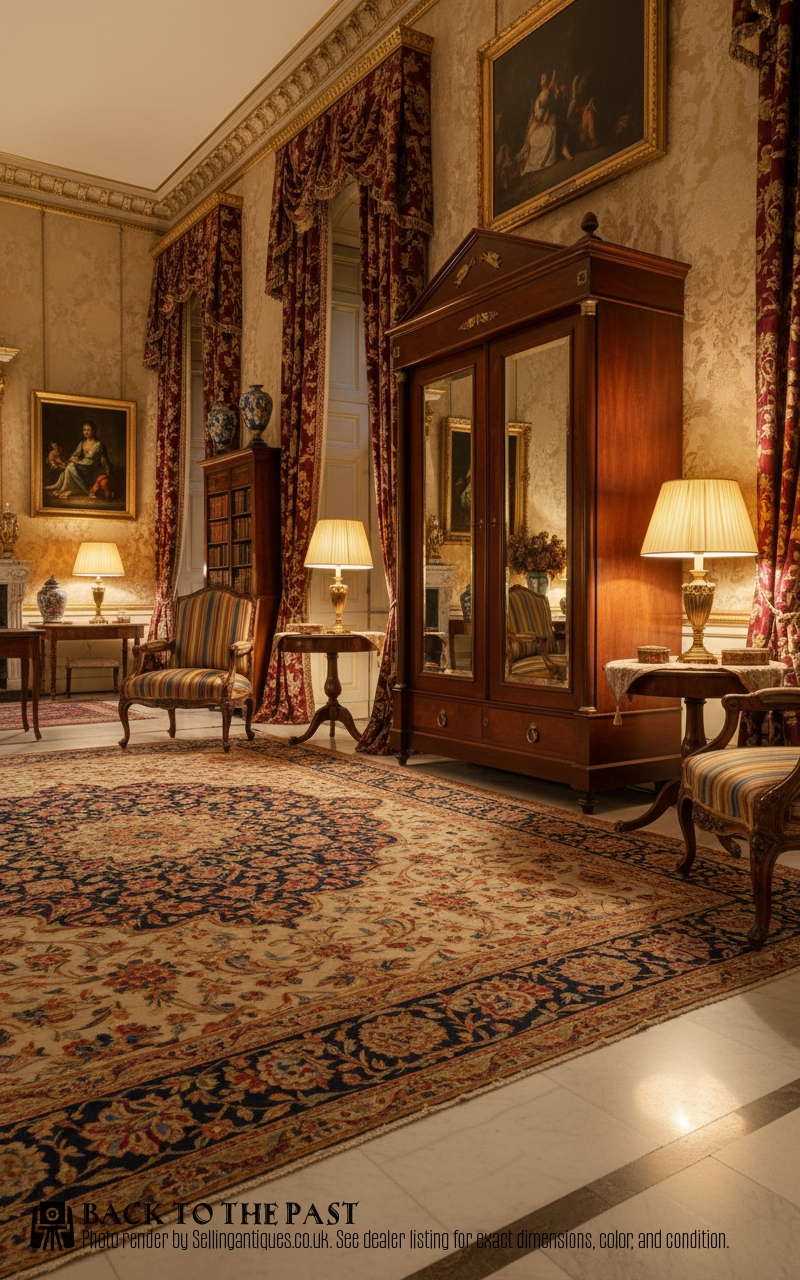
Mahogany Mirrored Armoire
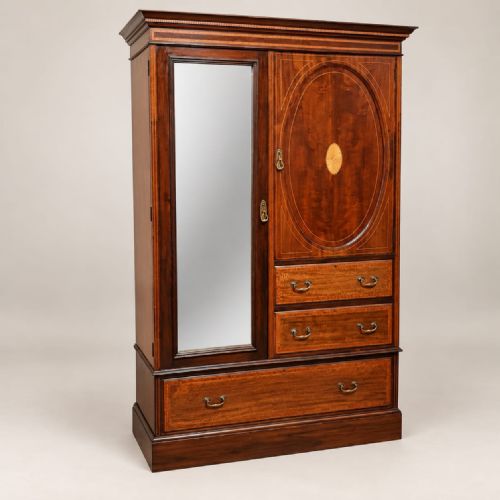
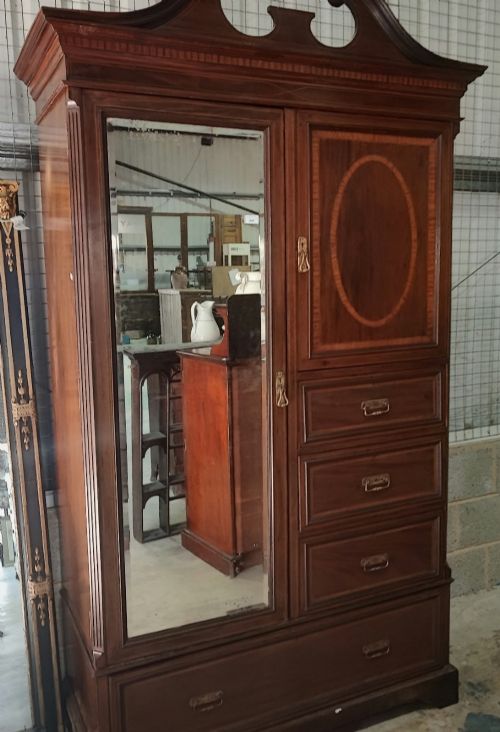
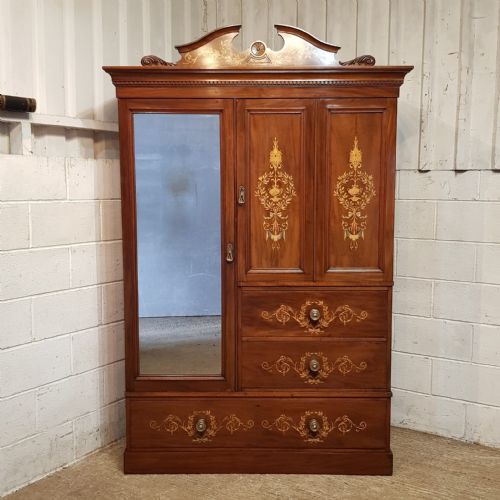
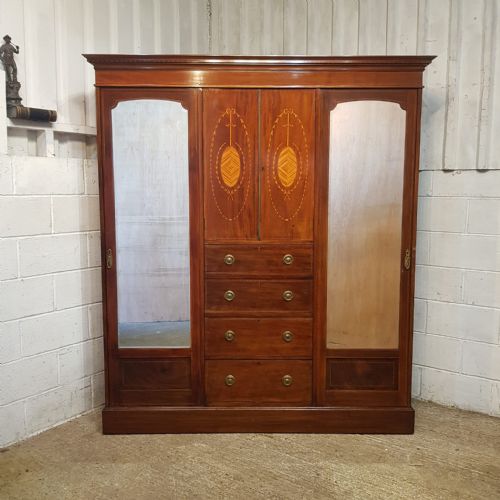
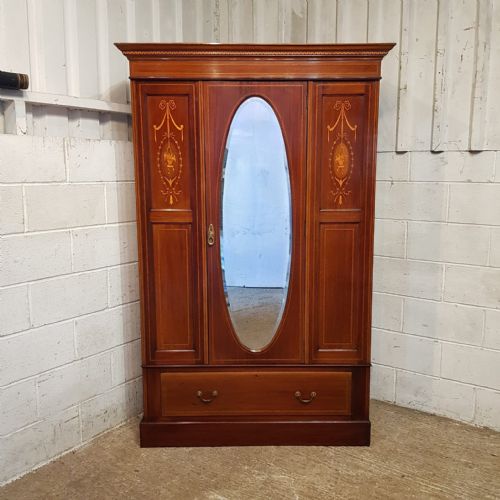
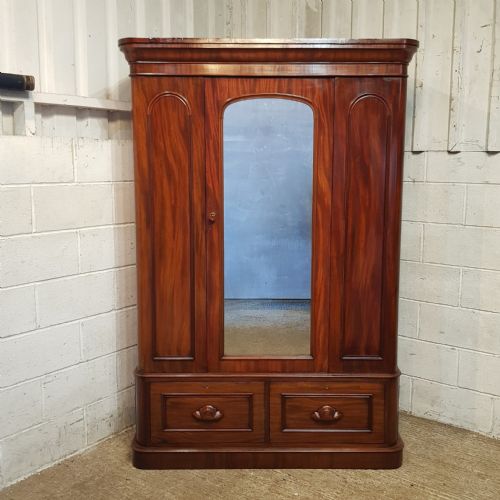
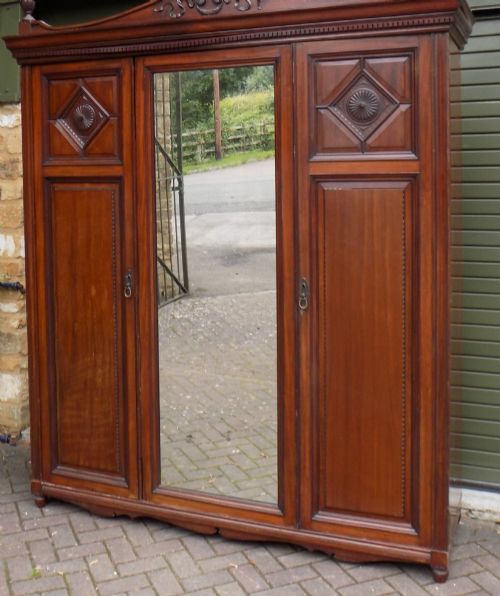
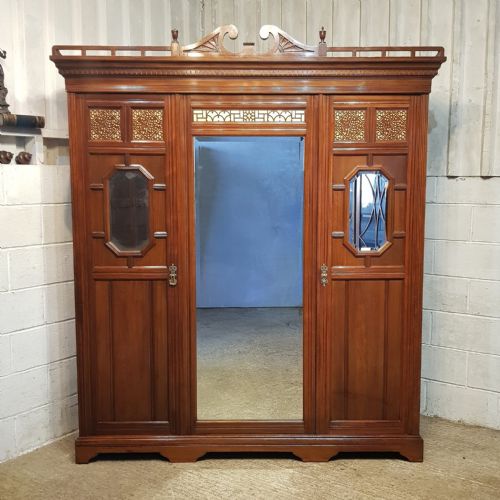
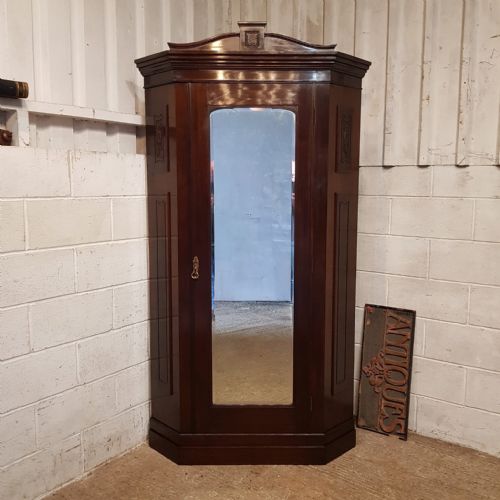
A mahogany mirrored armoire stands as a substantial piece of bedroom furniture designed for hanging garments, linen storage, and dressing. When exploring a mahogany mirrored armoire, buyers encounter various configurations spanning single, double, triple, and quadruple door setups, alongside specialised compactum layouts.
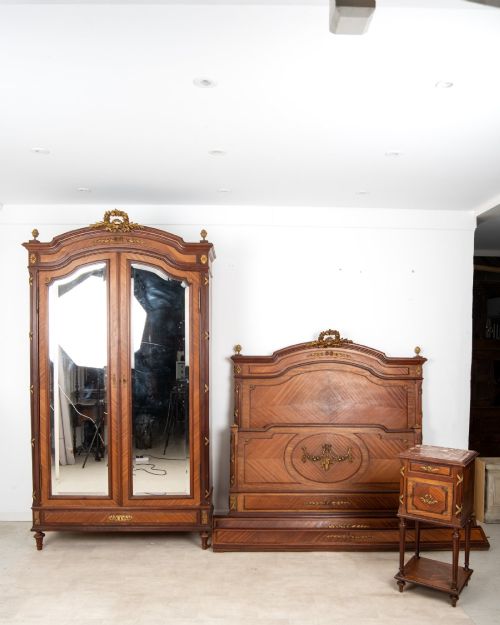
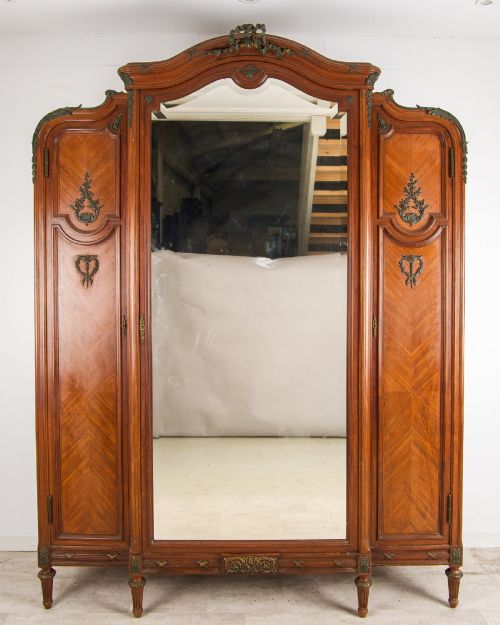
The pieces appearing on this page derive primarily from the Victorian and Edwardian eras, stretching from the mid nineteenth century into the early twentieth century. Alongside British pieces, continental examples demonstrate French Empire, Louis XVI Revival, and Arts and Crafts influences.
Makers such as Edwards and Roberts, Maples and Co, and Wylie and Lochhead contributed notable variations in form, ranging from bow-fronted wardrobes to corner configurations and matching bedroom suites.
Materials and Construction Techniques
Cabinet makers utilised solid mahogany and mahogany veneers applied to secondary timbers, often accentuating the primary wood with contrasting satinwood inlay. Heavy timber construction provided the structural stability required to support tall panel doors and sizeable bevelled mirror glass.
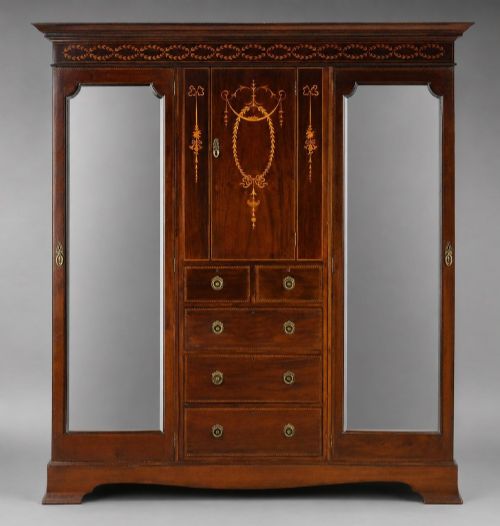
Decorative detailing on these wardrobes relies on cast brass hardware, gilt bronze, ormolu mounts, and carved elements. French styles incorporate gilt bronze mounts and distinct proportions, while British Victorian and Edwardian examples lean towards geometric marquetry and satinwood crossbanding.
Mahogany Mirrored Armoire Retail Price Guide 2026
Typical asking prices for mahogany mirrored armoire among the pieces listed under this phrase on Sellingantiques today, from the lower quarter to the upper quarter. They describe what is for sale here now, not the wider market.
Listings span Victorian, Edwardian, and early twentieth-century periods, alongside French Empire and Arts and Crafts styles.
Distinctions in Quality and Craftsmanship
The standard of timber selection and veneer matching defines the visual hierarchy among these wardrobes. Superior examples exhibit continuous grain across large surfaces and meticulous satinwood inlay, whereas simpler iterations rely on plain mahogany planks.
Internal configuration and joinery depth separate standard wardrobes from complex compactum designs featuring internal drawers and trays. The integration of heavy mirror glass requires robust internal framing to prevent door sag over decades of use.
Edwards and Roberts·Wylie Lochhead of Glasgow·E. A. Taylor·Maples and Co
The Mahogany Mirrored Armoire Glossary
- Compactum
- A multi-compartment wardrobe that incorporates drawers, linen slides, and hanging space within a single unified piece of furniture.
- Ormolu
- Gilded bronze ornamentation applied to furniture, frequently found on French Empire and Louis XVI Revival pieces.
- Satinwood
- A lustrous yellowish timber native to India and Ceylon, used extensively for contrasting inlay and stringing on Edwardian and Victorian furniture.
- Breakfront
- A piece of furniture featuring a central section that projects forward from the flanking outer sections.
- Marquetry
- Decorative patterns formed by the insertion of small pieces of veneer into a fitted wood ground.
Mahogany Mirrored Armoire: Frequently Asked Questions
What is a compactum wardrobe?
A compactum is a specialised form of wardrobe that divides its interior storage into multiple sections, combining hanging space with banks of internal drawers, shelves, and linen slides. This layout provided gentlemen and families with comprehensive storage in a single footprint.
Such pieces often display more intricate internal joinery and configuration than standard hanging wardrobes of the Victorian and Edwardian periods.
How do I distinguish Victorian from Edwardian pieces?
Victorian wardrobes generally feature darker, heavier mahogany timber, deeper cornices, and more robust carving. They often present symmetrical proportions with substantial panel doors or centred mirror plates.
Edwardian examples tend to display lighter mahogany tones, often enhanced by delicate satinwood inlay, stringing, and a slightly more refined architectural profile influenced by updated aesthetic tastes.
Are French armoires different from British wardrobes?
French armoires and bedroom suites from the nineteenth and early twentieth centuries typically showcase Louis XVI Revival or Empire styling, incorporating gilt bronze ormolu mounts and softer structural lines. They often arrive as dismantling carcasses designed for easier transport.
British equivalents, by contrast, focus heavily on multi-door combination layouts, compactum arrangements, and precise inlaid marquetry rather than cast metal ornamentation.
How do I accommodate a large triple wardrobe?
These tall, deep pieces require careful measurement of ceiling height and floor clearance, particularly when moving them into older properties with restricted staircases or low lintels. Many period triple and quadruple wardrobes were constructed to dismantle into sections.
Ensuring stable placement on level flooring prevents distortion of the tall doors and keeps the heavy mirrored glass operating smoothly within its frame.