




Mahogany Marble Top Drawers
When you search for mahogany marble top drawers, you enter a world of continental bedside cabinets, tall chests, and commodes topped in cool stone.
Mahogany Marble Top Drawers
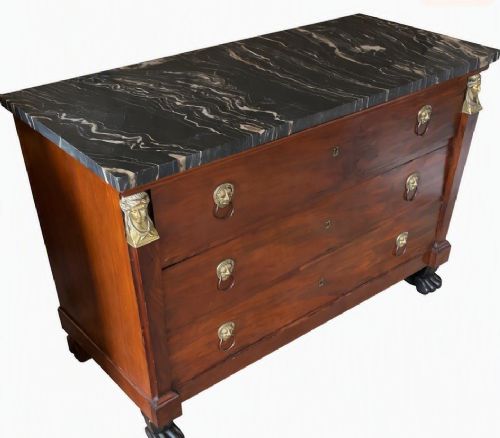
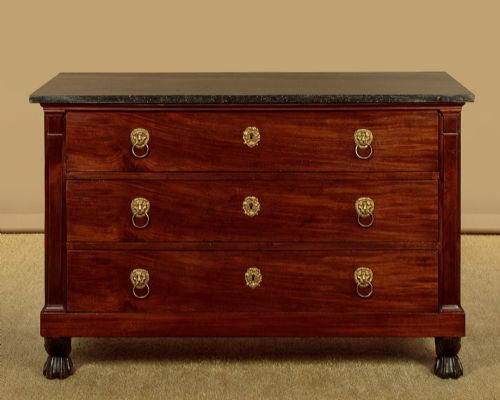
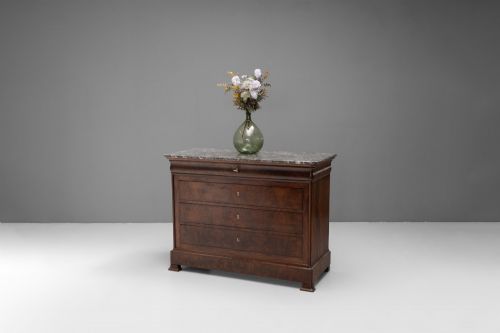
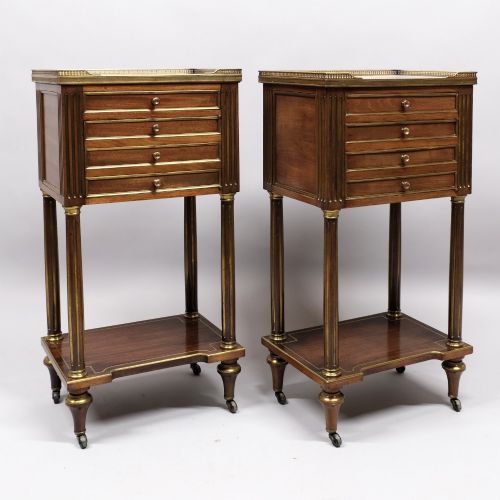
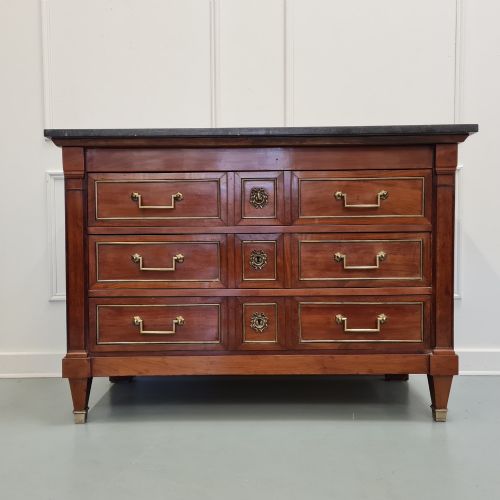
The phrase mahogany marble top drawers guides collectors towards functional bedroom and dressing furniture produced across the nineteenth century and into the Edwardian era. You will frequently encounter continental commodes, tall chests, and bedside cabinets where dark timber supports a heavy stone slab.
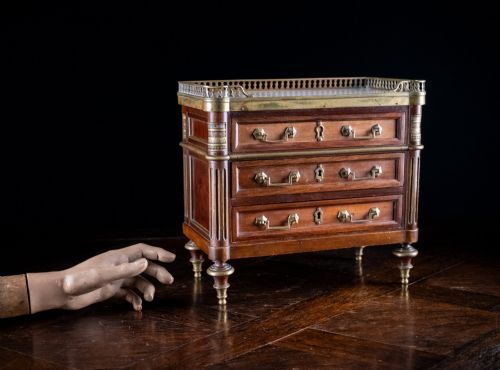
The forms range from grand French Empire and Louis XVI chests with multiple drawers to smaller bedside tables and washstands. Many pieces originate from French workshops, though Victorian British examples also appear alongside Biedermeier and neoclassical designs.
Materials and Construction
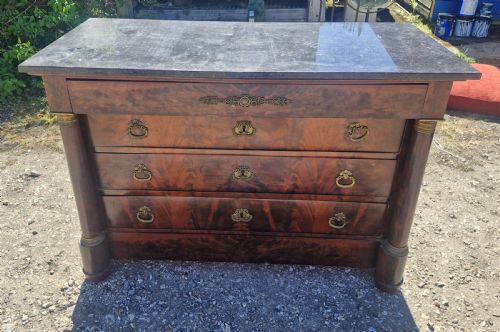
Cabinet makers utilised dense timbers such as standard mahogany, figured flame mahogany, and occasionally kingwood, applying them over sturdy carcases. Grain patterns were carefully matched across drawer fronts to create visual depth on commodes and cabinets.
Heavy marble slabs in grey, white, or coloured varieties sit flush upon the wooden tops, providing a durable and cool working surface. Metal elements including brass, ormolu, and gilt bronze appear as mounts, key escutcheons, and decorative handles.
The inventory spans the eighteenth, nineteenth, and early twentieth centuries, encompassing Victorian, Edwardian, and continental revival periods.
Assessing Quality
Quality rests on the selection of the timber veneers, the crispness of the cast bronze or ormolu mounts, and the integration of the stone top. Superior examples show seamless veneer matching and finely detailed hardware rather than generic cast fittings.
The weight, thickness, and geological character of the marble slab also indicate the grade of the piece, as do internal drawer linings and dovetail construction. Well-executed carving or marquetry inlay elevates the standing of individual commodes and washstands.
Mon Krieger·Jean-Henri Riesener
The Mahogany Marble Top Drawers Glossary
- Commode
- A low chest of drawers, frequently French in origin, designed for domestic bedrooms and reception spaces. These pieces often feature multiple deep drawers beneath a heavy marble surface.
- Ormolu
- Gilt bronze mounts applied to furniture to accent corners, feet, and drawer pulls. This decorative technique is particularly common on French Empire and Louis XVI pieces.
- Flame mahogany
- A veneer cut from the fork of the mahogany tree to create a distinctive flickering flame pattern. Cabinet makers used this timber on prominent drawer fronts to catch the light.
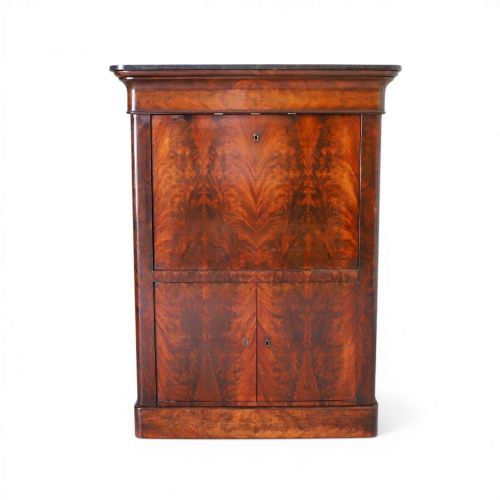
- Secrétaire à abattant
- A tall cabinet featuring a drop-front writing surface concealing internal compartments. These pieces combine desk functionality with traditional drawer storage.
- Verde Alpi
- A dark green decorative marble variety featuring white veining. This stone appears frequently on continental commodes and bedside cabinets.
Mahogany Marble Top Drawers: Frequently Asked Questions
How do I clean the marble top?
Use a soft cloth dampened with warm water and mild, pH-neutral soap to wipe the stone surface gently. Avoid acidic cleaners, vinegar, or harsh chemicals that can etch or dull the marble polish over time.
Dry the slab thoroughly with a clean towel to prevent water spots. For stubborn marks, consult a specialist stone restorer rather than attempting abrasive scrubbing.
Are the marble tops fixed in place?
Most marble slabs on these pieces rest entirely under their own considerable weight without permanent fixings. This traditional method allows the stone to be removed safely when moving the heavy furniture.
Exercise caution when tilting or transporting commodes and chests, as the loose stone can slide off. Lifting the marble off separately reduces the risk of chipping during relocation.
How do I tell Empire from Louis XVI style?
French Empire pieces display heavy, austere neoclassical forms with bold mahogany surfaces and prominent gilt bronze mounts. They often draw inspiration from ancient Roman and Greek military motifs.
Louis XVI furniture tends to feature lighter proportions, straighter tapered legs, and refined neoclassical detailing with subtle fluting. The mounts on Louis XVI items are typically more restrained and delicate than their Empire counterparts.
Where were these pieces used originally?
Bedside cabinets and commodes served primarily in grand bedrooms to hold personal items, nightwear, and washing paraphernalia. The stone top provided a hygienic, waterproof surface for pitchers and basins.
Washstands and dressing chests occupied similar domestic quarters for morning hygiene routines. Today, these items transition easily into modern hallways, living rooms, and bedrooms as statement storage.