





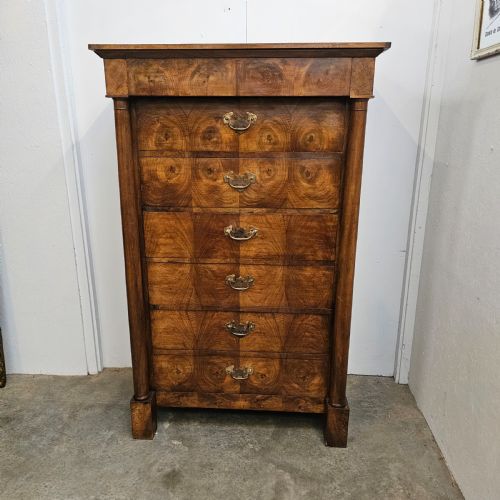

Antique Empire Bedroom Furniture
Antique empire bedroom furniture brings classical architectural dignity and rich timbers like mahogany and flame birch to the sleeping quarters.
Antique Empire Bedroom Furniture
These pieces comprise monumental storage and sleeping items shaped by the classical revival of the nineteenth century. The selection leans heavily towards French and Swedish commodes, chests of drawers, and complete bedroom suites.
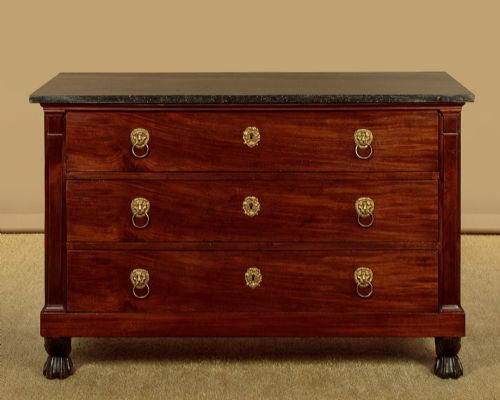
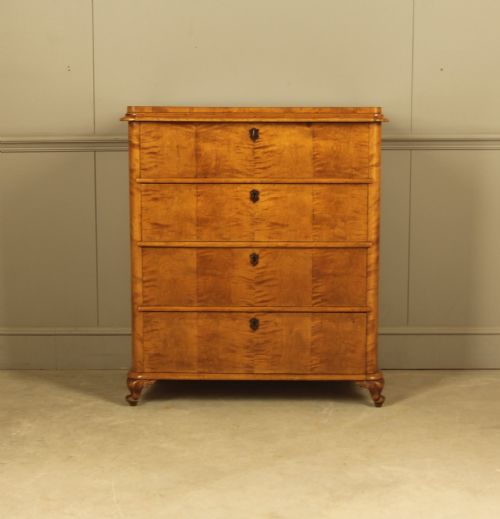
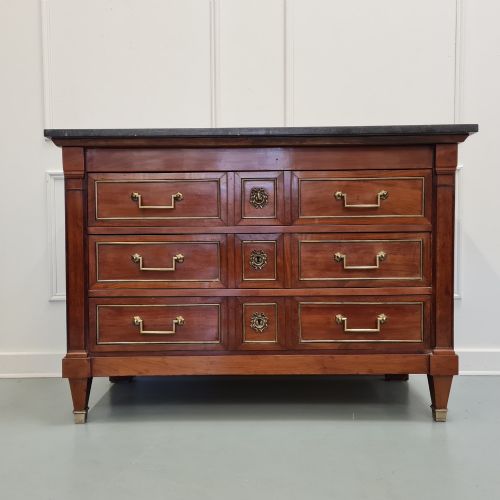
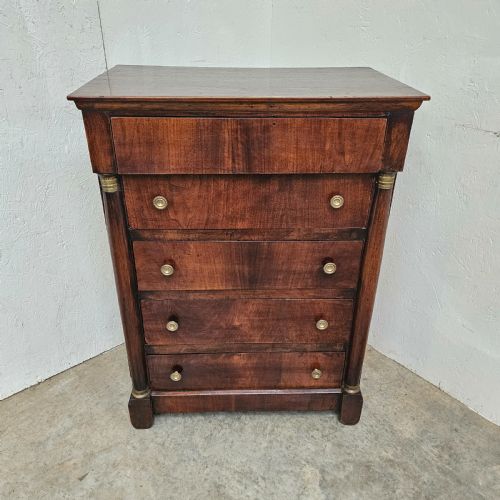
A buyer seeking antique empire bedroom furniture encounters grand five and six-drawer chests, compactum wardrobes, bedside cabinets, and occasional window seats. French mahogany Commodes and Swedish birch chests dominate the offerings.
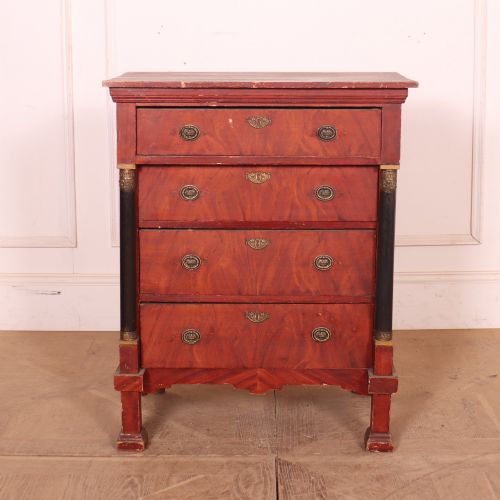
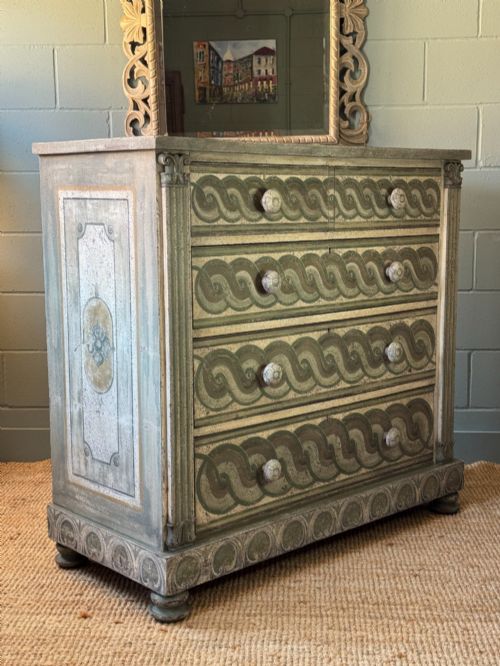
Stylistic influences span French Empire, Louis Philippe, Dutch Empire, and Swedish Biedermeier variations. Pieces range from austere architectural forms to richly figured wood grain and marble-topped surfaces.
Materials and construction methods
Cabinet makers utilised dense structural timbers including mahogany, walnut, oak, and pine as foundations. These were frequently faced with striking veneers such as flame birch, tiger birch, amboyna, and burr walnut.
Surface ornamentation relies on contrasting grain patterns, bookmatched veneers, and intricate marquetry inlay. Structural enrichment often incorporates cast brass mounts, ormolu, and inset marble slabs on top surfaces.
Listings feature woods including mahogany, walnut, pine, flame birch, tiger birch, burr walnut, and amboyna alongside marble and brass.
Distinctions in quality
Quality rests upon the selection and matching of surface veneers, such as symmetrical flame birch or bookmatched walnut. Superior examples display thoughtful grain continuity across multiple drawer fronts.
The sophistication of secondary materials and hardware marks the tier of a piece. Fine mounts in cast brass and genuine marble tops elevate an item above plain timber constructions.
Harris Lebus
The Antique Empire Bedroom Furniture Glossary
- Commode
- A decorative chest of drawers, typically low and wide. French examples frequently feature marble tops and architectural proportions.
- Semainier
- A tall, narrow chest of drawers traditionally designed with seven drawers, one for each day of the week. This form appears in French walnut.
- Compactum
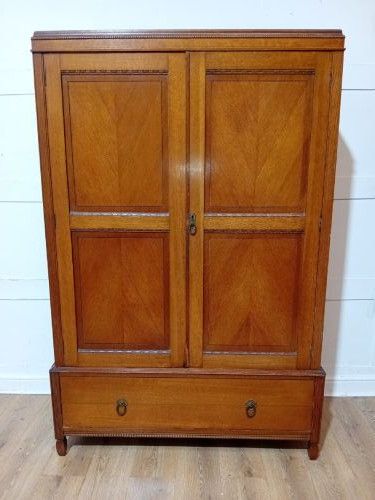
- A large, multi-functional wardrobe offering hanging space and internal drawers or shelving combined within one unit. The Harris Lebus example demonstrates this form.
- Ormolu
- Gilt bronze mounts applied to furniture for decorative contrast. It provides metallic highlight against dark mahogany or ebonised wood.
- Bookmatched
- A veneer technique where two adjacent pieces of wood veneer are sliced from the same flitch and opened like a book. This creates a symmetrical mirror-image pattern across the surface.
Antique Empire Bedroom Furniture: Frequently Asked Questions
What defines empire style furniture?
Empire style draws direct inspiration from the classical architecture of ancient Greece and Rome. It prioritises symmetry, structural mass, and restrained ornamentation.
In bedroom pieces, this translates to column-like pilasters, projecting cornices, and rich dark timbers contrasted with bright metal mounts.
How do French and Swedish pieces differ?
French empire furniture often employs dark mahogany paired with gleaming marble tops and cast brass or ormolu mounts. The overall effect is formal and imposing.
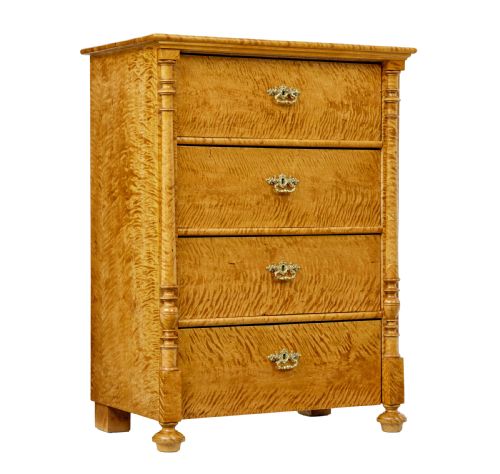
Swedish interpretations, particularly within the nineteenth century, favour lighter honey-toned veneers like birch and flame birch. They emphasise natural wood grain over applied metal decoration.
Where should I place a commode?
A commode serves as a substantial focal point in a bedroom or hallway, offering generous surface area and deep drawer storage. Marble-topped versions suit spaces where durability and cool textures are desired.
Their architectural presence allows them to anchor large wall spaces without requiring heavy accompanying decor.
How do I care for antique veneer?
Antique veneers require stable indoor humidity and protection from direct sunlight to prevent warping and fading. Dusting with a dry lint-free cloth preserves the polished surface.
Avoid commercial silicone sprays and excess moisture, which can lift old adhesives beneath delicate bookmatched grain.