
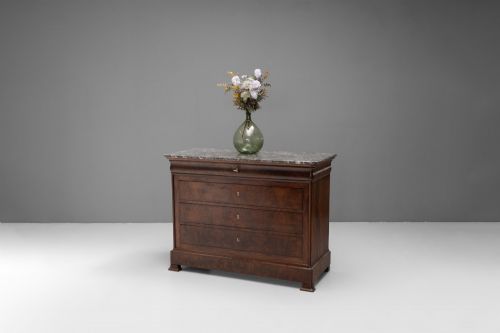


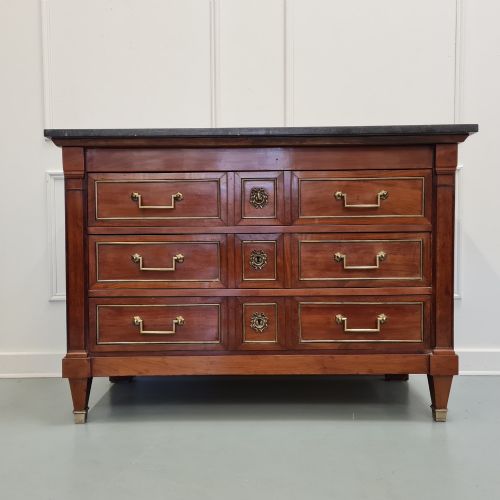
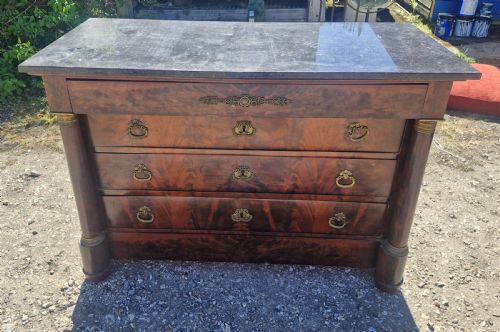


Mahogany Marble Top Commode
A mahogany marble top commode combines heavy timber storage with a cool stone slab for a balanced bedroom or salon piece.
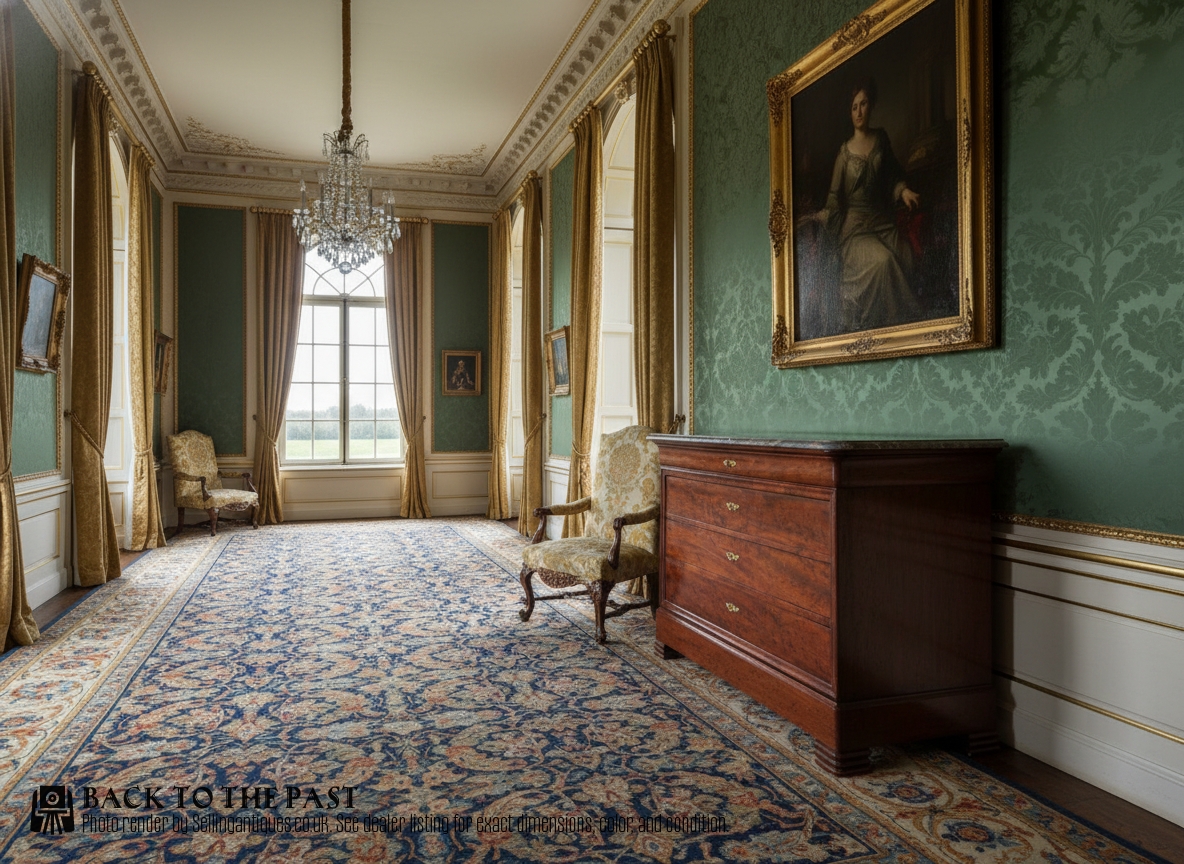
Mahogany Marble Top Commode
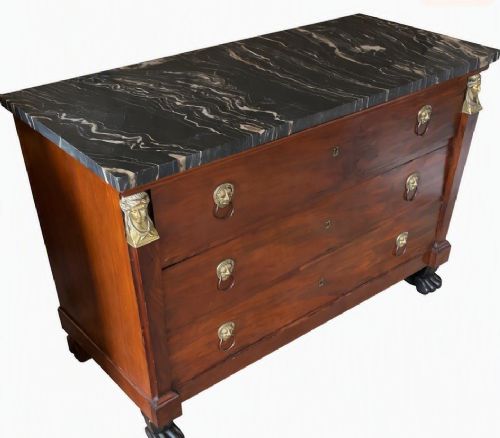
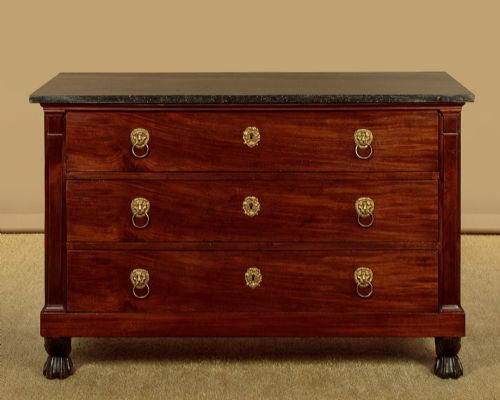
A mahogany marble top commode functions primarily as a low chest of drawers or bedside cabinet topped with stone. Most examples found here originate from nineteenth-century French workshops, spanning styles from French Empire and Louis XVI to Louis Philippe and Biedermeier.
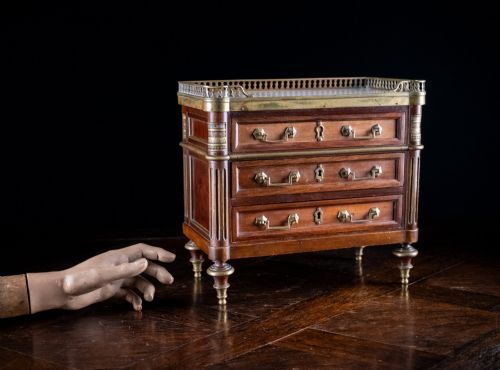
The form ranges from standard four-drawer chests and serpentine-fronted cabinets to diminutive bedside tables and miniature chests. These pieces served historically for private chambers, holding garments, linens, or personal effects beneath their protective marble surfaces.
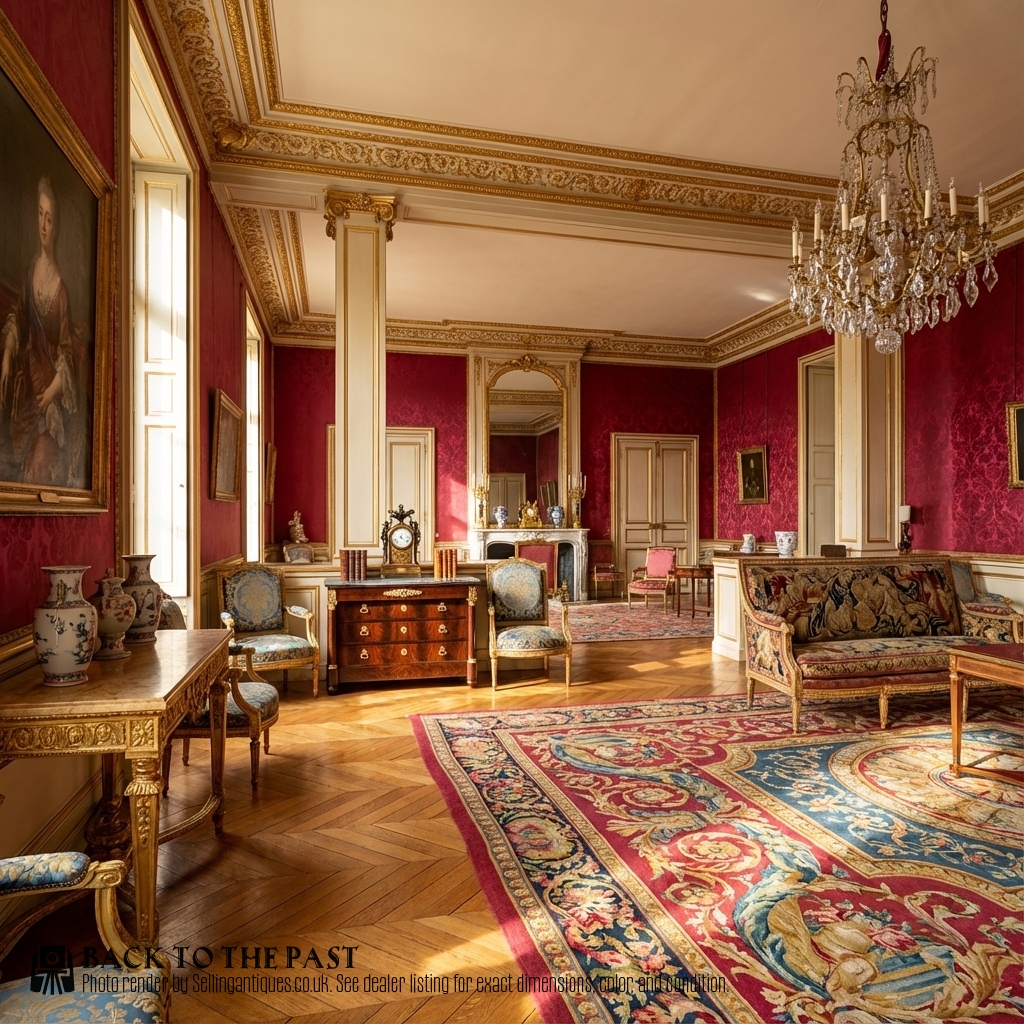
How they were made
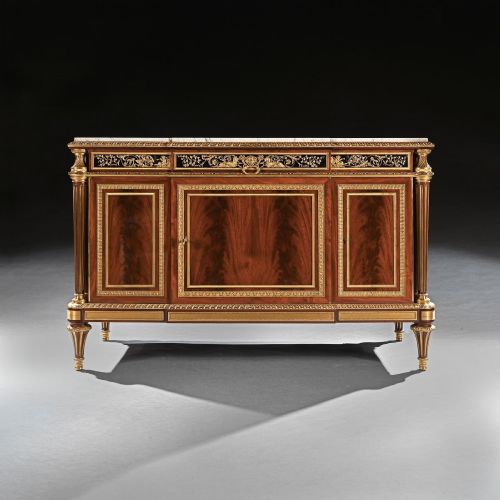
Carpenters built these commodes using solid or veneered mahogany and flame mahogany over secondary timbers, frequently applying intricate marquetry or parquetry patterns. Ormolu, gilt bronze, and brass mounts accent the corners, keyhole escutcheons, and drawer pulls.
The stone slabs employ various marbles, including grey marble, fossil marble, Verde Alpi, and white varieties, cut to follow the rectilinear, bow-front, or serpentine contours of the wooden carcase.
Listings feature flame mahogany, walnut, and tulipwood veneers paired with grey, fossil, and Verde Alpi marble slabs.
What varies in quality
The sophistication of the bronze or ormolu mounts and the precision of the flame mahogany veneer dictate the standing of an individual piece. Cabinetmakers working in established urban centres employed heavier cast mounts and thicker marble slabs with moulded edges.
The execution of the drawer joints, the matching of wood grain across the drawer fronts, and the integrity of the stone top distinguish high-workshop output from standard provincial production.
Henry Dasson·Weisweiler·Mon Krieger·Jean-Henri Riesener
The Mahogany Marble Top Commode Glossary
- Ormolu
- Gilt bronze mounts applied to furniture edges and handles. This technique involved dipping bronze in a gold amalgam.
- Flame mahogany
- Timber cut from the fork of the mahogany tree to create a distinctive flickering grain pattern. Cabinetmakers used these veneers symmetrically on drawer faces.
- Directoire
- A transitional French design period bridging Louis XVI and Empire styles. Pieces from this era feature restrained classical geometry.
- Serpentine front
- A cabinet face curved in a wave shape with a convex centre flanked by concave sides. This shape required advanced carpentry skill to fit the marble top precisely.
- Verde Alpi
- A dark green Italian marble characterised by light green and white veining. It appears frequently on nineteenth-century commodes.
Mahogany Marble Top Commode: Frequently Asked Questions
How do I clean the marble top?
Use warm water and a soft cloth to wipe the stone surface regularly. Avoid acidic household cleaners that can etch the polished marble.
Dry the stone thoroughly with a clean towel to prevent water spots from forming on the polished surface.
Can I place a commode in a hallway?
These cabinets suit hallways and entrance spaces well, offering surface display room and concealed drawer storage. Their shallow depth allows passage in narrower corridors without obstructing movement.
Ensure the floor is level so the heavy stone top remains stable on the wooden carcase.
What is the difference between Empire and Louis Philippe styles?
Empire pieces display heavy classical motifs, gilt bronze mounts, and dark mahogany surfaces reflecting Napoleonic taste. Louis Philippe commodes adopt simpler, softer lines with a focus on figured wood grain rather than metal ornamentation.
Both styles utilise heavy marble slabs, but Empire versions frequently employ bolder architectural proportions.
Are bedside chests matched pairs?
Some listings offer matched pairs intended for placement on either side of a bed. These twins share identical dimensions, marble types, and veneer layouts.
Single bedside cabinets also appear frequently for standalone use in smaller guest rooms.