
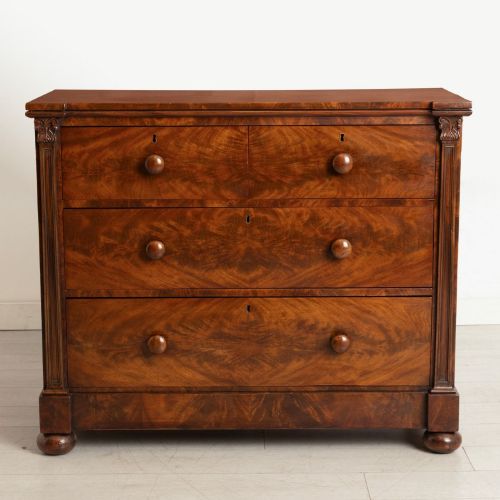
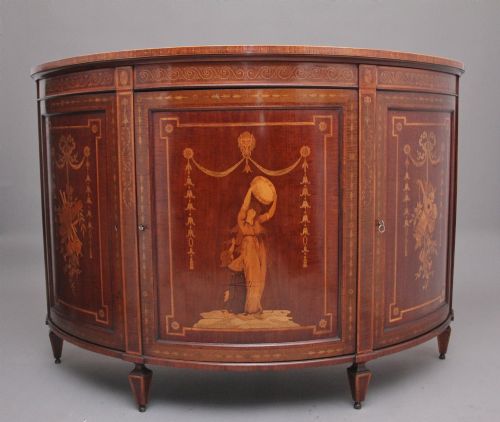
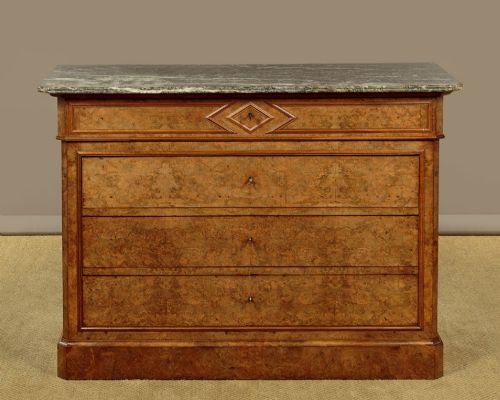
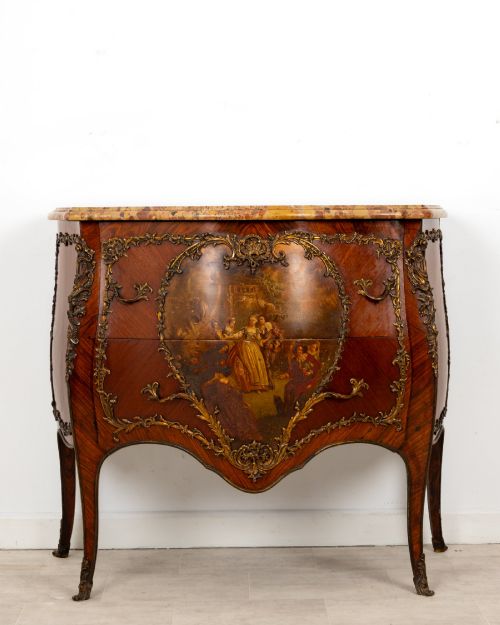




Nineteenth Century French Commode
A nineteenth century french commode brings substantial presence and rich timber to a room, offering deep drawers beneath polished stone tops.
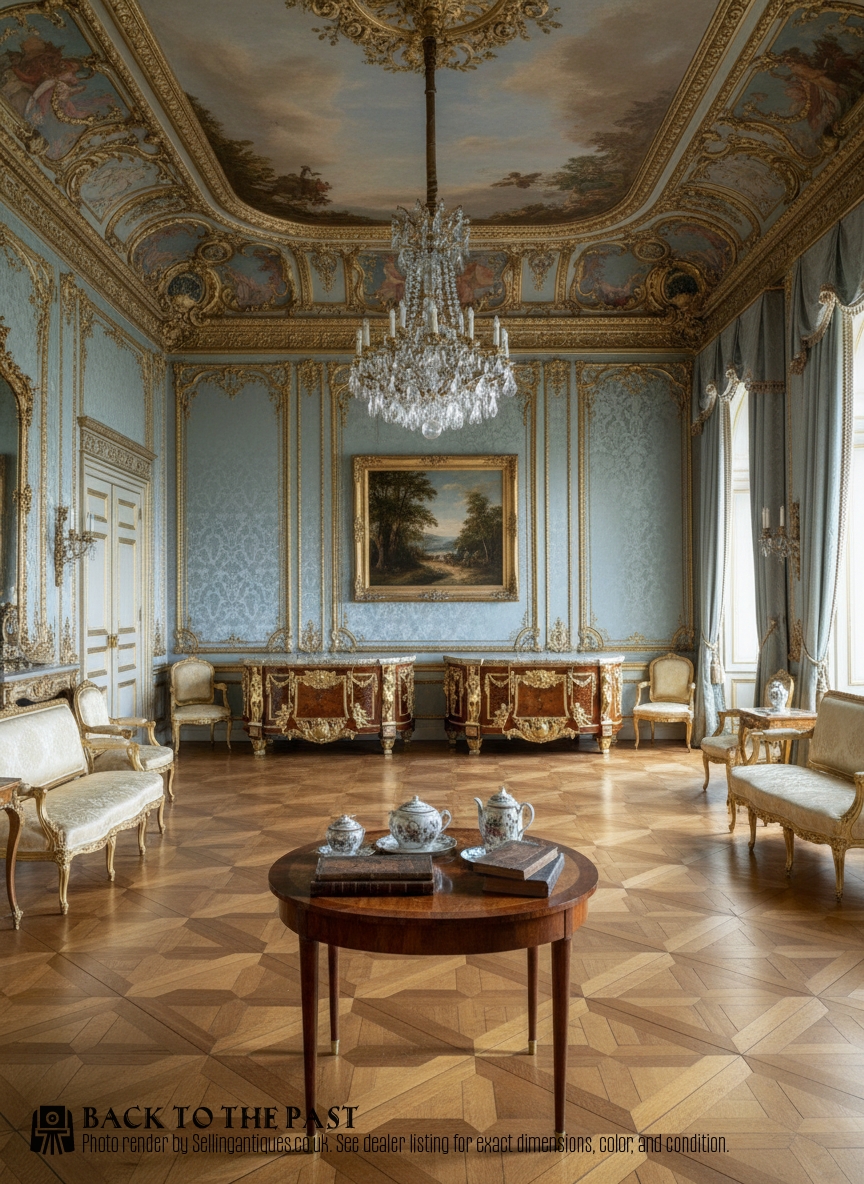
Nineteenth Century French Commode
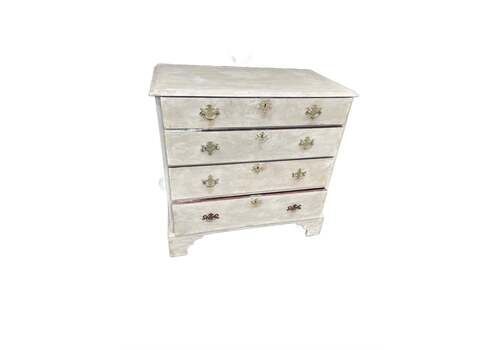
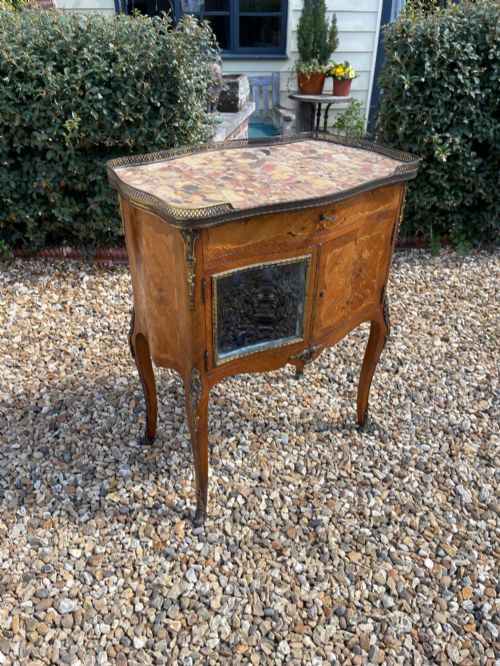
When you search for a nineteenth century french commode, you encounter a substantial case piece designed for storage, most frequently appearing as a chest of drawers or a side cabinet. The examples on this page span several decades of the nineteenth century and stretch into the early twentieth century, showing both revival aesthetics and strict period forms.
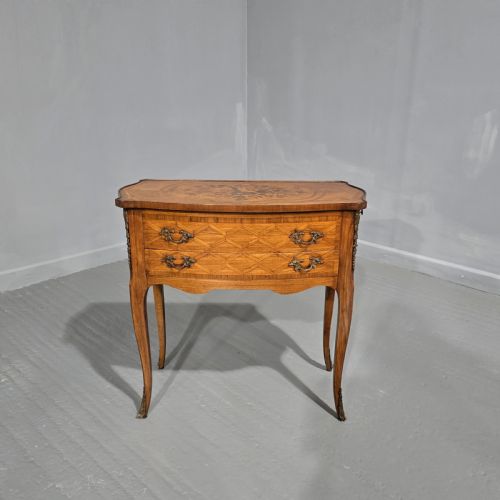
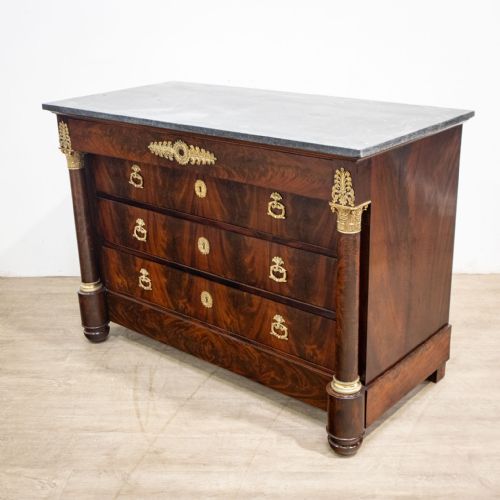
The most common forms on this page include serpentine chests, side cabinets, and straightforward four-drawer pieces. Origins cluster around French workshops, with specific pieces referencing major cabinetmakers such as Joseph Zwiener and Jean-Henri Riesener, alongside London retailers like Edwards and Roberts.
Stylistic expressions draw heavily on historical French vocabularies, ranging from Louis XV and Louis XVI revivals to the bolder geometry of the French Empire. You will find pieces finished with marquetry, simple mahogany, painted surfaces, or intricate inlays, giving each cabinet a distinct character suited to formal or eclectic interiors.
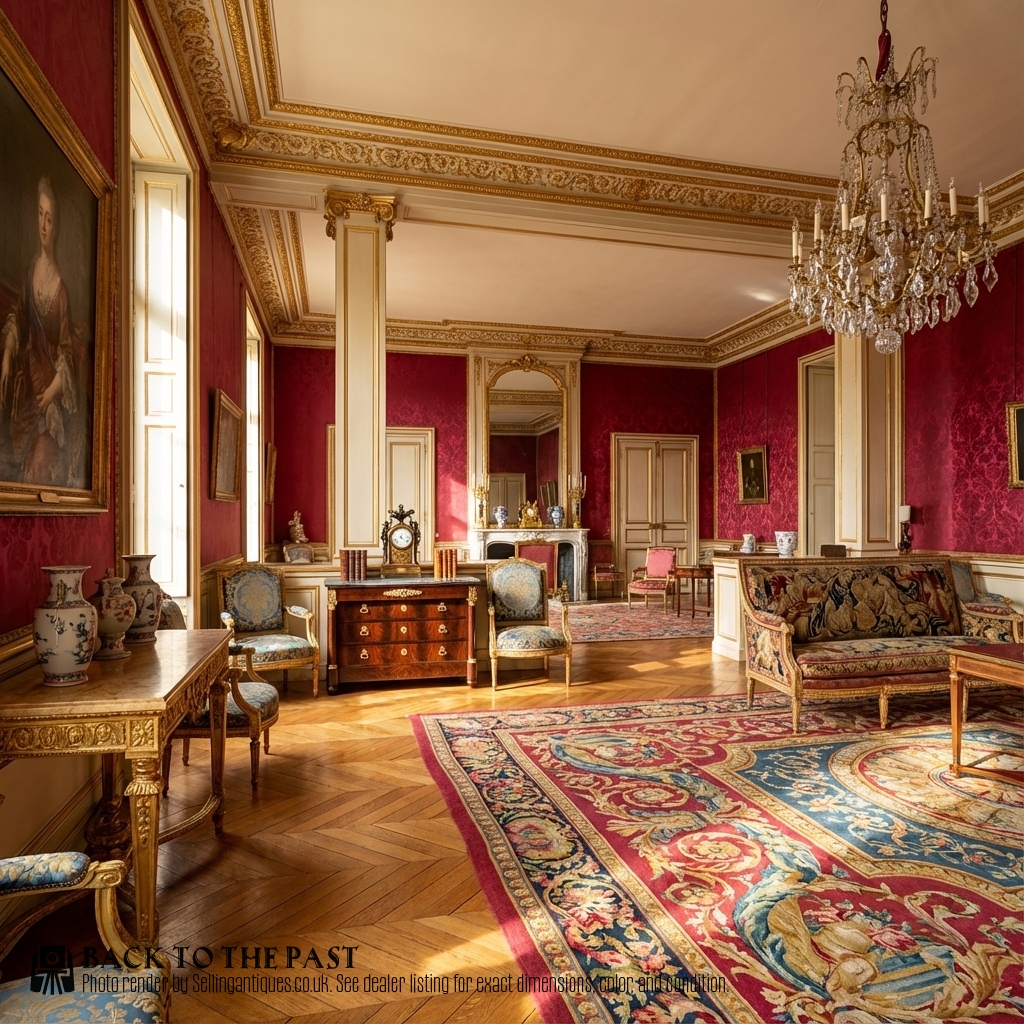
How they were made
Cabinetmakers of this era built carcasses from solid foundational timbers such as mahogany or walnut, then applied decorative surface veneers including kingwood, rosewood, and walnut. Marquetry designs were painstakingly cut and fitted by hand to create intricate floral or geometric patterns across the drawer fronts and sides.
Mounts made from ormolu, gilt bronze, and brass were cast and chased to accentuate the architectural lines and corners of the furniture. Heavy marble slabs, usually cut with a moulded edge or serpentine contour, were then fitted to the top surface as a durable and decorative finish.
Listings feature woods including kingwood, rosewood, walnut, and mahogany, paired with marble and gilt bronze.
What varies in quality
The distinction between standard production and the finest output lies in the crispness of the gilt-bronze mounts and the precision of the marquetry. Superior pieces exhibit hand-chased metalwork with sharp detail and seamless veneer work that follows the complex curves of the carcase without lifting or shrinking.
Internal construction also separates cabinet grades, with finer examples utilising solid oak or mahogany drawer linings alongside hand-cut dovetails. The integration of the marble top, ensuring a precise fit to the wooden frame beneath, indicates the level of care invested by the maker.
Edwards and Roberts·Joseph Zwiener·Jean-Henri Riesener
The Nineteenth Century French Commode Glossary
- Ormolu
- Gilded bronze mounts applied to furniture for decoration and edge protection. This technique involves coating cast bronze with a finely ground gold mercury amalgam and heating it.
- Marquetry
- The art of applying pieces of veneer to a structure to form decorative patterns. Craftsmen use contrasting woods to build pictorial or geometric designs.
- Serpentine
- A shape characterised by a undulating front line that curves inward centrally and swells outward at the sides. This contour requires advanced woodworking skill.
- Vernis Martin
- A type of simulated Japanese lacquer developed in France during the eighteenth century and imitated later. It provides a glossy, translucent painted finish.
- Kingwood
- A dense, richly figured timber native to Brazil utilised heavily in high-end cabinetmaking. Its contrasting dark and light brown zones make it ideal for decorative banding.
Nineteenth Century French Commode: Frequently Asked Questions
How do I clean the marble top?
Wipe the stone surface using a soft cloth dampened with warm water and mild, pH-neutral soap. Avoid acidic cleaners, vinegar, or harsh chemicals that can etch the polished finish.
Dry the marble thoroughly with a clean microfiber towel to prevent water spots. For persistent marks, consult a professional stone conservator rather than using abrasive scouring pads.
Can I place a lamp on the commode?
A lamp sits safely on the stone or timber top provided the weight is moderate and the base does not scratch the surface. Use felt pads beneath heavy metal or ceramic bases to protect the polish.
Route electrical cords carefully down the back of the cabinet to maintain the clean visual lines of the furniture.
How do I distinguish Louis XV from Louis XVI style?
Louis XV style pieces rely on asymmetry, sweeping curves, and exuberant rococo ormolu mounts. The overall silhouette feels fluid, with cabriole legs and serpentine fronts.
Louis XVI style marks a return to neoclassical symmetry and straight lines, featuring fluted legs, rectangular proportions, and architectural mounts drawn from classical antiquity.
Are the keys usually original?
Many nineteenth-century commodes retain replacement keys due to the centuries that have passed since their manufacture. Original locks remain common, but matching keys are frequently sourced later to ensure functionality.
Functioning locks add practical utility for securing drawers, though many owners simply use the key as a decorative pull.