

Mahogany Locking Drawers
Mahogany locking drawers are practical pieces of antique furniture designed to keep contents secure using ingenious locking mechanisms.
Mahogany Locking Drawers
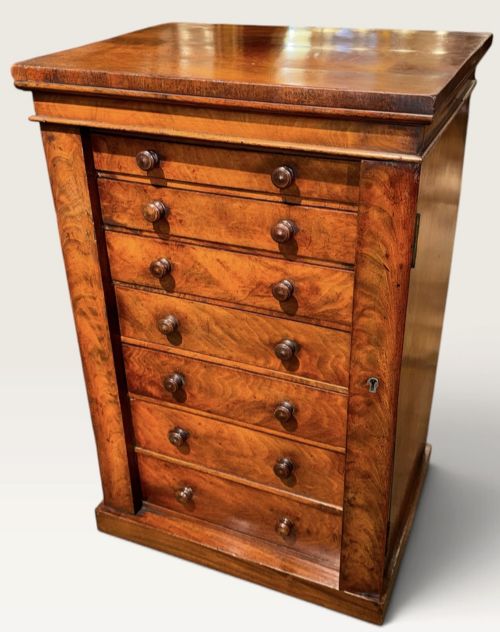
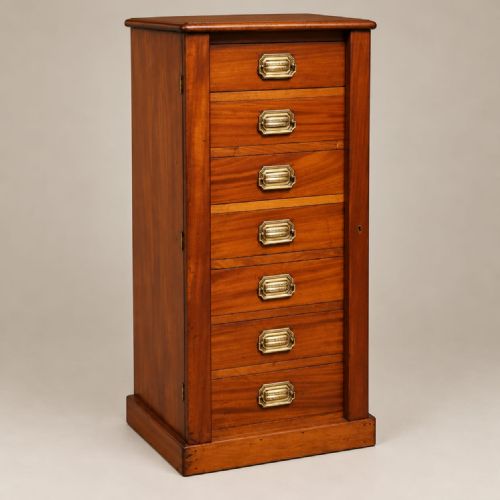
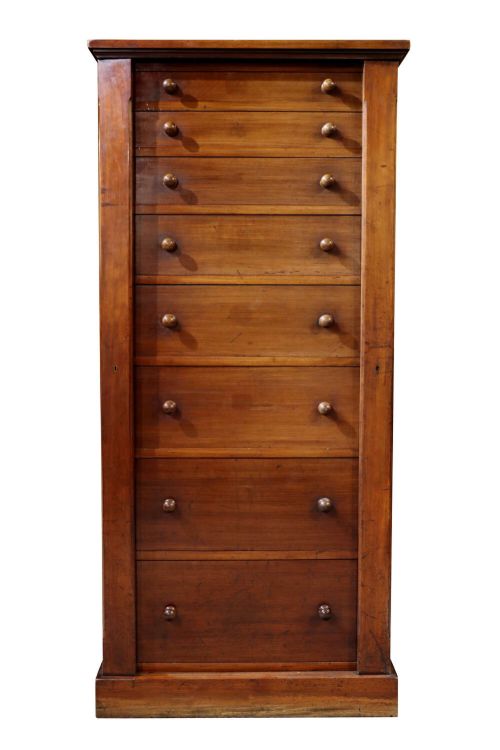
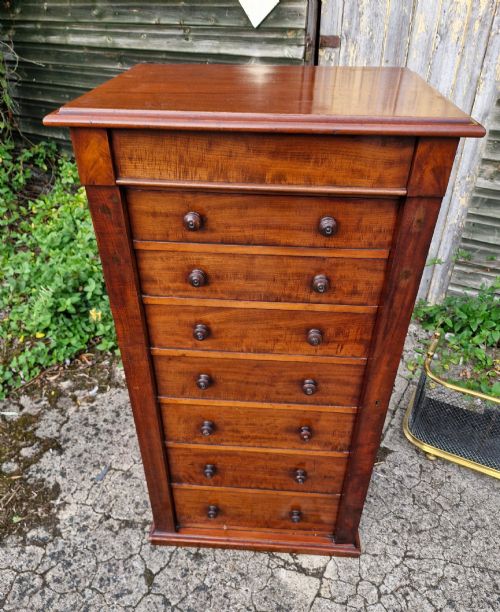
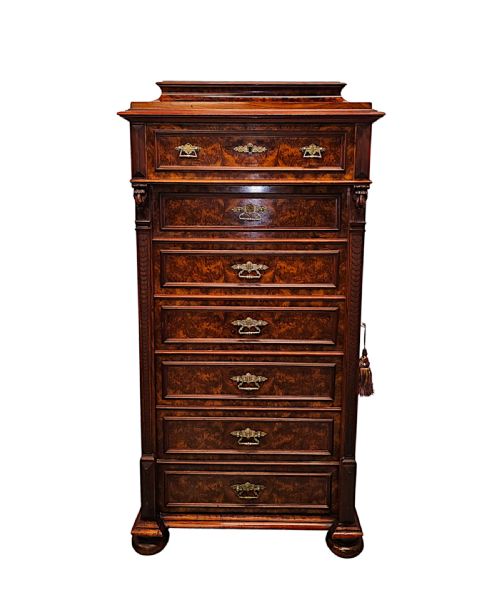
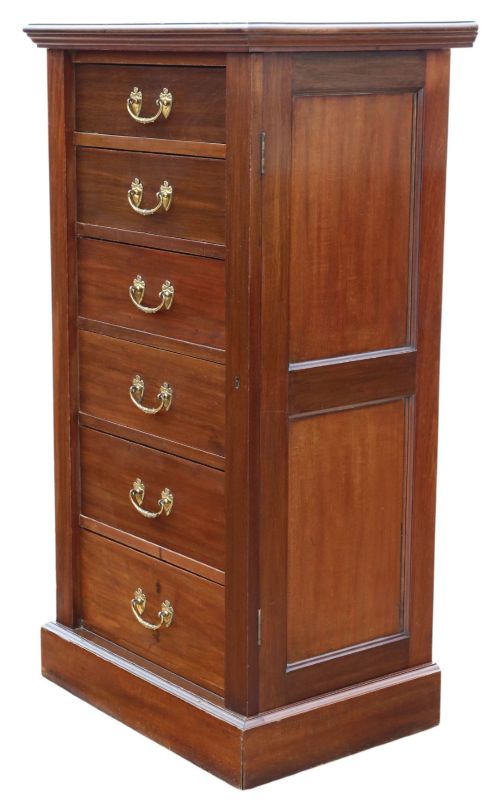
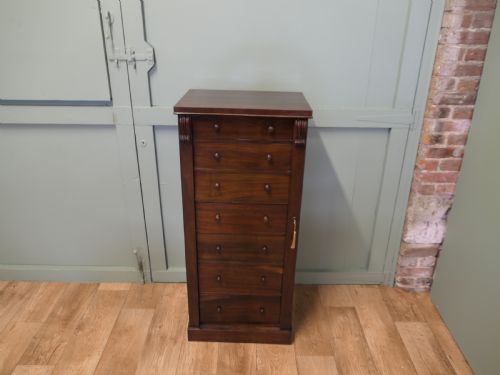
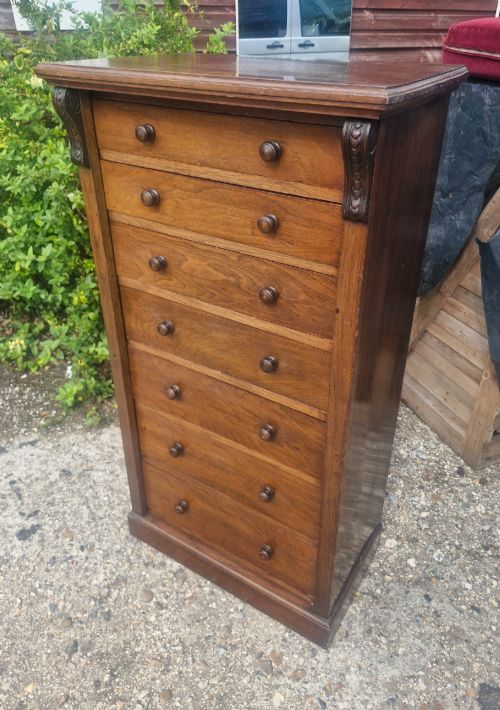
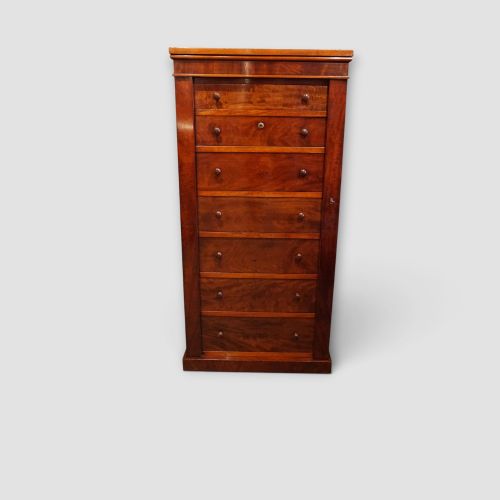
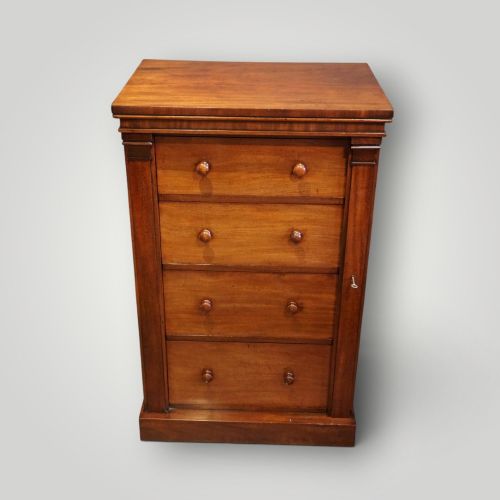
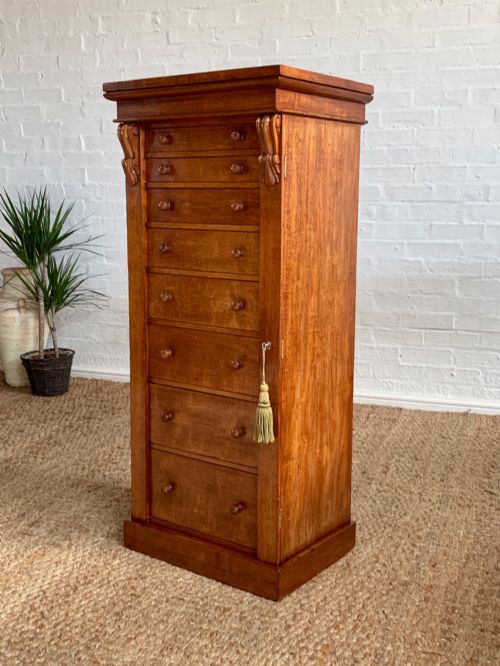
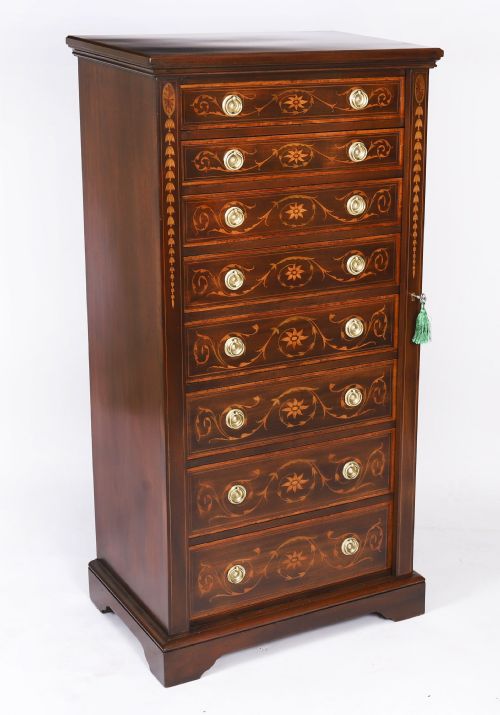
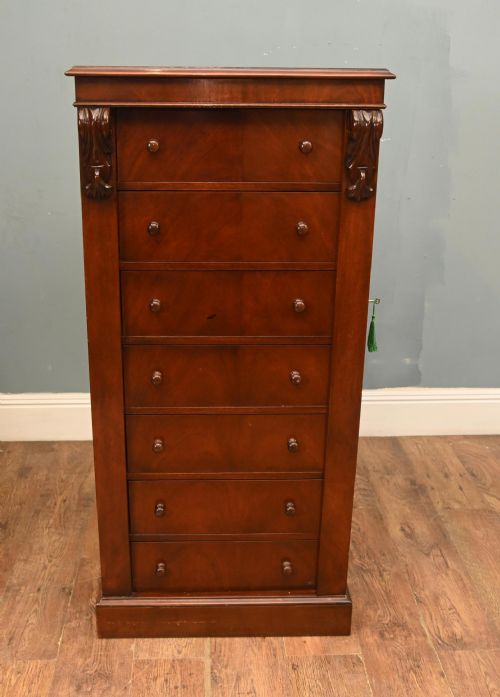
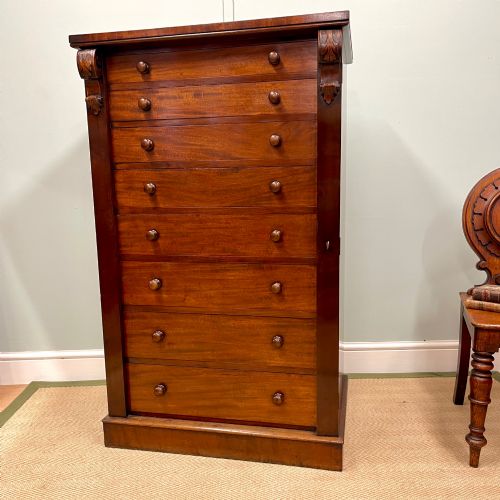
When you search for mahogany locking drawers, you encounter tall chests, diminutive apprentice pieces, apothecary boxes, and cabinets originating across the Georgian, Victorian, and Edwardian eras. The most frequent form on this page is the Wellington chest, characterised by its slender proportions and a hinged locking stile that secures all the drawers at once.
These items span several distinct periods including Regency, William IV, and late nineteenth-century manufacture. Alongside standard bedroom chests, the selection includes miniature chests, collectors cabinets, and tea caddies incorporating secret compartments or locking drawers.
Originating predominantly from British workshops, these case pieces serve both decorative and functional roles in domestic interiors. The survival of functional locking mechanisms across centuries demonstrates their enduring utility for storing valuables and documents.
Materials and construction methods
Cabinetmakers utilised solid mahogany and applied flame mahogany veneer over secondary timbers to create rich, dark surfaces. Figured mahogany and burr walnut appear frequently, displaying complex natural grain patterns across drawer fronts and top panels.
Mechanisms rely on brass fittings, locks, and hinges that operate in conjunction with vertical locking flaps or stiles. Skilled joinery ensures drawers slide smoothly within frames while maintaining tight tolerances required for secure locking systems.
Mahogany Locking Drawers Retail Price Guide 2026
Typical asking prices for mahogany locking drawers among the pieces listed under this phrase on Sellingantiques today, from the lower quarter to the upper quarter. They describe what is for sale here now, not the wider market.
Listings feature mahogany, burr walnut, and satinwood materials across Georgian, Victorian, and Edwardian periods.
Distinctions in construction and material grade
Quality separates pieces through the selection of timber veneers, such as highly figured mahogany or burr walnut, matched carefully across multiple drawer fronts. Superior examples retain original working locks, keys, and turned wooden knobs without modern replacements.
The precision of the locking stile mechanism dictates operational success, where tighter joinery and smooth hinge movement reflect superior cabinetmaking standards. Proportion and scale also vary, with miniature chests and outsized or paired examples demonstrating greater scarcity.
J Shoolbred
The Mahogany Locking Drawers Glossary
- Wellington chest
- A tall, narrow chest of drawers featuring a hinged vertical locking flap on one side that secures all drawers when locked. This specific form became popular during the nineteenth century.
- Secretaire
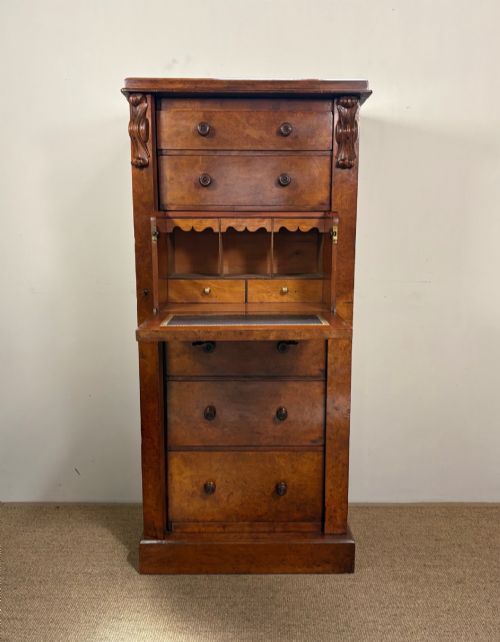
- A cabinet or chest incorporating a hinged writing flap that drops down to reveal a fitted interior with small drawers and pigeonholes. These often include secret compartments or locking mechanisms.
- Flame mahogany
- A veneer cut from the fork of the mahogany tree where branches meet the trunk, producing a distinctive flickering flame pattern. Cabinetmakers utilised this timber on prominent drawer fronts.
- Apothecary box
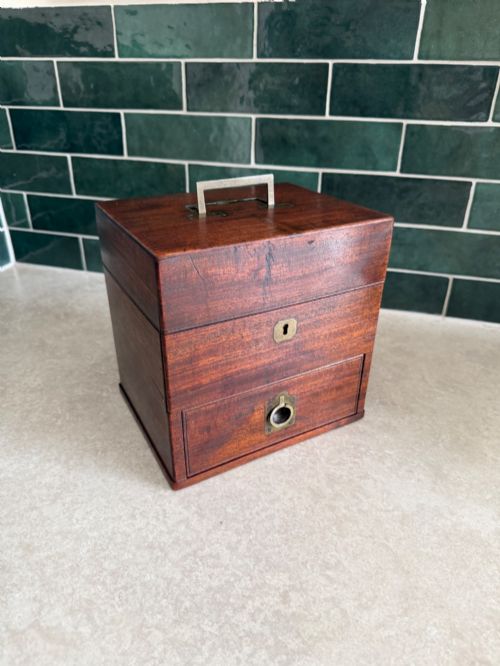
- A small portable cabinet or box fitted with internal compartments and drawers designed for storing medicines and phials. Many feature locking lids or secured drawers.
- Stile
- A vertical framing member of a panelled piece of furniture, which in certain chests acts as the locking bar that swings to secure the drawer bank.
Mahogany Locking Drawers: Frequently Asked Questions
How do Wellington chest locks operate?
A Wellington chest uses a hinged vertical locking stile on the right side of the drawer stack. Turning the key in this wooden bar swings it over the drawer edges, preventing them from opening.
Opening this flap requires the original key, which releases the internal catches and allows each drawer to pull out individually.
Where were these pieces used?
These pieces served primarily in private studies, bedrooms, and drawing rooms for storing personal valuables, jewellery, and confidential documents. The secure locking function made them suitable for keeping items away from servants or guests.
Smaller items like tea caddies and apothecary boxes sat upon side tables or desks, providing portable security for precious tea leaves or medicines.
How do I identify a Victorian piece?
Victorian examples typically display deeper colour saturation in the mahogany timber alongside heavier brass hardware and turned wooden knobs. Construction often incorporates machine-sawn elements hidden within secondary framing timbers.
Proportions tend to be robust, matching the architectural tastes prevalent during the reign of Queen Victoria between eighteen thirty-seven and nineteen zero one.
Can I get replacement keys for locks?
Historic lever locks often require bespoke keys fashioned by a specialist restorer to match the internal wards. Many surviving pieces retain their original keys, which should be kept secure.
For pieces missing keys, a locksmith experienced in antique furniture can cut a functional key without damaging the original mechanism.