
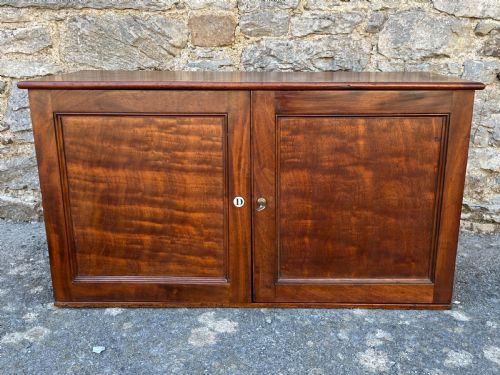


Mahogany Locking Cabinet
A mahogany locking cabinet provides secure storage, uniting rich timber with clever locking mechanisms.
Mahogany Locking Cabinet
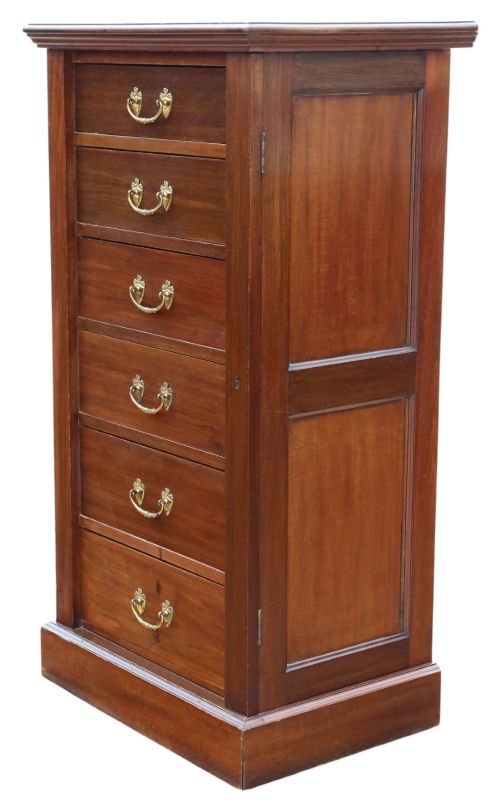
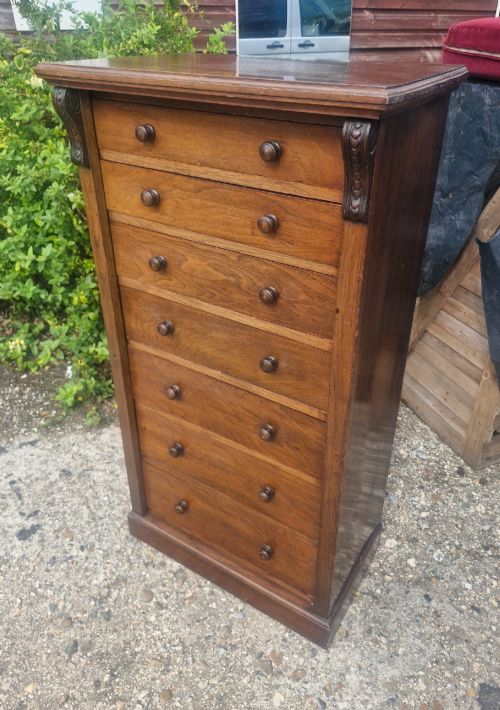
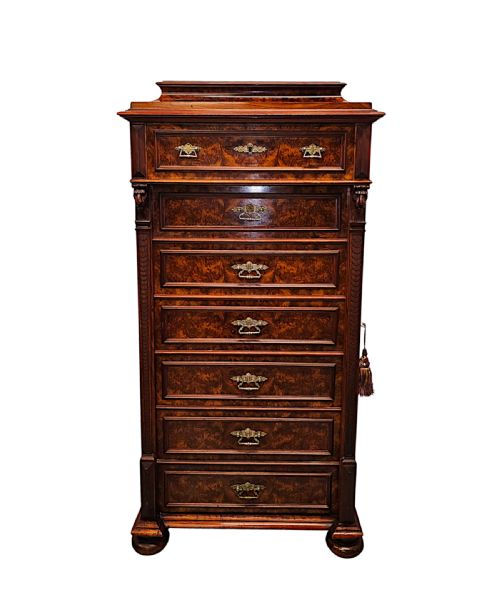
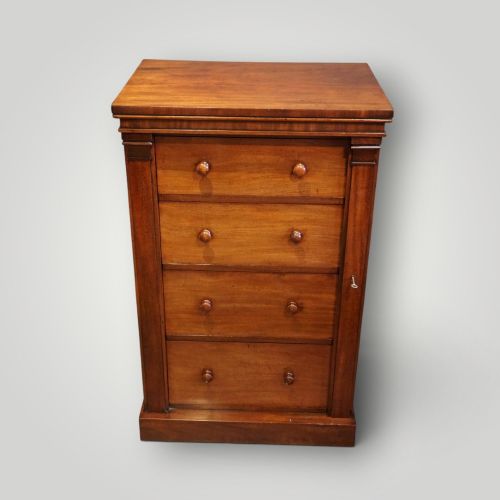
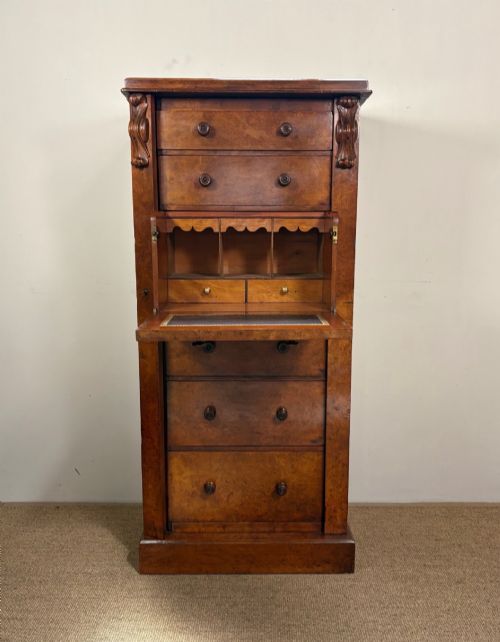
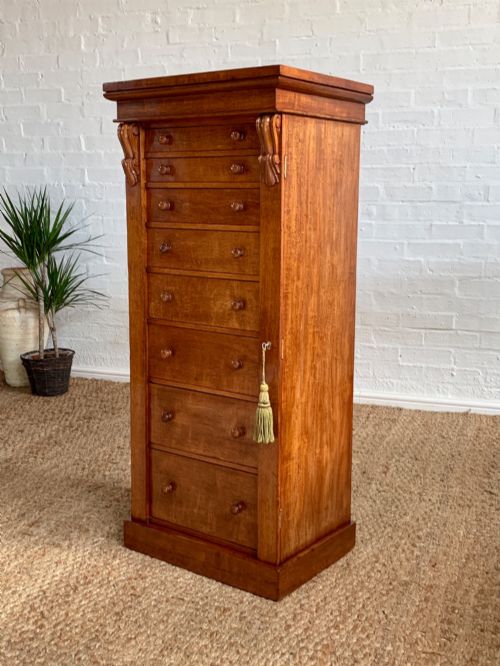
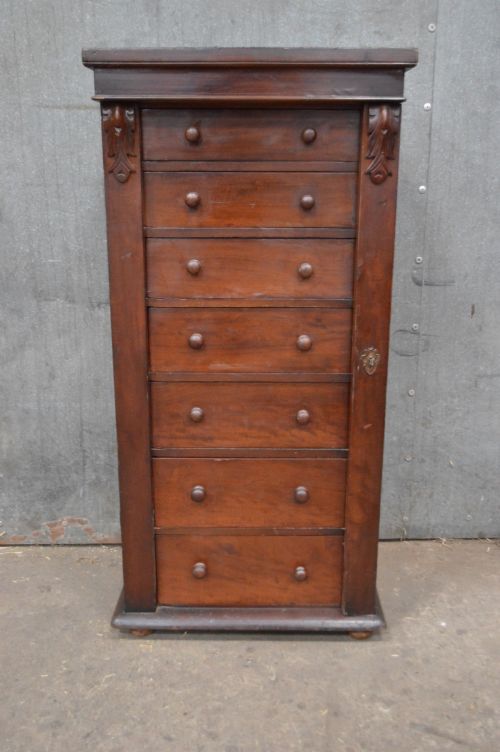
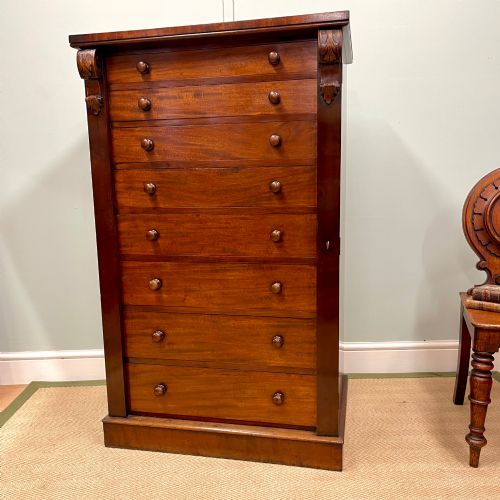
A mahogany locking cabinet encompasses tall Wellington chests, compact side cabinets, and specialised collectors pieces designed with secure doors or locking locking bars. Buyers searching for a mahogany locking cabinet will most frequently encounter Victorian Wellington chests, which feature a characteristic hinged locking stile secured by a key.
The selection spans from Georgian glazed corner wall hanging cabinets to Edwardian inlaid side pieces and expansive 19th Century double chests. Formats range from miniature drawer sets and secretaire variants to large military filing units and multi-drawer collectors cabinets.
Origins stretch across the 19th Century, taking in Regency, Victorian, and Edwardian periods alongside Georgian Revival and 19th Century French examples. These pieces served diverse domestic and functional roles, from housing correspondence to displaying valuable collections safely.
Materials and construction methods
Makers utilised solid mahogany and applied flame mahogany veneer, burr walnut, figured mahogany, and satinwood to primary surfaces, often complemented by contrasting timber inlays. Secondary woods provided structural stability for drawer linings and internal dividers.
Brass hardware, including original turned knobs, drawer pulls, hinges, and locking mechanisms, functioned as both decoration and security. Leather inserts appeared on specific working surfaces, while glass panes were fitted to display and corner cabinet doors.
Several miniature chests appear alongside full-sized counterparts, offering identical locking mechanisms on a diminutive scale.
Assessing quality in construction and timber
The distinction between tiers rests upon timber selection, figure consistency, and the precise execution of veneers. Cabinets showcasing lively flame mahogany or figured grain display greater ambition in surface design.
Mechanical integrity defines the superior examples, particularly the smooth operation of the locking stile and the exact fit of keys and drawers. Original hardware and intact locking mechanisms significantly elevate a piece.
Collinson & Lock London·Druce & Co.
The Mahogany Locking Cabinet Glossary
- Wellington chest
- A tall, narrow chest of drawers featuring a hinged locking bar on one side that secures all drawers when locked with a key. This form originated in the 19th Century.
- Secretaire
- A desk or chest incorporating a fitted writing drawer with a drop-front writing surface. It combines standard storage with a concealed writing desk.
- Flame mahogany
- A decorative veneer cut from timber where the branch meets the trunk, producing a flame-like pattern. It was favoured for high-status cabinet fronts.
- Stile
- A vertical framing member of a panelled door or the locking bar on a Wellington chest. On these cabinets, the stile swings away to release the drawer stack.
- Fiddleback
- A figured mahogany with small, undulating ripples across the grain resembling the back of a violin. This timber figure indicates high-grade selection by the maker.
Mahogany Locking Cabinet: Frequently Asked Questions
How does a Wellington chest lock?
A Wellington chest locks via a hinged vertical wooden bar, known as a locking stile, positioned down one side of the drawer stack. When closed and secured with a key, this bar catches the edge of every drawer simultaneously.
Opening the lock allows the stile to swing clear, releasing the drawers for normal access.
What were collectors cabinets used for?
Collectors cabinets provided secure storage for natural history specimens, coins, medals, or miniatures. Their shallow drawers kept delicate items organised and protected from dust and light.
Locking doors ensured valuable or fragile collections remained undisturbed.
How do I date a Victorian piece?
Dating a Victorian piece involves examining construction methods, timber choice, and hardware styles. Mid 19th Century examples often display heavy solid mahogany or rich figured veneers, while later Victorian items may incorporate machine-sawn components.
Design motifs and secondary wood choices also offer clues to the specific decade of manufacture.
Where were corner cabinets placed?
Corner cabinets were designed to utilise unpopulated room angles, particularly in dining rooms or parlours. Wall-hanging versions saved floor space while keeping contents visible through glazed doors.
They often stored glassware, spirits, or ceramics close to hand.