

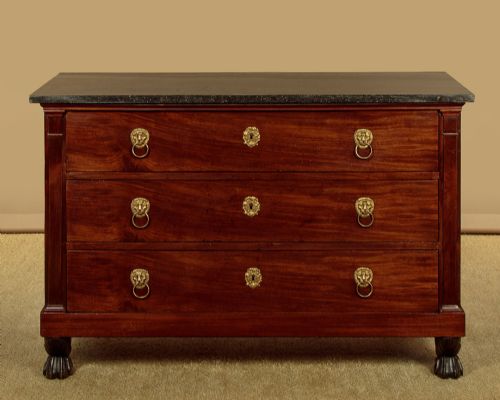
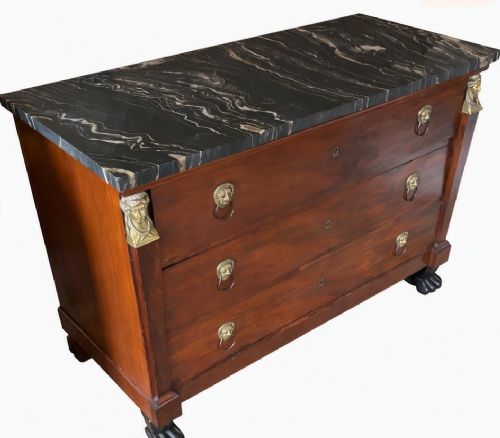
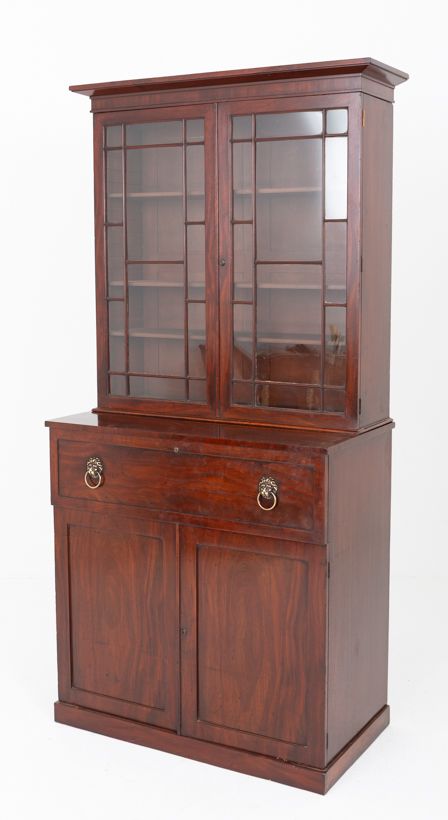
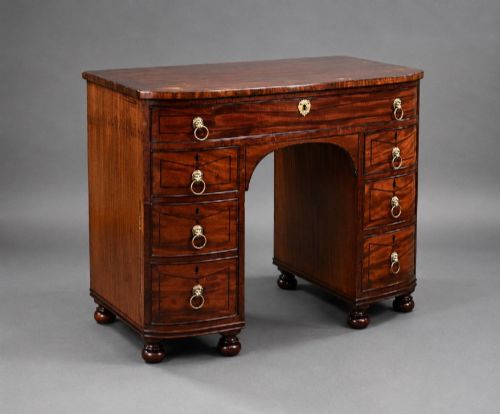
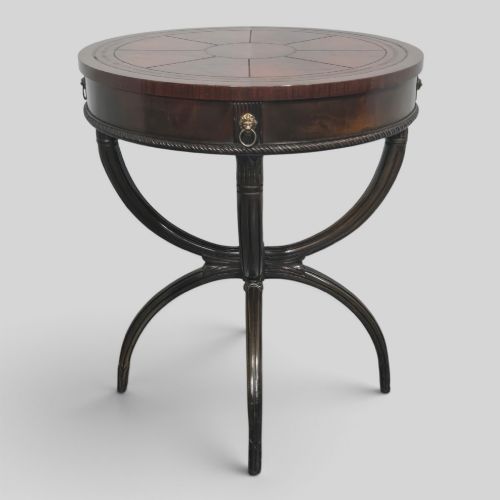
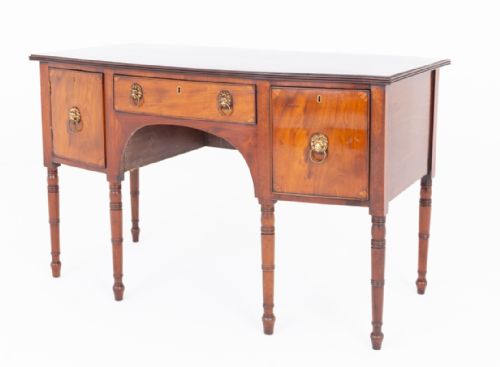


Mahogany Lion Mask
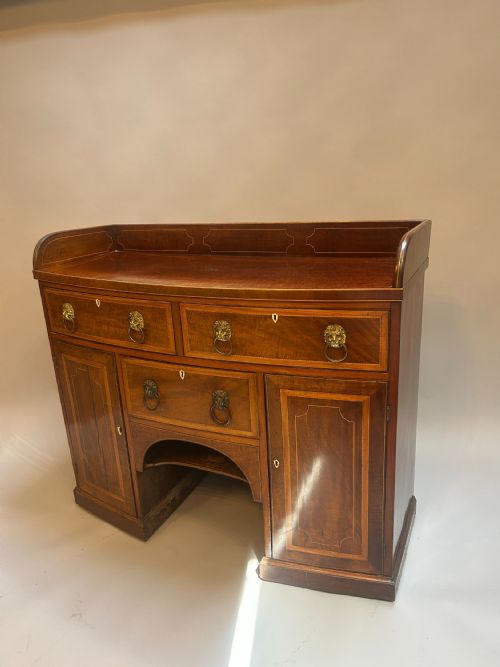
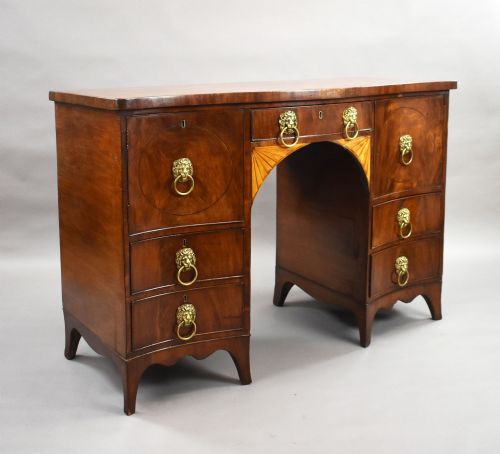
Mahogany lion mask pieces bring together rich timber and bold classical carving, offering solid presence for the dining room or hall.
Mahogany Lion Mask
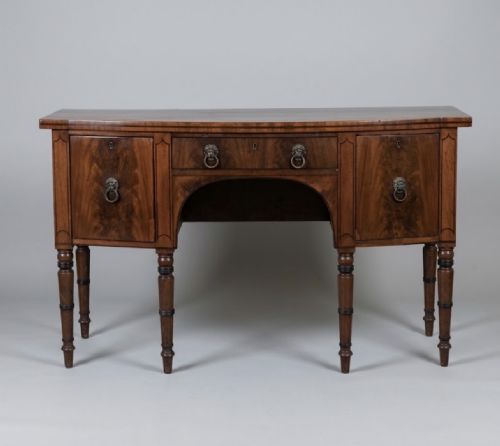
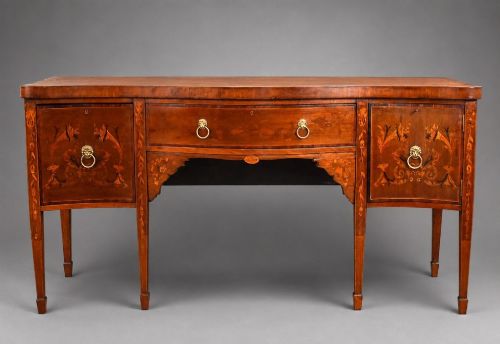
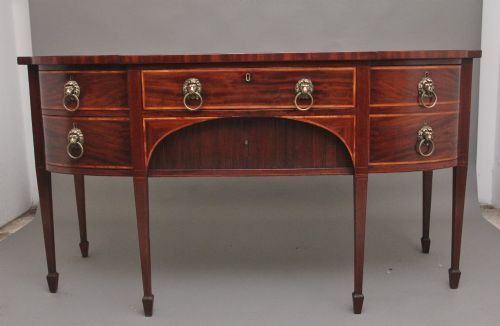
When buyers search for mahogany lion mask items, they encounter forms rooted primarily in the Georgian, Regency, and nineteenth-century periods. The selection focuses heavily on dining room furnishings such as wine coolers, cellarettes, and sideboards.
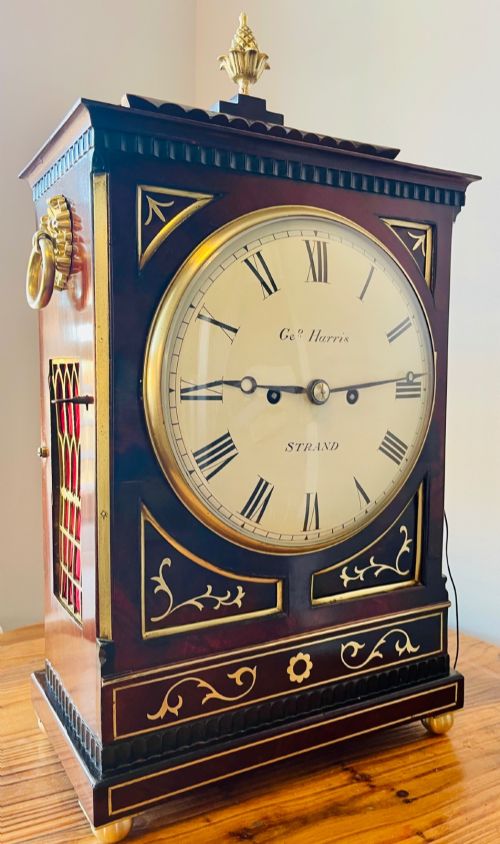
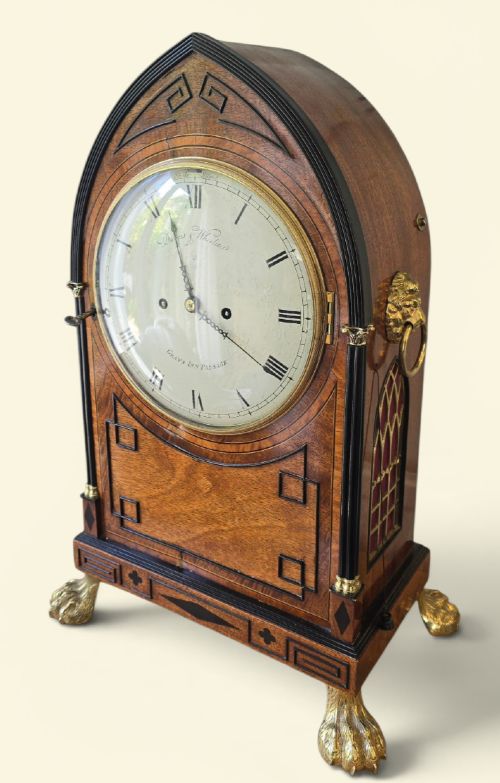
These items range from compact coopered planters to large breakfront sideboards and bracket clocks. The aesthetic draws strongly on classical design, integrating carved wooden motifs into functional furniture.
How they were made
Craftsmen built these pieces using dense solid timbers, frequently applying veneers of flame mahogany over secondary woods. Inlaid details in boxwood, satinwood, and ebony often accent the primary surfaces.
Metal components play a structural and decorative role, with brass bindings, handles, and mounts securing coopered staves or framing door panels.
Mahogany Lion Mask Retail Price Guide 2026
Typical asking prices for mahogany lion mask among the pieces listed under this phrase on Sellingantiques today, from the lower quarter to the upper quarter. They describe what is for sale here now, not the wider market.
Listings span the Georgian, Regency, and Edwardian periods, featuring brass, boxwood, and marble alongside solid mahogany.
What varies in quality
The standard of carving defines the upper tier of these pieces, particularly in the crispness and depth of the wooden mask details. Inferior examples show softer relief work and less attention to anatomical proportion.
Timber selection and grain matching further separate ordinary items from superior works. Master craftsmen aligned flame veneers symmetrically, whereas lesser pieces utilise plain or mismatched boards.
Desbois and Wheeler·Gillington of Dublin
The Mahogany Lion Mask Glossary
- Cellarette
- A lockable container used for storing wine bottles in the dining room. These vessels frequently sit on low stands or feet and incorporate metal liners.
- Coopered
- Constructed using vertical wooden staves bound together by metal hoops, much like a traditional barrel. This technique appears often in wine coolers and planters.
- Bowfront
- A curved convex cabinet front that projects outward in an arc. This shape is common in sideboards from the Georgian and Regency eras.
- Satinwood
- A durable yellowish wood utilised for contrasting stringing and decorative inlay work. It provides a bright visual accent against dark mahogany.
Mahogany Lion Mask: Frequently Asked Questions
What is a mahogany lion mask wine cooler?
A wine cooler is a timber vessel designed to chill bottles using ice or cold water during formal meals. Examples often feature metal liners and brass carrying handles.
Lion mask mounts appear on the exterior as decorative handle plates or carved wooden projections, reflecting classical architectural themes.
How do I date a mahogany sideboard?
Dating relies on examining the timber construction, drawer linings, and overall silhouette. Pieces from the eighteenth century typically show hand-cut dovetails and simpler underlying woods.
Later nineteenth-century iterations often incorporate heavier brass mounts and distinct revival styles such as Egyptian or Neoclassical.
Where were cellarettes placed in a room?
Cellarettes stood directly on the floor or on dedicated low stands beneath sideboards or dining tables. Their primary function was practical wine storage close to the dining action.
Because they possessed secure locks, they also served to protect expensive vintages from domestic staff.
How do I care for antique mahogany furniture?
Maintenance requires keeping timber away from direct heat sources and rapid humidity shifts to prevent wood splitting. Natural wax polishes applied sparingly help nourish the surface.
Avoid chemical sprays and abrasive cleaners that can damage the underlying French polish or original finish.