

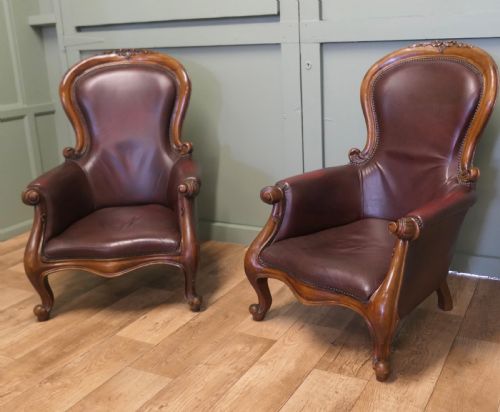
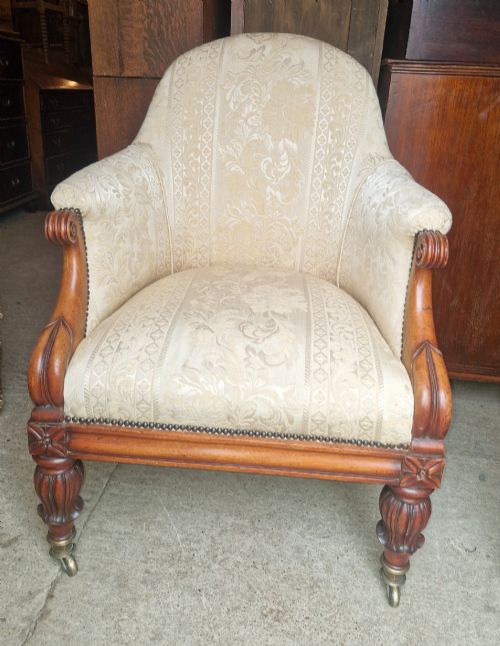
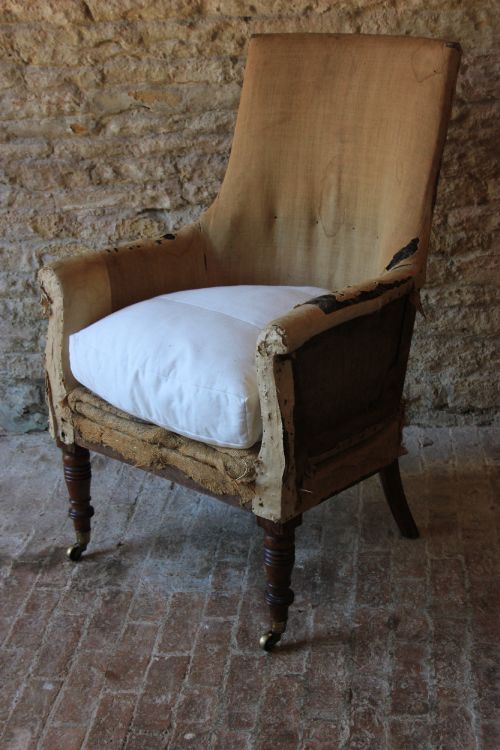
Mahogany Library Armchair
A mahogany library armchair combines sturdy timber framing with deep upholstery, serving as a steadfast seat for reading, writing, or resting.
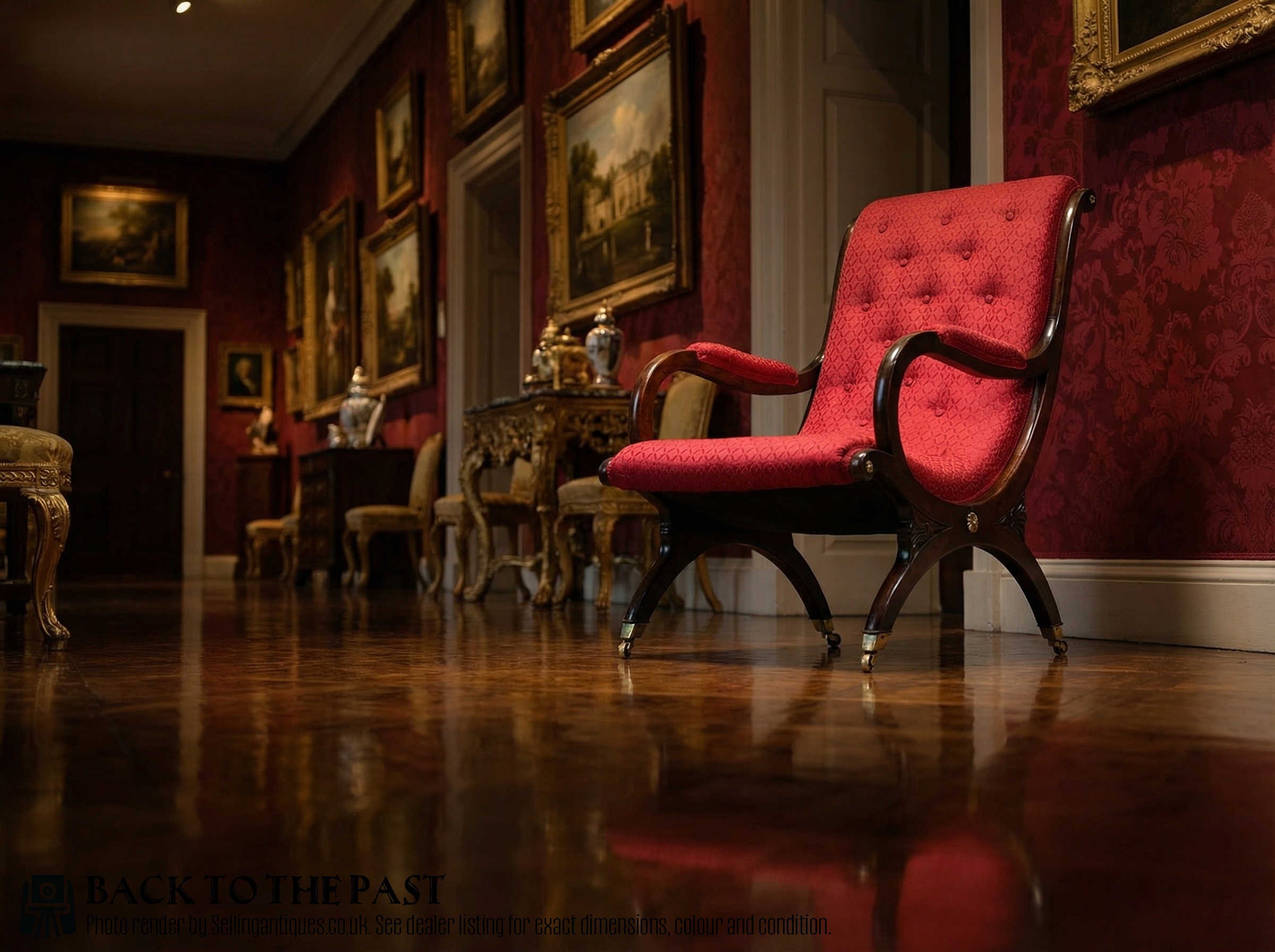
Mahogany Library Armchair
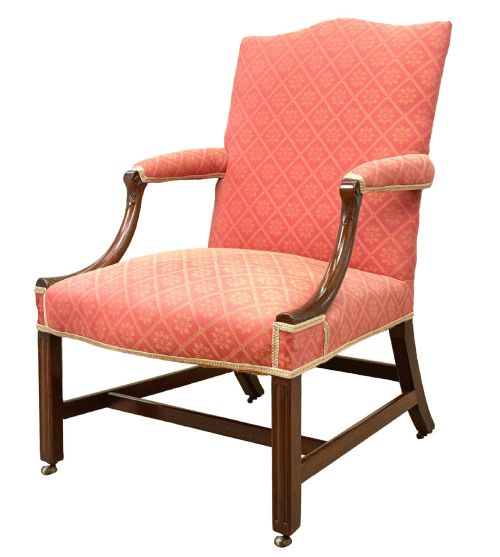
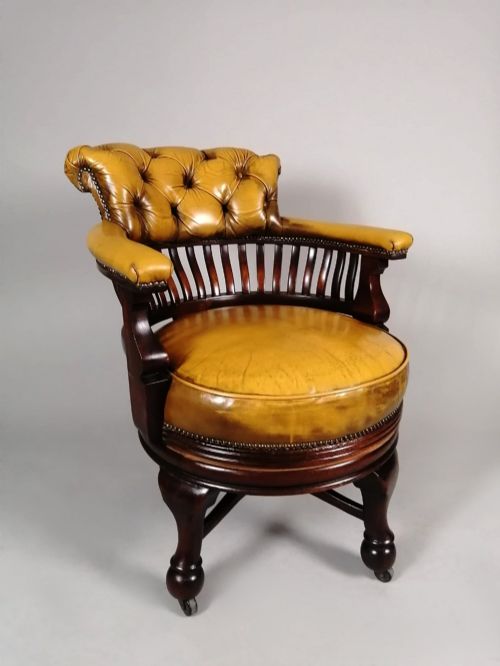
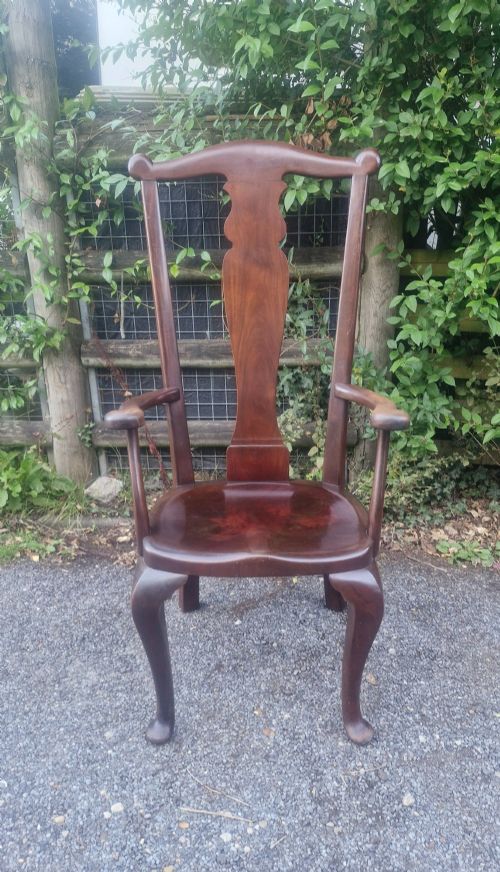
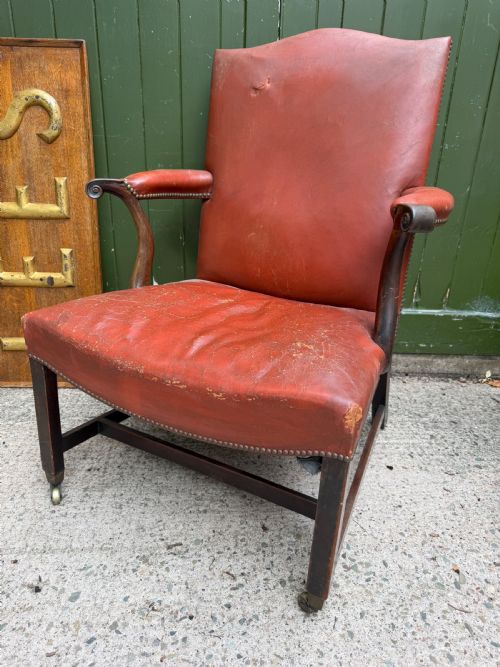
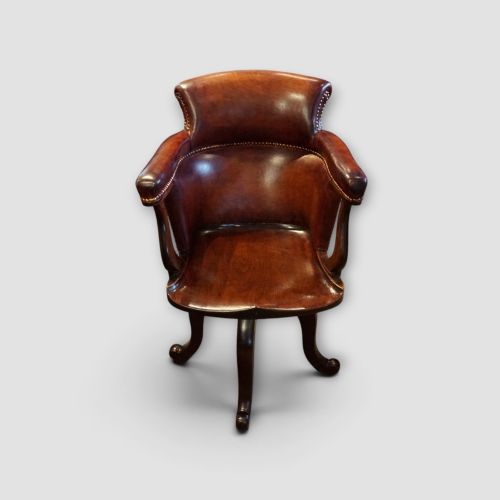
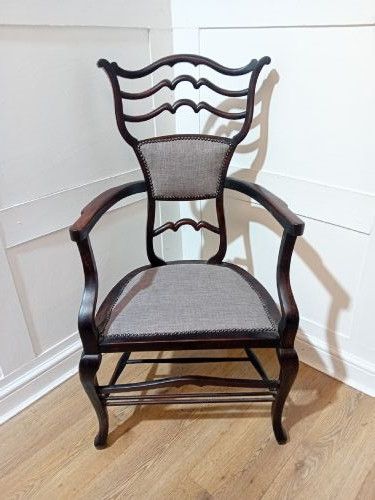
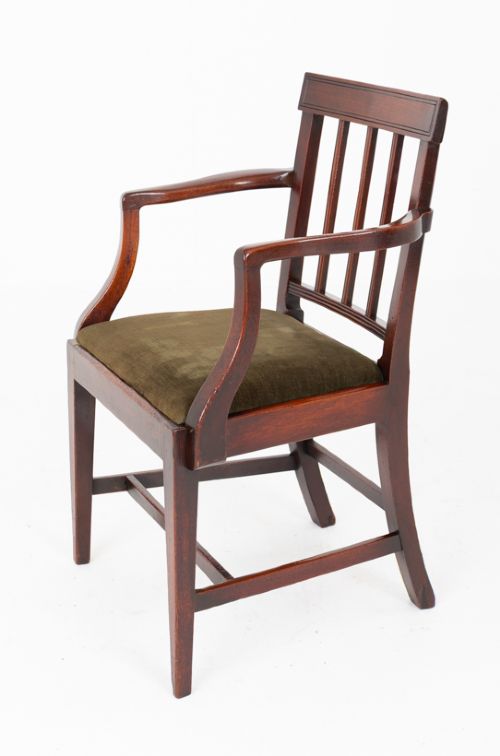
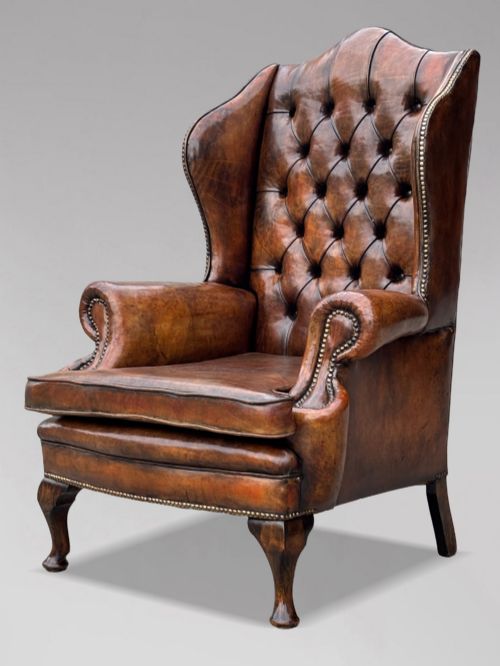
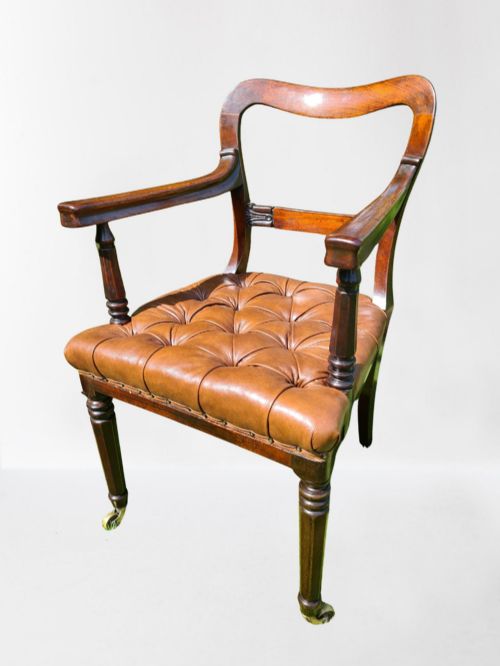
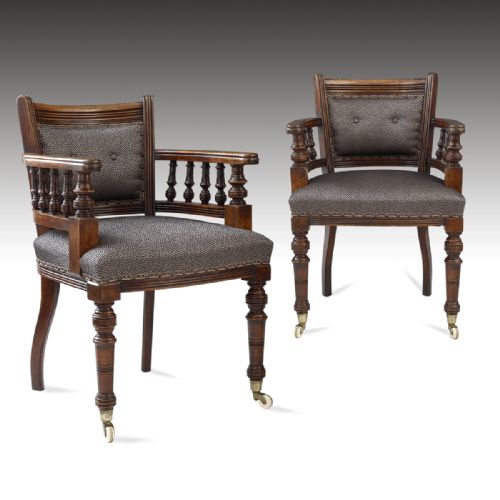
A mahogany library armchair sits at the intersection of comfort and study, appearing across Georgian, Regency, and Victorian periods as both open-framed armchairs and enclosed tub shapes. Buyers seeking a mahogany library armchair encounter everything from formal George III Gainsborough designs upholstered in leather to revolving office desk chairs and spindle-backed reading seats.
The pieces on this page span the eighteenth, nineteenth, and early twentieth centuries, reflecting the changing domestic requirements of country houses and town residences. Most examples combine a sturdy hardwood frame with traditional stuffing, often finished with brass castors or decorative carving along the arm supports and rails.
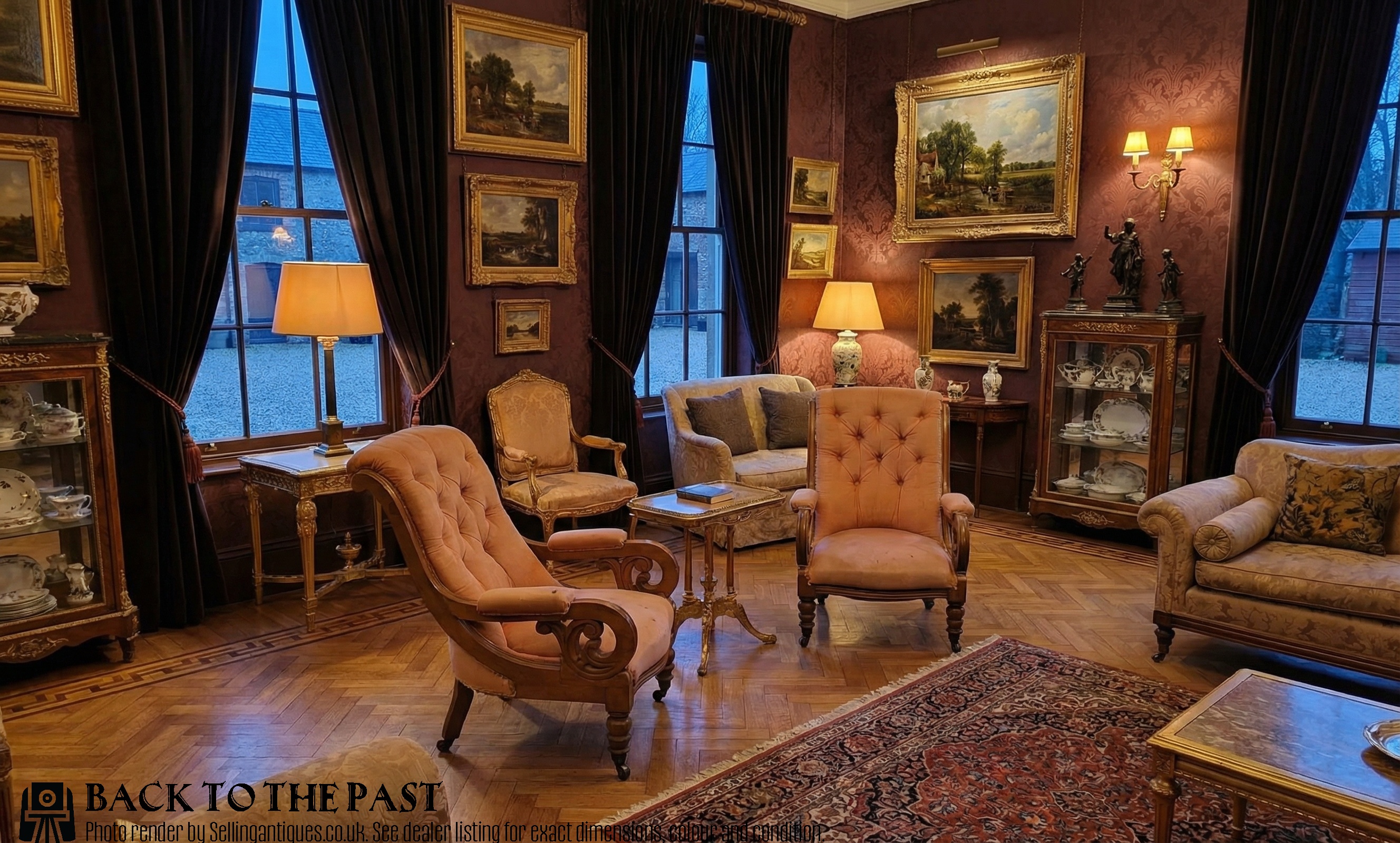
Materials and Construction
Makers shaped these chairs primarily from solid mahogany, utilising its dense grain to support carved details like blind frets, scroll arms, and claw feet. Frames were frequently fitted with brass castors to ease movement across heavy carpets and reinforced with internal corner blocks for stability.
Upholstery relied on traditional layers of hessian, webbing, and animal hair or stuffing, finished with leather, velvet, fabric, or cane panels. Brass nails or buttons often secured the hide and textile coverings directly to the wooden rails.
Mahogany Library Armchair Retail Price Guide 2026
Typical asking prices for mahogany library armchair among the pieces listed under this phrase on Sellingantiques today, from the lower quarter to the upper quarter. They describe what is for sale here now, not the wider market.
Some nineteenth-century chairs arrived with built-in steps that unfolded from the frame, saving readers from awkward stretches.
Assessing the Standard
Quality rests upon the crispness of the timber carving, the proportions of the frame, and the integrity of the underlying joinery. Superior examples display thoughtful proportions, such as generous seat depths and well-sculpted armrests that balance decorative presence with physical support.
The distinction between standard workshop output and exceptional craftsmanship lies in the selection of figured mahogany timber and the retention of original components like castors, leather hides, and structural pins. Later alterations or heavy restoration alter the visual balance and historical cohesion of the piece.
Gillows·Howard and Sons·Cope and Collinson
The Mahogany Library Armchair Glossary
- Gainsborough chair
- A type of open-armed easy chair with a padded seat and back, dating from the mid-eighteenth century. These seats feature short legs and wide upholstered frames designed for domestic comfort.
- Bergere
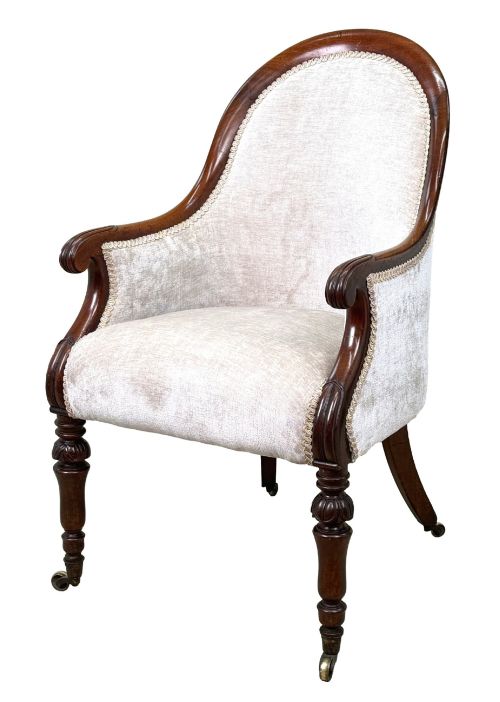
- An enclosed armchair with cane or upholstered sides and back panels. This French-inspired form became popular in English drawing rooms and libraries during the Regency period.
- Tub armchair
- A curved seating form where the back rail sweeps continuously down to form low arms. Such pieces often incorporate cane work or tight leather upholstery.
- Castor
- A small wheel fitted to the base of furniture legs to assist movement across floors. Brass and ceramic varieties appear frequently on nineteenth-century library seating.
- Spindle back
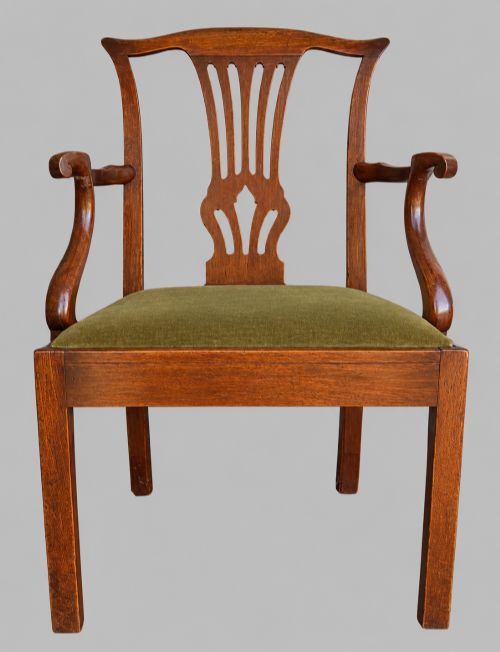
- A chair back constructed from a series of turned wooden rods or pillars. This simpler form offers lighter visual weight while maintaining structural rigidity.
Mahogany Library Armchair: Frequently Asked Questions
What defines a library armchair?
A library armchair is characterised by a sturdy mahogany frame and padded upholstery designed for prolonged sitting during reading or writing. These chairs often feature generous proportions and supportive armrests.
Historically, they occupied studies, libraries, and drawing rooms in large residences, combining utility with decorative presence.
How do I distinguish Regency from Victorian models?
Regency chairs typically display classical restraint with clean lines, brass inlay, or saber legs reflecting early nineteenth-century neoclassical tastes. Victorian examples often introduce heavier proportions, spoon backs, or buttoned leather upholstery.
Examining the turning on the legs and the style of the arm supports helps clarify the period of manufacture.
Were these chairs used at desks?
Many library armchairs served double duty as desk or writing chairs, particularly those fitted with revolving mechanisms or castors. Lower seat heights and open arms allowed users to move freely while working.
Shorter desk armchairs permitted easy access to kneeholes and writing surfaces.
How should I care for leather upholstery?
Leather surfaces benefit from regular dusting and occasional treatment with appropriate conditioners to prevent drying and cracking. Avoiding direct sunlight preserves the natural dye and suppleness of antique hides.
Gentle cleaning maintains the historic patina without stripping the surface finish.