
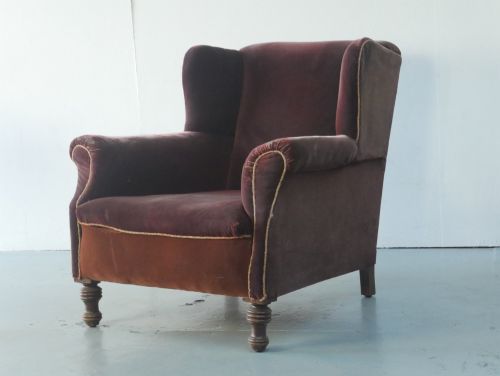
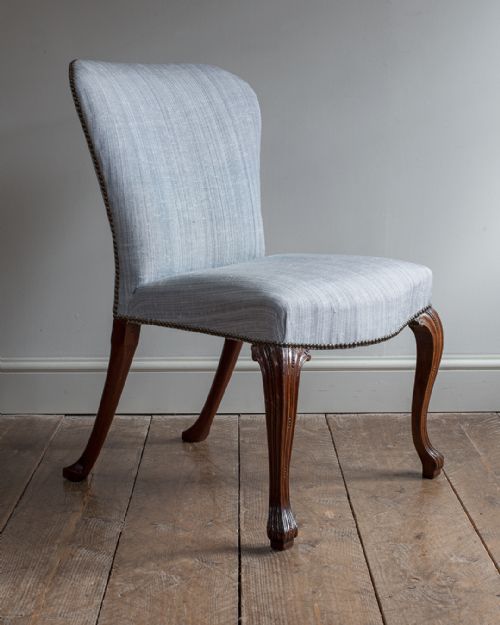
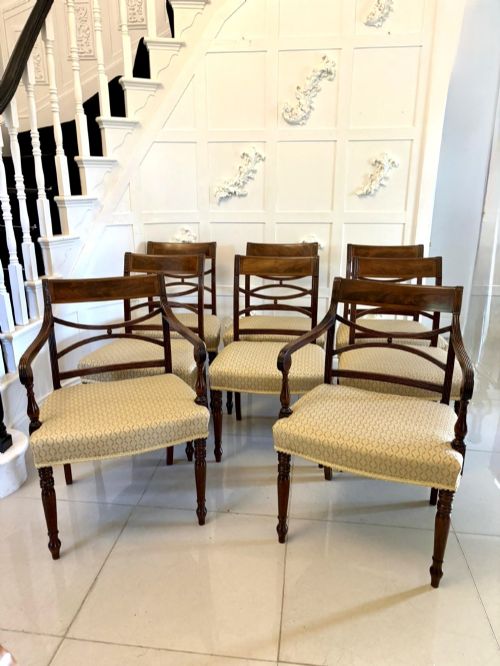
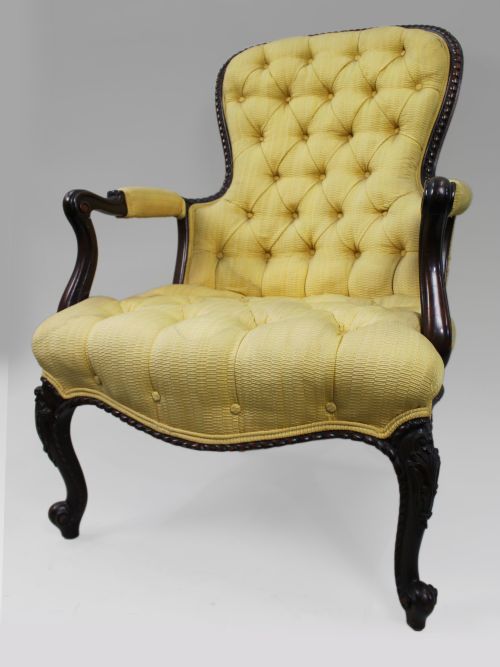
Mahogany Leg Chair
When searching for a mahogany leg chair, buyers encounter versatile seating options spanning the eighteenth century to the early twentieth century.
Mahogany Leg Chair
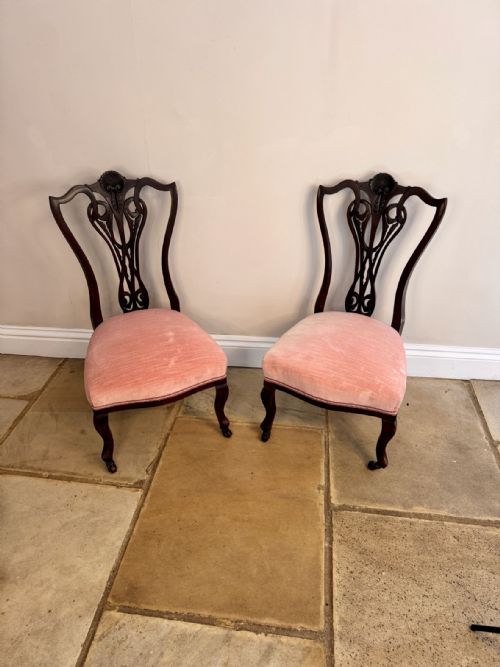
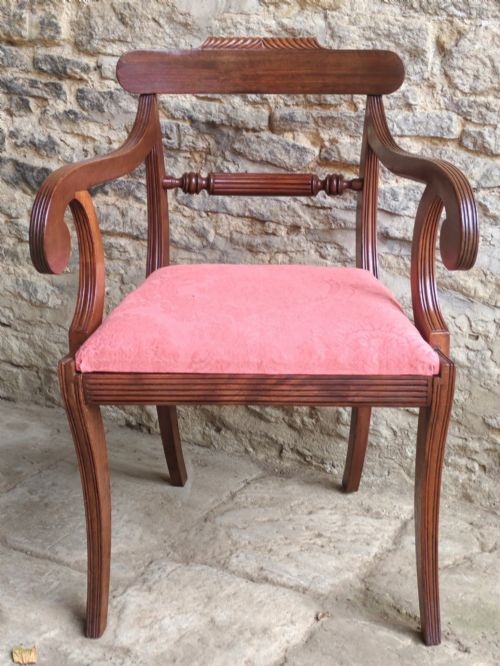
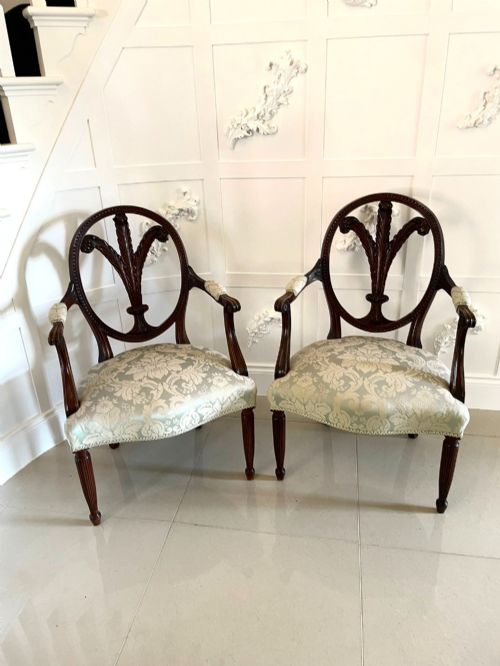
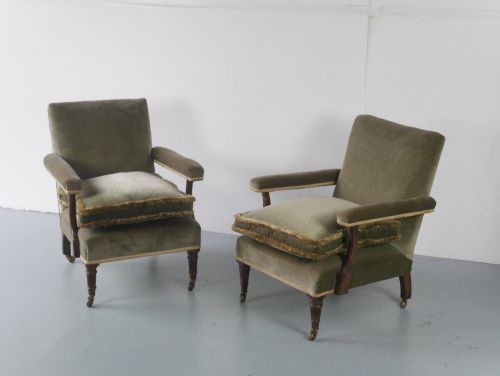
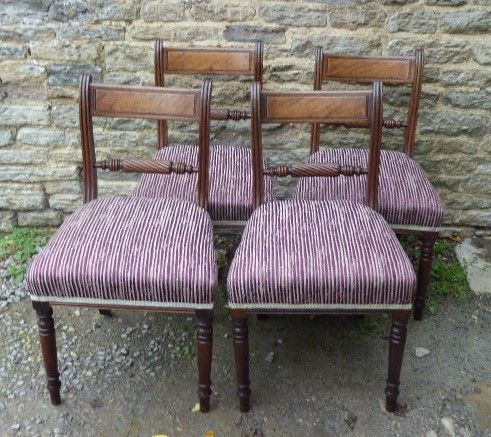
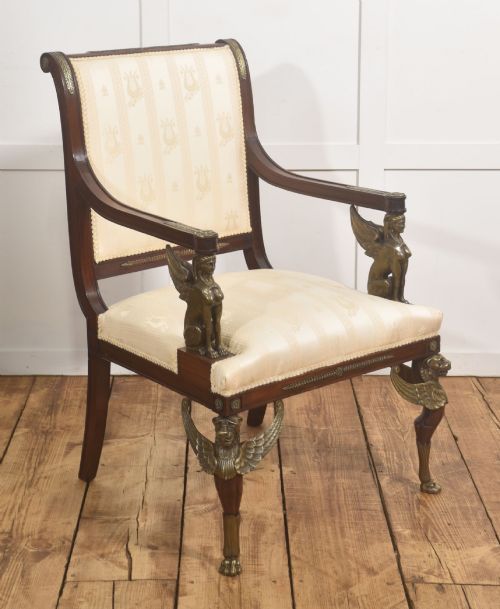
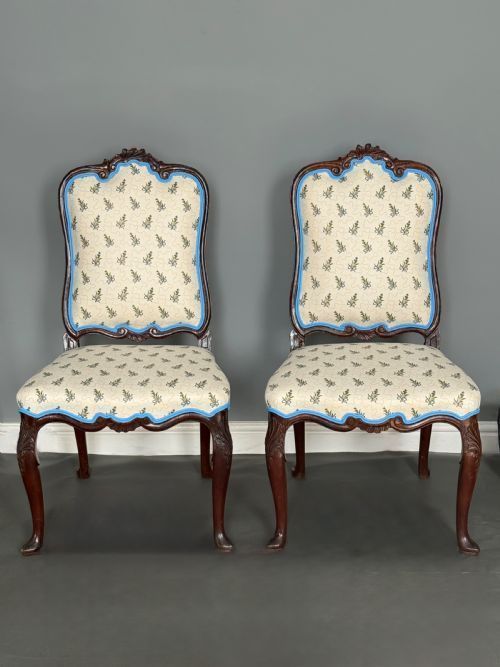
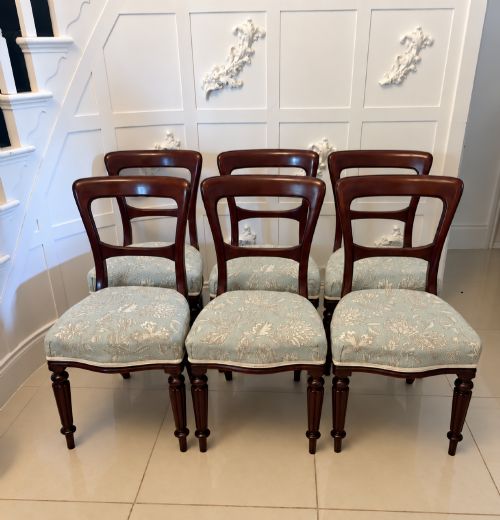
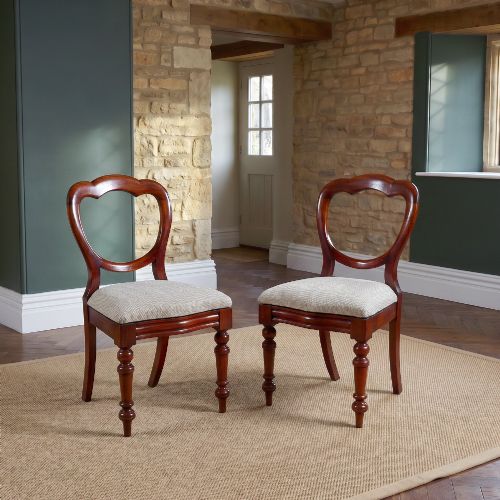
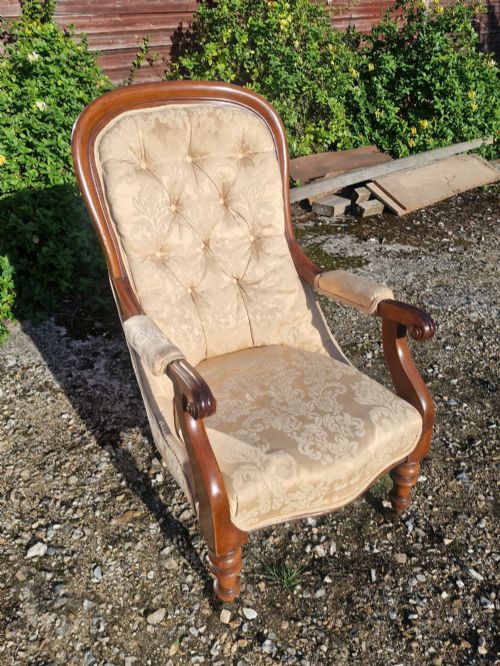
A mahogany leg chair encompasses a broad category of seating furniture featuring wooden supports constructed from dense tropical timber. The selection on this page includes dining sets, library armchairs, nursing chairs, and side seating originating from Georgian, Victorian, and Edwardian periods.
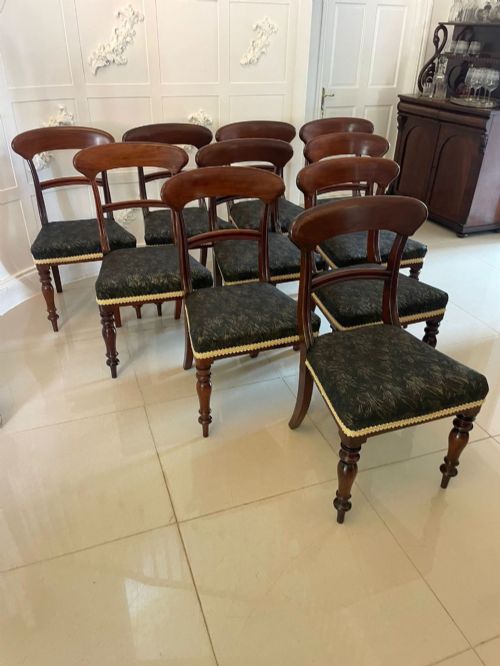
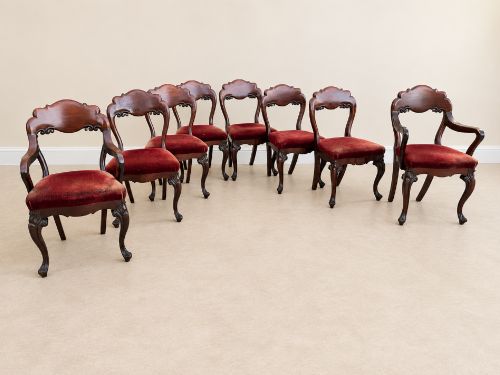
Dining chairs appear frequently in sets of four, six, or eight, often accompanied by carvers with armrests. Single armchairs, tub chairs, and wing chairs also recur regularly across these listings.
Origins span English workshops, Scottish makers, and continental European output, showcasing stylistic shifts from Chippendale and Regency designs through to Victorian balloon backs and later revivals.
How They Were Made
Construction relies heavily on solid mahogany timber, sometimes specified as Cuban mahogany or red walnut, shaped into sabre legs, turned supports, or carved cabriole forms. Joinery methods typically involve mortise and tenon frames designed to support everyday weight.
Upholstery techniques vary across periods, incorporating horsehair stuffing, hessian webbing, and leather, fabric, or cane seats. Brass inlay, carved details, and brass studding frequently accent the structural woodwork.
The inventory records various seating forms, including nursing chairs, slipper chairs, and library armchairs alongside standard dining sets.
What Varies In Quality
The degree of craftsmanship shows in the crispness of carved details on legs and backs, alongside the matching of timber grain across multi-chair dining sets. Superior examples maintain structural integrity without excessive timber replacement.
Original upholstery materials, untouched surface patination, and the presence of maker stamps or paper labels separate standard production pieces from higher-tier workshop output.
Howard and Sons·Warings·Gillows·Whytock and Reid·J Kendell·William Morris
The Mahogany Leg Chair Glossary
- Sabre leg
- A concave sweeping leg that tapers toward the foot, commonly found on Regency dining chairs. This form adds an outward curve that mirrors classical furniture traditions.
- Carver
- An armchair designed to match a set of single dining chairs, usually placed at the head of a table. These pieces feature integrated armrests for added comfort.
- Cabriole leg
- A furniture leg that curves outward at the knee and tapers inward toward the ankle, ending in a pad or claw foot. This design draws inspiration from animal limbs.
- Balloon back
- A rounded, oval-shaped chair back popular during the Victorian era. The curved top rail resembles the profile of a filled balloon.
- Bar back
- A horizontal slat across the middle of a chair back resembling the shape of a gymnastic bar. This style appears frequently on Regency and William IV dining seats.
Mahogany Leg Chair: Frequently Asked Questions
How do I spot a Regency mahogany chair?
Regency chairs typically feature saber legs, reeded frames, and classical motifs inspired by ancient Rome and Greece. Darker Cuban mahogany timbers and brass inlay often appear on examples from this period.
Dining sets from this era frequently include cane seats or drop-in pads upholstered in leather or textile. Look for slender proportions and balanced curves in the top rail.
Are dining sets matching or assembled later?
Many larger dining sets comprise chairs gathered together over time to match an original style or period. Subtle variations in timber tone, carving depth, or chair height indicate married sets.
Inspect the undersides and joinery of each chair to confirm uniform construction methods. Complete sets originating from a single commission remain less common.
How should I care for antique mahogany?
Mahogany timber benefits from minimal intervention, requiring only dry dusting with a soft cloth to remove everyday particles. Avoid placing wooden furniture near direct heat sources or strong sunlight.
Occasional application of appropriate wax polish helps nourish the surface patina without building up heavy residues over time.