


Mahogany Glass Counter Display
A mahogany glass counter display organises retail goods inside a timber frame, built for shopkeepers to present wares clearly to customers.
Mahogany Glass Counter Display
A mahogany glass counter display serves as a shop fixture designed to showcase merchandise upon or behind a retail counter. These pieces appear across periods spanning the nineteenth century through the nineteen-thirties, reflecting commercial shopfitting traditions.
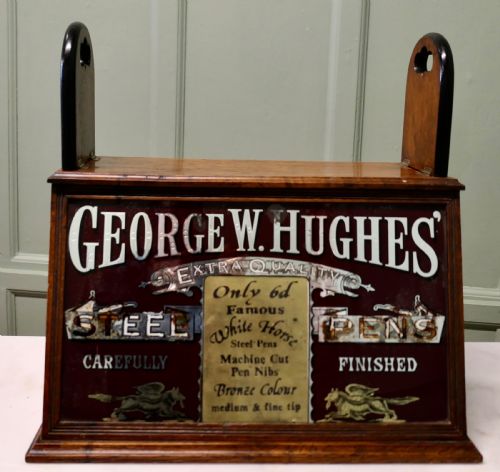
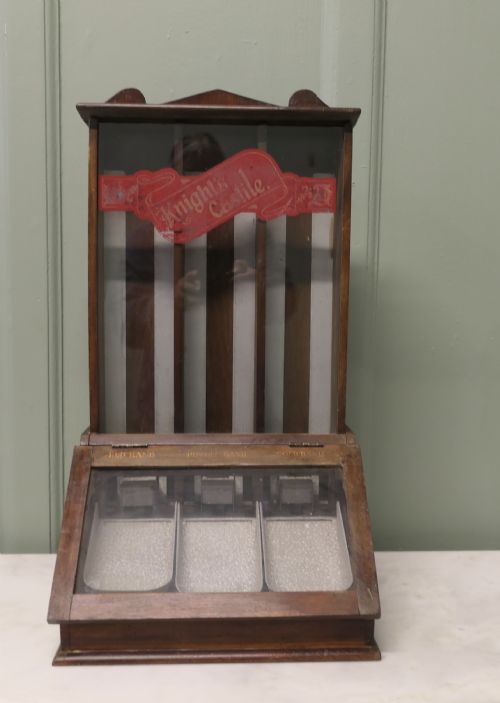
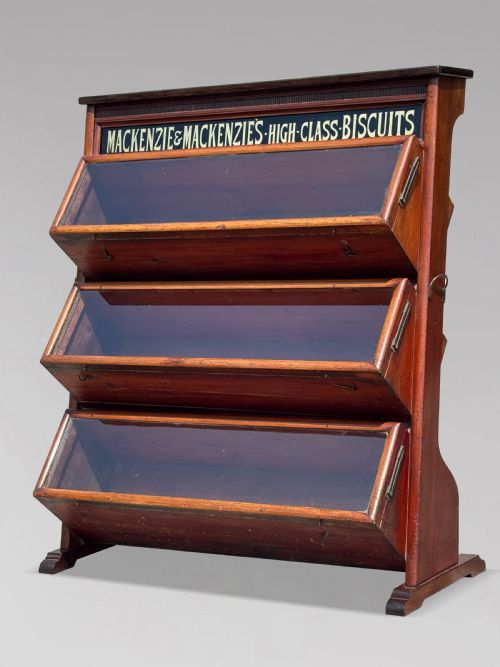
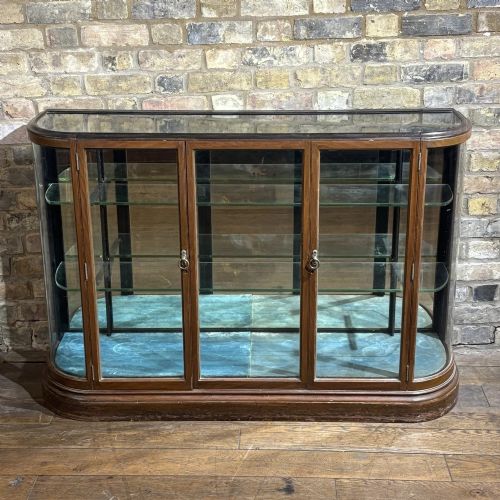
The inventory on this page contains numerous variations, including countertop cases, freestanding cabinets, bow-ended units, and long shop serving counters. Many examples carry specific advertising or maker details linked to confectioners, chemists, and drapers.
Buyers encounter distinct architectural styles within the evidence, ranging from plain commercial forms to Adam style and Louis XVI Revival designs. These pieces originate from distinct eras such as the Victorian and Edwardian periods, alongside early twentieth-century workshops.
How they were made
Makers constructed these commercial display units primarily using solid and veneered mahogany frames fitted with large glass panels to maximise visibility. Hardwoods provide structural integrity for heavy retail use, while interior surfaces frequently incorporate mirrored glass, fabric, velvet, or felt linings.
Brass fittings appear throughout the construction, securing doors, hinges, and shelving inside the glazed enclosures. Joinery techniques balance functional durability with decorative moulding, particularly on pieces produced by established shopfitters.
Several cabinets retain their original commercial purpose, having once tempted customers with sewing cottons, biscuits, and pharmaceutical supplies.
What varies in quality
The standard of production depends heavily upon the maker's reputation and the original retail destination of the cabinet. Specialised shopfitters produced robust commercial fittings with refined timber mouldings and superior glazing, whereas standard utility units utilised simpler construction methods.
Proportion and form dictate the architectural presence of each piece, distinguishing simple countertop boxes from large pentagonal or bow-fronted serving counters. Intricate decorative touches, such as inlaid timber or revival styling, elevate standard shop furniture into high-status retail showpieces.
F. Sage & Co.·John Stow Ltd of Bradford·Ermen & Roby·E. Pollard & Co. Ltd.·Pollards
The Mahogany Glass Counter Display Glossary
- Vitrine
- A glass display cabinet intended for the presentation of fine objects or merchandise. These enclosures protect items while offering all-round visibility.
- Countertop
- A smaller display case designed to sit directly on top of a retail sales counter. They bring goods to eye level for customers making point-of-sale purchases.
- Haberdashery
- A shop fittings category associated with the sale of sewing materials, threads, and textiles. Cabinets from this trade often feature multiple shallow drawers or glass compartments.
- Bow end
- A cabinet design featuring a rounded or curved glass end panel. This configuration softens sharp corners and enhances sightlines from multiple angles.
- Shopfitter
- A commercial manufacturer responsible for outfitting retail interiors with specialised counters, shelving, and display cases. Firms in this trade supplied standardised or bespoke joinery to high street businesses.
Mahogany Glass Counter Display: Frequently Asked Questions
What were these cabinets used for?
Shopkeepers utilised these glazed units to present confectionery, tea, pharmaceuticals, and drapers' goods directly to the public while protecting stock from dust and handling.
Commercial enterprises employed them as serving counters and countertop display cases to encourage point-of-sale purchases in busy retail environments.
How do I identify an Edwardian display case?
Edwardian examples generally date from the early twentieth century and display lighter timber tones alongside restrained classical detailing or plain commercial utility.
These cabinets often coincide with specific advertising panels or shopfitter labels from the era surrounding the First World War.
Where should I place a counter display at home?
Countertop models sit well upon sideboards, desks, or kitchen islands where their glass panels can display collections of small objects.
Larger freestanding counters function effectively as independent room dividers or focal points within a dining room or hallway.
What is sign-written decoration on a cabinet?
Sign-writing refers to painted lettering applied to the glass or timber framework to advertise historical brands such as chocolate or cocoa manufacturers.
Some pieces feature later sign-written additions applied during subsequent commercial use or restoration work.