




Victorian Commercial Glass Case
These Victorian commercial glass case examples bring genuine retail heritage into the home, offering glazed protection for cherished collections.
Victorian Commercial Glass Case
A victorian commercial glass case represents the practical shopfittings utilised by nineteenth and early twentieth century merchants to merchandise goods securely. These pieces originate from chemists, confectioners, and drapers, functioning as counter displays or tall vitrines designed to catch the customer's eye.
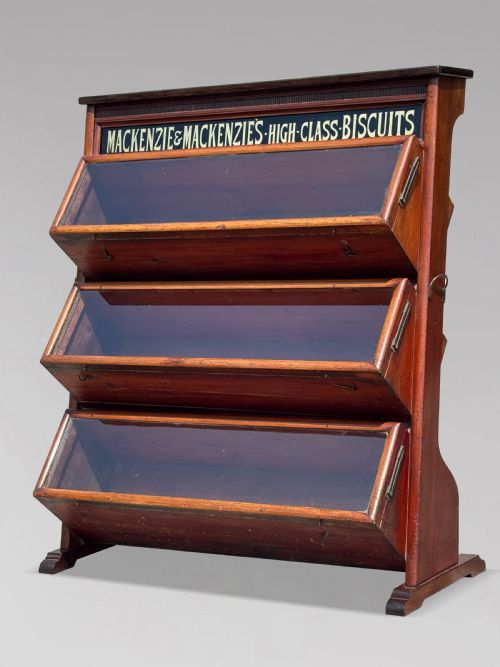
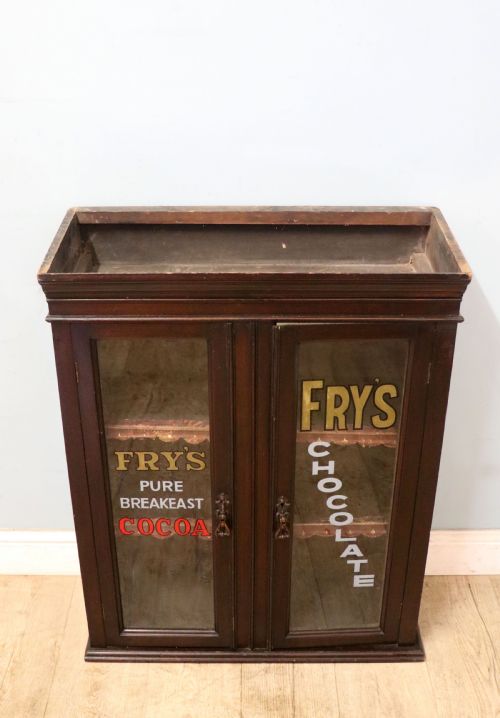
The items found within this selection include mahogany display cabinets, haberdashery units, and specialised counter cases bearing original hand sign written advertising. Prominent examples celebrate historical brands such as Mackenzie's Biscuits, Fry's chocolate, and Cadbury's Cocoa.
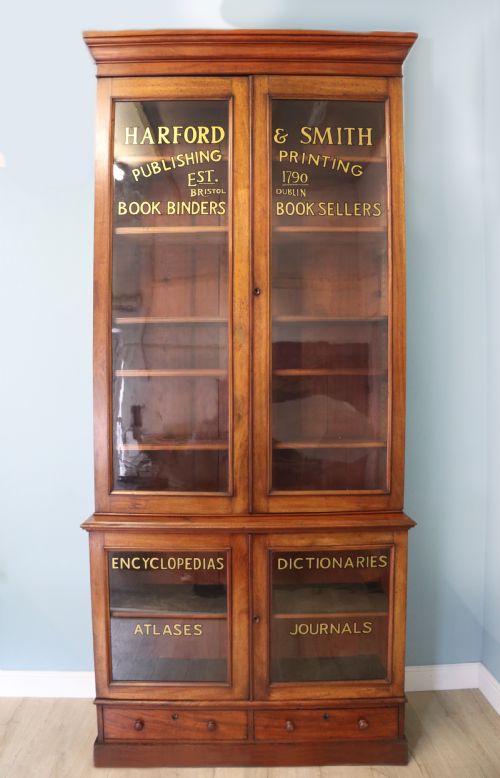
Most entries span the Victorian and Edwardian periods, utilising solid timber frames and extensive glazing to maximise visibility. Collectors encounter freestanding bookcases alongside specialised shop counters intended for daily retail use.
How they were made
Cabinetmakers constructed these retail fixtures primarily from solid mahogany and durable hardwoods, ensuring the framework could withstand demanding commercial environments. Brass hardware provides structural reinforcement and functional closure for doors and compartments.
Glazing forms the primary enclosure, frequently paired with mirrored interiors to amplify light and reflect the displayed merchandise. Signage relies on traditional hand painting directly onto glass or timber surfaces to promote specific confectioners and merchants.
Many a Victorian shopkeeper kept biscuits and sewing cottons behind glass, accidentally inventing the ultimate modern display cabinet.
What varies in quality
The distinction between standard shopfittings and superior examples rests upon the integrity of the timber framing and the preservation of original signage. Cabinets retaining authentic hand written lettering for named establishments command greater historical interest.
Mackenzie's Biscuits·Robert West Gunsmith·Kemps Pharmacy·John Stow Ltd of Bradford·Ermen & Roby·Cadbury's Cocoa
The Victorian Commercial Glass Case Glossary
- Vitrine
- A glass display cabinet used primarily for safeguarding and exhibiting delicate objects. These structures rely on transparent panels on multiple sides.
- Shopfittings
- Fixtures and furniture specifically manufactured for commercial retail interiors. They prioritize durability and maximum visibility for merchandise.
- Hand sign written
- Lettering applied manually by signwriters using traditional paint techniques. This method was standard for period commercial branding.
- Haberdashery cabinet
- A specialised multi drawer retail unit featuring glass fronts. They allowed merchants to display small sewing goods and notions.
- Counter display
- A low showcase positioned directly upon shop counters to encourage point of sale purchases. Customers viewed goods from above or through angled glass.
Victorian Commercial Glass Case: Frequently Asked Questions
What were these glass cases used for?
Merchants utilised these glazed cabinets on shop counters and floors to display confectionery, medicine, sewing cottons, and firearms securely. The transparent panels protected delicate inventory from dust and handling while keeping goods visible to passing buyers.
Over time, these functional shopfittings transitioned from active commercial environments into domestic spaces, where collectors repurpose them to showcase personal treasures and curiosities.
How do I date a commercial glass case?
Dating relies on examining construction methods, timber choices, and specific hardware styles associated with nineteenth and early twentieth century cabinetmaking. Mahogany and heavy brass fittings typically point toward Victorian or Edwardian workshop origins.
Original hand painted commercial lettering provides precise contextual clues when referencing historical confectioners, pharmacies, or named manufacturers active during those decades.
Are the advertising signs original?
Many surviving cabinets retain authentic hand sign written advertising applied directly to the glass or timber during their active retail lifespan. These inscriptions identify historic brands and chemist shops, adding significant provenance to the structure.
Signage execution requires careful visual inspection to distinguish period hand lettering from later decorative additions applied to plain antique cabinets.
How do I care for mahogany shop furniture?
Maintain these timber frames by avoiding direct sunlight and excessive temperature fluctuations that cause wood to dry and joints to loosen. Regular dusting with a soft cloth preserves the polished surface without requiring harsh chemical polishes.
Clean the extensive glass panels using mild solutions while taking care not to disturb fragile hand painted lettering or delicate mirrored interior foils.