
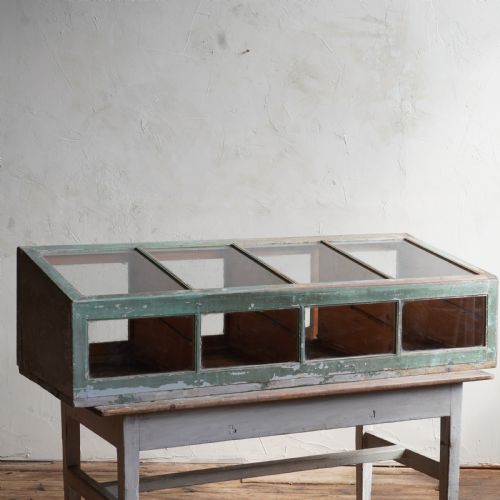


Glazed Counter Showcase
A glazed counter showcase sits on a shop counter to hold small goods under glass, built for trade and display.
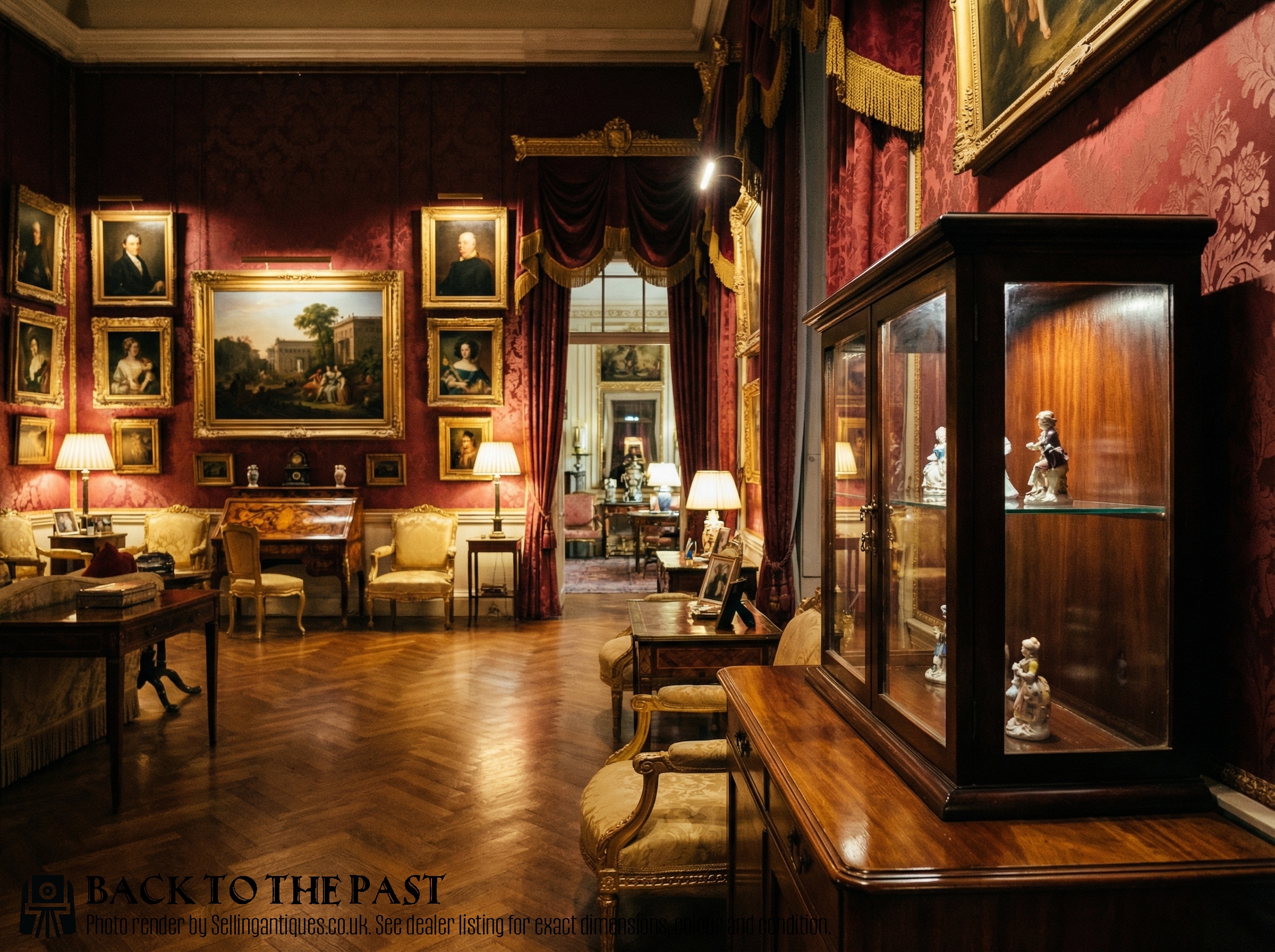
Glazed Counter Showcase
A glazed counter showcase serves retail and domestic settings alike, taking the form of tabletop display boxes, countertop cabinets, and full serving counters. You will most frequently encounter mahogany and oak constructions from the Victorian, Edwardian, and 1920s periods, designed to sit directly upon shop counters.
These pieces encompass low display cases with mirrored interiors, tall freestanding shop fittings, and specialised apothecary or confectionary units. The smaller tabletop versions feature single glass doors or lift-up lids for immediate access by the merchant.
Commercial origins define much of this selection, originating from chemist shops, confectioners, and general stores of the late nineteenth and early twentieth centuries. Surviving examples often retain original branding or sign-written decoration from historic makers like Rowntree and Fry.
Construction and Materials
Makers utilised solid timber frames of mahogany, oak, walnut, and ebonised wood to house large expanses of clear plate glass. Brass hardware, including hinges, latches, and locks, secures the doors and framing elements.
Interiors frequently incorporate mirrored glass to reflect light through the display space, alongside velvet linings or wooden shelving. Cedar and general hardwoods also appear in specialised collector boxes and larger display counters.
Exterior finishes range from distressed paint and gold leaf to polished mahogany and natural wax, reflecting the specific commercial or domestic demands of the original commission.
Several chocolate and cocoa display cabinets still wear their original sweet shop branding under the glass.
Craftsmanship and Proportion
Quality rests in the weight of the timber and the precision of the glazing joints, distinguishing robust commercial shop fittings from lighter domestic boxes. Superior examples display carefully mitred framing and substantial brass fixtures rather than light metal pins.
F. Sage & Co.·E. Pollard & Co. Ltd.
The Glazed Counter Showcase Glossary
- Countertop
- A furniture piece sized specifically to rest upon the top of a shop counter or table. These units bring goods to eye level for the customer.
- Ebonised
- Wood finished with a dark stain or paint to imitate expensive ebony. This treatment was common in the late nineteenth and early twentieth centuries.
- Admiralty Pattern
- A standardised design commissioned for official or naval use. These items follow strict governmental specifications for durability and brass hardware.
- Apothecary
- Pertaining to the historic trade of dispensing medicines and chemicals. Cabinets from this context often include small drawers and specialised glass shelving.
Glazed Counter Showcase: Frequently Asked Questions
What were glazed counter showcases used for?
Merchants used these glass-fronted cabinets to present small, valuable, or delicate goods securely on shop counters. Confectioners, jewellers, and chemists relied on them to keep merchandise visible yet protected from dust and handling.
Over time, these units transitioned from active retail environments into domestic settings for displaying collections, curiosities, and tableware.
How do I date a shop display cabinet?
Dating relies on timber choices, construction techniques, and accompanying commercial branding. Victorian and Edwardian examples typically feature dense mahogany or oak framing with hand-cut dovetails and heavy brass hardware.
Later pieces from the 1920s and 1930s often adopt cleaner lines, ebonised finishes, or specific manufacturer plaques and painted trade signage.
Are the advertising signs on these cabinets original?
Some cabinets retain their original sign-written glass or timber decoration applied for brands like Rowntree, Fry, and Cadbury. Other pieces feature later or renewed sign-writing added during subsequent restoration work.
Close inspection of the paint wear, crazing, and integration with the surrounding timber helps distinguish period factory decoration from later applications.
How should I clean a antique display cabinet?
Maintenance requires gentle dusting of the timber and careful glass cleaning with standard non-ammonia solutions. Avoid harsh chemical polishes that can degrade nineteenth-century wax finishes and aged wood surfaces.
Interior velvet linings respond best to light vacuuming with a soft brush attachment to preserve the fabric pile without pulling the fibres.