

Mahogany Games Console
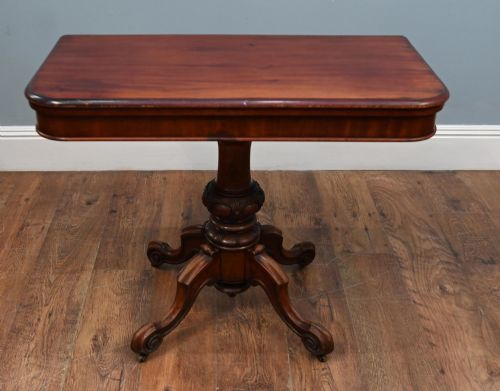
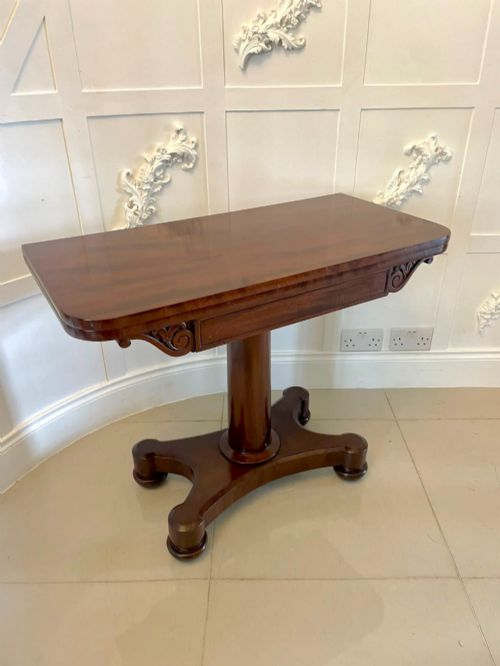
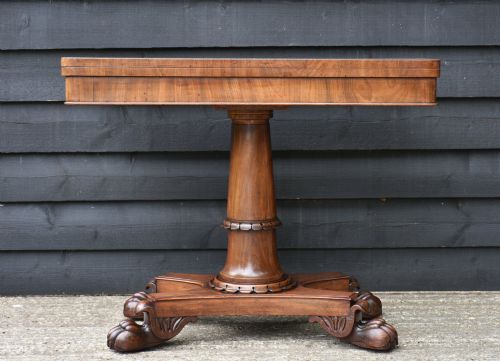
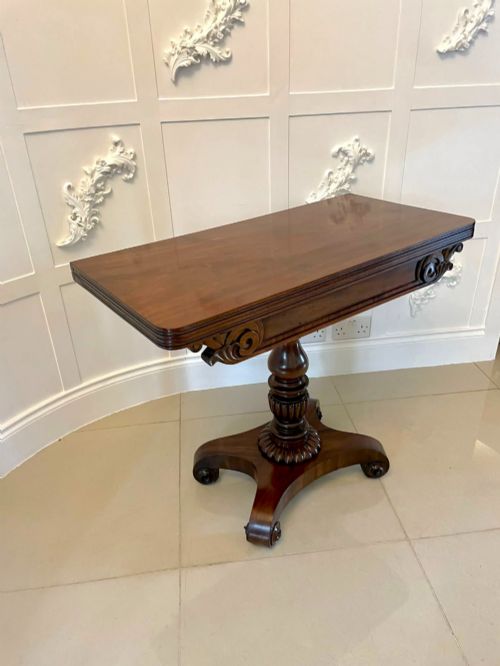
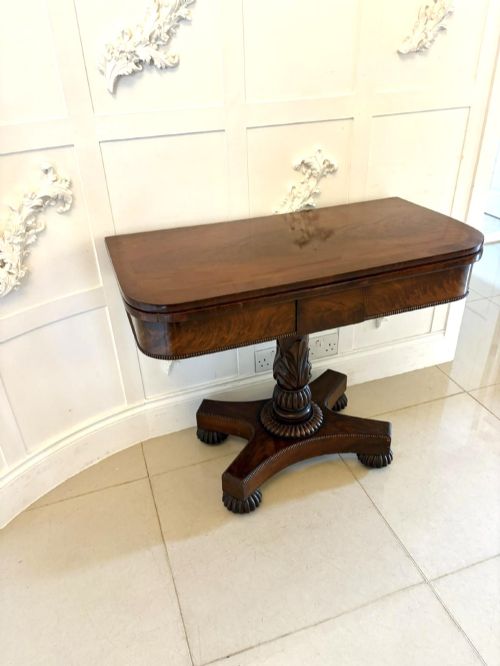
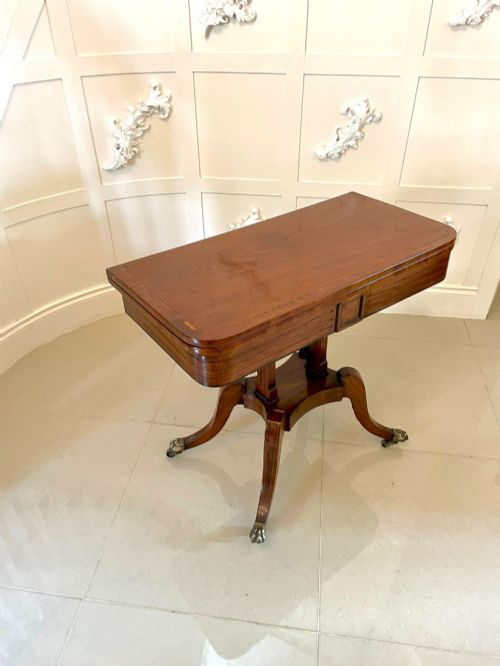
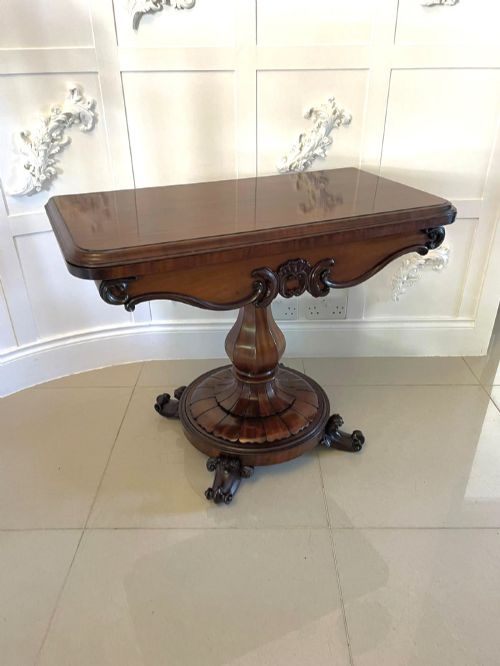
A mahogany games console brings functional elegance to a room, offering a versatile surface that unfolds for cards or tea.
Mahogany Games Console
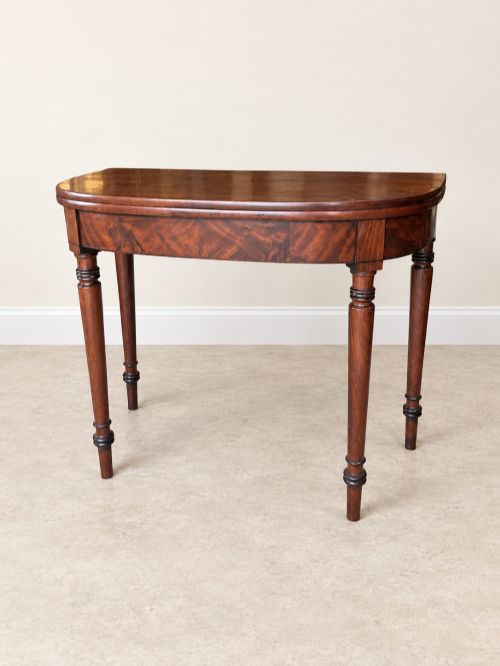
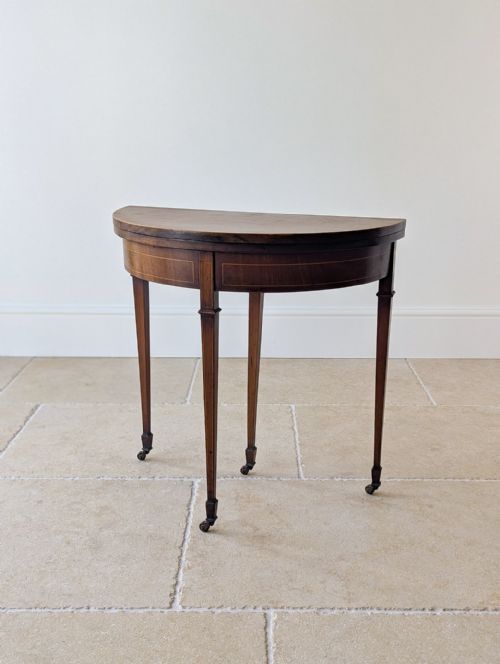
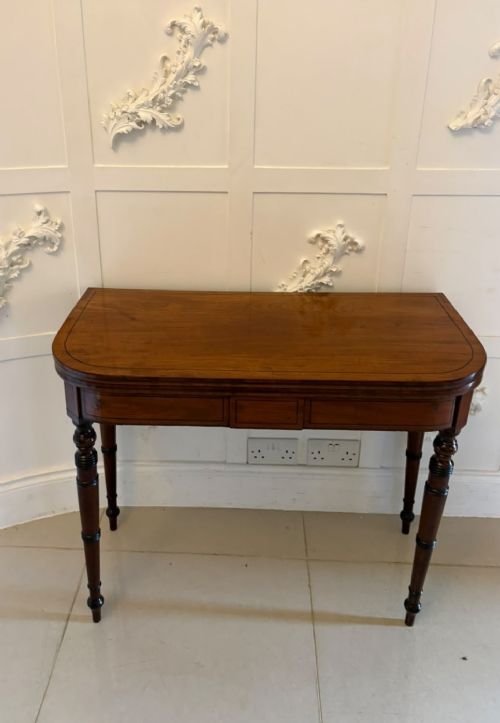
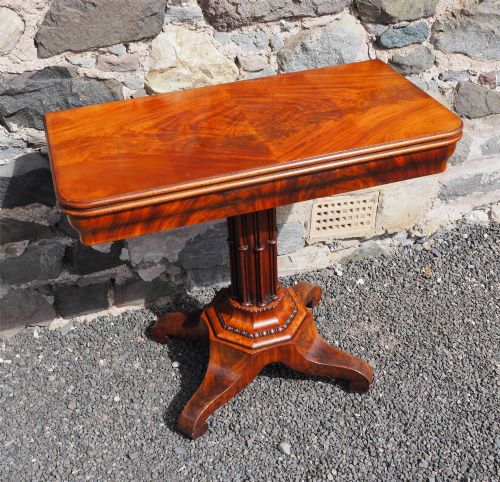
When searching for a mahogany games console, a buyer encounters a flexible item of furniture designed for leisure and display, frequently appearing as a fold-over card or tea table.
The selections span the eighteenth, nineteenth, and early twentieth centuries, encompassing Georgian, Regency, William IV, Victorian, and Edwardian eras.
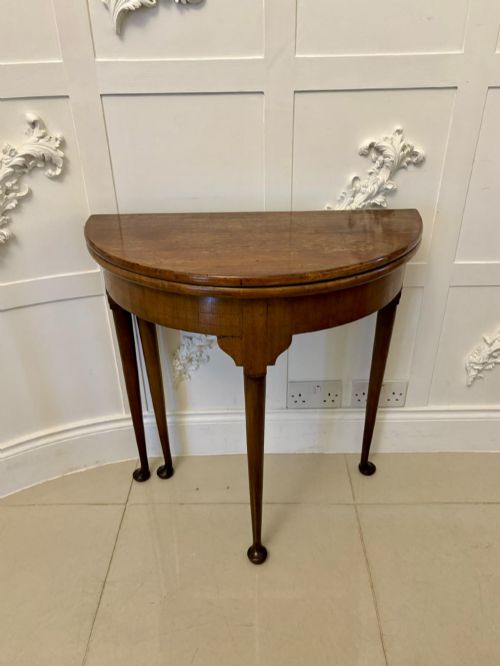
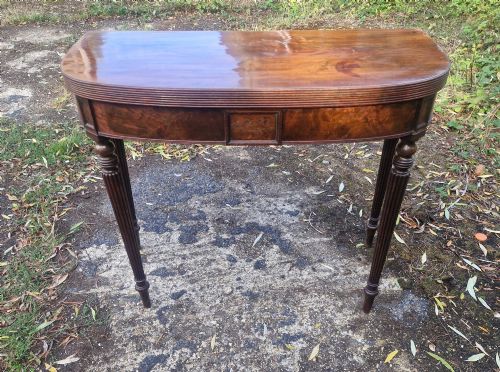
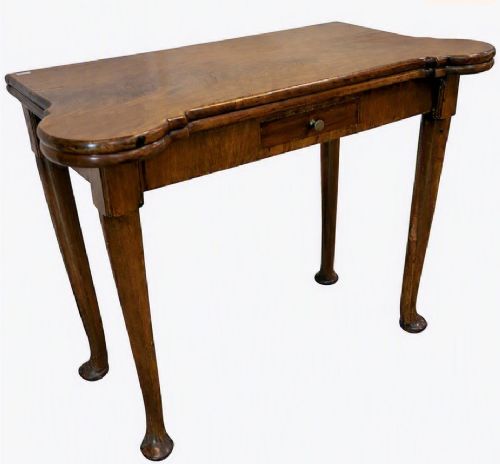
Forms include demilune, serpentine, and D-shaped profiles, often functioning equally well as side or console tables when closed.
How they were made
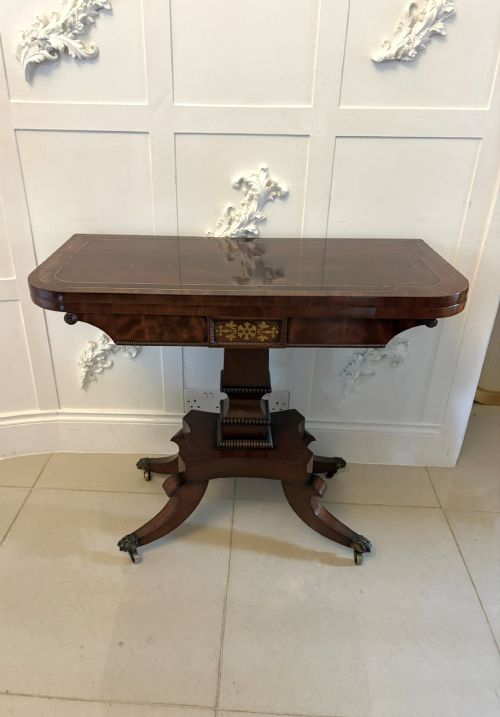
Craftsmen utilised solid mahogany and flame mahogany veneers, frequently enhancing surfaces with satinwood, boxwood, and brass inlay.
Construction techniques included concertina actions and turnover tops supported by folding legs, enabling the dual purpose of a compact console and an expanded playing surface.
Materials recorded on this page include solid mahogany, flame mahogany veneer, satinwood, boxwood, and brass.
What varies in quality
The standard of a piece rests upon the selection of figured timber, the crispness of any wood or brass inlay, and the precision of the folding mechanism.
Superior examples display balanced proportions, original patination, and thoughtful detailing such as shaped serpentine fronts or specialist leg styles.
Bruce & Burns of Edinburgh·Giles Grendey·Gillows
The Mahogany Games Console Glossary
- Demilune
- Half-moon shaped, commonly used to describe tables with semicircular tops that sit flat against a wall.
- Concertina action
- A table frame that extends outward on a linked wooden hinge mechanism, providing stable support for all four corners when opened.
- Patina
- The surface sheen and depth of colour developed by wood over decades of handling and polishing.
- Flame mahogany
- A veneer cut from the fork of the mahogany tree, creating a distinctive rippled, flame-like pattern.
- Crossbanding
- A strip of veneer laid perpendicularly to the grain of the main surface, framing the top edge.
Mahogany Games Console: Frequently Asked Questions
How do I use a games console today?
These tables adapt easily to modern interiors as hallway consoles or slim sideboards when kept in the folded position.
Opening the top reveals a baize-lined surface that functions as a small dining table or a desk for writing.
How do I tell a Regency table from a Georgian one?
Georgian pieces often feature carved details like claw-and-ball feet or serpentine fronts, reflecting earlier classical tastes.
Regency examples tend to incorporate bold brass inlay, reeded legs, and architectural influences derived from ancient Roman and Greek designs.
What is a concertina action table?
A concertina action uses an expanding frame that pulls out with the moving table leaf to support the opened top.
This design ensures that all four legs remain evenly spaced at the corners whether the table is open or closed.
Are Edwardian tables antiques?
Edwardian furniture dates from the early twentieth century, offering lighter proportions and often drawing inspiration from earlier Sheraton styles.
While newer than Georgian or Regency pieces, they display traditional craftsmanship using fine mahogany veneers and inlay.