


Edwardian Bridge Table
These pieces are Edwardian bridge tables, designed for evening card games and valued for their clever folding mechanisms and fine timber construction.
Edwardian Bridge Table
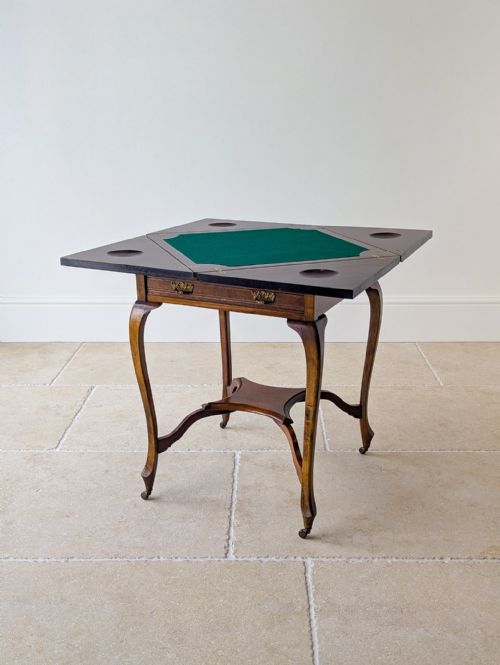
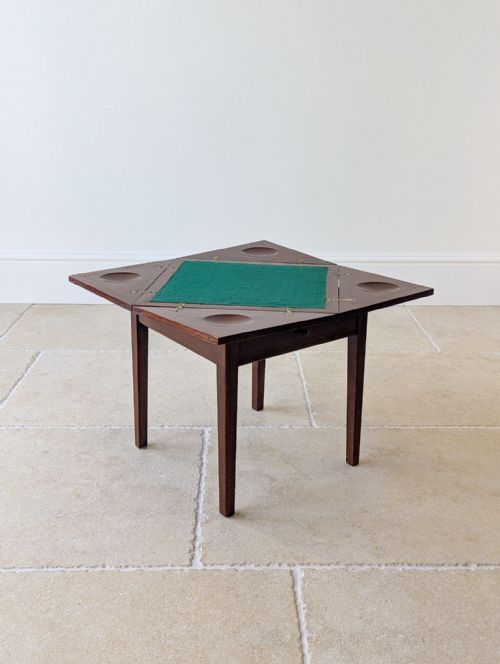
When you search for an Edwardian bridge table, you encounter compact folding furniture intended for parlour games and card evenings. The envelope card table is the form most commonly met here, featuring rotating tops that unfold to reveal a baize-lined playing surface.
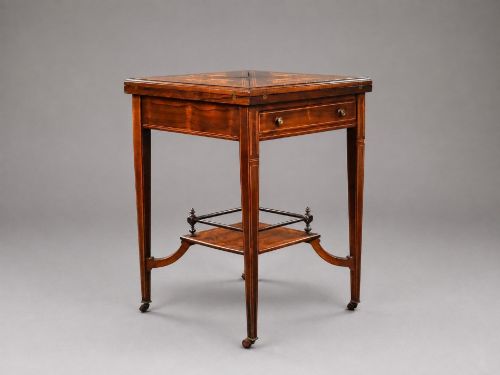
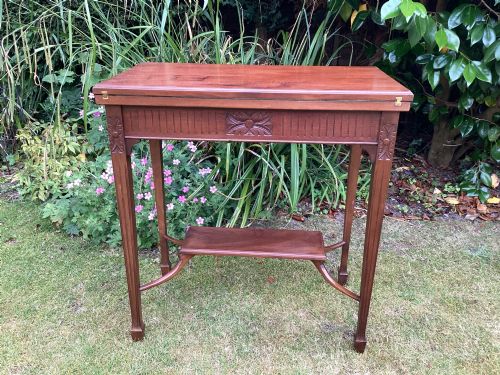
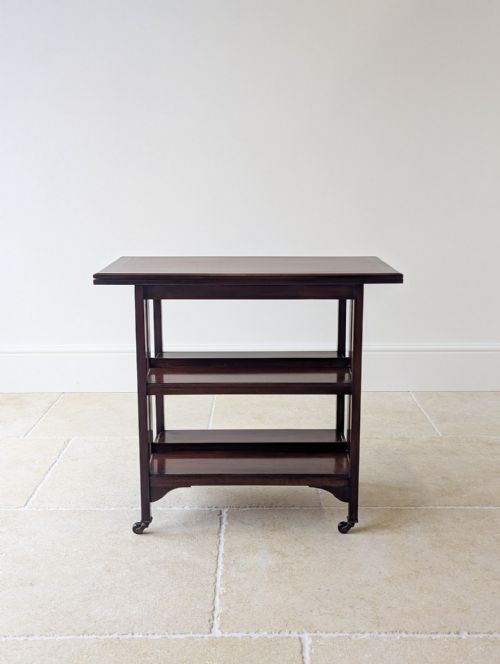
Makers of the period also produced fold-over games tables and occasional tables with integrated bookshelf bases in mahogany, rosewood, and satinwood. Alongside tables, the selection includes playing card boxes fashioned from brass and silver for storing decks.
Most examples date from the Edwardian era and the early twentieth century, though some pieces bridge the late Victorian period or adopt earlier revivals such as the Queen Anne style and Chippendale influence.
Judging quality
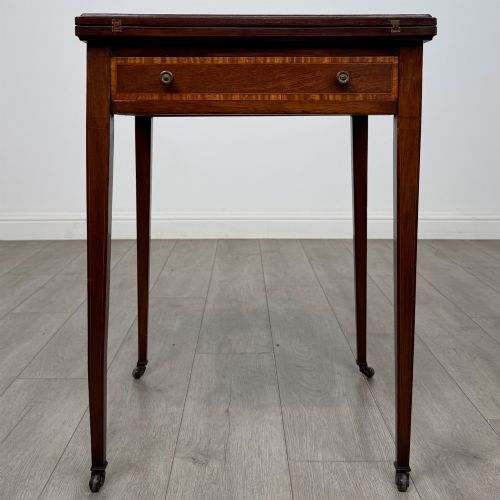
Quality rests in the choice of timber veneers and the crispness of any inlaid marquetry rather than elaborate carving. Finer tables display carefully matched grain patterns across the folding leaves and sound internal pivot actions.
Listings feature mahogany, rosewood, and satinwood alongside brass inlay and wool baize across Edwardian and Victorian periods.
Maple & Co.·Howard & Sons Ltd·Edwards & Roberts
The Edwardian Bridge Table Glossary
- Envelope table
- A square card table with four triangular flaps that rotate and fold open to form the playing surface. This clever design conceals the green baize until the top is turned.
- Baize
- A coarse woollen fabric traditionally used to line the tops of card and gaming tables. It provides a durable surface that dampens the sound of rolling dice and sliding counters.
- Marquetry
- Decorative veneer work arranged in pictorial or geometric patterns using various coloured woods. Craftsmen cut contrasting timbers like satinwood and rosewood to fit flush into the primary surface.
- Ormolu
- Gilded bronze used for decorative mounts and fittings on fine furniture. It adds metallic contrast to dark woods such as mahogany.
- Fold-over top
- A hinged table top that opens out to double the surface area, commonly supported by a swing leg or a pivoting frieze. This mechanism allows a compact occasional table to function as a card table.
Edwardian Bridge Table: Frequently Asked Questions
How do envelope card tables work?
The square top rotates on its base while four triangular leaves are hinged so they unfold simultaneously. As you turn the top, the flaps open out to create a flat playing square.
Underneath the leaves, small wells often appear in the corners to hold counters or coins during a game.
What woods were used for these tables?
Mahogany forms the primary structure for the majority of surviving examples, often finished with satinwood banding or boxwood stringing. Rosewood and walnut also feature prominently among the polished surfaces.
Inlays incorporate lighter exotic timbers to create geometric borders and delicate floral motifs across the tops.
Where were bridge tables placed in a home?
These pieces functioned as occasional tables in drawing rooms and parlours when not in use for cards. Their compact dimensions allowed them to sit against a wall or serve as display surfaces.
During evening gatherings, owners moved the tables into the centre of the room and unfolded the leaves for play.
How do I care for the baize surface?
Wool baize requires gentle brushing with a soft clothes brush to remove dust and prevent fibres from matting. Avoid using water or liquid cleaners, which can stain the wool and warp the wooden flaps beneath.
Keep the table away from direct sunlight to prevent the green dye from fading unevenly across the exposed playing area.
Are these tables suitable for modern dining?
Edwardian card tables are generally built for games rather than meals and lack the height and knee clearance of standard dining furniture. The folding mechanisms and internal pivot structures are also not designed to bear heavy downward pressure.
They function best as side tables, desk spaces for laptops, or dedicated surfaces for board games and puzzles.