
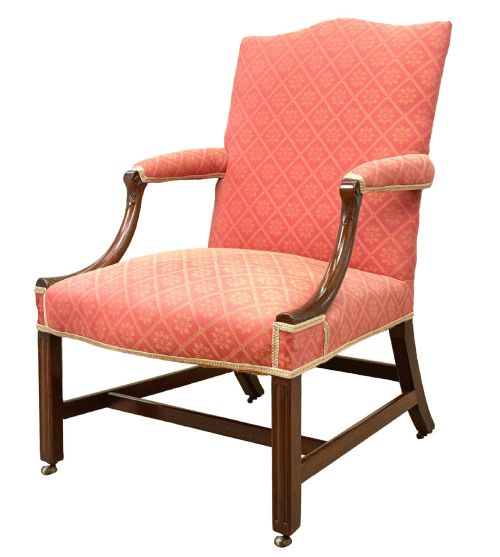
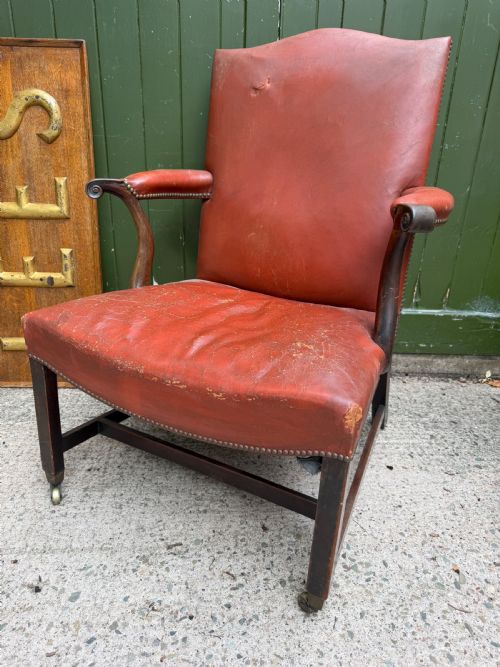
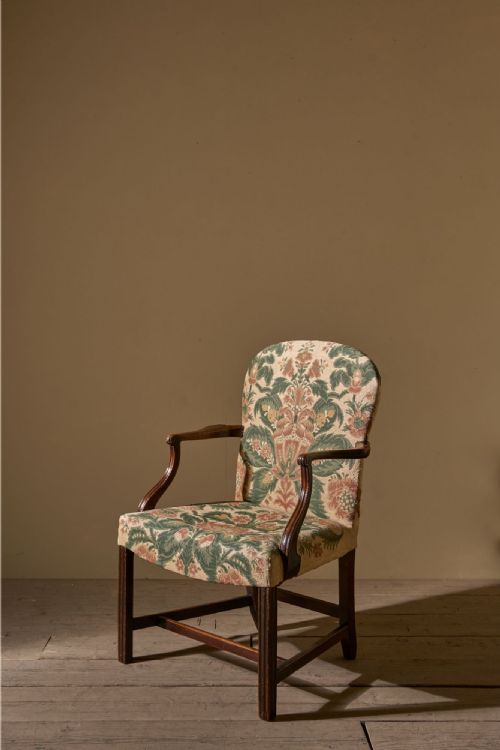
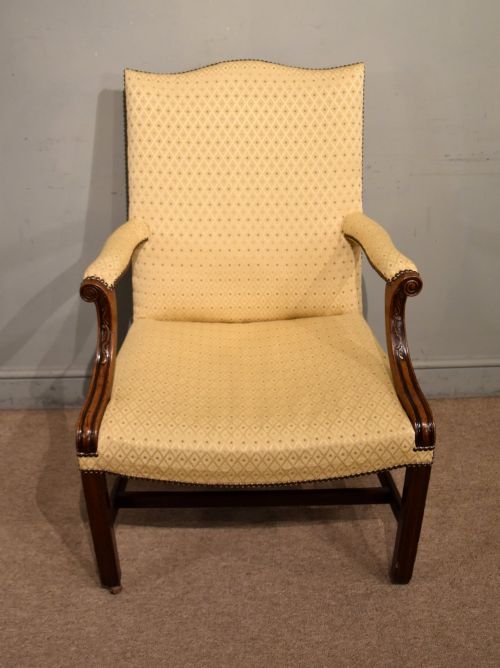
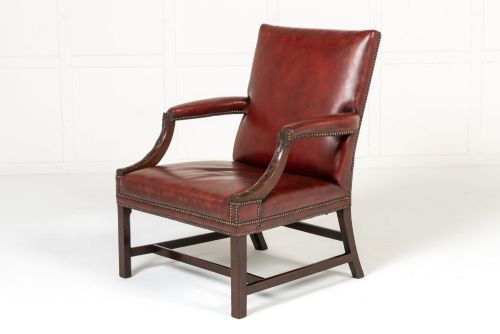
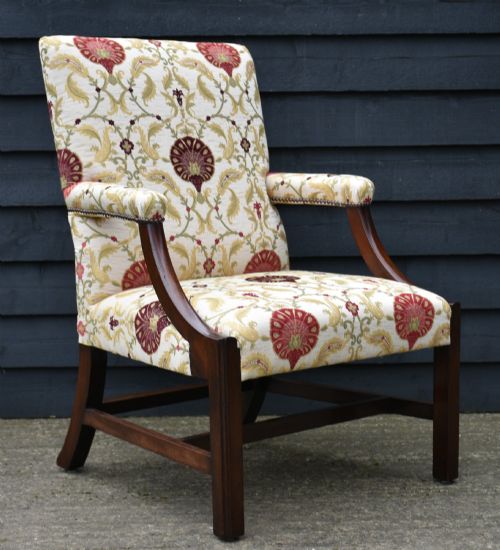
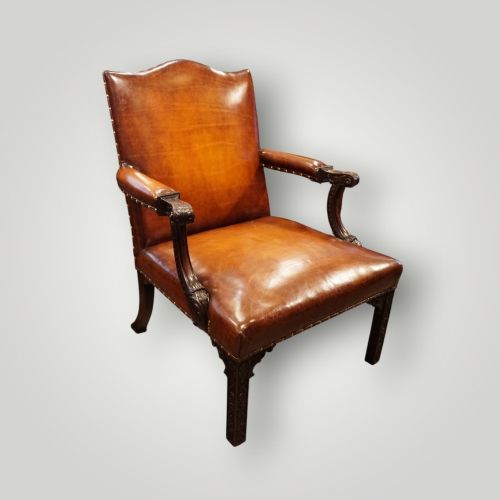
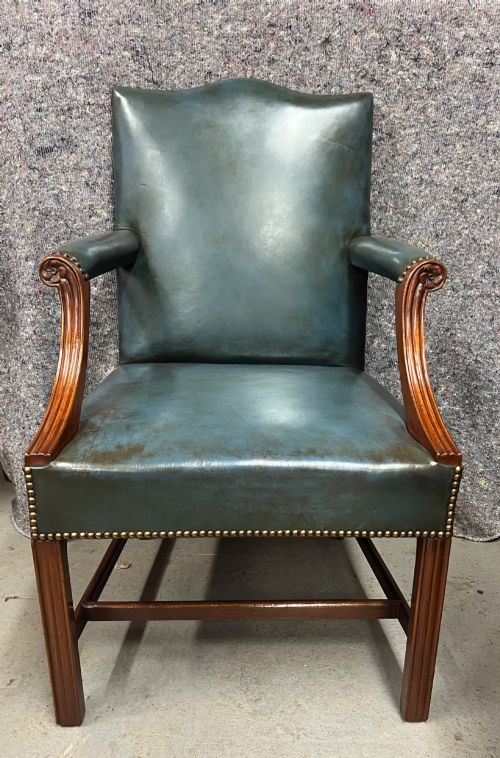
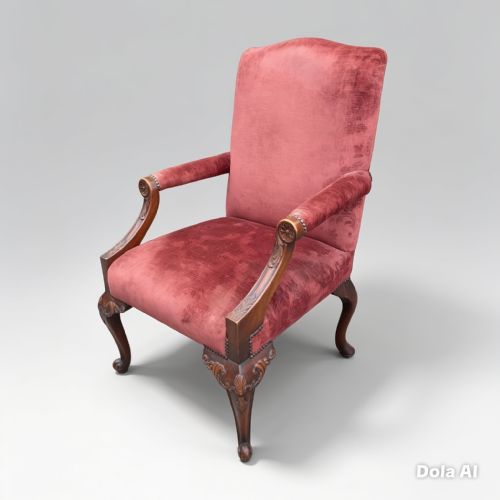
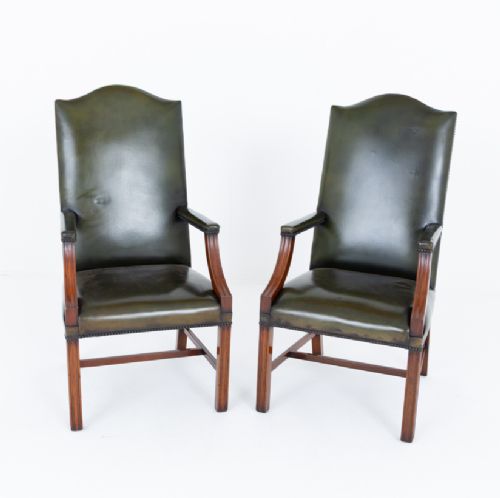
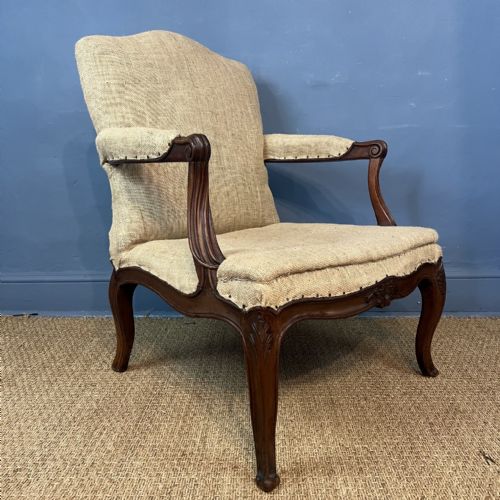
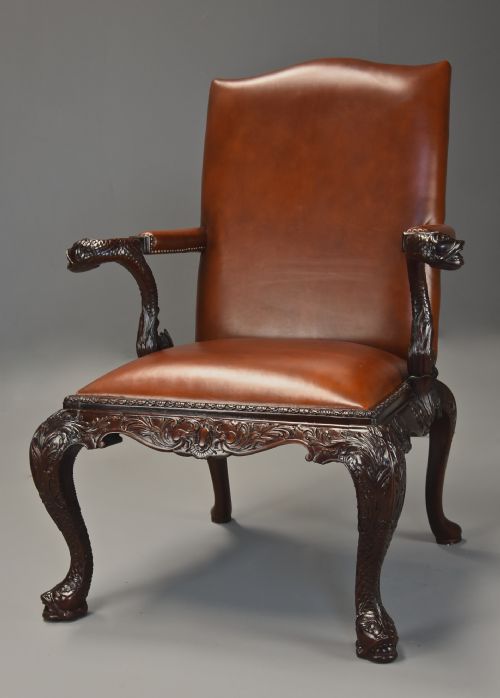


Mahogany Gainsborough Armchair
A mahogany gainsborough armchair brings substantial library seating into a room, combining upholstered comfort with open wooden arms.
Mahogany Gainsborough Armchair
A mahogany gainsborough armchair functions as a wide, upholstered seat with open arms, historically designed for reading or desk work. The form originates in the eighteenth century during the Georgian period, often associated with the reigns of George II and George III.
Most examples found today belong either to the eighteenth century or later revival periods spanning the nineteenth and early twentieth centuries. Makers working in the Chippendale style or later revival movements frequently reproduced these library chairs using traditional proportions.
The layout typically involves a fully upholstered square back and seat, padded armrests, and straight or cabriole wooden legs. Variations include desk chairs and larger library versions finished in leather or damask fabric.
Materials and construction
Cabinet makers built the structural frames using solid mahogany, valued for its density and stability. Carpenters shaped the wooden framework to support deep upholstery while allowing space for decorative carving along the arm supports and leg rails.
Upholstery methods involved traditional stuffing materials secured over webbing, finished with leather hides or woven textiles such as damask and tapestry fabric. Brass nails frequently edge the leather upholstery on period and revival examples alike.
Listings feature mahogany frames paired with brass accents, leather hides, and damask upholstery across Georgian and later revival periods.
Evaluating the craftsmanship
The distinction between ordinary and superior pieces rests largely on the depth and crispness of the wood carving. Fine examples display hand-carved details like blind frets or acanthus leaves that remain sharp and well-defined.
Proportion and scale dictate the visual weight of the chair, with better examples maintaining balanced arm heights and sturdy structural integrity. The choice of covering also influences the finish, particularly where hand-dyed hide or antique leather is utilised.
The Mahogany Gainsborough Armchair Glossary
- Gainsborough armchair
- A wide, upholstered open-arm chair dating from the eighteenth century. The name derives from the association with portraits painted by Thomas Gainsborough.
- Blind carving
- Carved ornament applied in low relief to a flat surface, often seen on chair frame legs. This technique decorates the wood without breaking the straight profile.
- Cabriole leg
- A furniture leg that curves outward at the knee and tapers inward toward the foot. This shape originates from classical furniture design and appears on mid-eighteenth-century seating.
- Damask
- A reversible figured fabric woven on a jacquard loom with patterns formed by contrasting warps and wefts. It frequently appears as original or replacement upholstery on library armchairs.
- Library chair
- A heavy, comfortable armchair intended for reading rooms and studies. These chairs often feature leather upholstery designed to withstand daily use.
Mahogany Gainsborough Armchair: Frequently Asked Questions
How can I tell an eighteenth-century chair from a revival piece?
Distinguishing period pieces from later revivals involves examining the construction methods, timber patination, and wear patterns on the mahogany frame.
Eighteenth-century examples display historical joinery and natural wood ageing, whereas nineteenth and twentieth-century revival pieces reflect the manufacturing techniques of their own decades.
Were these chairs used at desks?
Many examples function as desk chairs in libraries and private studies, offering a wide seat for comfortable writing.
The open arms allow adequate space for movement, which made them popular for administrative work and reading large volumes.
What upholstery materials are traditional?
Traditional upholstery materials include smooth leather hides, often fixed with individual brass upholstery tacks along the borders.
Alternative period coverings include woven textiles like damask, tapestry fabric, and heavy velvet.