

Mahogany Folding Stand
When you search for a mahogany folding stand, you enter a domain of versatile serving pieces, tray tables and cake stands designed to store away cleanly after use.
Mahogany Folding Stand
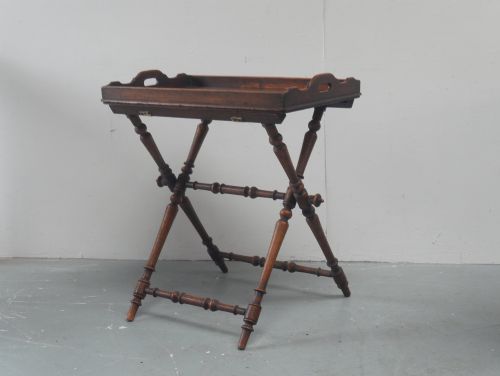
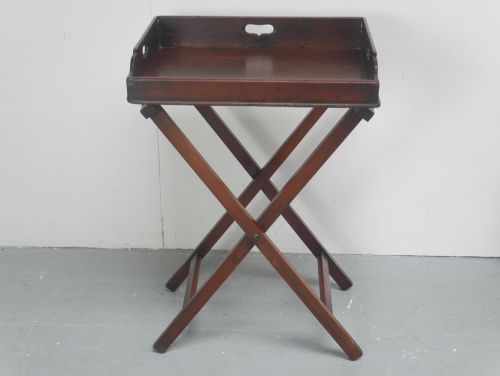
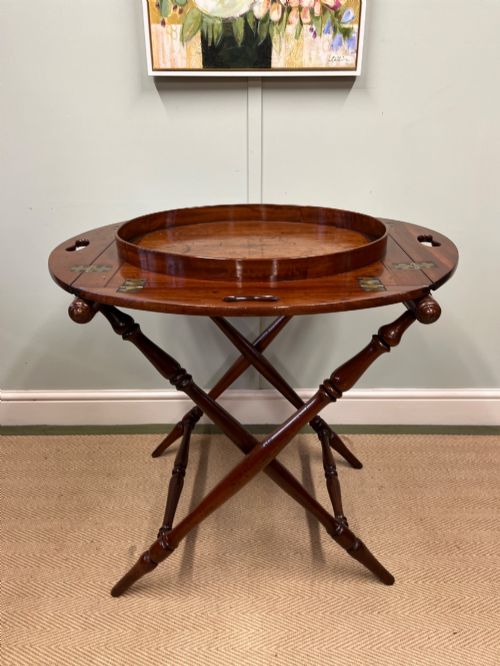
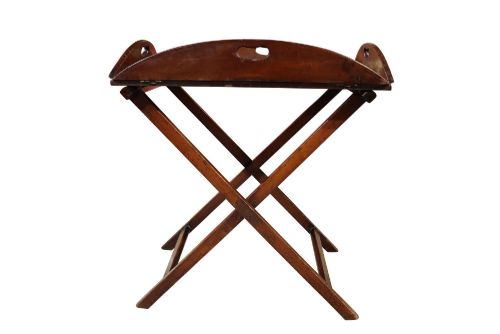
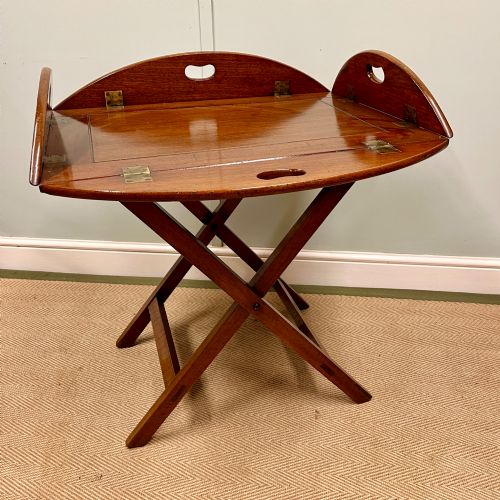
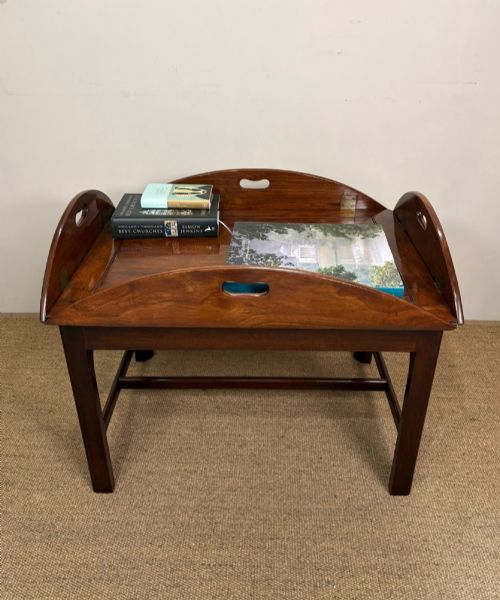
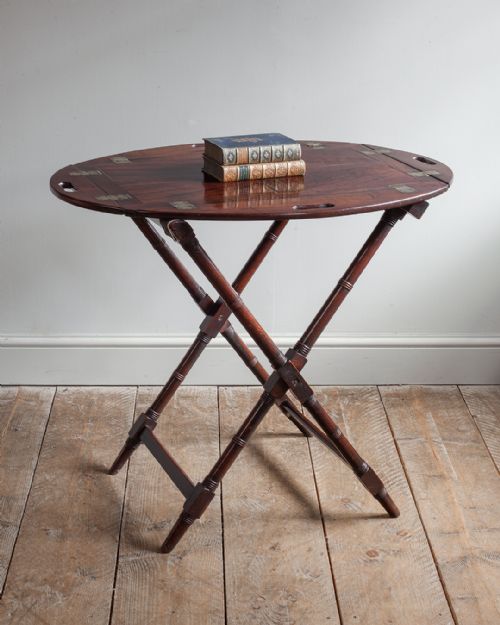
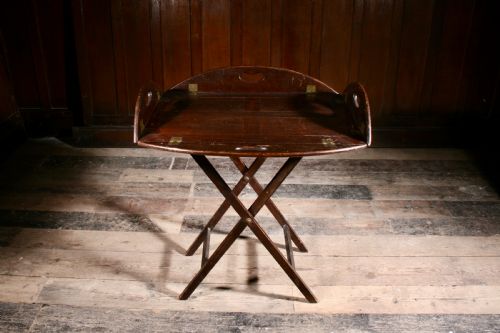
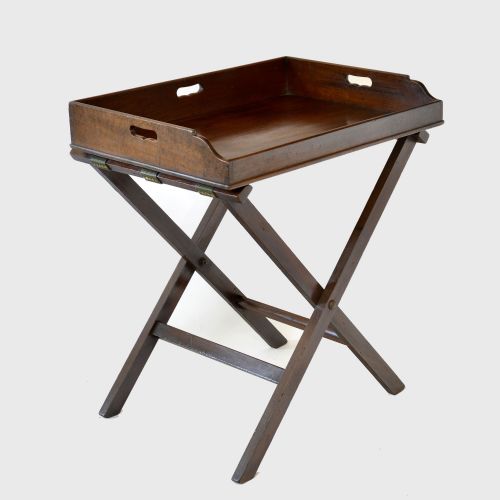
A mahogany folding stand encompasses practical household items from the Georgian, Victorian and Edwardian eras, designed to be easily collapsed and stored when not required. The most frequent forms encountered here are butler's trays on folding stands, alongside multi-tiered cake stands and occasional serving tables.
Originating as functional furniture for country houses and urban drawing rooms alike, these pieces served the daily rituals of dining, tea and washing. The selection spans robust George III serving trays to delicate Edwardian three-tier stands, uniting utility with handsome cabinet timber.
How they were made
The primary material across these pieces is mahogany, frequently paired with Cuban mahogany, satinwood or oak for contrasting details and structural strength. Brass hinges, brackets and mounts provide both mechanical durability and visual accent, particularly on folding campaign furniture and serving trays.
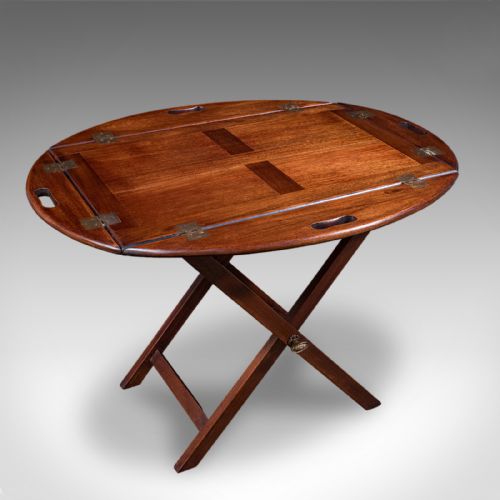
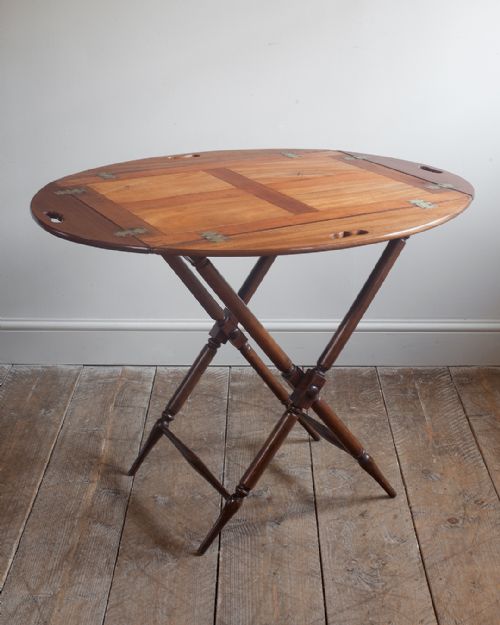
Joinery techniques focus on portability and weight distribution, utilising hinged drop-flaps, folding X-frame bases and collapsible tiered supports. Inlaid boxwood and satinwood stringing often decorate the edges of Georgian and Edwardian tops, while turned wooden legs give stability to the folding frames.
Mahogany Folding Stand Retail Price Guide 2026
Typical asking prices for mahogany folding stand among the pieces listed under this phrase on Sellingantiques today, from the lower quarter to the upper quarter. They describe what is for sale here now, not the wider market.
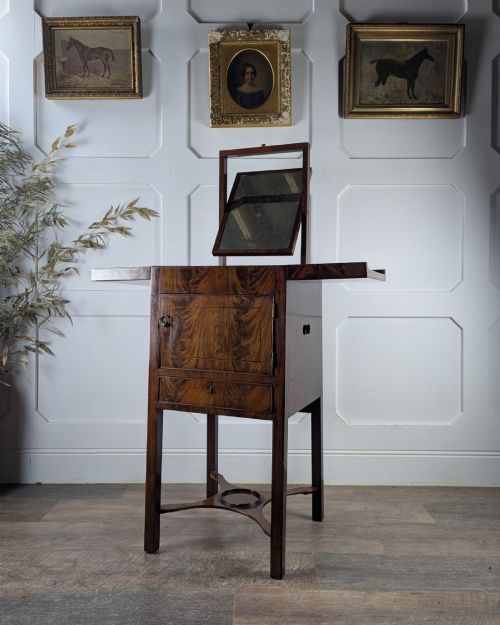
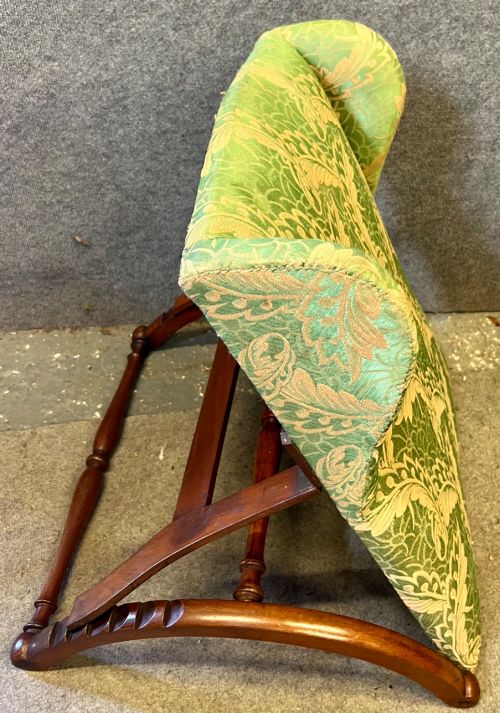
Listings feature mahogany folding stands spanning the Georgian, Regency, Victorian and Edwardian eras, alongside related forms like washstands and luggage racks.
What varies in quality
Quality rests primarily in the selection of the timber, where dense, richly figured Cuban mahogany distinguishes finer Georgian examples from plainer utilitarian items. The crispness of the turning on the folding stands and the tightness of the joinery where the leaves meet indicate superior cabinet-making.
Hardware also marks the distinction between standard production and higher-end pieces, with original brass fittings and maker-stamped hinges commanding greater appreciation. Balance and smooth mechanical action when collapsing the frame remain crucial to a well-executed stand.
Leveson and Sons·Benetfink and Co·James Mein of Kelso
The Mahogany Folding Stand Glossary
- Butler's tray
- A removable wooden tray with hinged or cutout sides, designed to sit upon a separate folding X-frame stand for serving. These pieces date predominantly from the Georgian and Victorian periods.
- Campaign furniture
- Portable items designed for travel, featuring folding frames, recessed brass handles and knock-down construction. They were utilised by military officers and travellers.
- Drop-flap
- A hinged section of a tray or table top that can be lowered to reduce the footprint or raised and supported to extend the surface area. This mechanism allows the furniture to adapt easily to domestic spaces.
- Cuban mahogany
- A dense, heavily figured variety of mahogany harvested in the Caribbean, prized for its deep colour and durability in fine 18th-century cabinet-making.
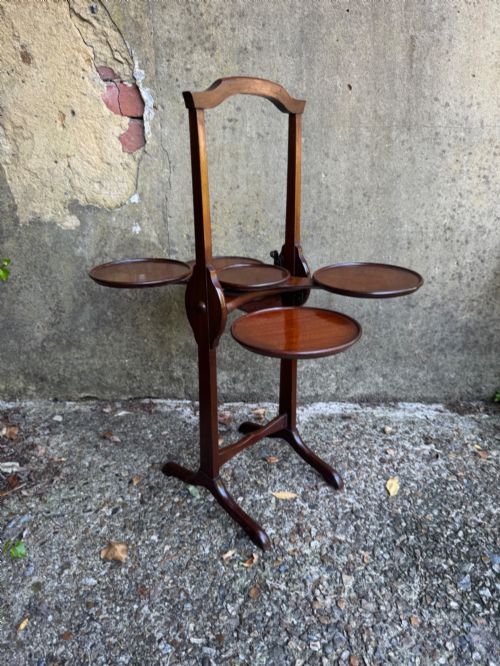
- Dumbwaiter
- A multi-tiered revolving or folding stand used for holding dishes or tea service without the need for constant servant attendance. Examples appear from the late 18th century onward.
Mahogany Folding Stand: Frequently Asked Questions
How do I use a butler's tray today?
A butler's tray on a folding stand makes a practical coffee table or side table in a modern sitting room. The removable tray allows you to carry drinks or afternoon tea with ease.
When extra space is required, the entire stand collapses flat for storage behind a door or in a cupboard. This preserves the original functionality while fitting contemporary living arrangements.
How are cake stands constructed?
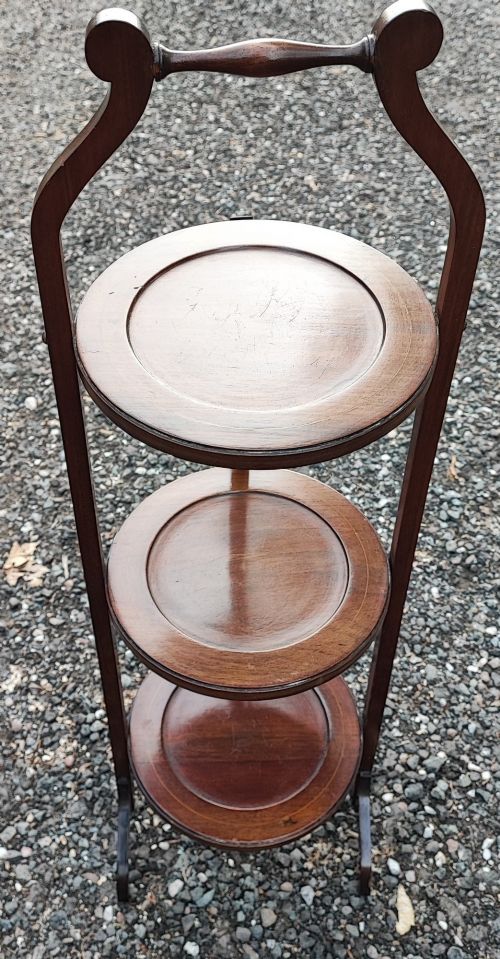
Edwardian cake stands typically feature three graduated circular shelves mounted on a folding wooden frame. The hinge mechanism allows the tiers to swing shut for compact storage.
Such pieces were designed for afternoon tea and light entertaining in domestic parlours. Their slender proportions make them suitable for corners or smaller rooms.
What is the difference between Georgian and Edwardian stands?
Georgian pieces emphasise solid mahogany construction, understated mouldings and deep, rich timber grains built for utility in grand houses. They often feature simple X-frame folding bases.
Edwardian examples introduce lighter woods, decorative inlay work and multi-tier designs like cake stands and folding towel rails. These reflect the changing domestic habits of the early 20th century.
Are the stands completely original?
Many folding stands survive with their matching original bases, particularly from the Victorian and Edwardian periods. Trays and stands were sometimes reunited over time if the dimensions and timber matched.
Examining the wear patterns on the joints and the patina of the mahogany helps determine whether the components belong together. Original brass hardware further supports the integrity of the piece.