


Mahogany Entryway Chairs
Mahogany entryway chairs bring formal presence to a hall or landing, combining sculptural timber backs with rigid seats intended for brief use.
Mahogany Entryway Chairs
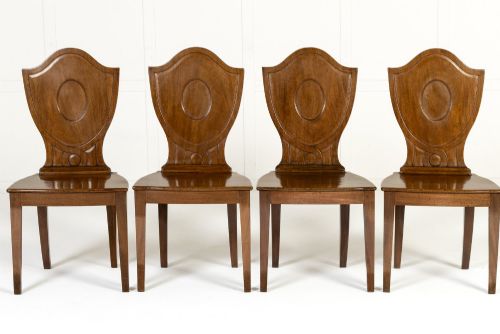
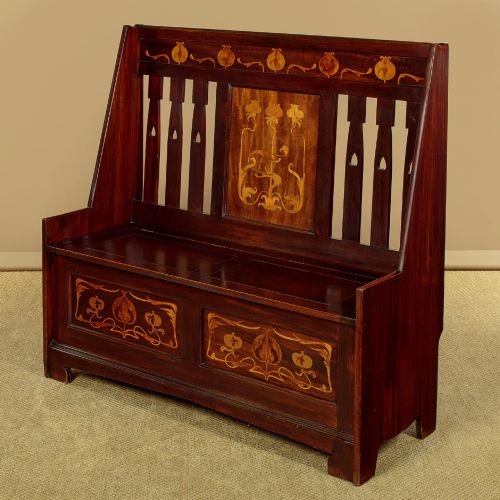
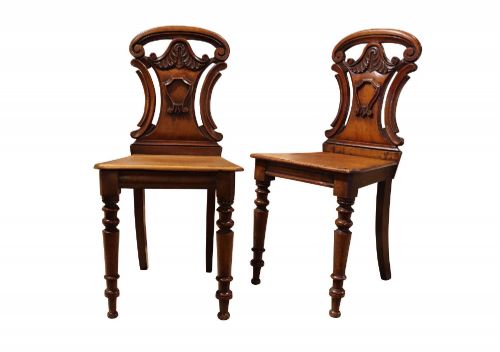
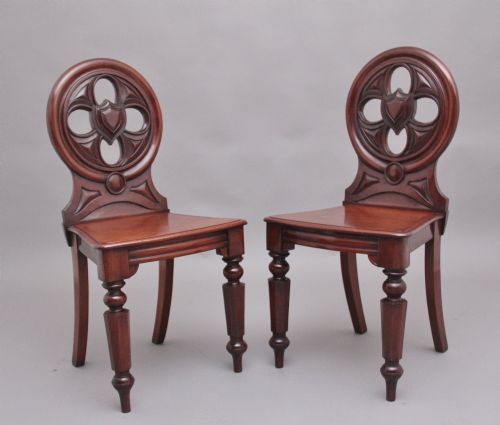
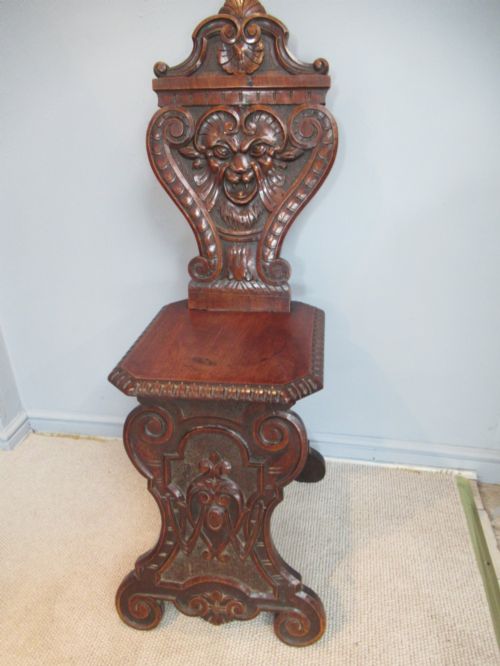
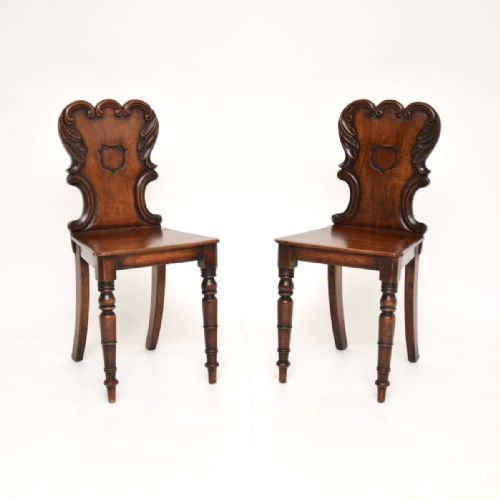
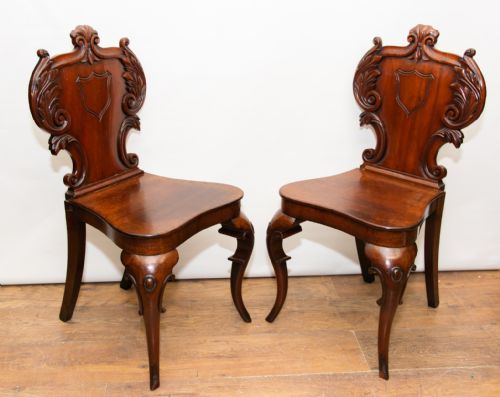
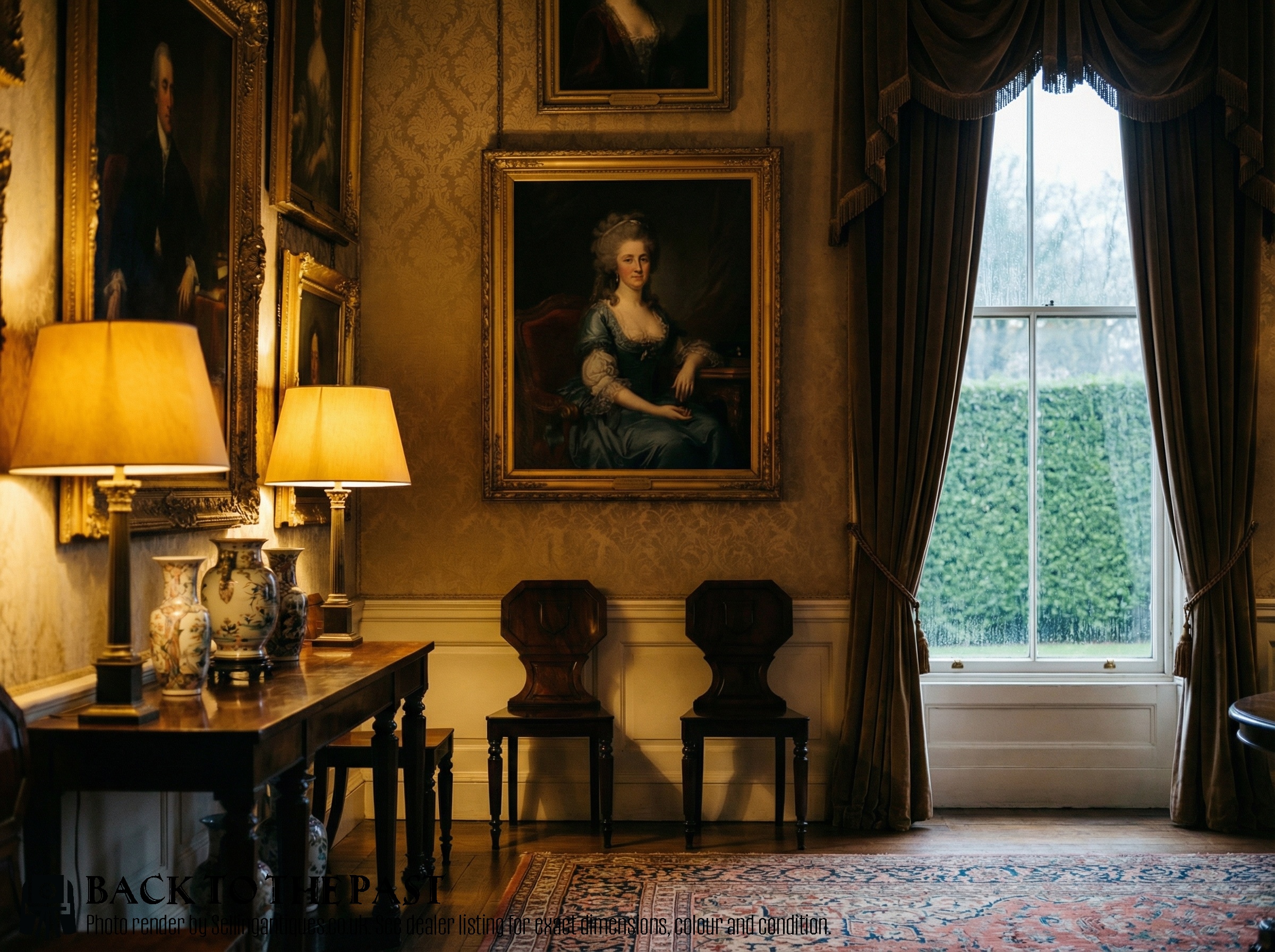
When buyers search for mahogany entryway chairs, they are looking at formal timber seating designed historically for the lobbies, halls, and landings of substantial houses. These pieces are predominantly represented on this page by hall chairs, alongside occasional side chairs, benches, and settles.
The pieces on offer span the eighteenth and nineteenth centuries, including George III, Regency, William IV, and Victorian periods. Buyers will encounter single pieces, pairs, and occasional sets reflecting the formal aesthetic of country houses and town residences.
Distinctions in quality
Quality rests upon the crispness of the carved ornamentation on the wooden backrest and the architectural proportions of the frame. Pieces attributed to prominent cabinet-makers display superior timber selection and more deeply sculpted relief work.
The integrity of the solid wood construction and the retention of original surface patination distinguish finer examples from standard production pieces. Lesser variants feature simpler turned legs and minimal decoration without sculpted back panels.
Materials across the inventory include solid mahogany, brass inlay, ceramic inserts, and boxwood.
James Shoolbred and Co·Gillows
The Mahogany Entryway Chairs Glossary
- Hall chair
- A rigid wooden seat with a solid panel back, designed for placement in an entranceway rather than for prolonged sitting. These items often feature painted or carved family crests or armorial bearings.
- Pelta back
- A shield or crescent-shaped backrest resembling an ancient Greek pelta shield. This distinctive outline appears frequently on Regency examples.
- Shield back
- A backrest formed in the curved outline of a heraldic shield. Cabinet-makers popularised this shape during the Georgian and Regency periods.
- Boxwood inlay
- Contrasting pale wood inserted into recesses cut into the mahogany surface. This technique creates delicate linear patterns.
- Solid wood
- Construction utilising unveneered timber throughout the frame and seat. This material choice ensures structural rigidity in high-traffic entryways.
Mahogany Entryway Chairs: Frequently Asked Questions
Where were mahogany entryway chairs placed?
These chairs stood in the entrance halls, corridors, and landings of large houses. Visitors and waiting tradespeople used them briefly.
Because they were meant for transient use rather than comfort, the seats were typically made of solid wood without upholstery.
How do I date a hall chair?
Dating relies on the stylistic clues of the timber backrest and legs. Regency pieces often display pelta or shield outlines, while Victorian examples lean toward heavier carved ornamentation.
Construction methods and secondary woods inside the frame also help narrow down the decade of manufacture.
Are these chairs comfortable for daily sitting?
They are generally not suited for long periods of sitting. The upright wooden seats and rigid carved backs prioritise formal appearance over comfort.
Buyers typically utilise them as accent pieces in hallways or occasional seating in bedrooms.