




Mahogany Drawer Specimen Cabinet
A mahogany drawer specimen cabinet holds the structured collections of the nineteenth and early twentieth centuries, prized for timber fidelity and dense banking.
Mahogany Drawer Specimen Cabinet
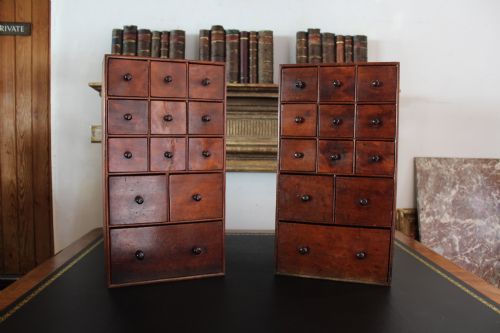
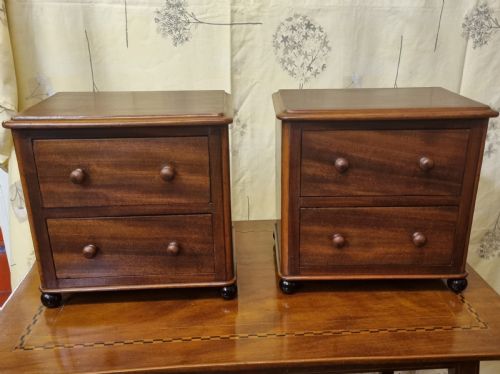
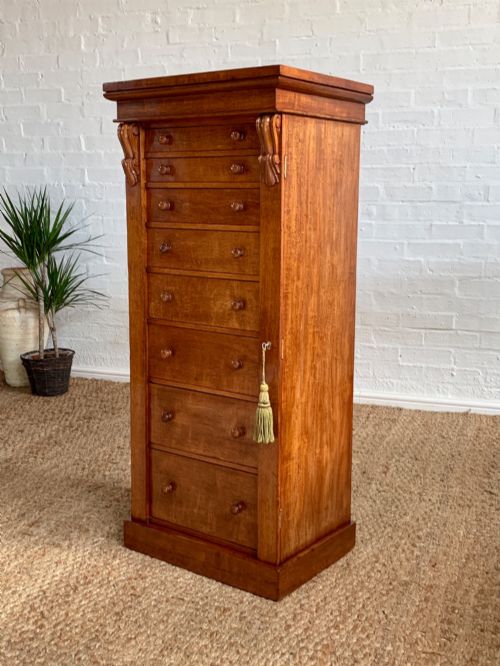
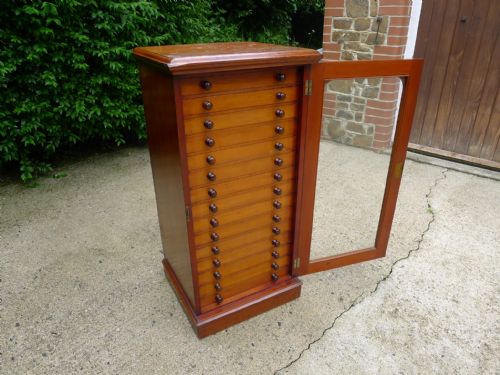
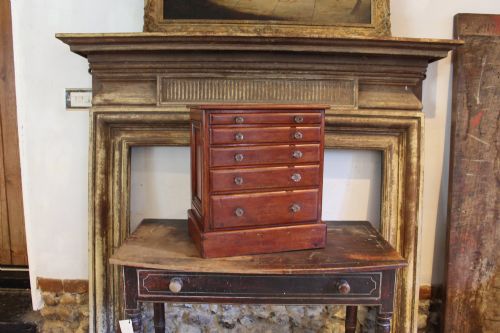
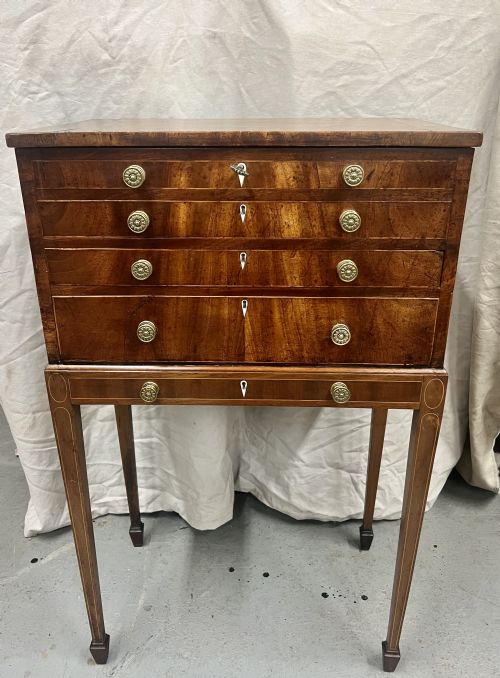
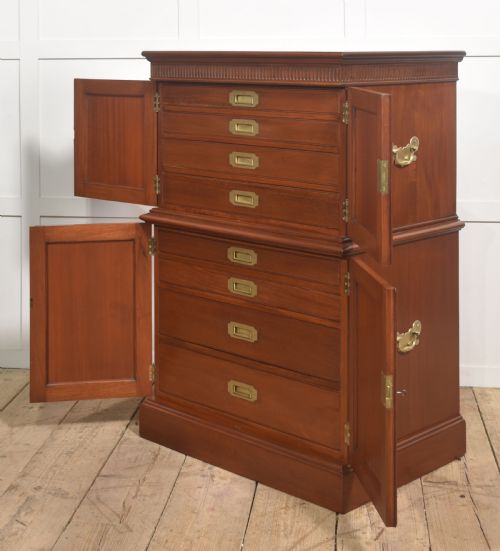
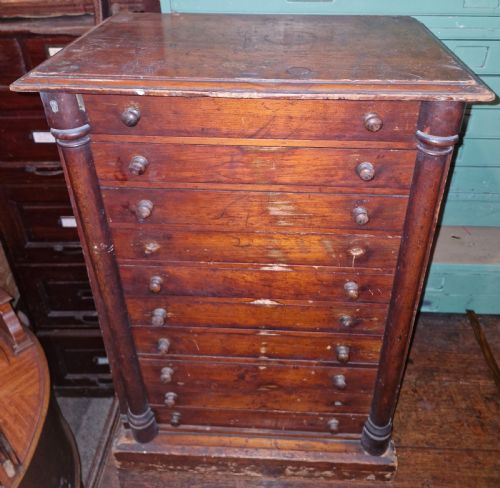
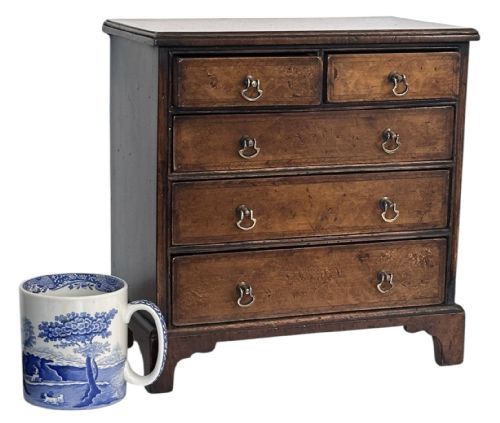
A mahogany drawer specimen cabinet is a piece of furniture built to house specific scientific, medical, or natural history items, appearing most frequently in Victorian and Georgian forms. Buyers encounter table-top chests, taller banks of drawers, and miniature Wellington chests designed for compact storage.
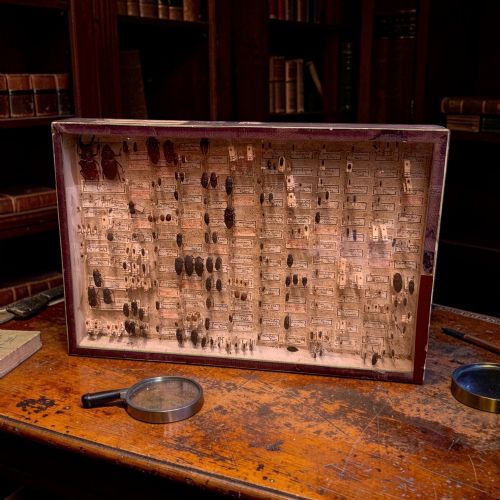
The specimens housed inside traditionally included insects, microscope slides, homeopathic remedies, and small artefacts, which dictated the shallow, numerous drawer format. These cabinets range from intimate pairs of table chests to massive multi-drawer storage units.
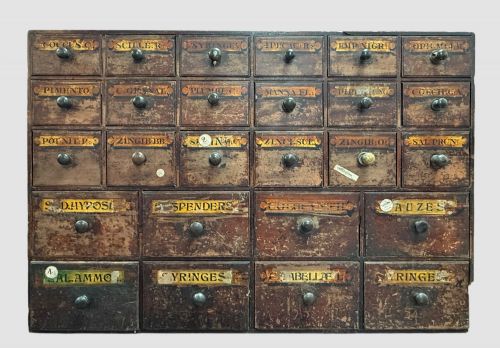
Pieces from this category span the Georgian, Regency, William IV, and Victorian periods, often categorized under natural history or apothecary furniture. The majority of surviving examples utilise solid mahogany or figured veneers with multiple small drawers.
How They Were Made
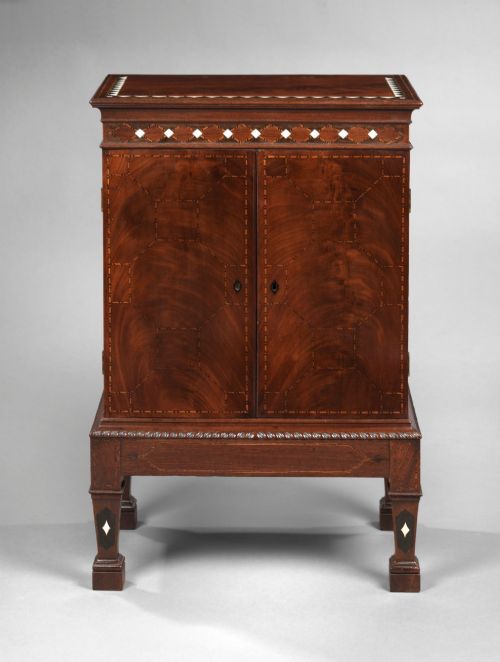
Makers built these cabinets using solid mahogany and secondary timbers like pine or oak, often finished with figured mahogany veneers on the primary surfaces. Brass drop handles, turned wooden knobs, and glass panels frequently complete the exterior construction of the drawers and doors.
Internal drawer construction relies on tight joinery designed to protect delicate contents from dust and light over extended periods of storage. Metal and bone elements appear selectively for pulls, key escutcheons, and small fittings.
Some tiny drawers once held watch repair cogs or homeopathic pills before storing modern buttons.
What Varies in Quality
Quality rests in the scale of the drawer count, the regularity of the timber grain, and the presence of specialist maker attribution. Larger multi-drawer pieces by recognised workshops display superior timber selection and more complex internal configurations.
The handling of secondary woods and the precision of the drawer fit separate standard domestic miniature chests from high-grade scientific specimens. Cabinets retaining original brass hardware and untouched polished surfaces command greater regard.
WATKINS & DONCASTER·BRADY OF EDMONTON·CHARLES WILLIAM SCHOFIELD
The Mahogany Drawer Specimen Cabinet Glossary
- Wellington chest
- A tall, narrow chest of drawers secured by a hinged locking stile on one side that fastens with a key. This locking mechanism keeps all internal drawers safely closed.
- Specimen cabinet
- A specialised storage unit featuring many shallow drawers designed for holding natural history collections or small objects. They protect sensitive items from dust and environmental degradation.
- Standish
- A portable stand or case traditionally holding writing equipment or small instrument drawers. In cabinet terms, it denotes a compact multi-drawer desk accessory.
- Apprentice piece
- A miniature item of furniture created to demonstrate a woodworker's proficiency to a guild. These pieces replicate full-scale furniture with exact joinery.
- Apothecary chest
- A multi-drawer cabinet used historically for storing medicinal ingredients and remedies. They often feature numerous small drawers for organised dispensing.
Mahogany Drawer Specimen Cabinet: Frequently Asked Questions
What were mahogany drawer specimen cabinets used for?
These cabinets served laboratories, studies, and chemists for organising delicate items like insect collections, microscope slides, and medical remedies. The numerous shallow drawers protected fragile specimens from light and physical disturbance.
Collectors and specialists relied on this modular storage to keep classifications orderly and secure. Over time, many transitioned into domestic display pieces for small curiosities.
How do I tell a Victorian specimen cabinet from a Georgian one?
Georgian and Regency specimens often exhibit cleaner structural lines, classical proportions, and specific banding or cockbeading on the drawer edges. Victorian variants frequently present heavier mahogany timber, figured veneers, and specialised locking stiles like the Wellington mechanism.
Looking at the internal construction and secondary woods like pine or oak helps clarify the period of manufacture. Regional styles, such as Scottish Victorian variants, also introduce distinct local joinery traits.
How should I care for a vintage mahogany cabinet?
Keep the wood away from direct sunlight and extreme humidity fluctuations to preserve the rich mahogany grain and prevent veneer lifting. Regular dusting with a soft, dry cloth maintains the polished finish without chemical buildup.
Avoid placing heavy objects on top of table-top chests to protect the upper surfaces and joints. Gentle wax application can nourish the timber if it appears dry.
What is the difference between an apprentice chest and a specimen cabinet?
An apprentice chest is a scaled-down model of a full-size domestic chest of drawers, built to prove a craftsman's mastery of scaling and joinery. A specimen cabinet is purpose-built with many shallow drawers specifically configured for scientific or natural history storage.
While both appear miniature in scale, their internal layouts and intended contents diverge significantly. Specimen cabinets prioritize drawer quantity and dust-proof fits over domestic drawer depth.