
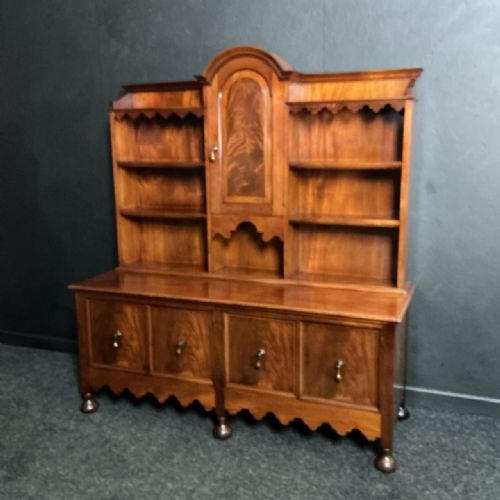
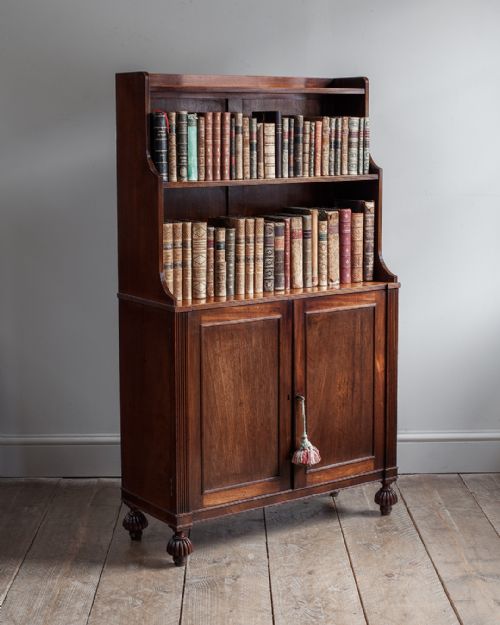
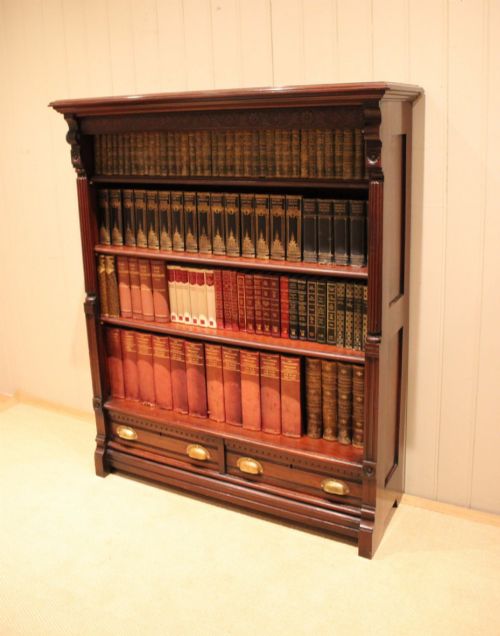
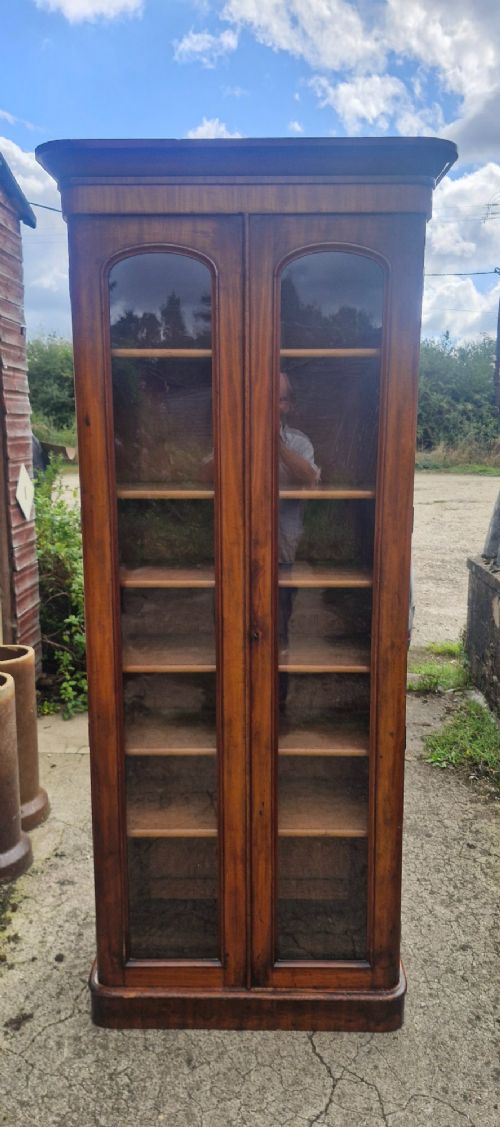
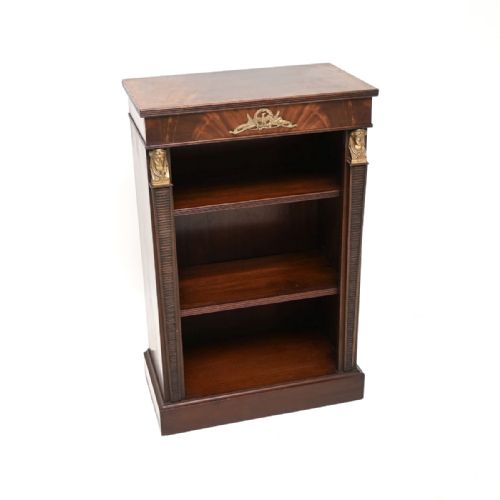
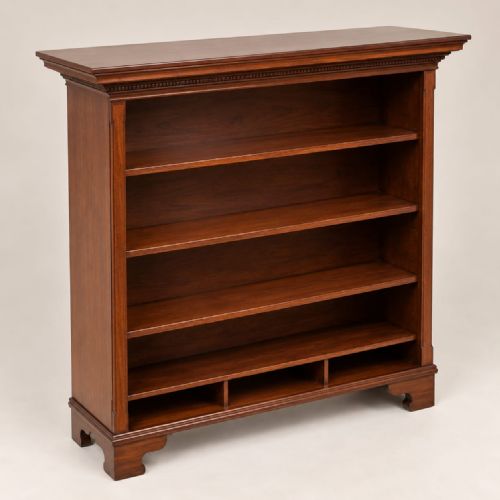
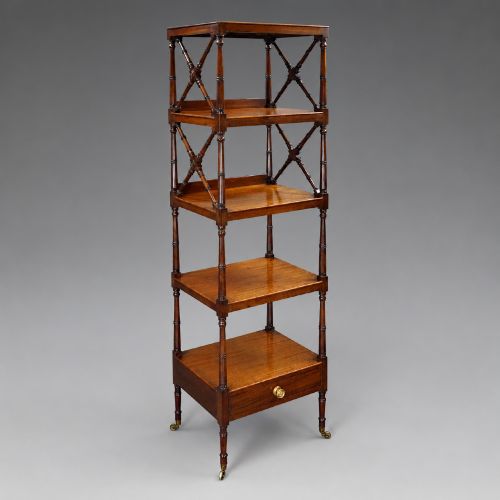
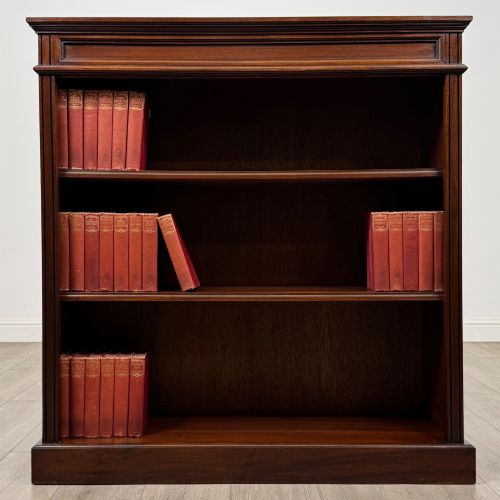
Mahogany Display Shelving
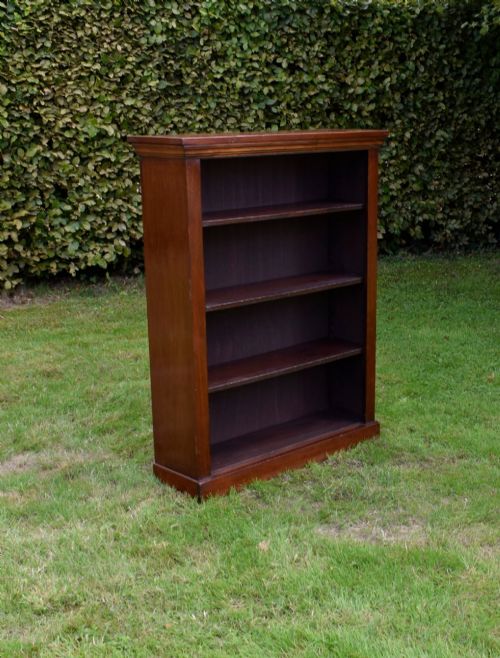
Mahogany display shelving brings together rich timber and practical tiers, offering a distinguished way to house books and objects in any room.
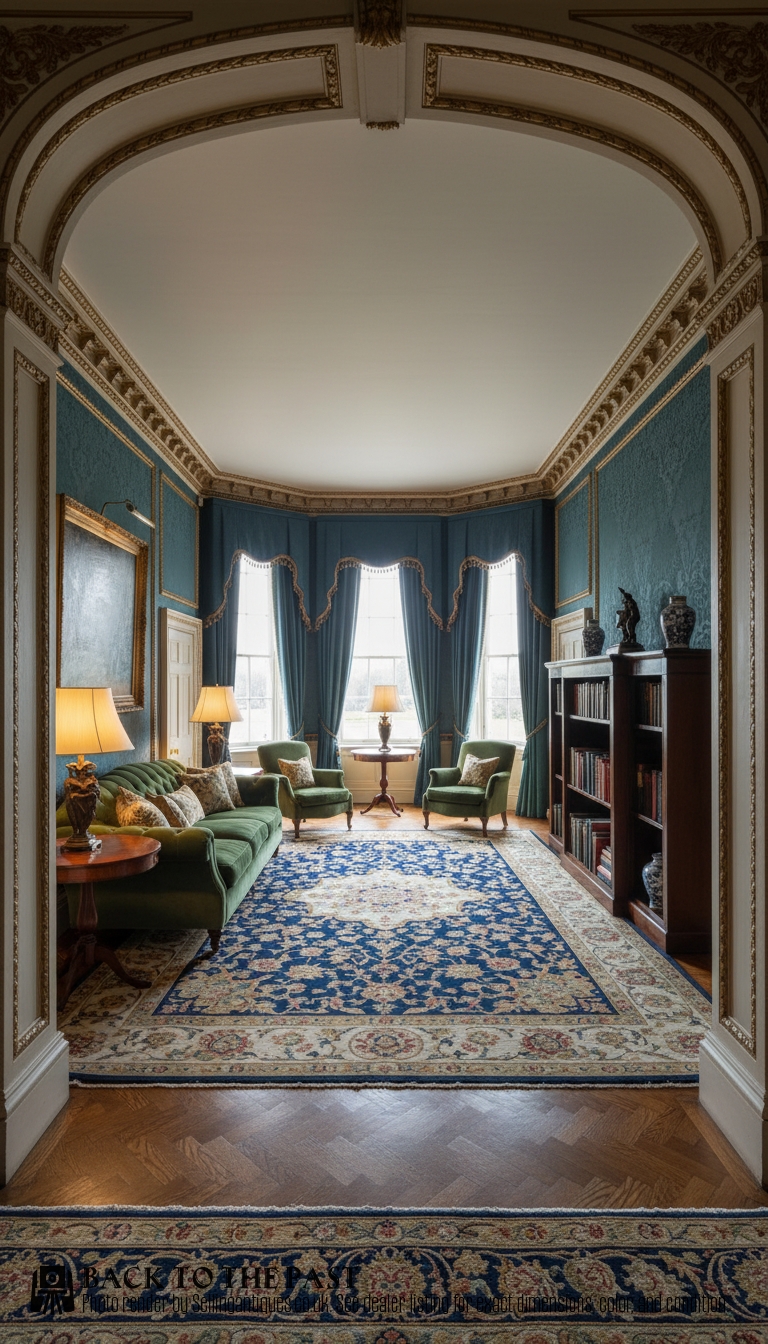
Materials and construction
Cabinet makers utilised solid mahogany and figured veneers such as flame mahogany and satinwood, often accentuating the timber with polished finishes. Structural components frequently incorporated brass mounts, castors, and occasionally ormolu details for added refinement.
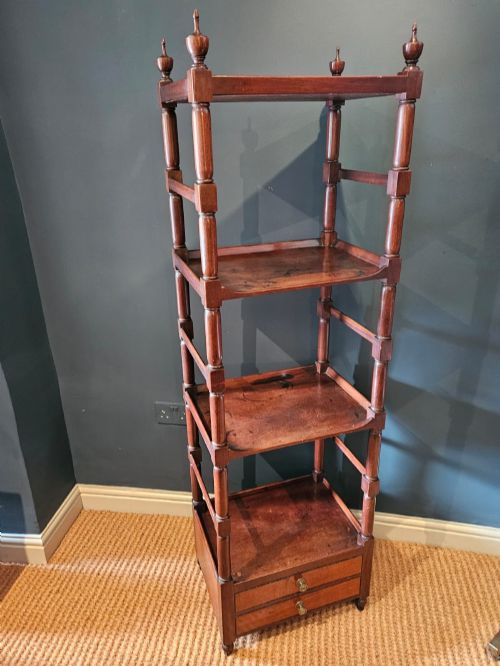
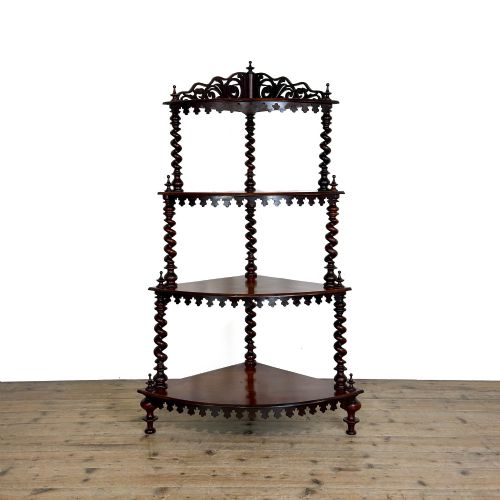
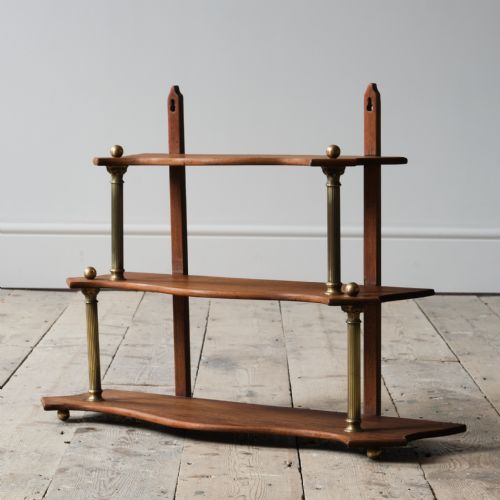
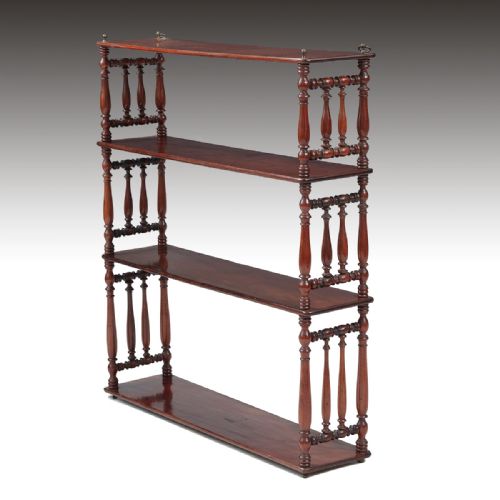
Shelving units and what-nots relied on traditional joinery techniques, employing fine dovetails for drawers and sturdy uprights or barley twist supports for the open tiers. Wall-hanging shelves utilised secure hanging brackets, while larger bookcases incorporated clever wooden ratchets or metal tracks for adjustable shelf heights.
Judging the range
The distinction between standard pieces and the finest work lies in the selection of the timber and the crispness of the carving or inlay. Heavily figured flame mahogany and subtle satinwood stringing elevate a piece above plain stock, whilst well-proportioned cornices and balanced tier spacing reveal the hand of a skilled designer.
Original brass hardware, sound structural timber without excessive shrinkage, and smooth mechanics on adjustable shelves or cupboard doors separate better examples from lesser ones. Pieces retaining their original castors and undisturbed surface patination demonstrate superior preservation over time.
Mahogany Display Shelving Retail Price Guide 2026
Typical asking prices for mahogany display shelving among the pieces listed under this phrase on Sellingantiques today, from the lower quarter to the upper quarter. They describe what is for sale here now, not the wider market.
Listings feature mahogany display shelving across eight distinct periods, led by Victorian and Edwardian examples alongside Georgian and Regency items.
Gillows·Maison Jansen
The Mahogany Display Shelving Glossary
- What-not
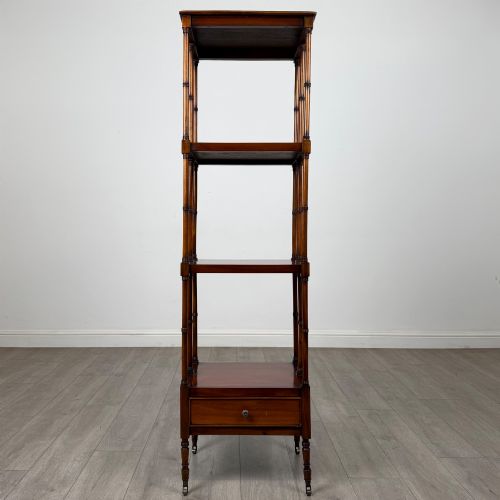
- A multi-tiered piece of freestanding furniture designed for the display of ornaments and books. These units typically feature three or four open shelves supported by slender columns.
- Etagere
- A French term for an open tiered piece of furniture used for displaying objects. These light shelving units often appear in slender proportions.
- Waterfall bookcase
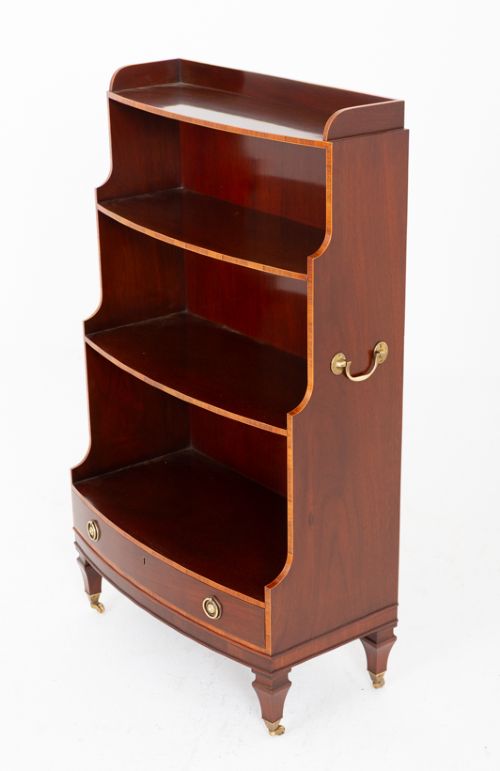
- A shelving unit with tiers that step back progressively from bottom to top, creating a profile resembling descending water. This style gained popularity during the Regency and Victorian eras.
- Ormolu
- Gilded bronze mounts applied to furniture for decorative effect. This technique appears on high-status nineteenth-century pieces.
- Breakfront
- A piece of furniture where the central section projects forward from the flanking wings. This architectural arrangement adds depth and visual interest to large bookcases.
Mahogany Display Shelving: Frequently Asked Questions
How do I date a mahogany bookcase?
Examine the timber grain, construction methods, and hardware style to determine the period of origin. Earlier pieces from the Georgian era often show hand-cut dovetails and solid timber backs, whereas Victorian and Edwardian examples may utilise machine-sawn elements and factory-produced brasses.
Look for design characteristics typical of specific reigns, such as the slender proportions of Regency pieces or the inlaid satinwood common in Edwardian furniture. Comparing the shelf adjustment mechanism also helps narrow down the decade of manufacture.
Are these shelves strong enough for heavy books?
Most antique open bookcases and shelving units were built to support substantial volumes of heavy literature. Solid mahogany construction provides robust structural integrity for everyday use.
When loading older shelving, distribute weight evenly across the boards, particularly on pieces with adjustable timber brackets. Heavier folios rest securely on the deeper lower tiers of waterfall bookcases or large breakfront cabinets.
How do I clean and maintain mahogany shelving?
Maintain the surface by dusting regularly with a soft, dry cloth to prevent the accumulation of grit. Avoid using silicone-based sprays or harsh chemical cleaners that can damage the traditional polish.
Apply a quality beeswax periodically to nourish the timber and preserve the natural sheen of the grain. Keep wooden shelving away from direct sunlight and strong heat sources to prevent the wood from drying out or warping.
Can I adjust the shelf heights on these units?
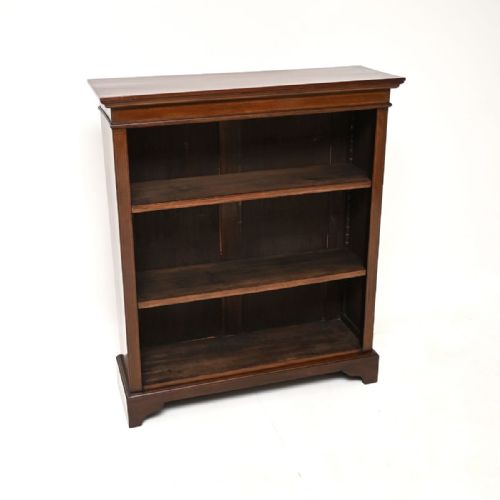
Many of the larger bookcases and shelving units feature adjustable shelves supported by wooden ratchets, brass studs, or metal tracks. This allows you to alter the tier spacing to accommodate books or objects of varying heights.
Older what-nots and wall shelves generally feature fixed tiers secured permanently into the vertical supports. Check the specific description of each piece to confirm whether the shelves move.