
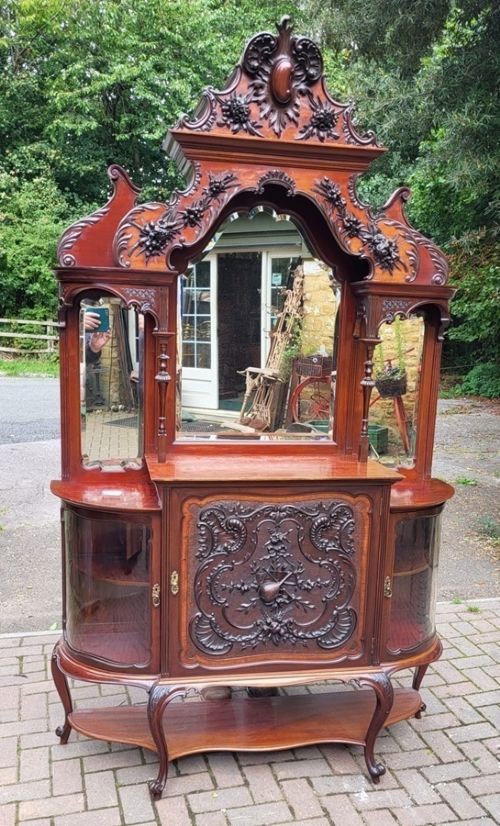


Mahogany Display Chiffonier
A mahogany display chiffonier brings practical storage and elegance together, offering the classic charm sought by collectors of fine period furniture.
Mahogany Display Chiffonier
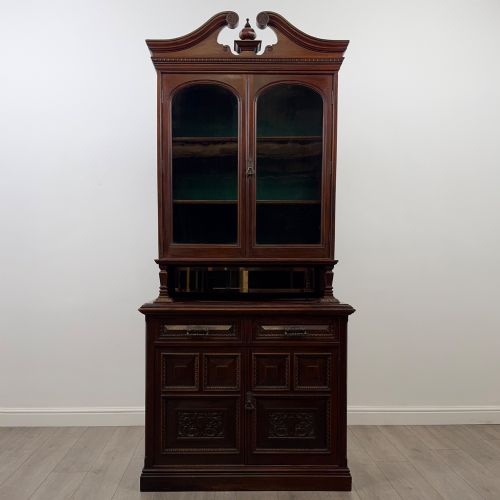
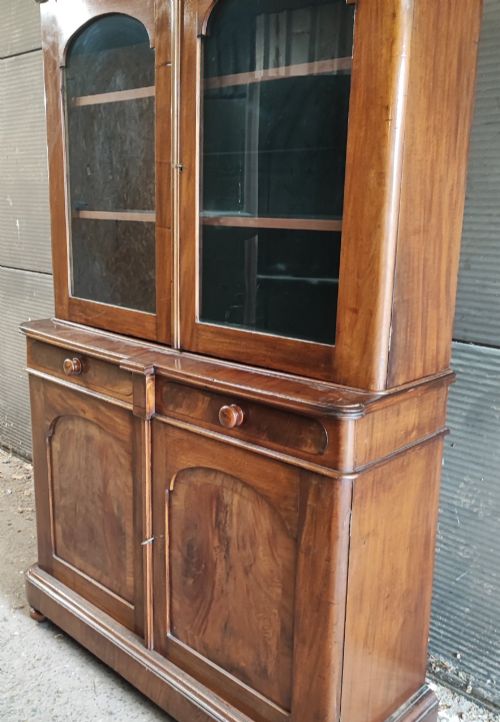
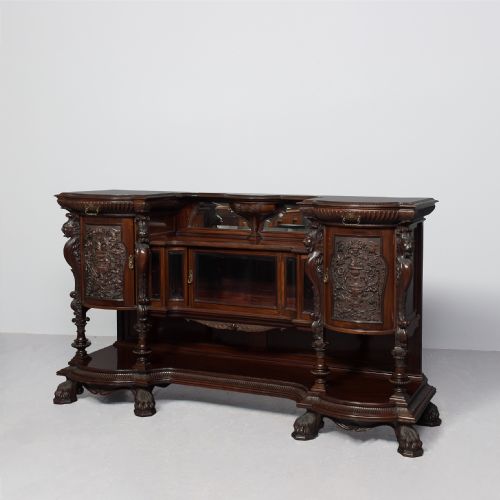
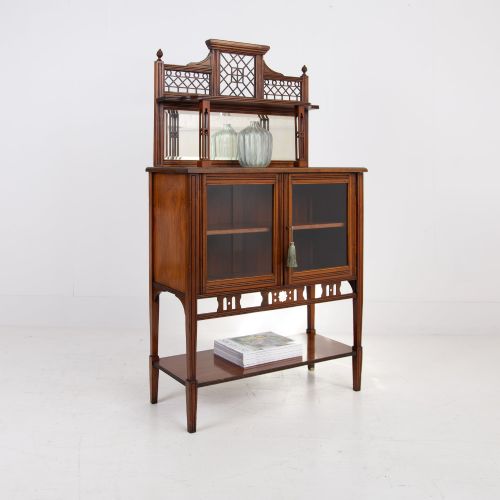
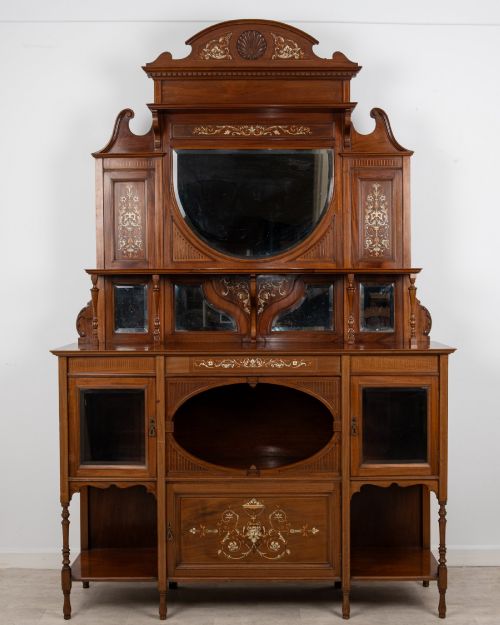
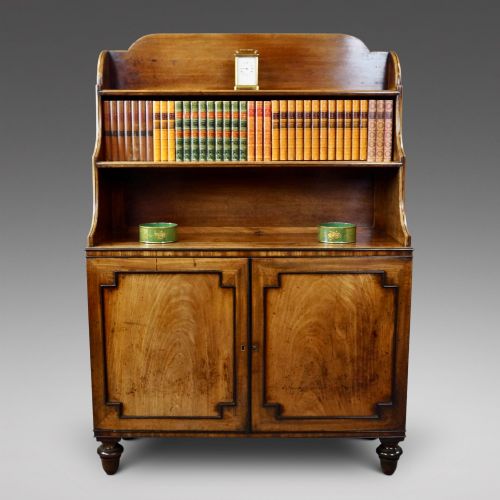
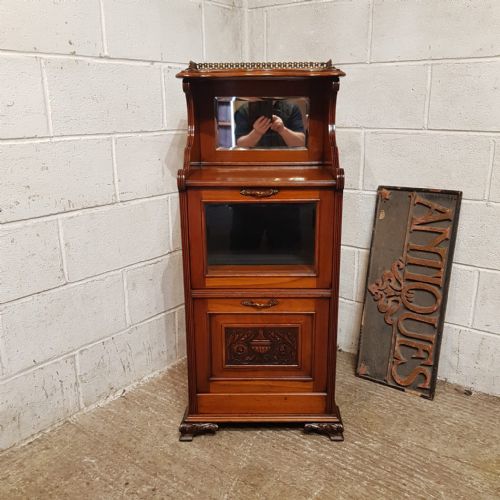
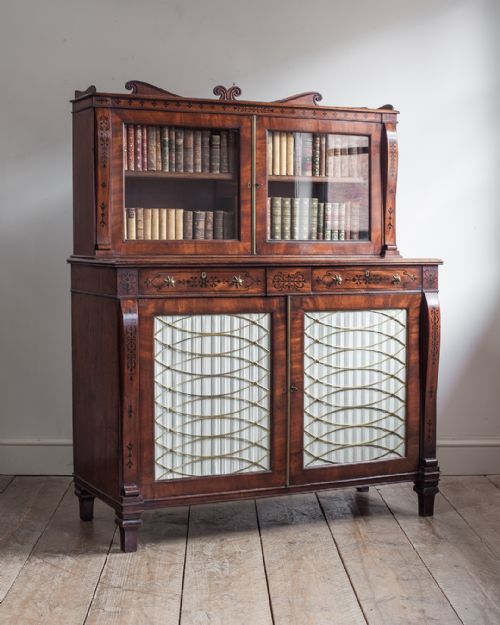
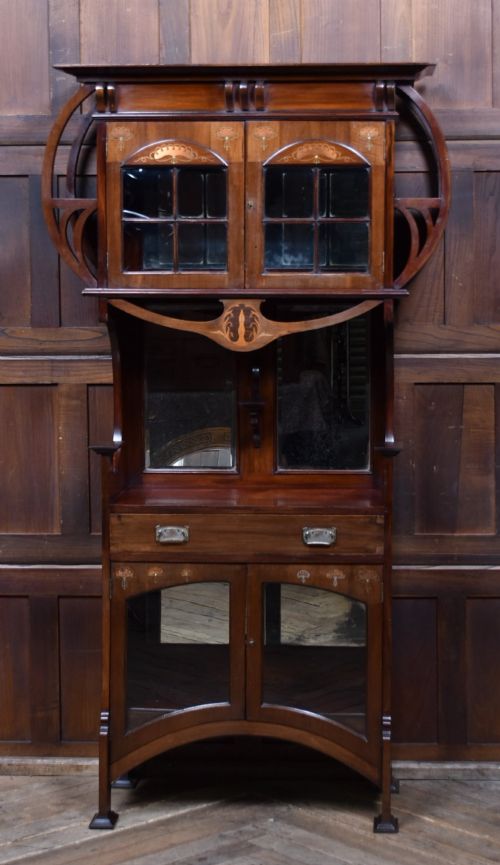
When you search for a mahogany display chiffonier, you are looking at a versatile hybrid of side cabinet, bookcase, and display piece developed across the nineteenth century. These items combine lower cupboards with upper shelving, glazed doors, or mirror backs designed to showcase glassware and books while concealing everyday objects.
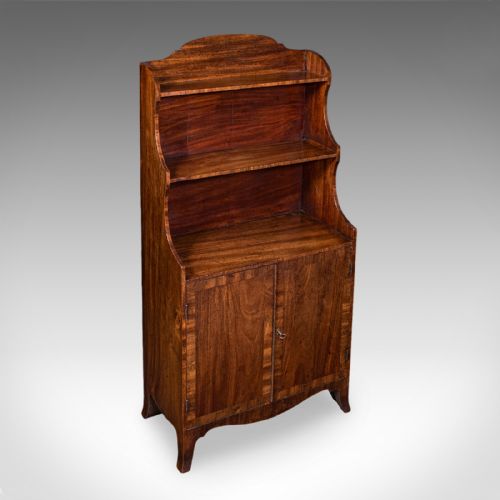
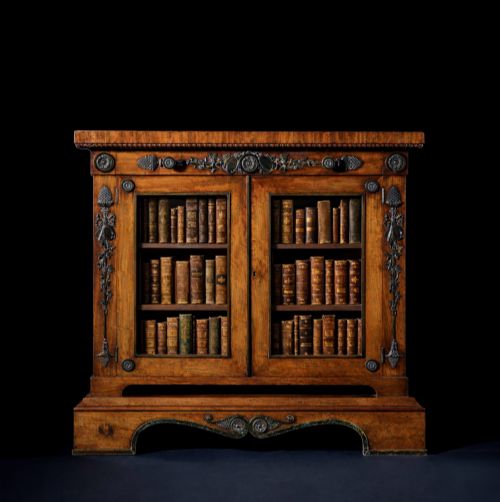
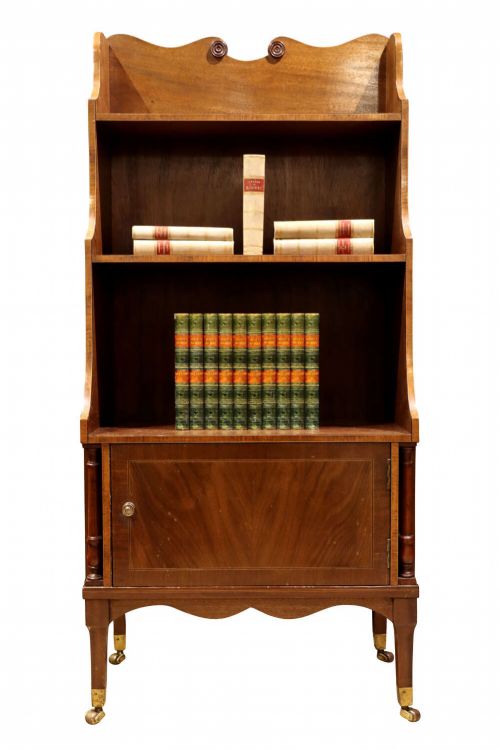
The versions most likely to meet you on this page date from the Regency and Victorian eras, alongside Edwardian examples. They range from petite waterfall bookcases and narrow side cabinets to substantial mirror-backed sideboards and breakfront bookcases.
Origins span formal English workshops and provincial cabinet makers working in mahogany, flame mahogany, and satinwood. Each piece balances utility with decorative restraint, serving as a focal point in a dining room or drawing room.
Construction and Materials
Makers built these pieces primarily from solid mahogany and rich flame mahogany veneers, often accented with delicate satinwood inlay and fine wood marquetry. The choice of dense, durable timber allowed craftsmen to plane expansive surfaces and turn slender supports.
Secondary structural elements incorporated brass hardware, such as handles and castors, alongside fitted glass panes and mirrored glass backs. These reflective surfaces were integrated into late Victorian and Edwardian cabinets to brighten darker interiors.
Joinery techniques relied on traditional dovetailed drawer construction and mortise and tenon frames, ensuring stability across large side cabinets and tall bookcase sections.
Some nineteenth-century cabinet makers thoughtfully mounted their heavy sideboards on tiny brass castors so the dining room floor could be swept.
Assessing Craftsmanship and Proportion
Quality rests heavily on the selection of timber veneers and the precision of the wood inlay. Finer cabinets display symmetrical flame mahogany figures and crisp, unblemished marquetry panels.
Structural proportion and hardware integration distinguish standard items from exceptional ones. Pieces retaining original brass castors, functioning locks with keys, and clear, bevelled glass plates demonstrate superior provenance.
Gillows·Robert Strahan
The Mahogany Display Chiffonier Glossary
- Chiffonier
- A low sideboard or cabinet, typically fitted with drawers and lower cupboards, evolving through the nineteenth century to include bookcase tops.
- Flame Mahogany
- Timber cut from the fork of the mahogany tree, prized for its dramatic, undulating grain patterns resembling flickering fire.
- Marquetry
- Decorative veneer work formed by fitting together small pieces of various coloured woods to create pictorial or geometric designs.
- Aesthetic Movement
- A late nineteenth-century design style rejecting heavy Victorian ornamentation in favour of simplicity, artistic refinement, and ebonised highlights.
- Whatnot
- A piece of freestanding furniture consisting of a set of open shelves for displaying ornaments, frequently incorporated into upper bookcase sections.
Mahogany Display Chiffonier: Frequently Asked Questions
What is a mahogany display chiffonier used for?
These cabinets served historically in dining rooms and drawing rooms to store table linen, silver, and books while displaying prized porcelain or glassware behind glass doors.
Today, they function brilliantly as focal storage pieces in modern living spaces, combining surface display areas with concealed cupboard space.
How do I tell a Regency chiffonier from a Victorian one?
Regency pieces, dating from the early nineteenth century, tend to feature cleaner architectural lines, bronze mounts, and classical restraint influenced by Greek and Roman revivals.
Victorian and late Victorian cabinets often display heavier carving, mirror-backs, and elaborate marquetry inlay reflecting changing industrial tastes and domestic ambitions.
What is a waterfall bookcase?
A waterfall bookcase is a distinct cabinet style featuring open shelves that recede in depth from bottom to top, creating a stepped profile.
This form appeared frequently in Regency and Edwardian variations, providing an elegant silhouette for smaller volumes and decorative items.
Are mirror backs original to these cabinets?
Mirror backs became widely popular during the late Victorian period and Edwardian era, added to reflect light and brighten Victorian drawing rooms.
While earlier Regency pieces rarely featured mirrors, late nineteenth-century iterations frequently integrated bevelled mirror glass into the superstructure.