

Mahogany Dished Table
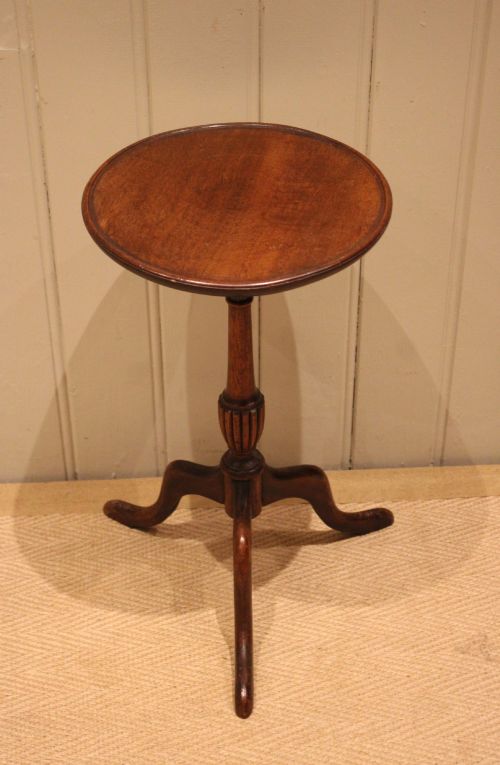
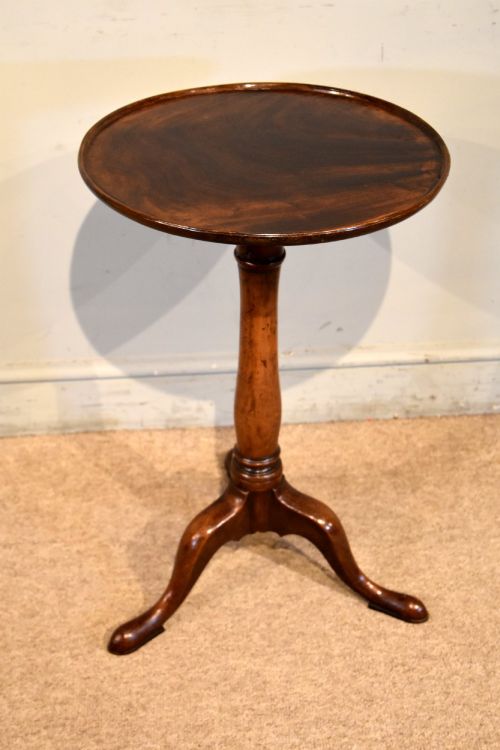
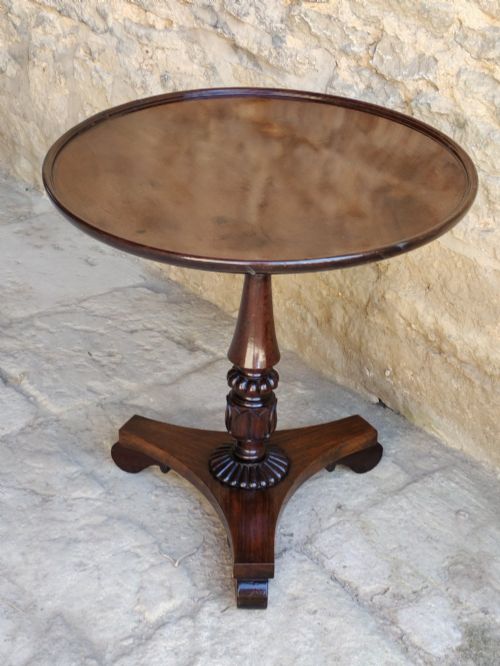
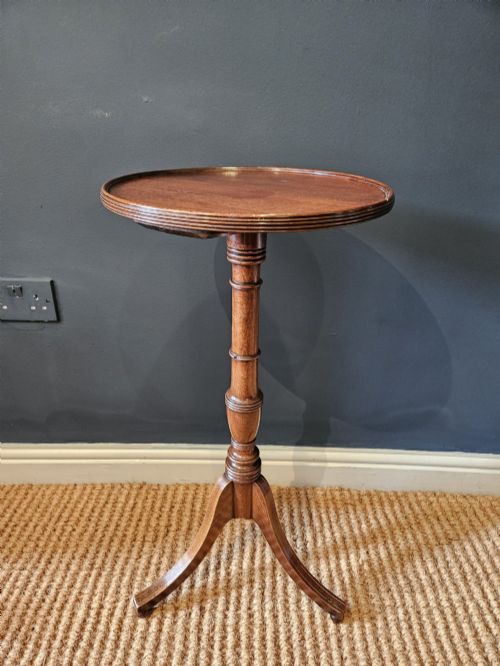
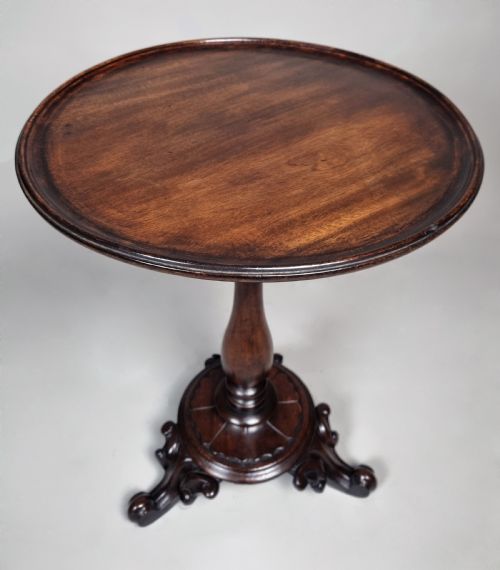
A mahogany dished table offers a turned pedestal and a raised circular rim, providing both utility and proportion for a traditional interior.
Mahogany Dished Table
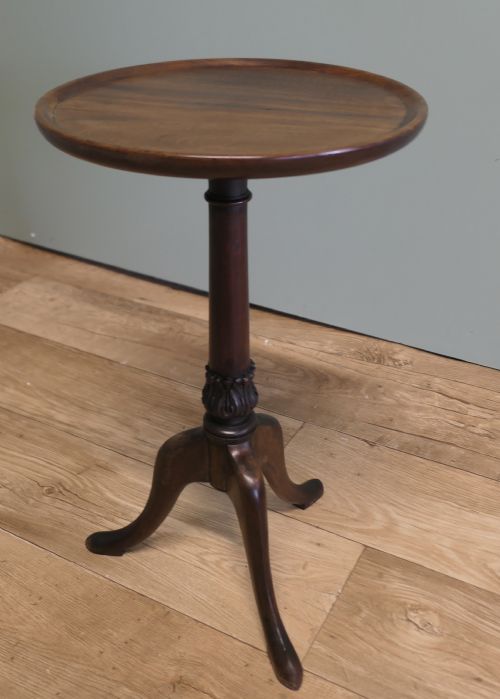
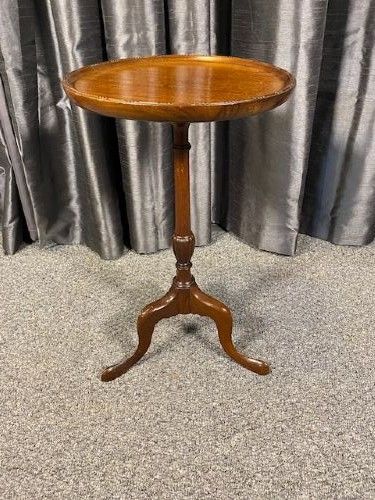
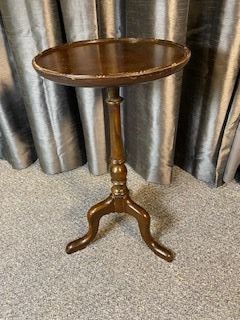
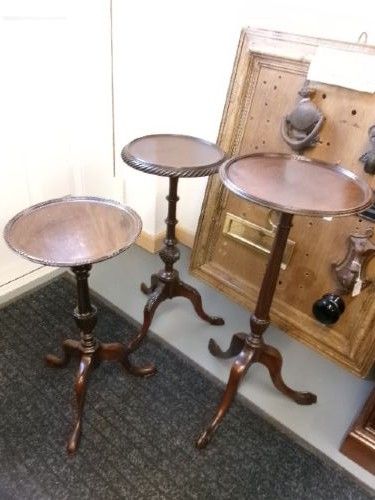
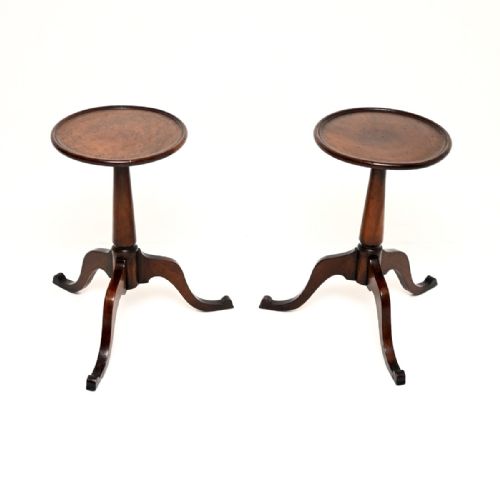
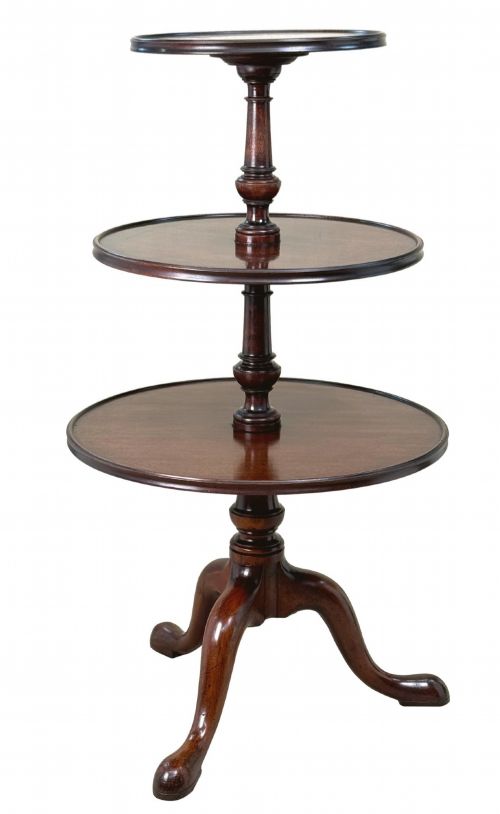
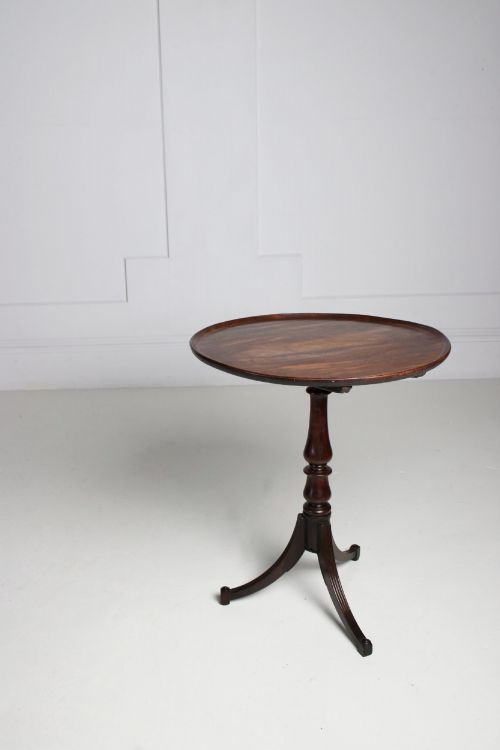
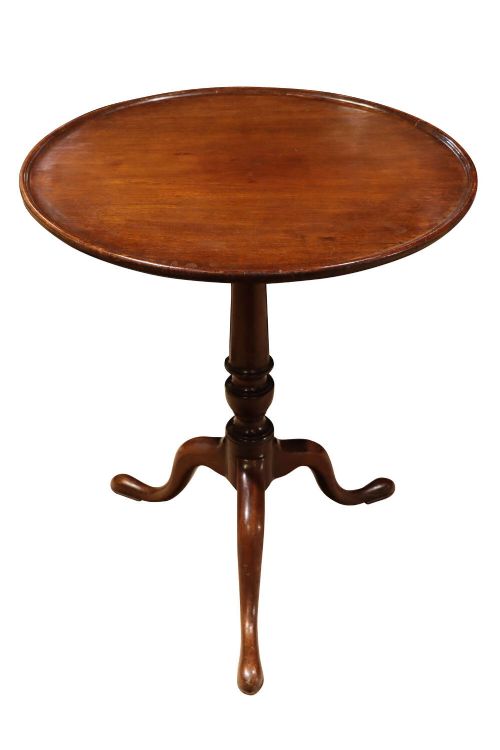
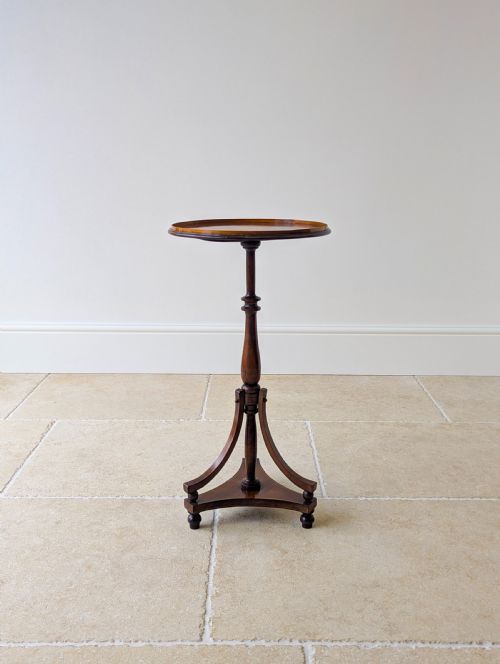
A mahogany dished table is encountered primarily as a wine table, tea table, or candle stand resting on a tripod base. These pieces span the eighteenth and nineteenth centuries, including Georgian, Regency, and Edwardian periods.
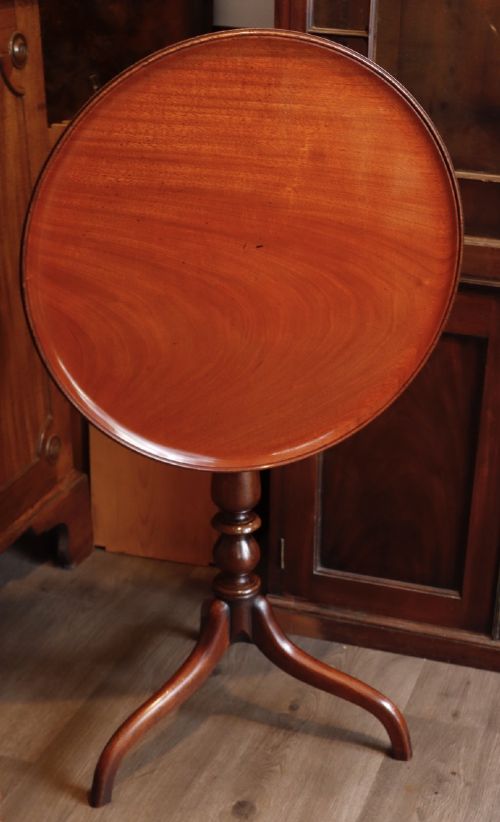
The defining characteristic is the circular top with a raised rim carved or turned directly from the solid timber, designed to prevent glassware or porcelain from sliding.
Examples range from compact tripod tea tables and kettle stands to larger silver tables and dumbwaiters originating in English and Irish workshops.
Construction and timber selection
Makers utilised solid mahogany and occasionally rosewood or burr wood, often incorporating boxwood and other timbers for wood inlay on later Edwardian pieces.
The dished top was typically turned on a lathe from a single thick plank of mahogany, leaving the solid perimeter raised above the centre field.
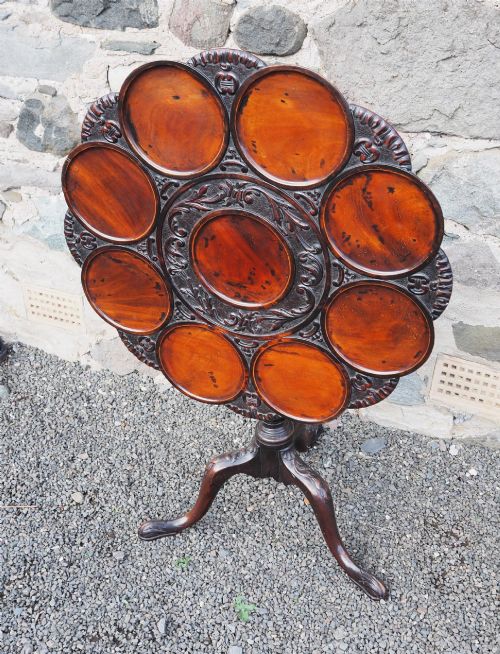
Tripod bases connect the central pedestal to three legs using traditional joinery, sometimes incorporating a birdcage mechanism to allow the top to tilt and revolve.
Mahogany Dished Table Retail Price Guide 2026
Typical asking prices for mahogany dished table among the pieces listed under this phrase on Sellingantiques today, from the lower quarter to the upper quarter. They describe what is for sale here now, not the wider market.
Listings feature mahogany dished tables spanning the Georgian, Regency, Victorian, and Edwardian periods, constructed in solid mahogany, rosewood, and burr wood.
Distinctions in craftsmanship and design
The depth and crispness of the turned moulding on the dished rim separate standard production from superior cabinet work, alongside the figuration and grain of the mahogany.
Proportion and stability in the tripod base dictate the success of the piece, with finer examples featuring elegantly carved cabriole legs and pad or claw feet rather than plain turnings.
Gillows
The Mahogany Dished Table Glossary
- Dished top
- A circular tabletop with a raised perimeter edge shaped to contain small objects. This rim was typically turned from solid timber rather than applied.
- Tripod base
- A support structure comprising three legs radiating from a central pillar. It provides stability on uneven floors.
- Tilt top
- A tabletop mounted on a hinge mechanism that allows the surface to fold vertical when not in use. This mechanism often includes a birdcage catch.
- Birdcage
- A revolving wooden framework beneath the tabletop that permits both rotation and tilting. It connects the top to the central column.
Mahogany Dished Table: Frequently Asked Questions
What was a mahogany dished table used for?
These tables served primarily for holding wine glasses, tea equipment, or candles beside seating furniture during the eighteenth and nineteenth centuries.
The raised rim prevented cups and bottles from sliding off the surface when placed near guests in a drawing room or parlour.
How do I identify a Georgian period table?
Georgian pieces display hand-carved mahogany surfaces, stable tripod constructions, and traditional timber patination developed over centuries of use.
Details such as snap-top mechanisms and birdcage supports point toward eighteenth-century English and Irish cabinet making.
What is a tilt-top mechanism?
A tilt-top mechanism allows the circular tabletop to pivot upright against the central column for convenient storage against a wall.
This functional feature was standard on eighteenth-century wine tables and occasional stands.
Where should I place a wine table at home?
A wine table fits easily beside an armchair, sofa, or in a corner as a compact lamp or display surface.
Its small footprint and raised rim make it practical for holding drinks or small decorative objects without taking up floor space.