






Mahogany Dessert Table
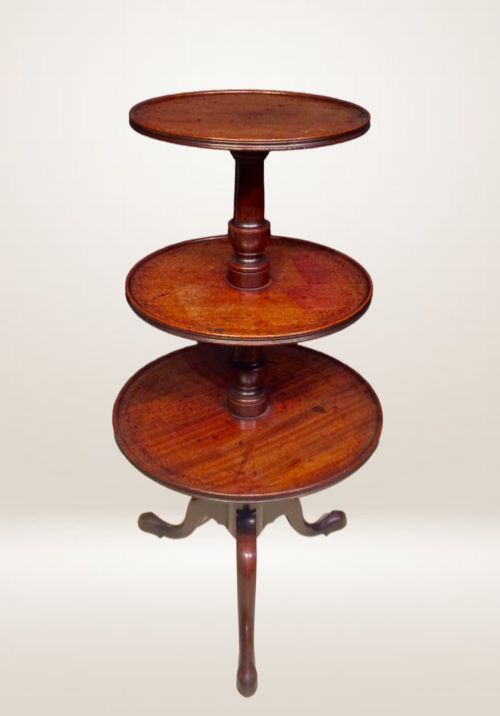
A mahogany dessert table, most often found here as a multi-tiered dumb waiter, serves as a practical multi-level surface for dining rooms.
Mahogany Dessert Table
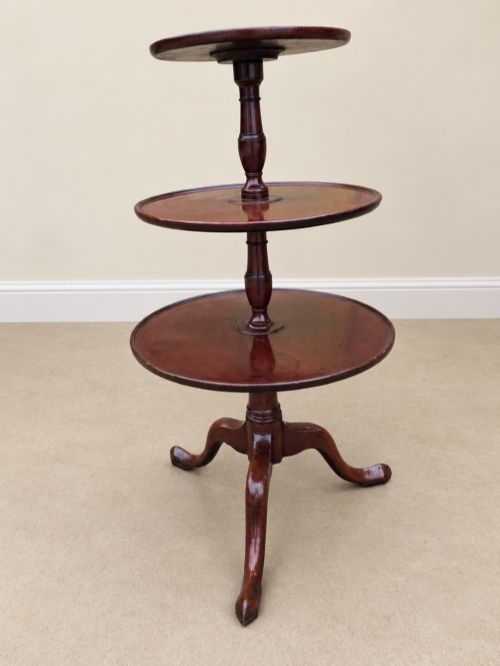
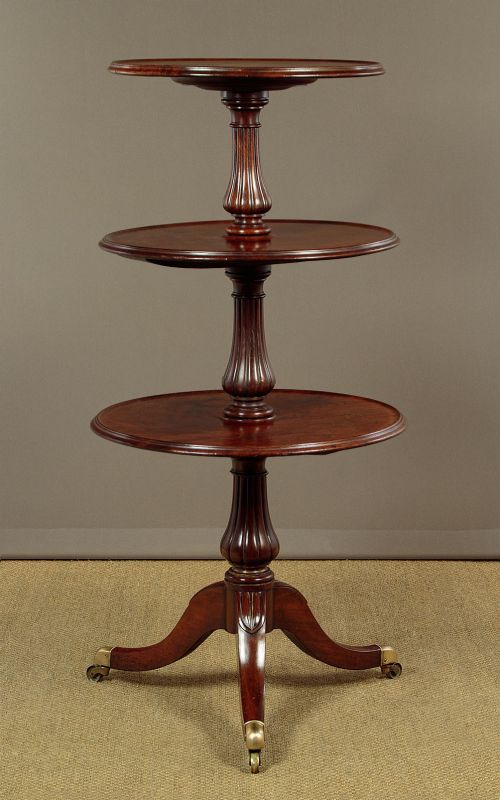
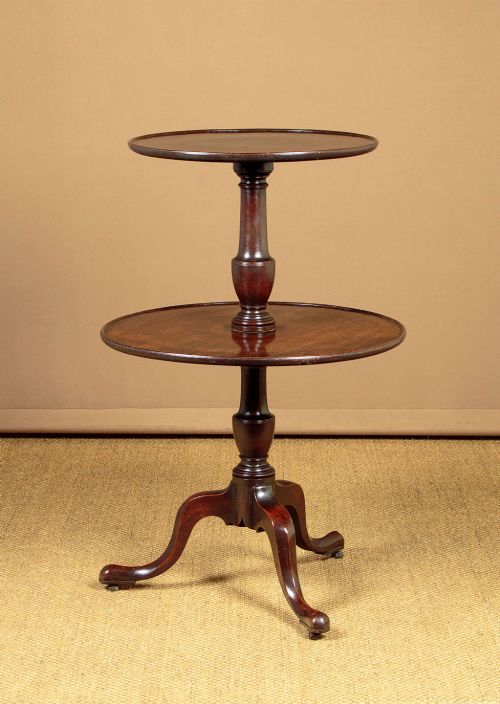
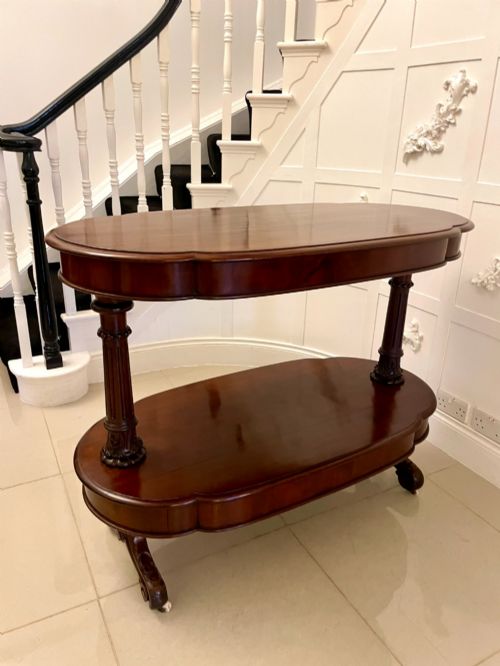
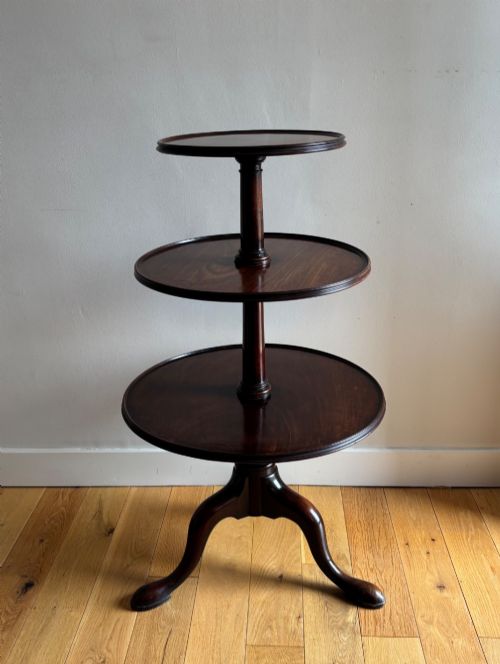
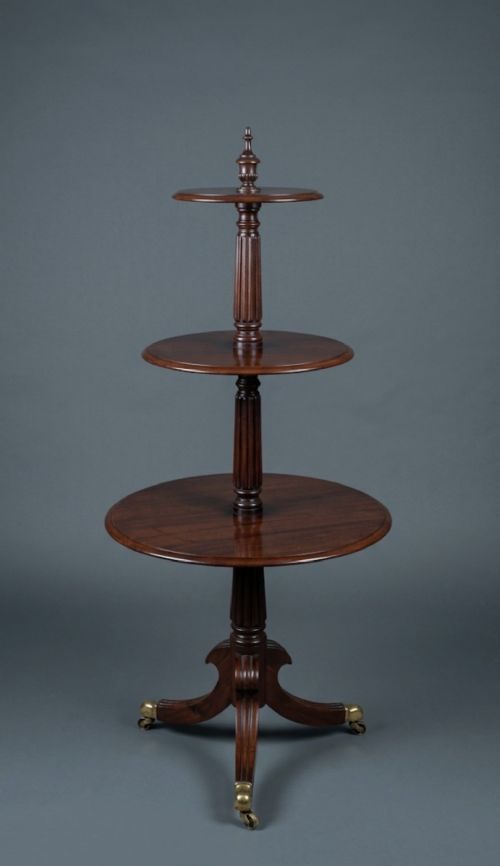
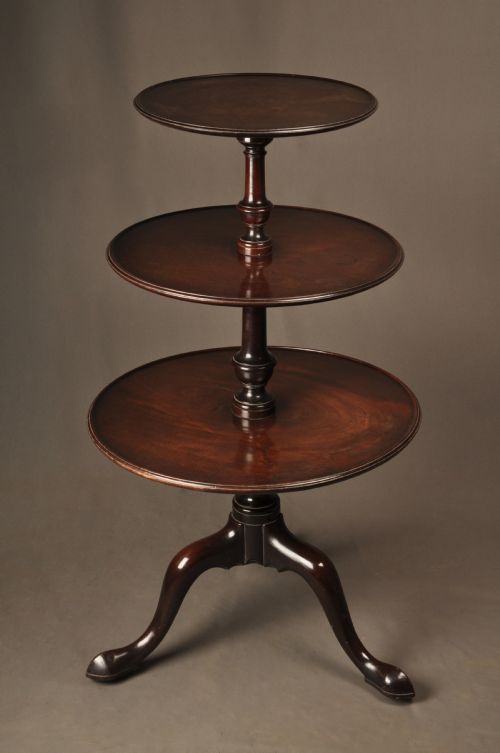
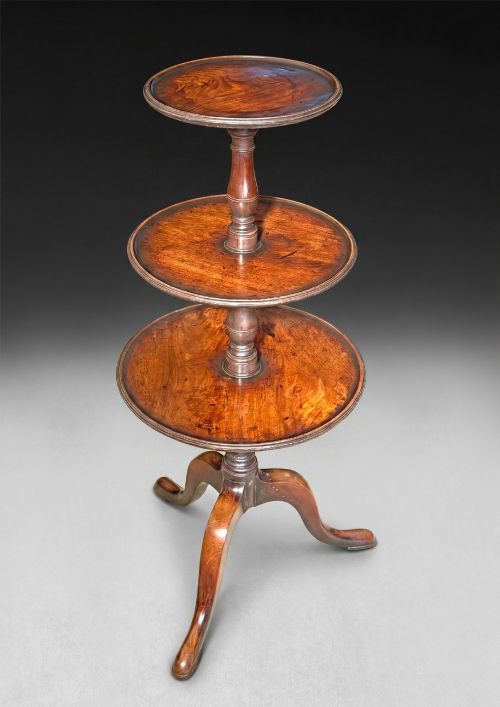
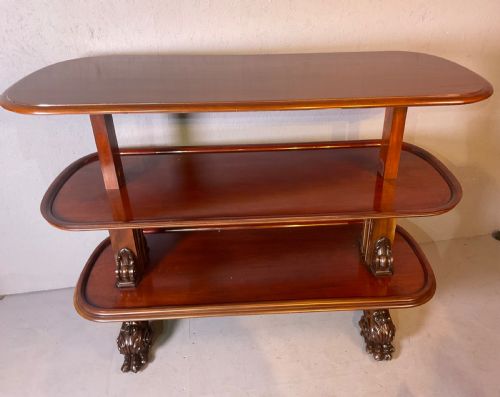
A mahogany dessert table typically takes the form of a dumb waiter or tiered serving table, designed to hold courses and tableware beside the main dining table. These pieces appear primarily across the Georgian, Regency, and Victorian periods, reflecting shifting interior dining habits over two centuries.
Most examples encountered on this page feature circular tiers supported on central pedestals, often with rotating trays or folding mechanisms. Two-tier and three-tier formats dominate the selection, built to stand beside sideboards or serve guests directly without the need for hovering attendants.
How they were made
Cabinet makers utilised dense mahogany for its stability and rich grain, occasionally adding rosewood or brass details to accentuate the turning and support structures. Tiers were frequently turned from single boards or carefully joined panels, mounted onto sturdy central pillars fitted with tripod legs or original castors.
Folding and revolving mechanisms required precise joinery to ensure the tiered trays turned smoothly or collapsed flat when not in use. Edge treatments ranged from plain round mouldings to raised galleries designed to keep serving dishes secure during rotation.
Mahogany Dessert Table Retail Price Guide 2026
Typical asking prices for mahogany dessert table among the pieces listed under this phrase on Sellingantiques today, from the lower quarter to the upper quarter. They describe what is for sale here now, not the wider market.
Listings span the Georgian, Regency, and Victorian eras, dominated by multi-tiered dumb waiters in mahogany with brass and inlay details.
What varies in quality
The distinction between standard utility pieces and finer examples rests on the choice of timber and the sophistication of the turning. Superior pieces display carefully matched mahogany grains across multiple tiers and crisply carved pillar columns.
Engineering of the rotating or folding joints marks the tier of craftsmanship. Robust hardware, well-fitted brass castors, and stable tripod bases separate exceptional workshop output from simpler provincial carpentry.
The Mahogany Dessert Table Glossary
- Dumb waiter
- A tiered serving table designed to hold food, wine, or dessert plates without the need for servants during a meal.
- Tiered table
- A piece of furniture constructed with multiple horizontal surfaces arranged vertically above a single base.
- Castor
- A small wheel fitted to the base of table legs to allow smooth rolling across dining room floors.
- Gallery
- A raised wooden rim or rail running around the edge of a tabletop to prevent items from sliding off.
- Pedestal
- A central vertical column supporting the upper tiers of a table, typically terminating in a tripod base.
Mahogany Dessert Table: Frequently Asked Questions
What is a mahogany dessert table?
A mahogany dessert table is a tiered serving stand, commonly called a dumb waiter, used historically to hold food and dishes near a dining table.
These pieces allow diners to help themselves to courses or store extra plates without requiring household staff in the room.
How do I date a mahogany dumb waiter?
Dating relies on observing the stylistic markers of periods such as George III, Regency, and Victorian, alongside construction methods.
Earlier 18th-century examples tend to feature simpler, robust tripod bases, while Victorian versions often introduce castors and metamorphic folding actions.
Where were these tables used?
They stood in formal dining rooms, placed conveniently beside the main dining table or against the perimeter wall.
Their tiered circular trays held dessert courses, decanters, and glassware ready for use during long evening meals.
Can these tables be folded away?
Certain examples incorporate folding mechanisms that allow the tiers to drop or pivot flat for storage when not in use.
Buyers should examine the specific hinges and pivots on folding variants to understand how the mechanism operates.