




Mahogany Desktop Box
A mahogany desktop box brings order to a working surface, offering compartmentalised storage in rich timber for letters, jewellery or small instruments.
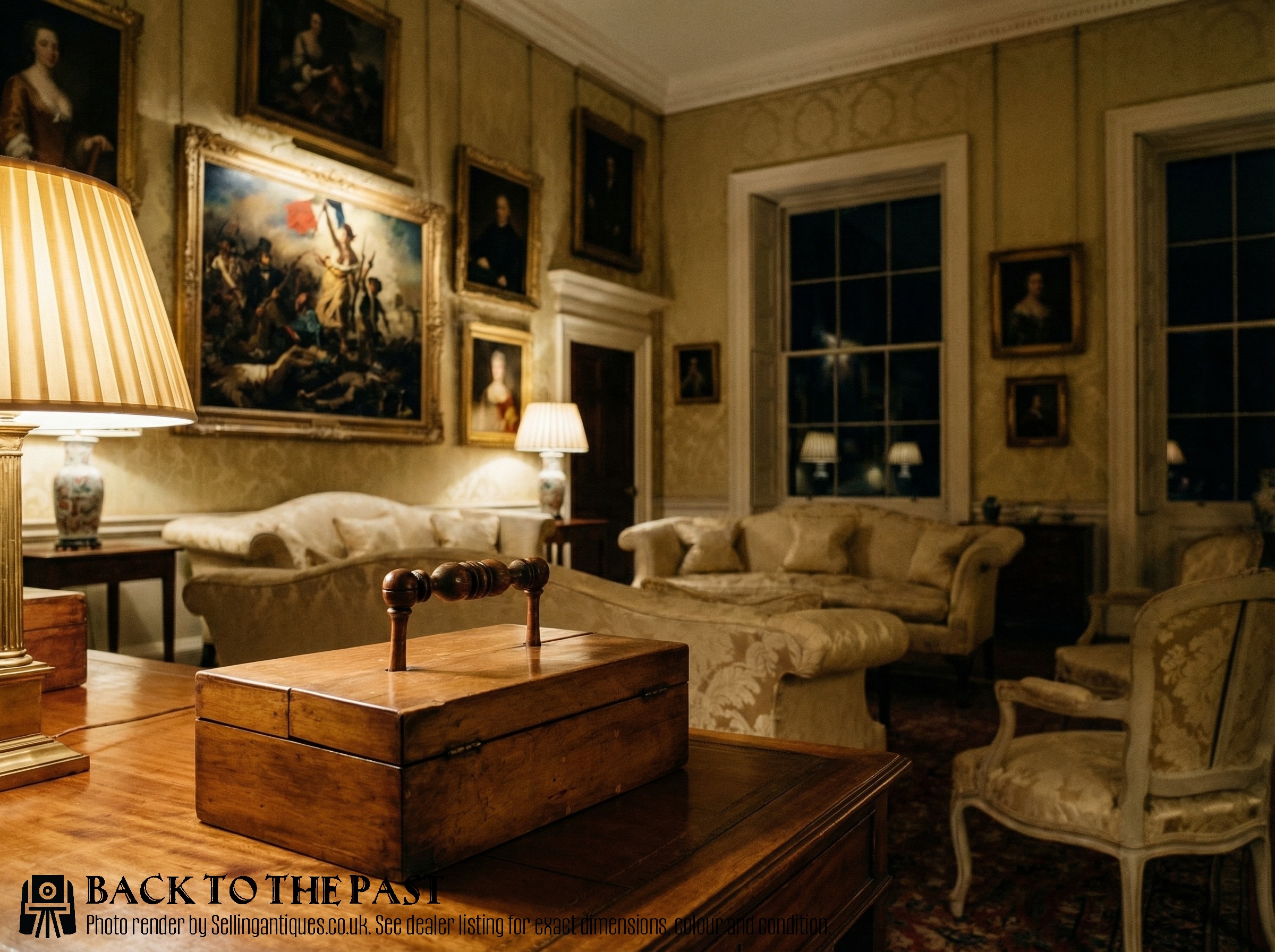
Mahogany Desktop Box
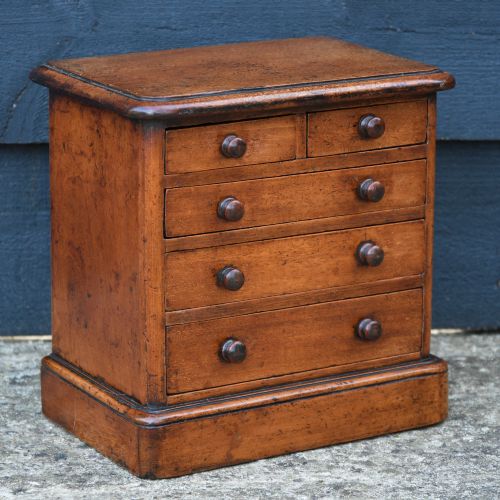
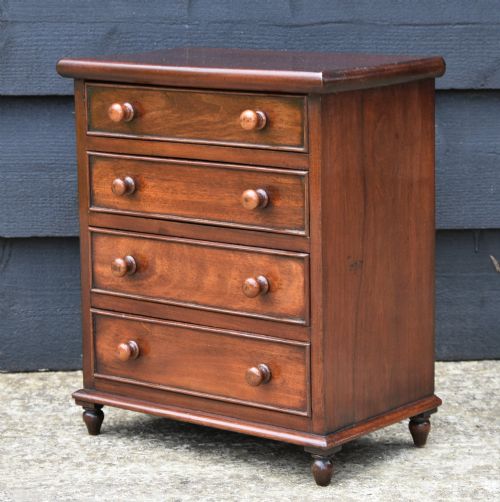
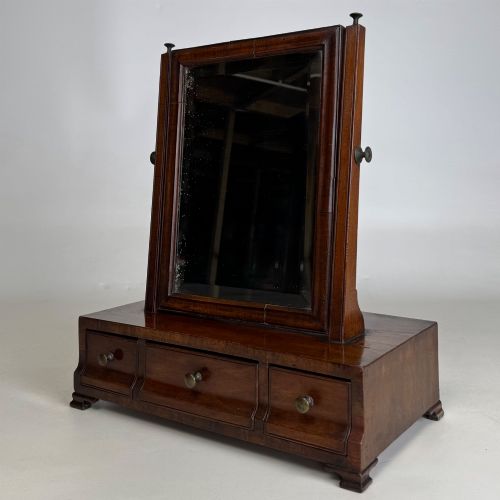
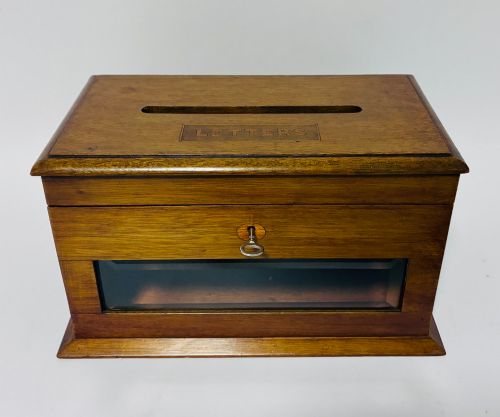
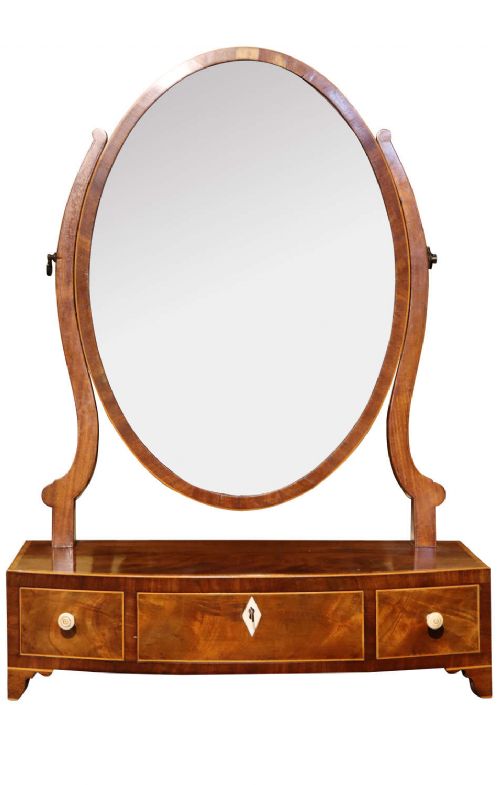
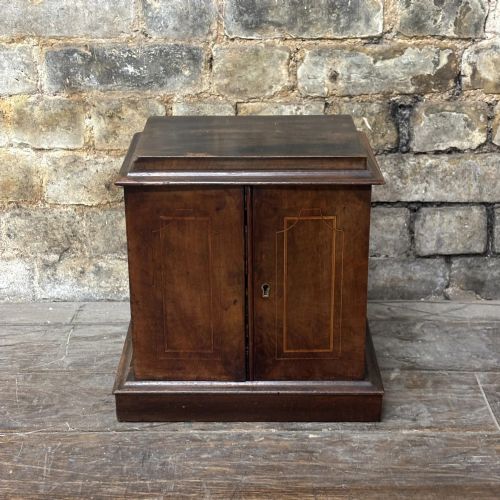
A mahogany desktop box encompasses everything from tabletop stationery cabinets and letter boxes to miniature chests of drawers and dressing table mirrors made of timber. You will frequently find pieces originating from the Georgian and Victorian periods, alongside Edwardian examples and later 1920s designs.
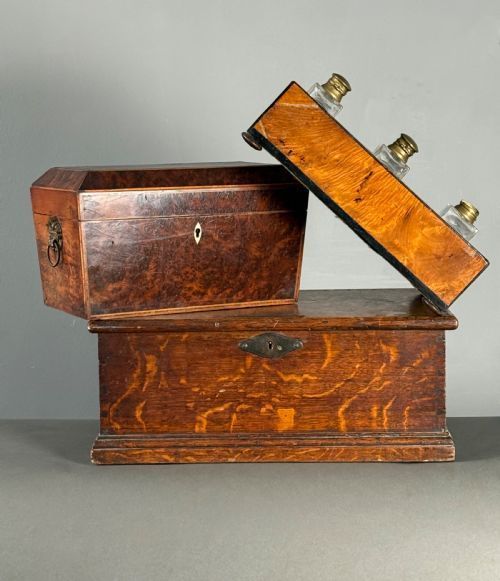
The practical forms include correspondence boxes, letter holders, tabletop repositories and specimen or collectors cabinets with multiple small drawers. Many serve specific domestic or professional tasks, such as holding writing paper, cigars, watches or scientific instruments like microscopes.
Miniature furniture and apprentice pieces also appear within this group, translating full-scale chests of drawers and dressing mirrors into compact desktop formats. These smaller items display the same joinery and proportions as their larger counterparts while sitting easily upon a desk or table.
Materials and construction
Makers built these pieces primarily using solid mahogany, occasionally supplemented by secondary timbers such as walnut or decorative veneers like satinwood and crossbanding. The natural grain of the wood provides the main visual character, often enhanced by hand-polishing.
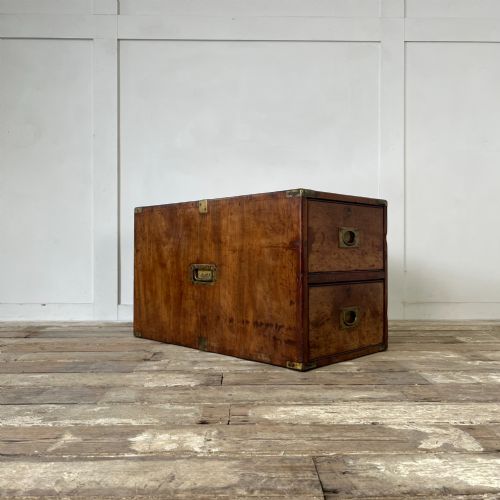
Brass mountings, hinges, handles and escutcheons frequently appear on campaign-style pieces, letter boxes and collectors cabinets to reinforce corners and secure lids. Glass panels feature on display cabinets and cased scientific instruments, while internal compartments sometimes incorporate bone or velvet linings.
Mahogany Desktop Box Retail Price Guide 2026
Typical asking prices for mahogany desktop box among the pieces listed under this phrase on Sellingantiques today, from the lower quarter to the upper quarter. They describe what is for sale here now, not the wider market.
Some Victorian letter boxes still bear ghost traces of answered and unanswered correspondence labels.
Distinctions in quality
The standard of a mahogany desktop box rests on the crispness of its joinery, the selection of figured timber, and the integrity of its internal layout. Superior examples retain matching brass hardware, well-fitted internal divisions, and smooth-running miniature drawers that demonstrate meticulous craftsmanship.
Pieces that display thoughtful proportion, such as serpentine fronts or subtle crossbanding, separate ordinary utility items from finer decorative pieces. The depth of the patina and the preservation of original polish also distinguish an exceptional survival from a heavily restored box.
Alfred Dunhill·Swift & Son
The Mahogany Desktop Box Glossary
- Crossbanding
- A border technique where thin strips of veneer are laid perpendicular to the main grain. This frames the top or drawer fronts of a cabinet with a contrasting border.
- Campaign chest
- A portable form of furniture made in sections with inset brass handles and corner brackets. It was designed for easy transport by travellers or military officers.
- Serpentine
- A curved line shape featuring a convex centre flanked by concave curves. It adds elegance and visual movement to the front of a dressing mirror or chest.
- Apprentice piece
- A small-scale model demonstration item made by a trainee craftsman. These objects tested a joiner's skill in miniature dovetailing and proportion.
- Escutcheon
- A protective plate surrounding a keyhole. It is commonly cast in brass and countersunk into the timber front of a box or cabinet door.
Mahogany Desktop Box: Frequently Asked Questions
What is a mahogany desktop box used for?
These boxes organise writing materials, letters, small instruments, and personal valuables on a table or desk.
Historically they kept correspondence private, stored specimens or jewellery, and provided portable storage for working professionals.
How do I date a mahogany desktop box?
Dating relies on stylistic clues like Georgian serpentine curves, Victorian brass campaign mounts, or Edwardian inlaid decoration.
Construction details such as drawer dovetailing and timber selection also help place a piece within the eighteenth, nineteenth, or early twentieth century.
Are miniature chests of drawers authentic?
Many miniature and apprentice chests served as genuine demonstrations of skill by woodworkers learning their trade.
Others functioned as practical tabletop storage for small household items, retaining the exact proportions and timber quality of full-sized furniture.
What distinguishes a stationery cabinet from a letter box?
Stationery cabinets typically feature doors or sloping fronts that open to reveal internal slots for paper, envelopes, and inkwells.
Letter boxes focus on an exterior slot designed to receive mail, often mounted on a wall or placed upon a hall table.