
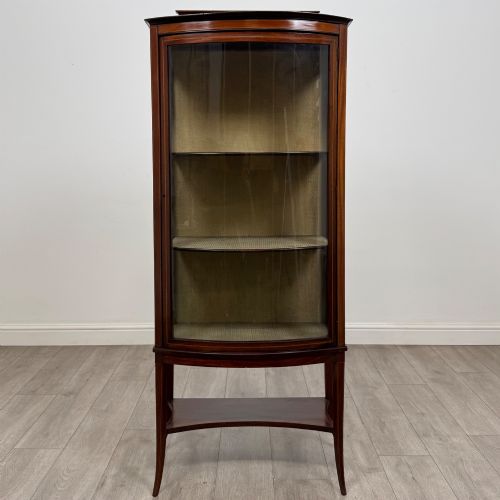
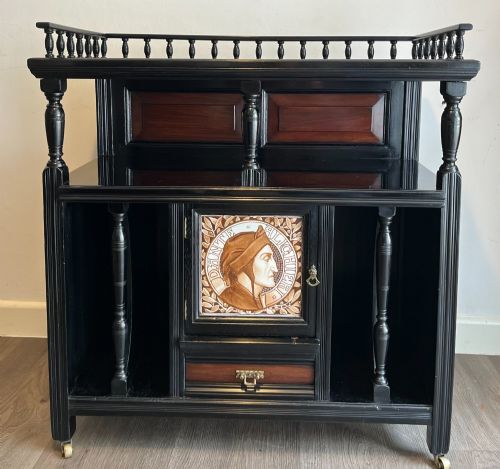
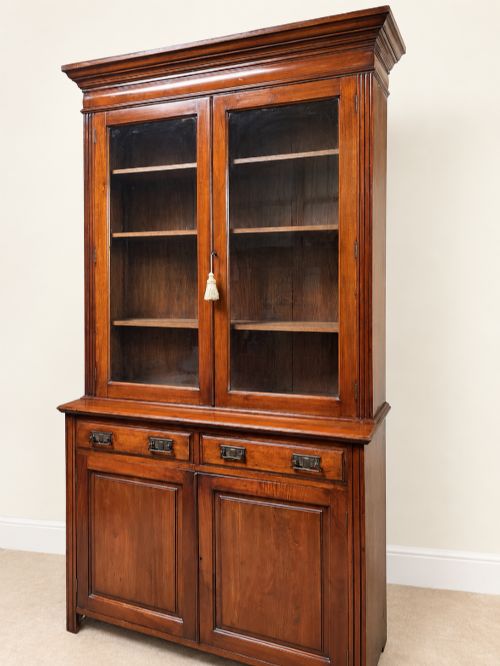
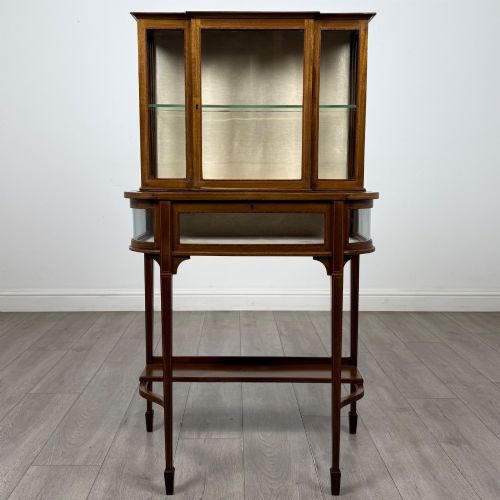
Mahogany Cupboard Display Cabinet
When you search for a mahogany cupboard display cabinet, you enter a world of timber-framed glass, adjustable shelving, and enclosed lower storage built to showcase and protect prized possessions.
Mahogany Cupboard Display Cabinet
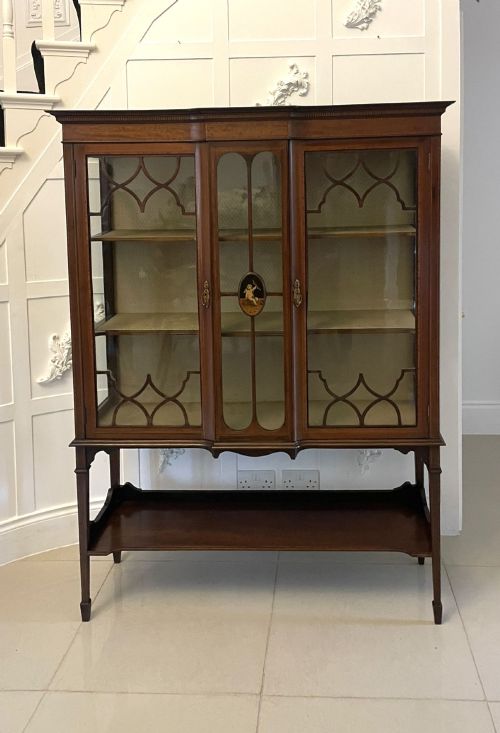
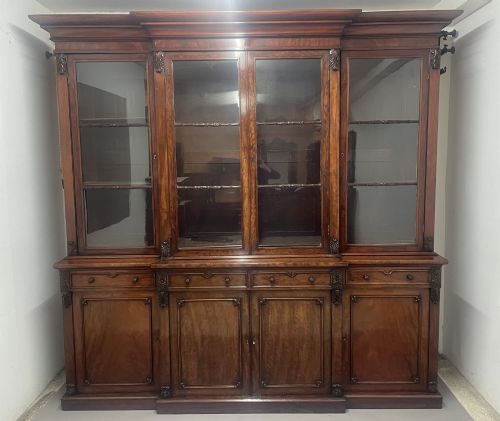
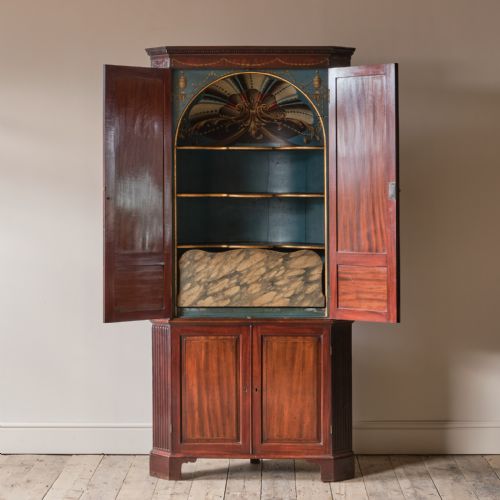
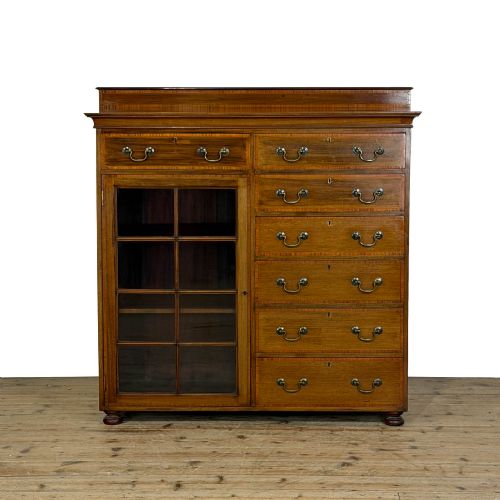
A mahogany cupboard display cabinet combines upper glazed shelving for viewing objects with a lower solid wooden cupboard for concealed storage. This hybrid furniture type appears across Georgian, Victorian, and Edwardian periods in upright, breakfront, and corner configurations.
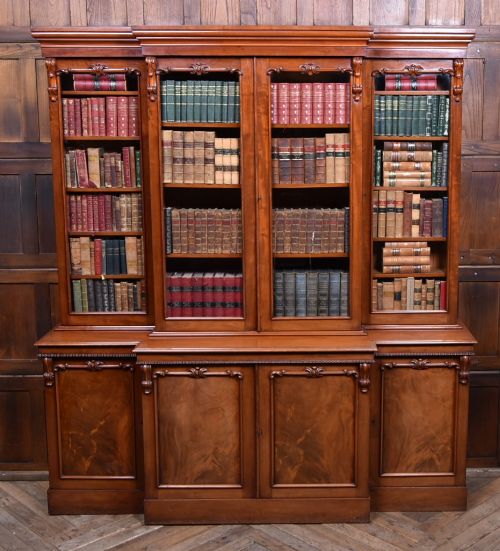
The pieces you encounter most frequently on this page date from the Victorian and Edwardian eras, spanning vertical bookcases, compact corner cupboards, and grand breakfront designs. They bridge the gap between practical library storage and formal drawing-room exhibition.
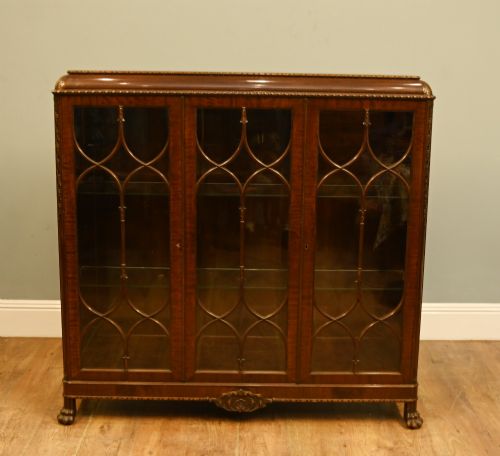
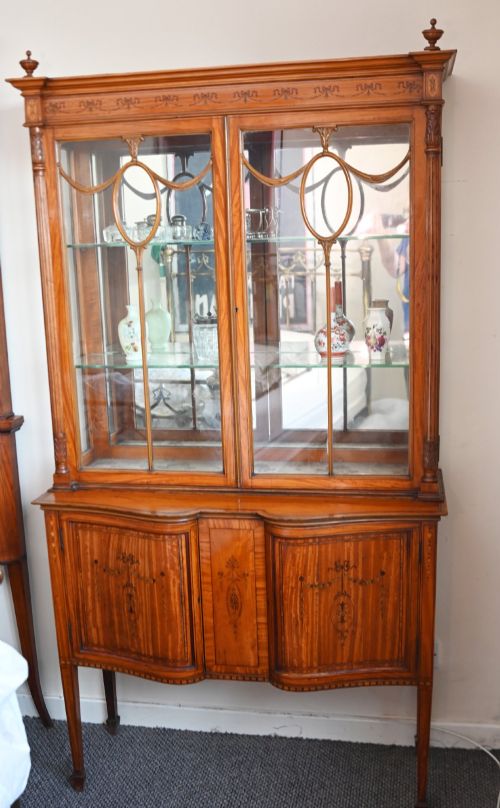
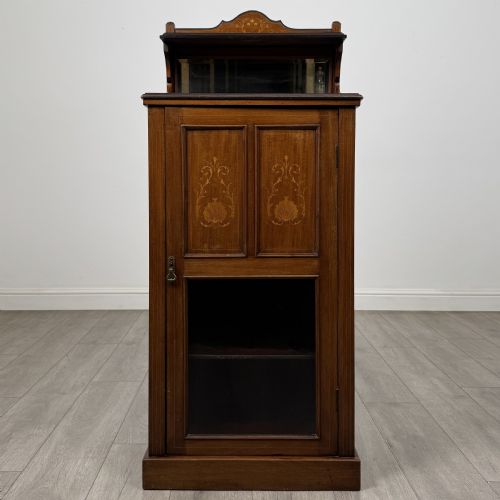
Many examples incorporate astragal glazing bars or satinwood inlay, reflecting specific design revivals like the Sheraton or Chinese Chippendale styles. They serve the same purpose today as they did centuries ago: displaying porcelain, books, and curiosities while keeping utilitarian items out of sight.
Materials and Construction
Cabinetmakers built these pieces primarily using solid mahogany and mahogany veneers, occasionally incorporating secondary timbers such as oak or walnut. The warm, rich grain of the wood often received hand-polished finishes to enhance its natural depth.
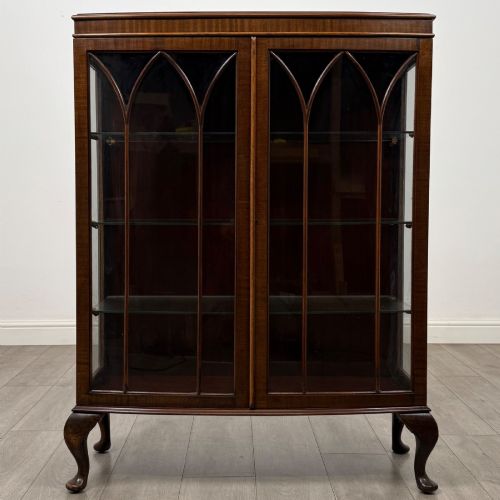
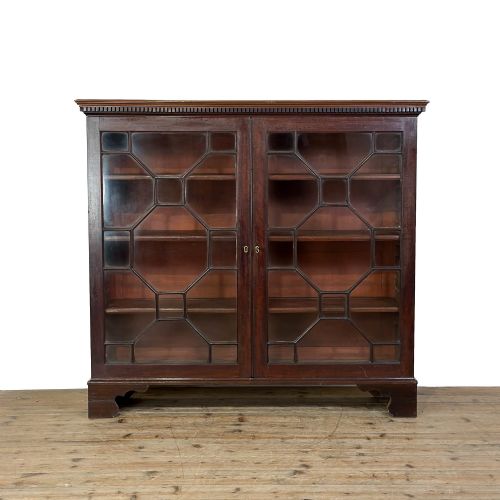
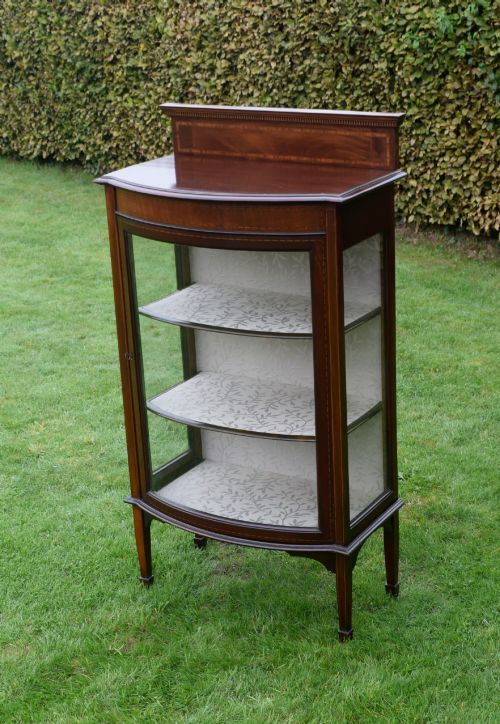
Glazing techniques utilised individual panes of glass held in place by wooden astragal bars, sometimes curved in bow-front or serpentine formats. Structural details included hand-cut dovetail joints in the drawers and brass hardware for locks and handles.
Inlaid pieces featured contrasting veneers like satinwood, alongside marquetry or painted decoration applied directly to the timber surfaces. Corner units and wall-hanging cupboards were engineered to fit domestic room layouts efficiently while maintaining structural integrity.
Materials recorded across these pieces include solid mahogany, glass, brass, satinwood inlay, mirror plates, and painted decoration.
Markers of Excellence
Quality rests upon the selection of the timber itself, where highly figured mahogany and precise veneer matching elevate a piece far above plain stock. The crispness of carved details, whether floral motifs or blind frets, indicates the time and skill invested by the maker.
Construction methods reveal craftsmanship in the thickness of the backboards, the tightness of the joinery, and the presence of original brass fittings and working locks. Subtle enhancements like satinwood crossbanding and delicate stringing separate standard utility furniture from high-status commissions.
Proportion and balance define the visual success of taller breakfront and corner cabinets, where cornices and plinths must harmonize with the glazed doors above. Originality of surfaces, including aged patination on the timber and intact glass panes, preserves the integrity of the piece.
Jas Shoolbred·Gillows·Edwards and Roberts
The Mahogany Cupboard Display Cabinet Glossary
- Astragal glazing
- Timber bars that divide a glass window into smaller panes within a door or bookcase front. These narrow wooden strips form geometric or gothic patterns across the display area.
- Breakfront
- A cabinet design where the central section projects forward from the flanking wings. This architectural arrangement creates depth and shadow across large bookcases and display units.
- Marquetry
- Decorative veneer work formed by fitted pieces of different coloured woods to create pictorial or abstract patterns. It appears frequently on Edwardian and late Victorian inlaid cabinets.
- Satinwood
- A pale, durable exotic timber utilised for contrasting inlay and stringing on darker mahogany surfaces. It provides a bright golden accent in Sheraton Revival pieces.
- Serpentine
- A furniture front curved with a convex centre flanked by concave ends, or vice versa. This flowing shape demands advanced woodworking skill to execute cleanly on doors and drawers.
Mahogany Cupboard Display Cabinet: Frequently Asked Questions
What is the difference between a bookcase and a display cabinet?
Bookcases generally feature open shelving designed primarily for housing volumes, though many period examples incorporate glazed doors to protect the contents.
Display cabinets focus on visibility, utilising glass on multiple sides and mirrored backs to showcase decorative ceramics and glassware.
How do I date a mahogany cabinet?
Dating relies on architectural styles, construction techniques, and timber characteristics. Georgian pieces often display restrained lines and hand-cut dovetails, while Victorian and Edwardian examples may include machine-sawn elements, heavier carvings, or distinctive revival motifs.
Secondary woods, lock types, and interior linings also provide physical clues that narrow down the decade of manufacture.
Are corner cabinets practical for modern rooms?
Corner cabinets utilise awkward or underused wall junctions, making them well-suited for smaller living spaces where floor area is at a premium.
They offer considerable storage and display capacity within a footprint that leaves the main walls free for other furniture.
How should I care for antique mahogany furniture?
Antique mahogany benefits from stable indoor humidity and protection from direct sunlight, which can bleach the rich colour of the timber over time.
Occasional treatment with appropriate wax maintains the lustre of the polish without building up sticky residues on the surface.