
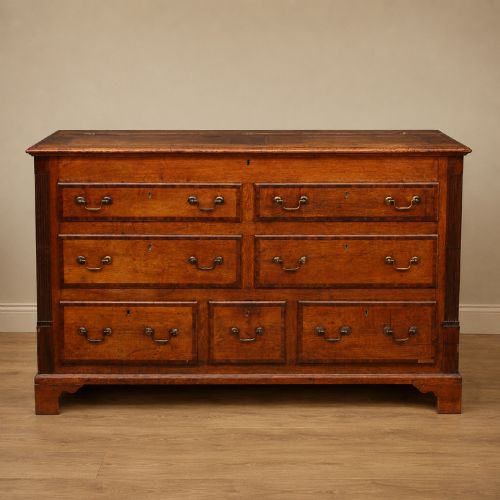

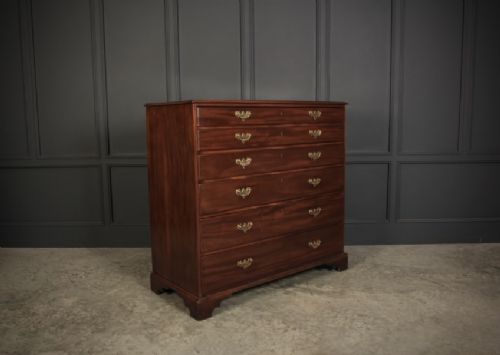


Mahogany Coffer with Drawers
These mahogany coffer with drawers pieces combine deep timber surfaces with practical storage, offering timeless utility for the home.
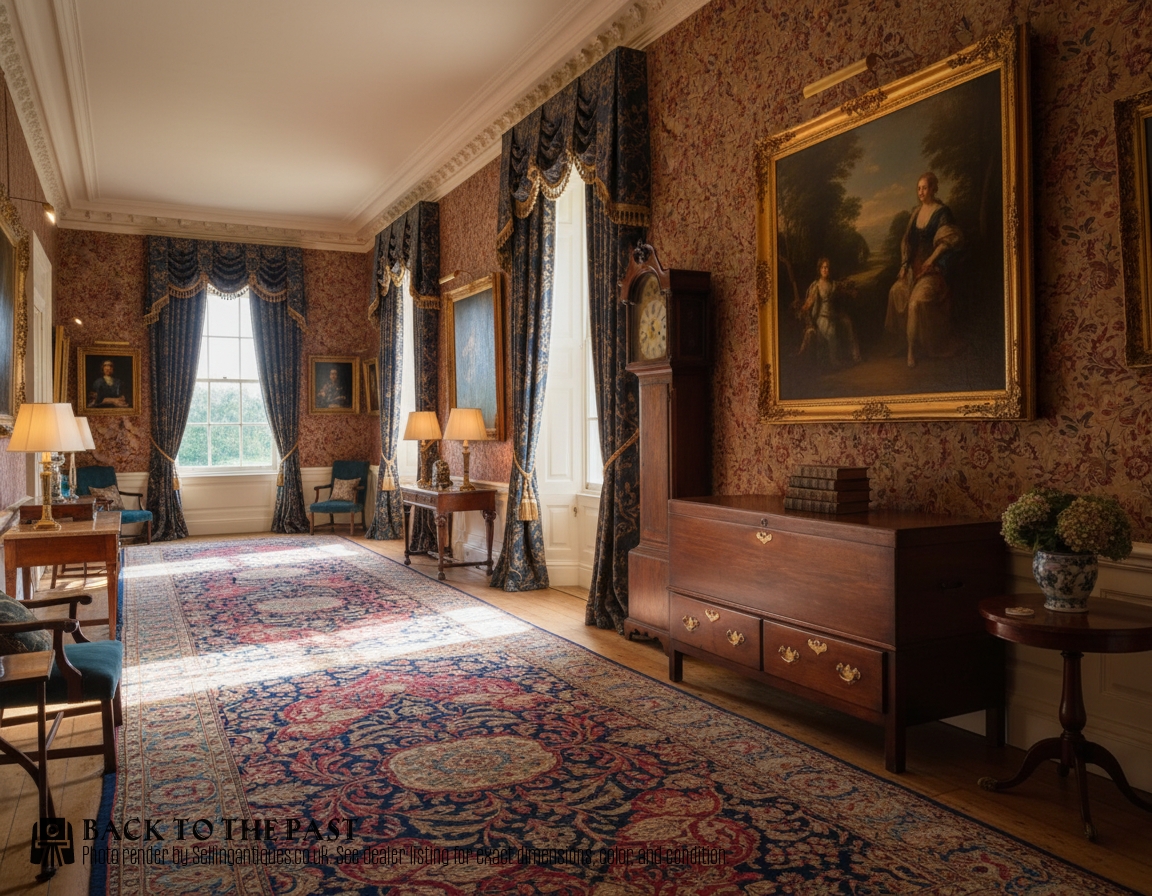
Mahogany Coffer with Drawers
When you search for mahogany coffer with drawers, you encounter a robust mix of storage forms spanning the eighteenth and nineteenth centuries. These pieces serve multiple domestic functions, operating as mule chests, housekeepers trunks, and hall trunks alongside traditional chests of drawers and chest on stand formats.
The specimens on this page originate predominantly from the Georgian period, alongside late nineteenth century examples and eighteenth century South African pieces. They blend the secure lidded storage of a traditional coffer with the accessible drawer space found in cabinetry.
Mule chests and housekeepers trunks dominate the offerings, often pairing a deep upper compartment with one or more lower drawers. This hybrid form developed to house linens, silver, or personal apparel efficiently within a single piece of furniture.
How they were made
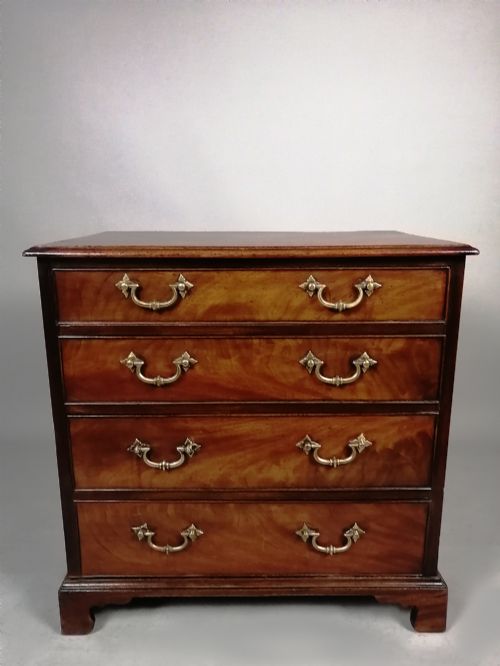
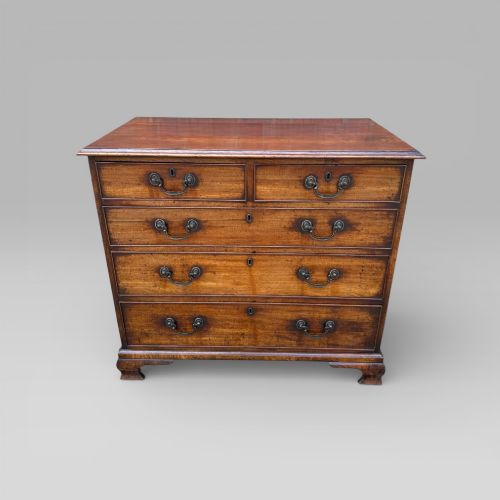
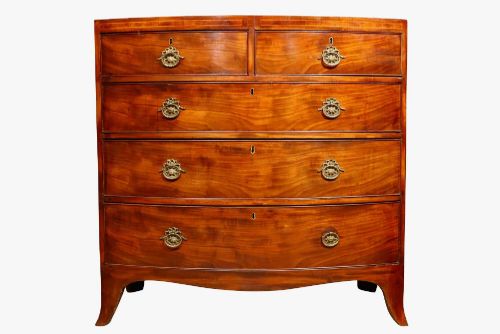
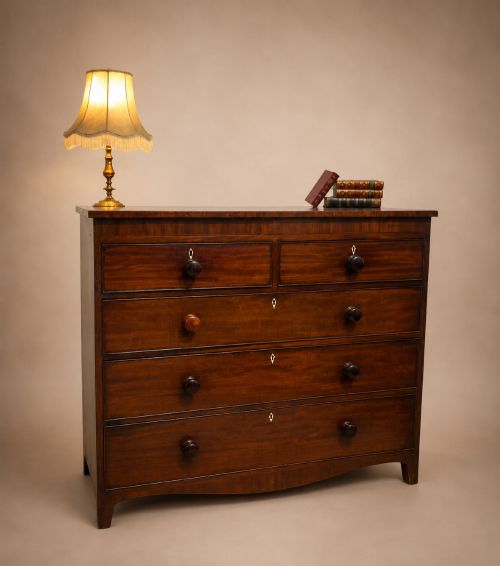
Cabinetmakers utilised dense timbers, notably solid mahogany and flame mahogany veneer, selected for rich grain patterns and durability. Selected pieces also incorporate stinkwood, reflecting regional variations in construction.
Metal hardware plays a functional and decorative role, with brass fixtures securing corners, lids, and drawers. Joinery methods range from standard box construction to sophisticated block front shaping.
Surface finishes highlight the natural warmth of the wood through traditional polishing techniques. The execution varies from restrained vernacular work to refined Chippendale revival styling.
Materials represented in the current inventory include solid mahogany, flame mahogany veneer, brass hardware, and regional stinkwood.
What varies in quality
The distinction between standard examples and superior pieces rests on the choice of timber and the sophistication of the veneer work. Flame mahogany veneer requires skilled application to achieve visual harmony across large expanses.
Proportion and decorative restraint dictate the aesthetic tier of each object, separating plain utility items from high status specimens. Elements such as brushing slides, cupboard cellarettes, or specialised stands elevate the complexity and desirability of the design.
The integrity of the original brass hardware and the crispness of the joinery distinguish well preserved items from those with heavy alterations. Subtle details in moulding profiles and bracket feet reflect the ambition of the original workshop.
The Mahogany Coffer with Drawers Glossary
- Mule chest
- A storage form combining a hinged chest section with one or more drawers beneath. This hybrid design bridges the traditional coffer and the chest of drawers.
- Brushing slide
- A pull out wooden board integrated into the upper casework to provide a temporary surface for folding garments or inspecting items. It typically sits just below the top moulding.
- Block front
- A cabinetmaking technique featuring a surface divided into three vertical panels, where the outer sections project forward and the central section recedes. This creates strong shadow lines and sculptural depth.
- Cellarette
- A dedicated storage cabinet or chest designed to hold wine bottles securely. These interiors often feature fitted compartments or lined sections.
- Stinkwood
- A dense, durable hardwood utilised in regional furniture production, particularly associated with Cape Dutch colonial pieces. It takes a deep polish and shows varied grain characteristics.
Mahogany Coffer with Drawers: Frequently Asked Questions
What is a mahogany coffer with drawers?
A mahogany coffer with drawers is a dual purpose storage furniture piece featuring a top opening compartment combined with lower drawers.
These hybrid items developed to store household linens, silver, or clothing while providing organised access through the drawer section.
How do I identify a Georgian piece?
Georgian pieces are identified through proportions, traditional joinery methods, and characteristic timber usage spanning the eighteenth century.
They display hand cut dovetails, solid mahogany construction, and period specific hardware without modern fasteners.
Where were mule chests used?
Mule chests functioned primarily in bedrooms and hallways of large houses for storing garments and household goods.
The lower drawers allowed frequent access to smaller items without disturbing the main lidded compartment above.
How do I care for mahogany furniture?
Maintain mahogany furniture by keeping it away from direct heat sources and sudden humidity changes.
Apply a traditional wax polish occasionally to nourish the timber and protect the surface from drying out.