
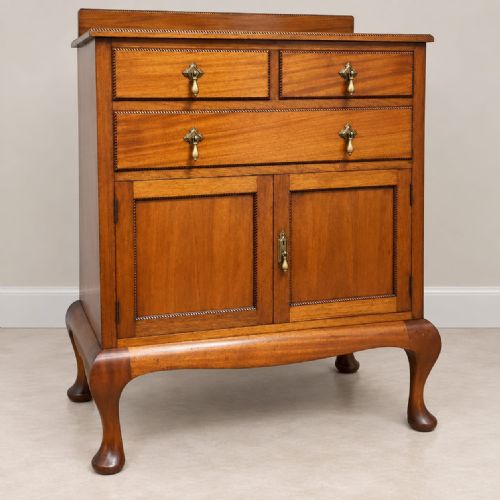
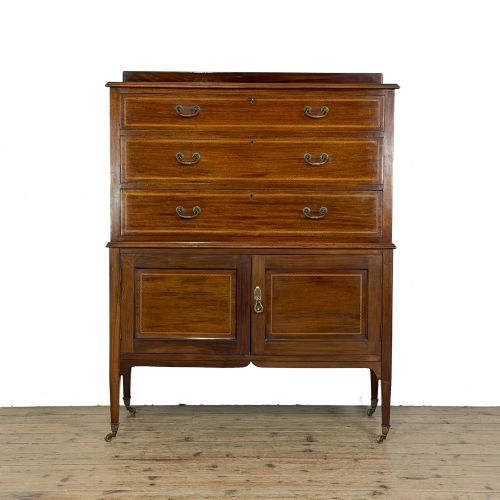
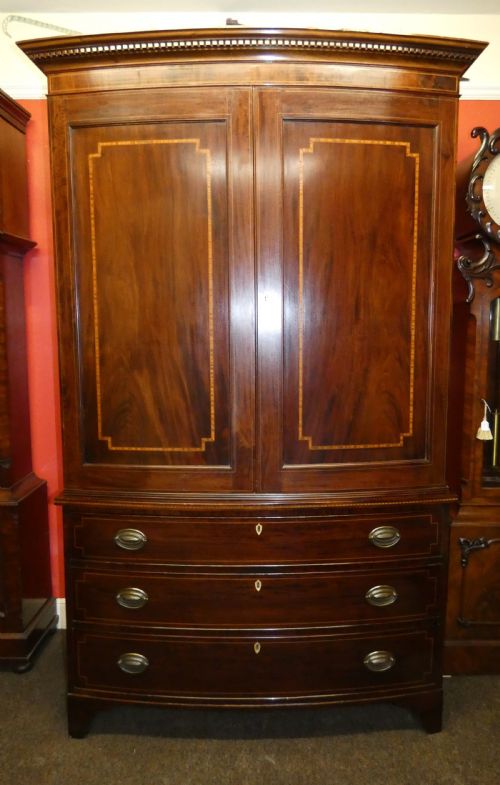
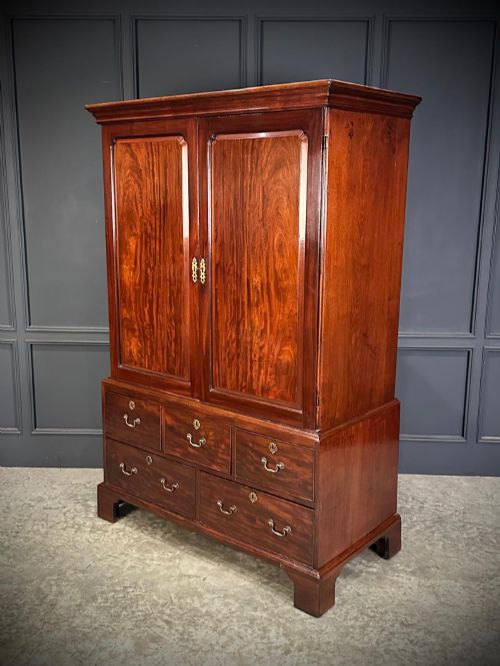
Mahogany Chest Press
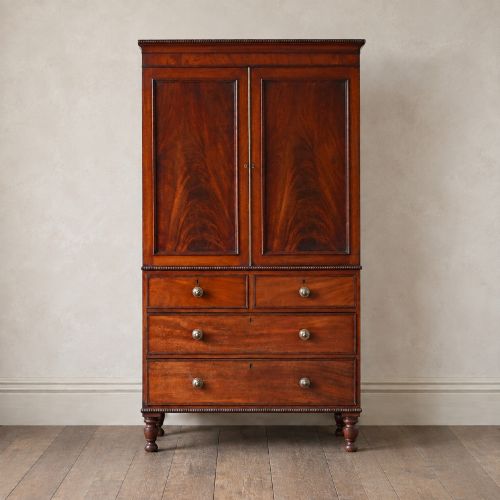
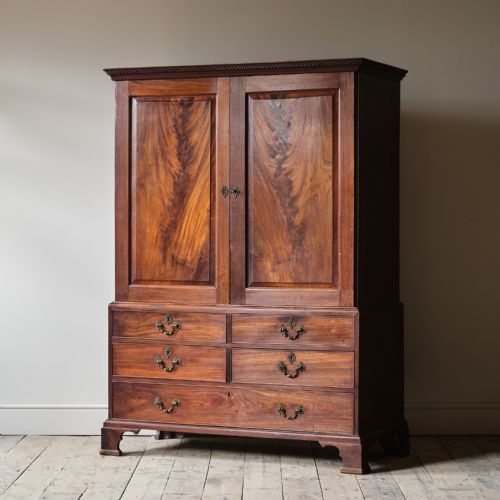
When you examine a mahogany chest press, you encounter a substantial combination of wardrobe and drawer storage built to preserve household linens.
Mahogany Chest Press
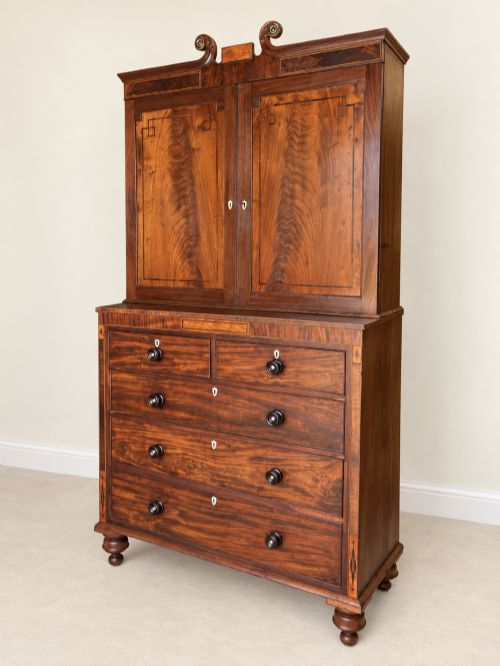
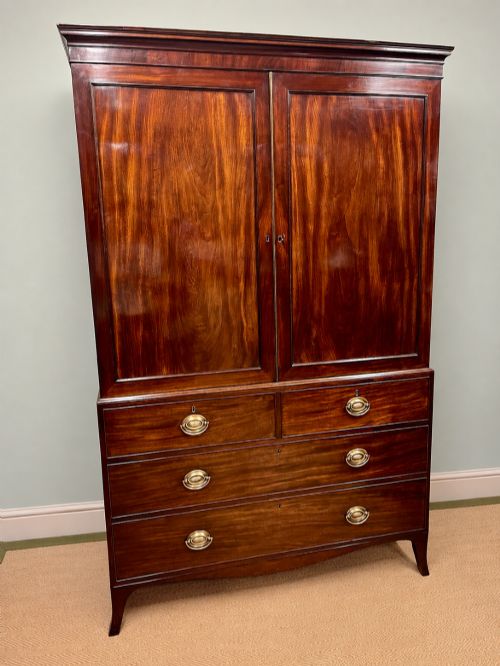
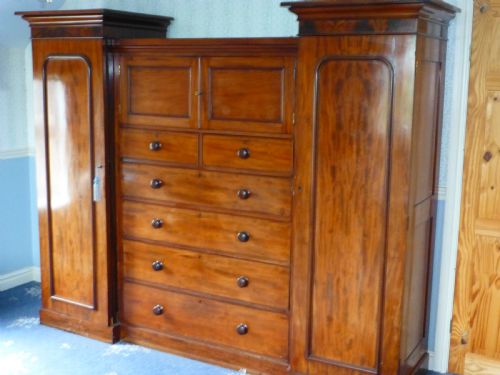
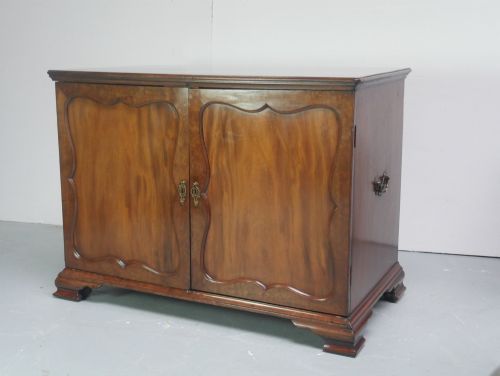
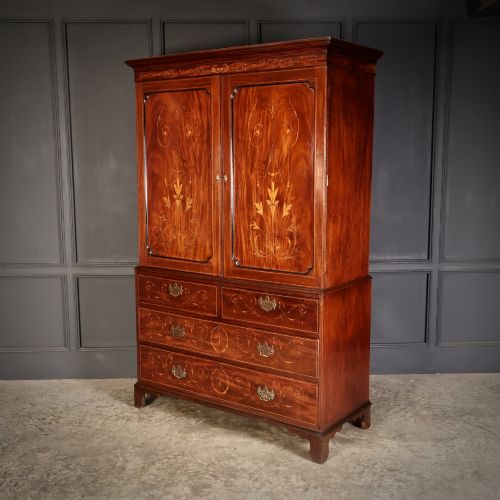
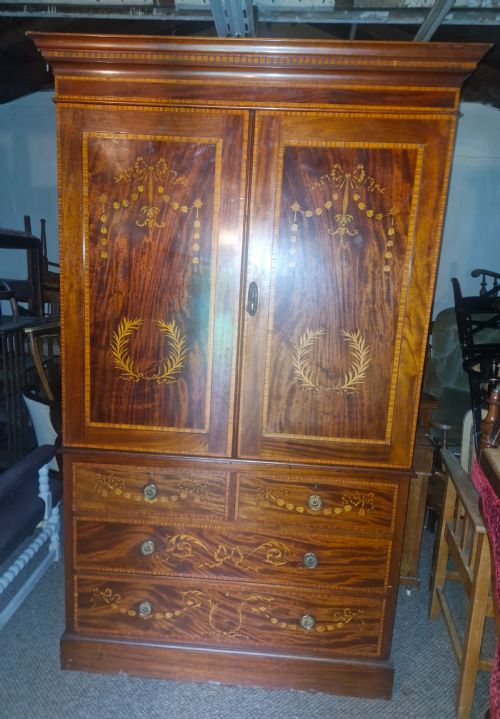
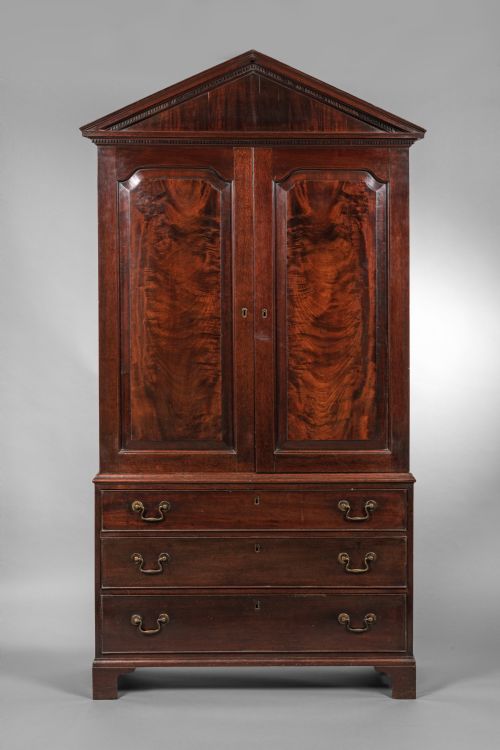
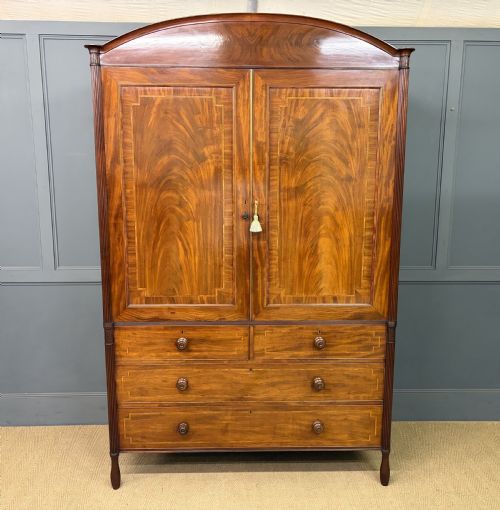
A mahogany chest press merges a upper cupboard containing sliding trays or shelves with a lower chest of drawers, creating a dominant piece of bedroom furniture. This phrase encompasses linen presses, gentleman's wardrobes, and clothes presses originating primarily from the Georgian, Regency, and Victorian periods.
The lower section usually takes the form of a chest of drawers, though some variants incorporate secretaire drawers containing fitted writing compartments. Provincial pieces and later Edwardian iterations also appear across the selection.
How They Were Made
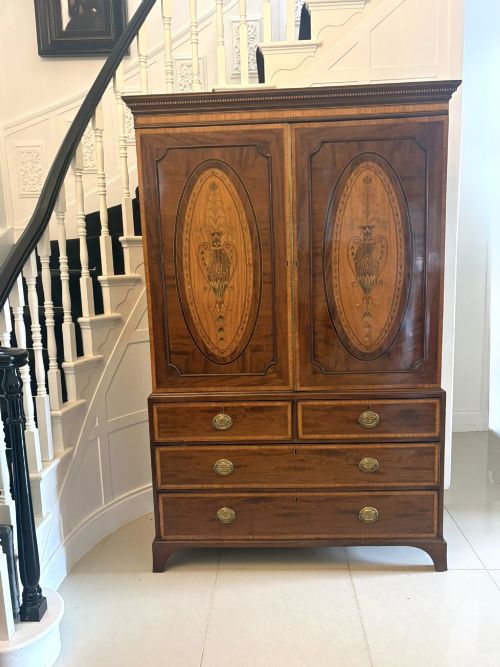
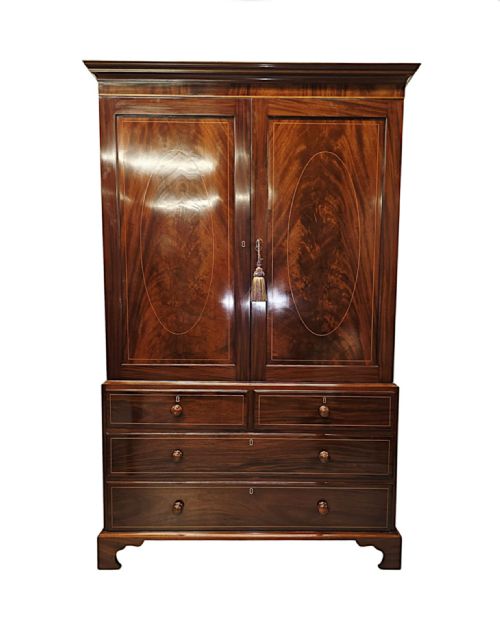
Cabinet makers utilised solid mahogany and applied flame mahogany veneers over secondary timbers such as oak, introducing contrasting grain patterns to the primary surfaces. Crossbanding in rosewood or satinwood, alongside delicate boxwood stringing, outlines the doors and drawer fronts.
Construction relied on tight dovetail joints for the drawer carcasses and pegged mortise and tenon frames for the main body. Brass handles, escutcheons, and working locks secure the doors and drawers.
Listings feature flame mahogany, satinwood inlay, and brass hardware applied across Georgian, Regency, and Victorian forms.
What Varies in Quality
The selection of timber dictates much of the distinction, with symmetrical flame mahogany veneer or figured plum pudding mahogany representing superior material selection over plain stock. The crispness of inlaid satinwood stringing and the depth of carved architectural mouldings separate standard production from master cabinet work.
Internal architecture marks the difference between basic shelving and fully intact original sliding linen trays operating smoothly within their runners. The survival of original brass hardware and functional internal mechanisms indicates careful preservation.
Gillows·Druce And Co·Maple And Co
The Mahogany Chest Press Glossary
- Linen Press
- A tall cabinet featuring upper doors enclosing sliding trays designed for flat textile storage above a chest of drawers. This form dominated domestic storage before hanging wardrobes took precedence in the bedroom.
- Flame Mahogany
- A wood veneer cut from the branch junction where the grain pattern resembles flickering flames. Cabinet makers used this figure prominently on primary display surfaces.
- Crossbanding
- A narrow strip of veneer laid perpendicularly to the surrounding grain along the border of a panel or drawer front. This technique frames the primary wood figure.
- Secretaire Drawer
- A pull-out drawer featuring a drop-front that conceals a fitted interior of small drawers and pigeonholes. It provides a writing surface within the chest structure.
- Compactum
- A multi-functional wardrobe combining hanging space, sliding trays, and drawers within a single unified cabinet. These pieces offer diverse internal storage configurations.
Mahogany Chest Press: Frequently Asked Questions
What is inside a linen press?
The upper section typically contains a series of removable sliding wooden trays, known as slides, designed for stacking folded linen and garments. The lower portion consists of standard chest drawers for smaller items.
Some interiors also incorporate hanging space or specialised compartments depending on the specific cabinet configuration.
How do I date a mahogany press?
Stylistic clues such as bracket feet, cockbeaded drawer edges, and classical stringing point towards eighteenth-century Georgian origins. Later Victorian and Edwardian examples often feature plinth bases and heavier proportions.
Construction methods like hand-cut dovetails and timber choice further help establish the period of manufacture.
Can I use a press as a wardrobe?
Many upper sections can be converted to hanging space by removing the internal sliding trays, though original trays are valued by collectors. Alternatively, the sliding trays function effectively for storing folded clothes, bedding, or knitwear.
The deep lower drawers provide ample space for bulkier garments and accessories.
How do I care for antique mahogany?
Keep the timber away from direct heat sources and strong sunlight to prevent the mahogany veneer from drying out and cracking. Regular dusting with a soft, dry cloth preserves the polished surface.
Occasional application of appropriate wax polish maintains the natural sheen of the wood without building up heavy residues.