


Mahogany Campaign Desk
A mahogany campaign desk is a sturdy, portable piece built for travel, offering practical fold-away writing surfaces and smart brass hardware.
Mahogany Campaign Desk
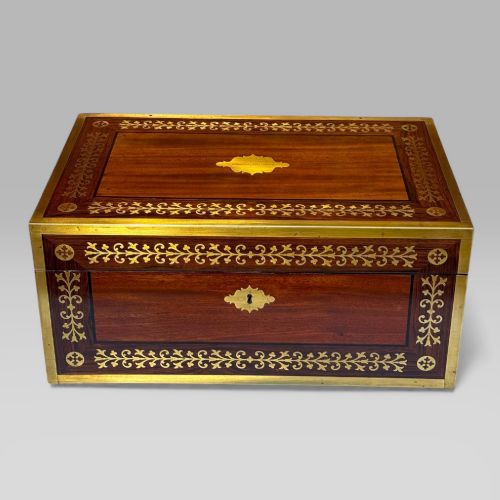
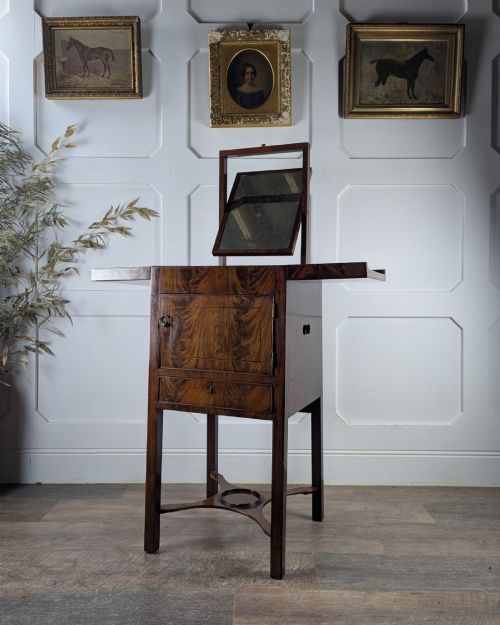
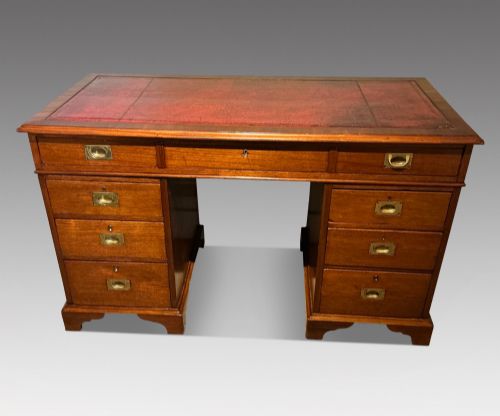
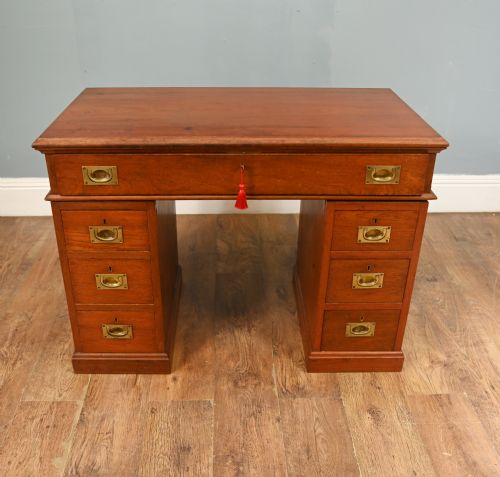
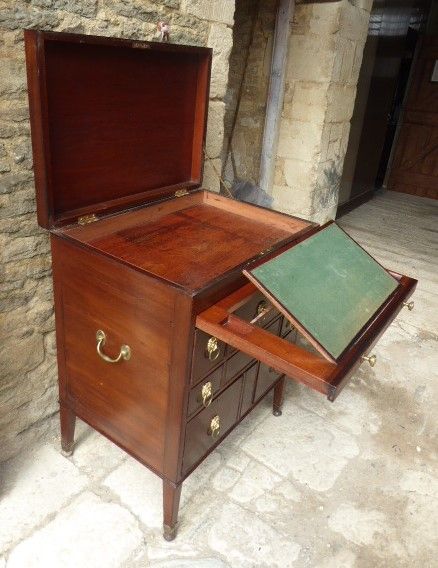
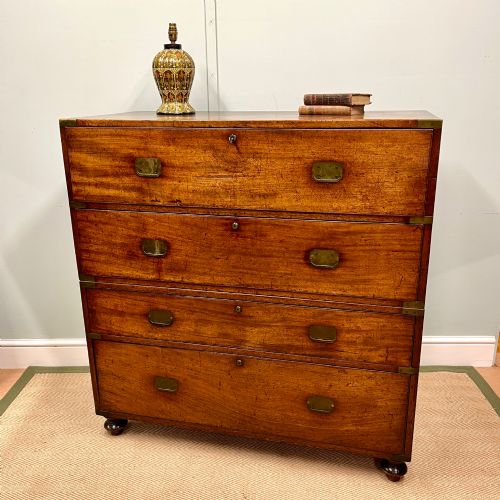
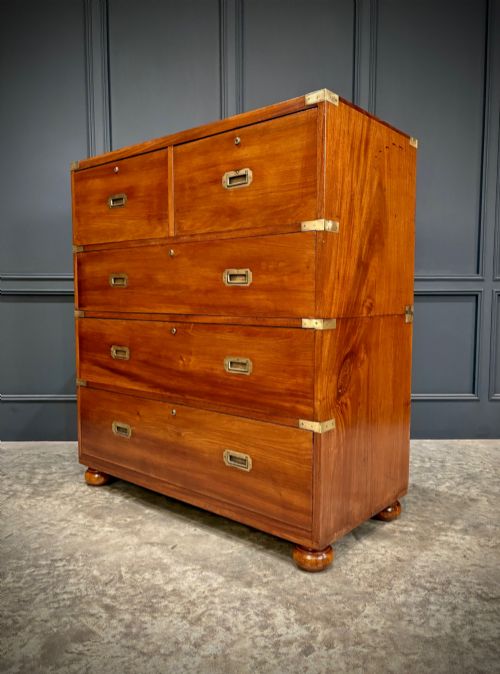
A mahogany campaign desk represents the portable furniture used by officers and travellers during the Georgian and Victorian eras. These items range from compact, folding writing slopes to substantial pedestal desks and secretaire chests designed to pack down securely for transit.
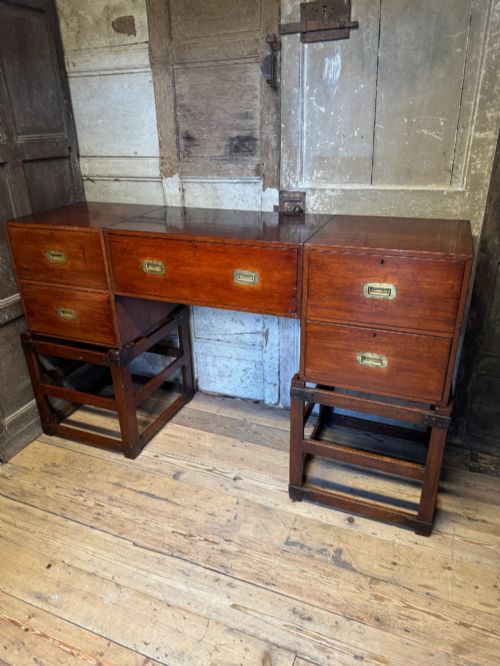
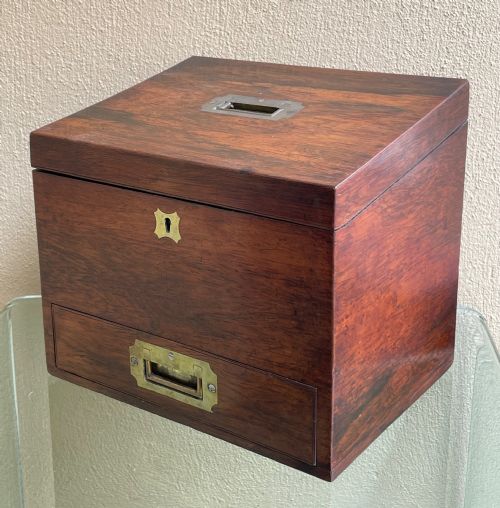
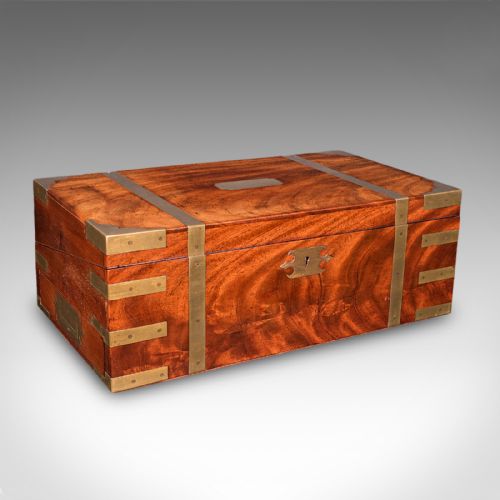
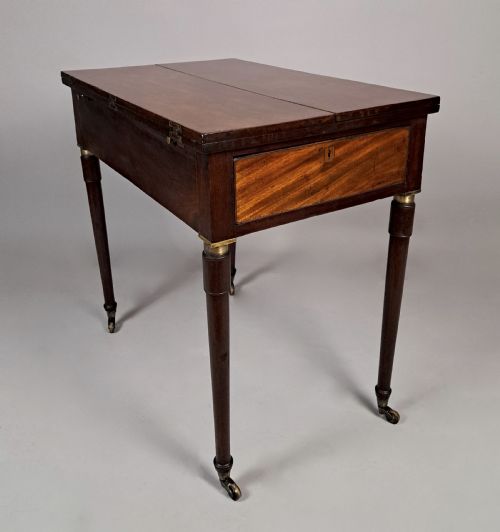
Buyers will most commonly encounter 19th-century Victorian and Georgian examples on this page. Portable writing boxes, slope chests, and naval pedestal desks dominate the selections, alongside occasional folding tables and metamorphic forms.
How they were made
Cabinet makers built these pieces primarily from solid mahogany and Cuban mahogany, often selecting dense timbers to withstand rough journeys. Selected variants incorporate rosewood, teak, or padauk for secondary woods and decorative accents.
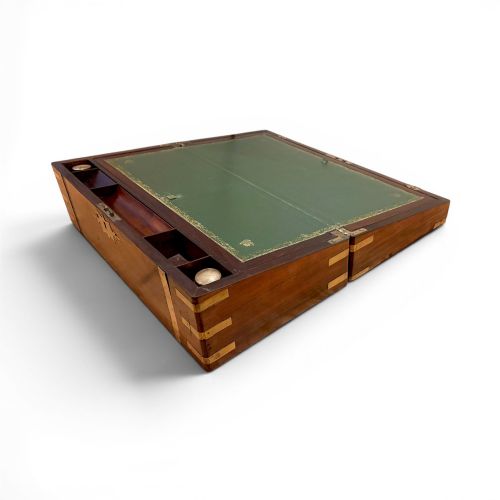
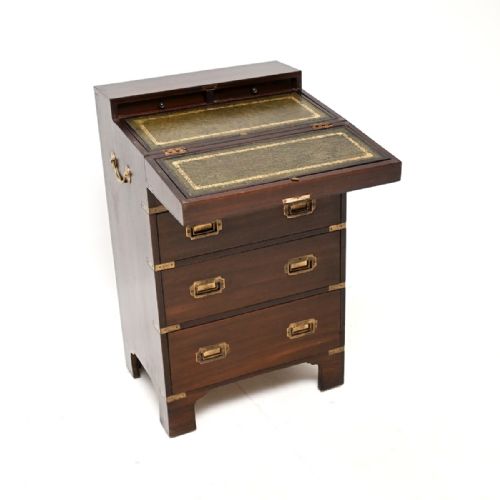
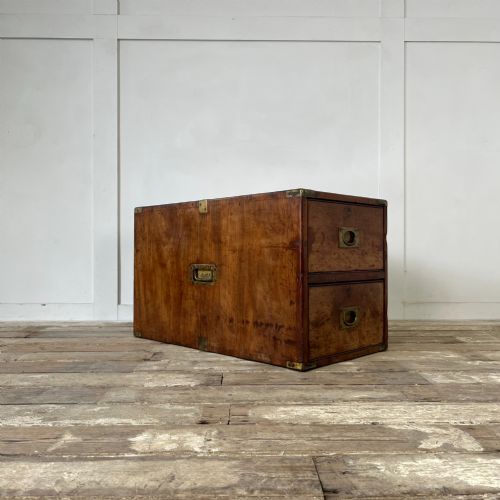
Construction relies heavily on recessed brass corners, flush carrying handles, and strap hinges designed to protect edges from impact during movement. Interiors frequently feature fitted compartments, secret drawers, and leather writing surfaces trimmed with gold tooling.
Mahogany Campaign Desk Retail Price Guide 2026
Typical asking prices for mahogany campaign desk among the pieces listed under this phrase on Sellingantiques today, from the lower quarter to the upper quarter. They describe what is for sale here now, not the wider market.
Listings feature brass, mahogany, rosewood, teak, and baize across Georgian, Victorian, and Edwardian periods.
What varies in quality
Quality rests on the precision of the brass-work and the cleverness of the internal mechanisms. Superior examples feature tightly fitted joints, original flush hardware, and fully operational secret compartments rather than later replacements.
The choice of timber grain and the condition of the original leather insert also determine the standing of a piece. Finer items retain intact working keys, original candle sconces, and well-figured mahogany surfaces that show minimal structural wear.
Gillows·Mappin & Webb
The Mahogany Campaign Desk Glossary
- Secretaire chest
- A chest of drawers featuring a fitted top drawer that drops down to reveal a writing surface and small pigeonholes. This hybrid form conceals a desk inside a standard case furniture design.
- Writing slope
- A portable box with a slanted lid that opens to provide a firm surface for correspondence. Inside, compartments store inkwells, pens, and paper.
- Flush mount
- Brass hardware sunk directly into the wood so that handles and corners do not project past the surfaces. This prevents snagging during transport.
- Pedestal desk
- A heavy writing table supported by two vertical banks of drawers. Campaign versions often separate into distinct modular sections for easier moving.
- Metamorphic
- Furniture designed to transform from one form into another, such as a desk that converts into a dining table or reading stand.
Mahogany Campaign Desk: Frequently Asked Questions
How do you pack a campaign desk for travel?
These pieces were originally engineered to pack down into manageable modular sections or closed boxes secured by heavy brass locks. Drawers lock shut, and folding legs or pedestals detach to make transit straightforward.
Modern owners generally keep them stationary, but the original split-carcase construction still allows the furniture to be disassembled into lighter parts for moving between rooms.
What is the difference between a slope and a pedestal desk?
A writing slope is a portable box placed on top of another table or used on the lap, featuring a sloping lid that opens to reveal storage. A pedestal desk is a large, freestanding piece supported by columns of drawers.
Both serve writing purposes, but pedestal desks provide permanent workspace and greater storage capacity while slopes prioritize portability.
How do I identify a Georgian campaign piece?
Georgian campaign furniture typically dates from the late 18th century and displays restrained lines with quality Cuban mahogany timbers. The brass mounts tend to be simpler and functional, focusing purely on structural protection.
Later Victorian versions often introduce more elaborate brass bound corners, secret sovereign sections, and fitted interiors with multiple hidden compartments.
Why do these desks feature so much brass?
Brass corners, straps, and flush handles protected the vulnerable edges of the wood when chests and desks endured rough journeys by ship or carriage. Recessing the metal prevented snags and allowed items to stack tightly.
Over time, this utilitarian reinforcement evolved into a distinct decorative style associated with military and naval campaign furniture.