
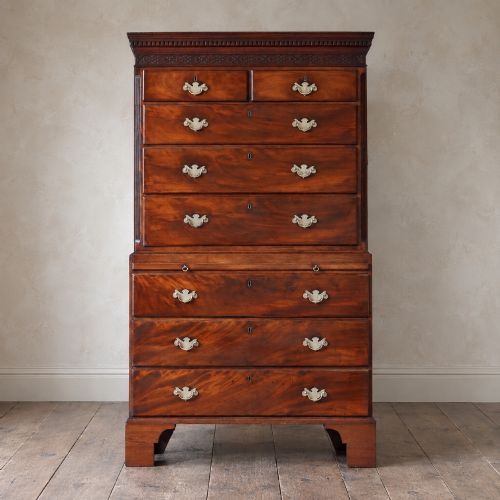
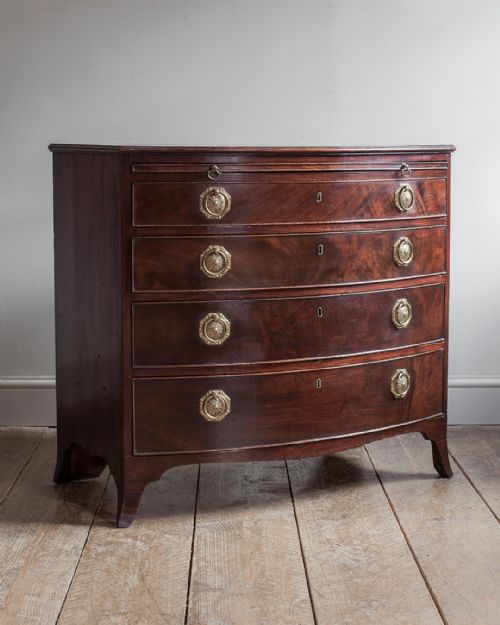

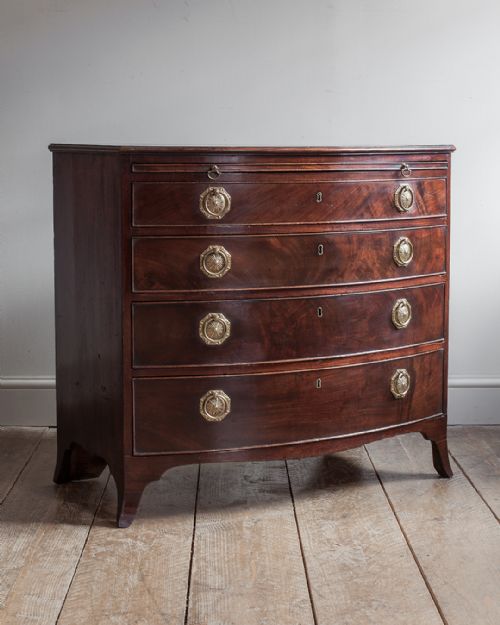
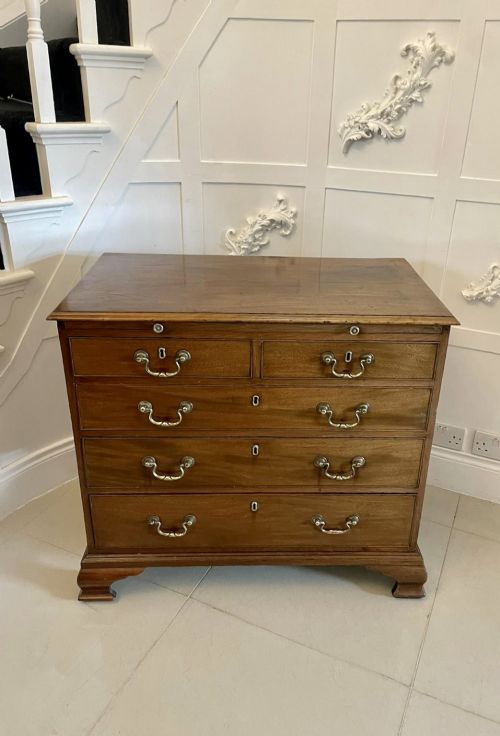
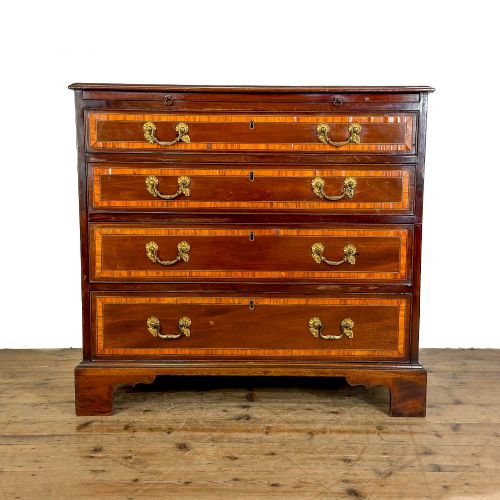

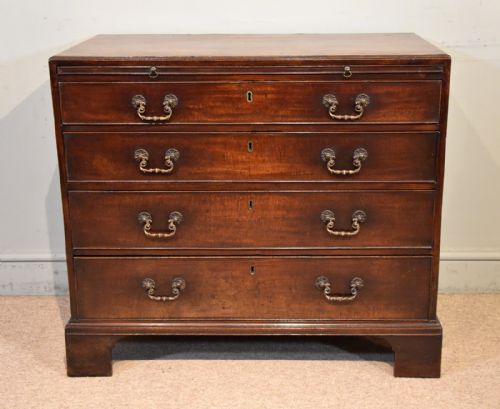
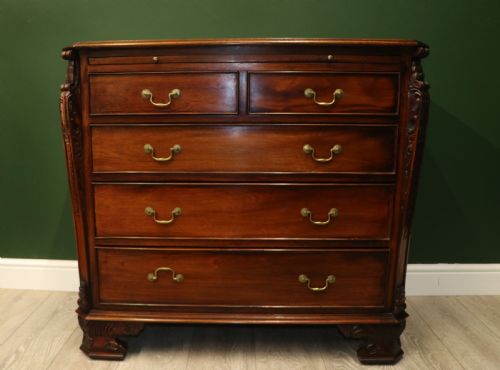

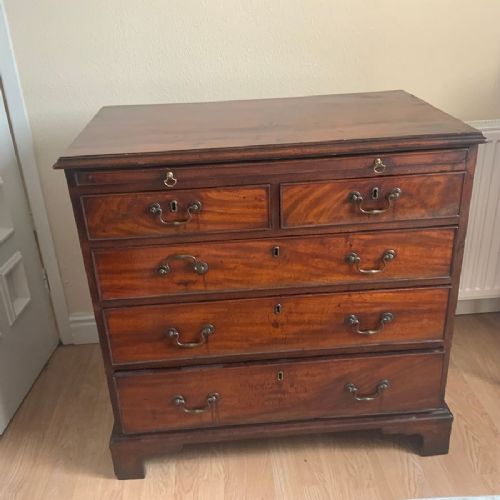

Mahogany Brush Slide
A mahogany brush slide sits within a chest of drawers to provide a pull-out shelf for writing or clothes sorting.
Mahogany Brush Slide
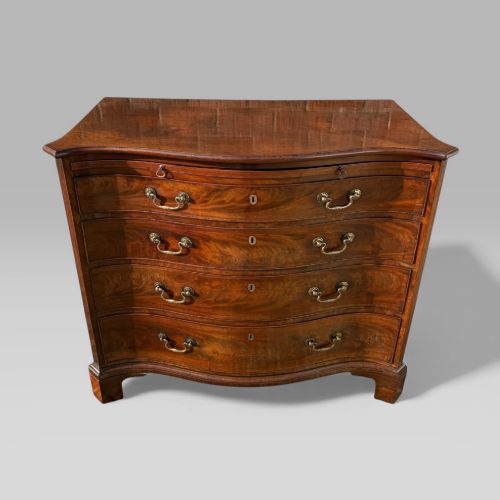
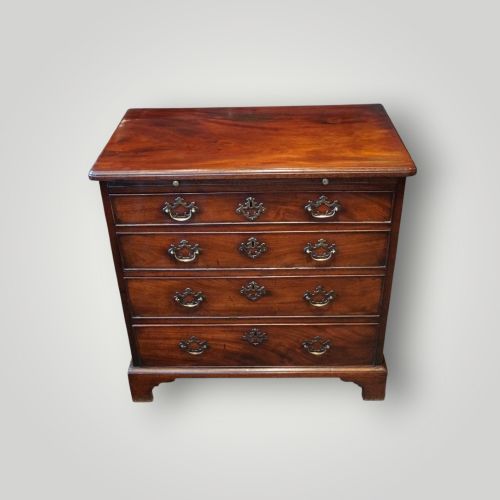
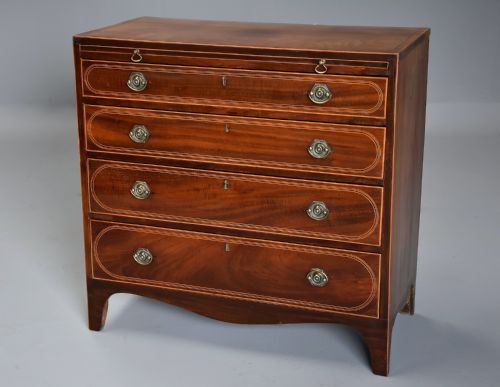
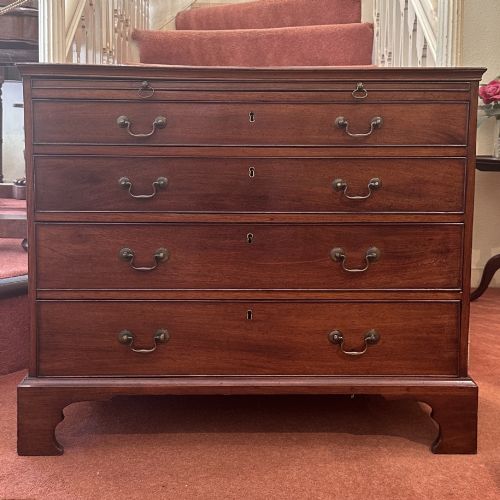
A mahogany brush slide is an integrated pull-out shelf housed immediately beneath the top surface or between drawers in a case piece. These components appear most frequently on Georgian, George III, and bachelor chests of drawers, offering a secondary surface that tucks away completely when not in use.
Buyers encounter these sliding boards primarily on eighteenth-century and nineteenth-century case furniture, including tallboys, chest on chests, and serpentine chests. The form bridges the gap between a standard chest of drawers and a compact writing desk, serving domestic dressing or correspondence needs.
The phrase directs attention to the pull-out mechanism itself, which operates within side runners or grooves beneath the carcase top. While the primary function remains writing or garment placement, the presence of the slide defines a specific class of functional antique case furniture.
How they were made
Cabinetmakers constructed these slides using solid mahogany or flame mahogany boards, often integrating secondary timbers such as oak for internal framing and drawer linings. The edges of the sliding board frequently incorporate moulded profiles or cockbeading to match the surrounding case architecture.
The mechanism relies on precision woodwork where runners are rebated into the sides of the carcase to ensure smooth horizontal movement. Fine examples utilise satinwood or boxwood inlay and crossbanding around the borders of the slide surface, demonstrating detailed cabinet-making techniques from the Georgian period onward.
Cabinetmakers occasionally concealed small secret compartments behind the sliding board to hide spare coinage.
What varies in quality
Quality reveals itself in the selection of timber, particularly the grain pattern of the flame mahogany and the crispness of any satinwood inlay or crossbanding. Superior pieces maintain tight tolerances in the sliding mechanism so the board moves without excessive lateral play or binding against the carcase frame.
The overall proportion of the chest and the retention of original brass hardware or ogee feet distinguish higher-grade examples from later revivals. Cabinetmakers who invested time in selecting figured veneers for both the drawer fronts and the pull-out slide itself produced pieces that command greater appreciation.
Druce & Co
The Mahogany Brush Slide Glossary
- Brushing slide
- A pull-out wooden shelf integrated into a chest of drawers, historically used for dusting clothes or as a temporary writing surface.
- Bachelor's chest
- A small, compact chest of drawers typically fitted with a sliding shelf, designed for single-room urban living in the eighteenth century.
- Chest on chest
- A tall case furniture form consisting of a larger lower chest supporting a slightly narrower upper chest, frequently incorporating a slide in the waist moulding.
- Serpentine chest
- A case piece featuring a front with a concave centre flanked by convex curves, requiring expert woodworking to shape the sliding board to match.
- Crossbanding
- A border technique where strips of veneer are laid with the grain running perpendicular to the main surface, often framing the perimeter of the slide.
Mahogany Brush Slide: Frequently Asked Questions
What was a brush slide used for?
These pull-out boards served as temporary ledges for folding garments, sorting linen, or writing letters in spaces where a full desk was impractical.
They allowed the owner to work standing up or inspect items at chest height without taking up floor space.
How do I tell an 18th-century chest from a revival piece?
Eighteenth-century examples display hand-cut dovetails, timber shrinkage patterns, and structural joinery using oak or pine secondary woods.
Revival pieces from the late nineteenth or twentieth century often reveal machine-cut elements, standardised screw fixings, and different interior drawer construction.
Did all bachelor chests have slides?
Most traditional bachelor chests incorporated a sliding board, though the exact form varied between straight fronts and serpentine shapes.
The presence of the slide is a defining characteristic that separates these compact pieces from standard bedroom chests.
How do I care for the sliding mechanism?
Keep the wooden runners clean and free of dust, and avoid applying modern liquid polishes that can cause the wood to swell inside the grooves.
Gentle maintenance ensures the slide moves smoothly without damaging the internal framing of the carcase.