

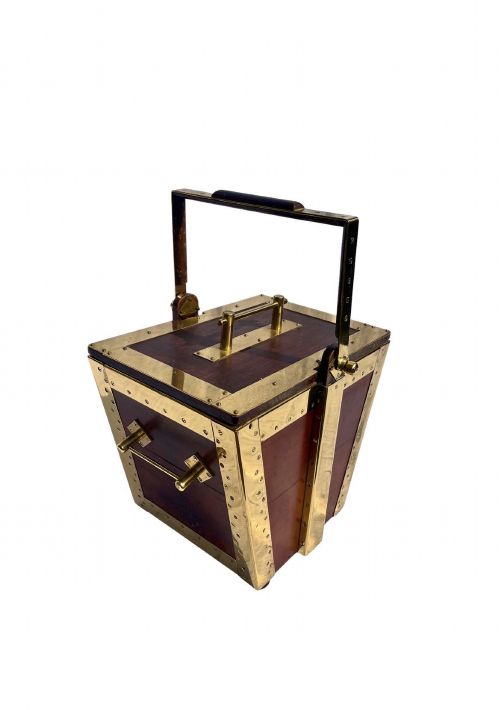
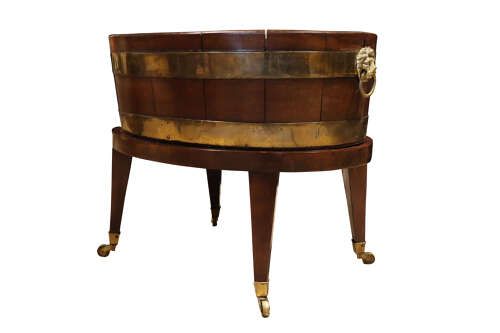

Mahogany Brass Bucket
When you search for a mahogany brass bucket, you are looking at substantial vessels of coopered timber held by polished metal hoops.
Mahogany Brass Bucket
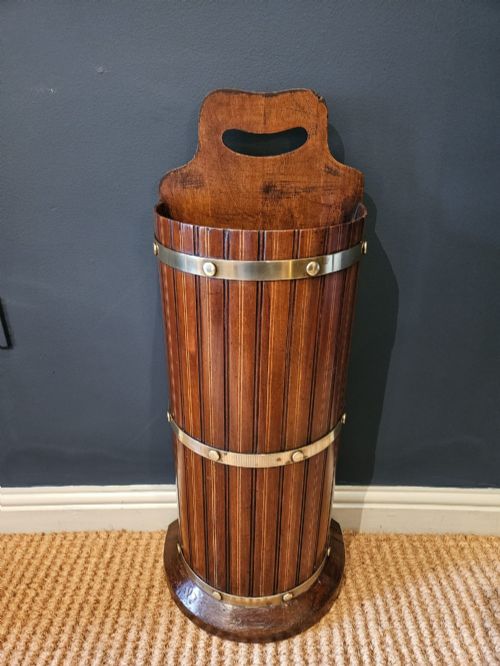
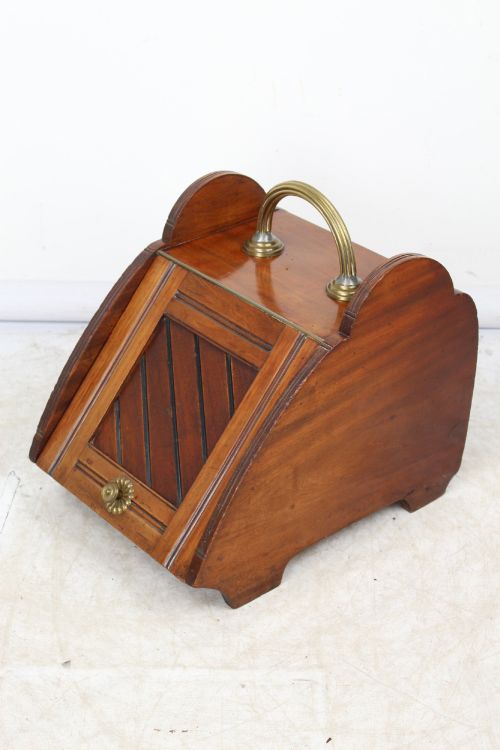
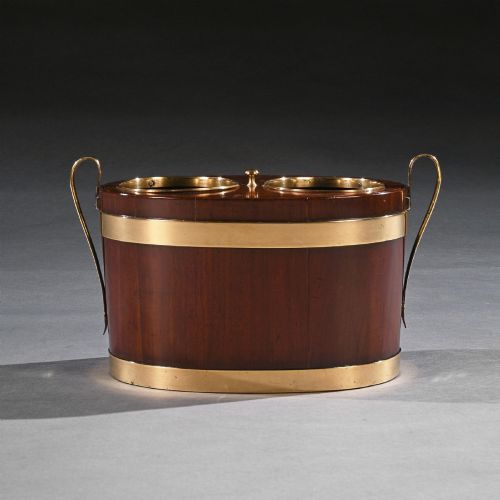
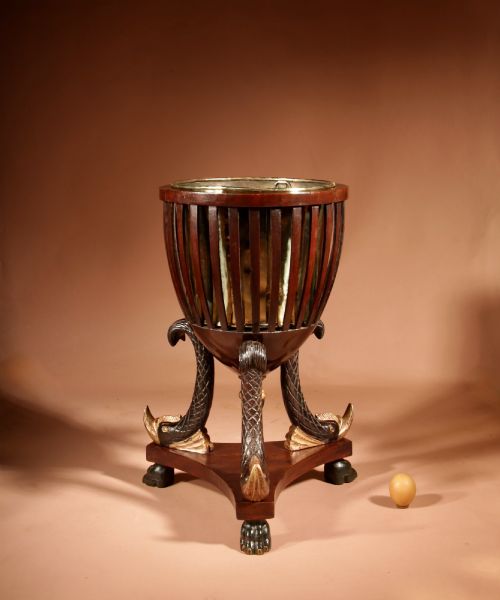
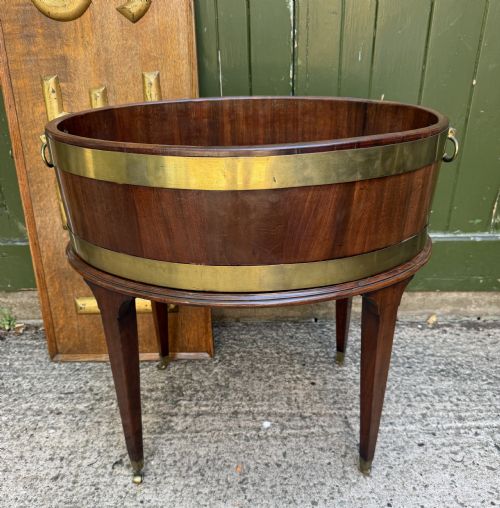
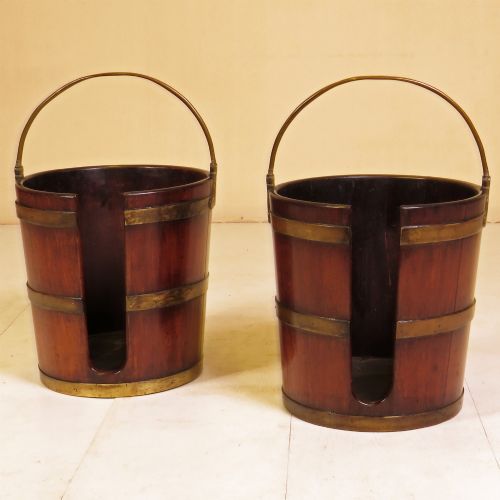
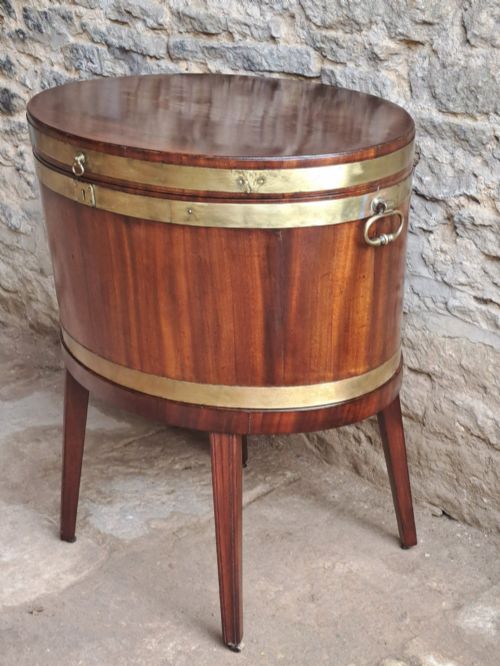
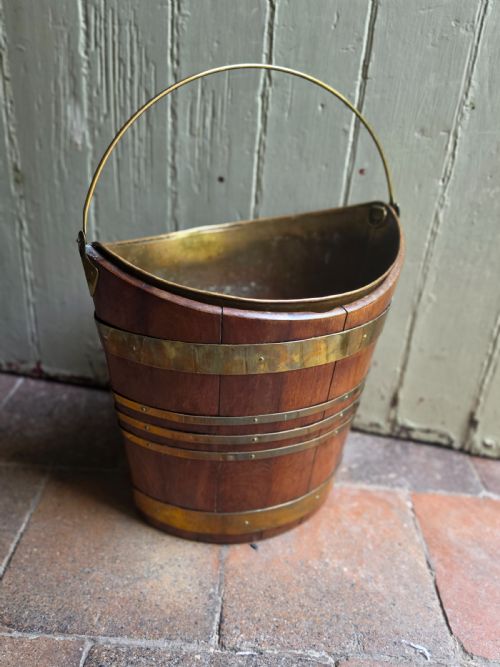
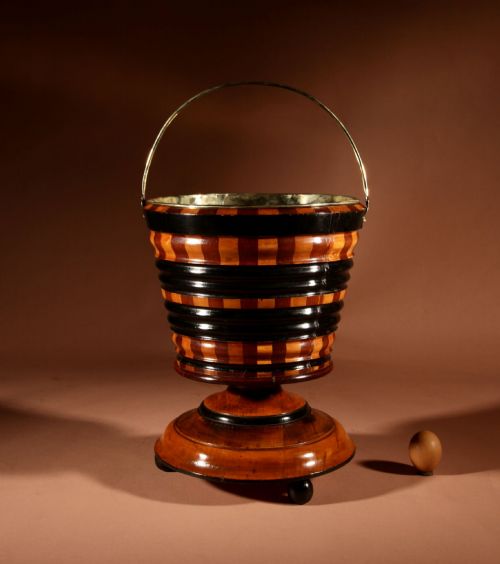
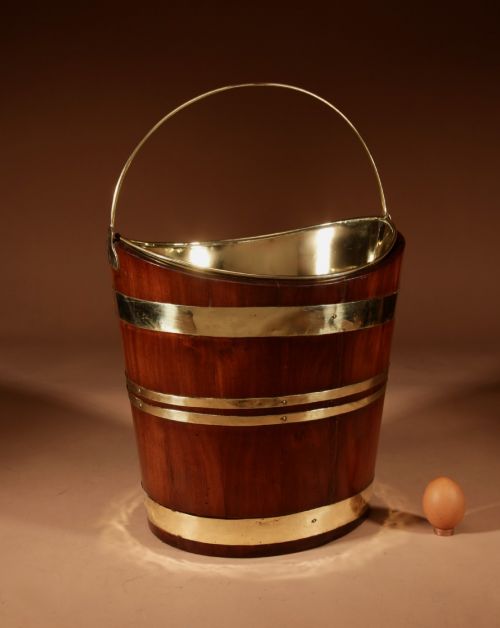
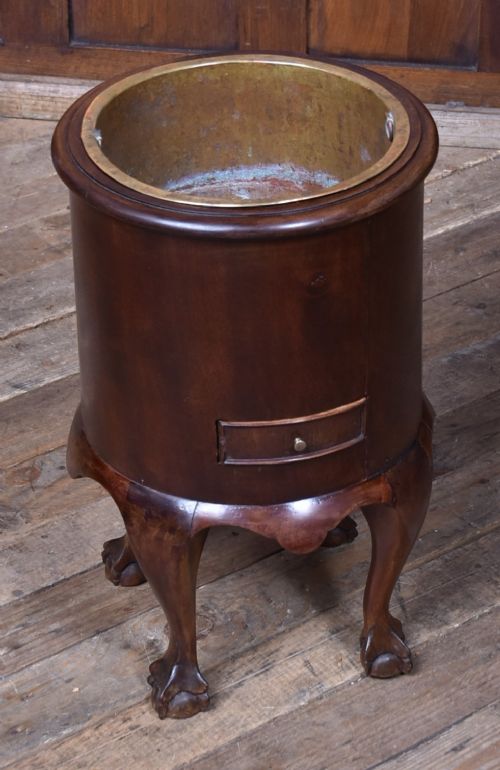
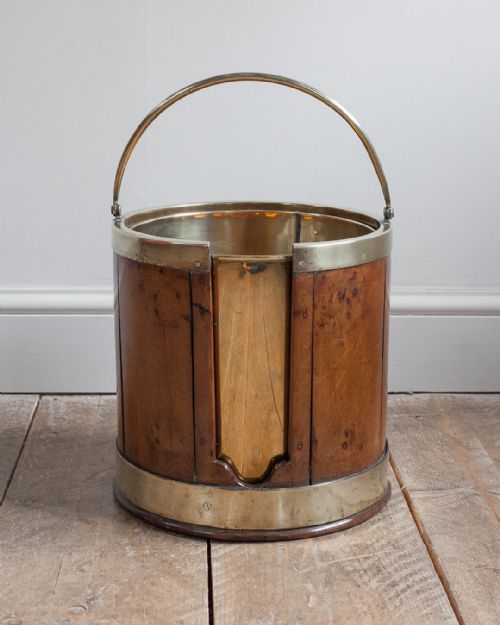
A mahogany brass bucket is a sturdy container formed from individual wooden staves bound together with metal bands, originating primarily across the eighteenth and nineteenth centuries. The designs span specific domestic uses, appearing as wine coolers, cellarettes, peat buckets, coal scuttles, and plate buckets.
The versions most commonly met on this page date from the Georgian and Victorian eras, often taking oval or cylindrical forms. Many sit upon dedicated stands or feet, while others feature swing handles and internal metal liners for practical containment.
How they were made
The construction relies upon traditional cooperage techniques, shaping individual staves of mahogany, walnut, or ebonised wood to fit tightly around a base. Skilled makers secured these wooden bodies using heavy brass hoops or bands, often fixed with pins or screws.
Makers integrated brass swing handles, drop handles, and occasionally zinc or metal liners to protect the wood from moisture and contents. Surface finishes depended on the period, ranging from polished mahogany grains to inlaid details.
Listings include items spanning the 18th century, Georgian, Regency, and Victorian periods, constructed from mahogany, walnut, and coopered wood.
What varies in quality
The distinction between tiers rests upon the precision of the cooperage and the weight of the brass mountings. Heavier gauge brass bands and finely fitted staves indicate superior craftsmanship.
Presence of original stands, matching liners, and well-preserved timber patination elevate certain examples. Subtle inlay work and balanced proportions further separate standard utility vessels from finer decorative pieces.
The Mahogany Brass Bucket Glossary
- Coopered wood
- Timber assembled using vertical staves shaped and bound together by bands, traditional for vessels holding liquids or loose materials.
- Wine cooler
- A deep bucket or cellarette lined to hold bottles and ice during dining.
- Peat bucket
- A container originally designed to hold fuel near a hearth, frequently featuring a brass swing handle.
- Plate bucket
- A straight-sided cylindrical vessel used for carrying or storing dining plates.
- Jardiniere
- An ornamental pot or stand used to hold growing plants or flowers.
Mahogany Brass Bucket: Frequently Asked Questions
What were mahogany brass buckets used for?
These vessels served practical domestic roles in dining rooms and drawing rooms. They held wine bottles with ice, stored peat or coal for fires, or transported dining plates.
Over time, many transitioned into decorative planters or umbrella stands within domestic interiors.
How do I identify a Georgian bucket?
Georgian examples typically display rich mahogany timber patination with hand-beaten brass bands secured by small pins. Their proportions often follow classic oval or cylindrical outlines common to the eighteenth century.
Many sit upon original matching stands or feature sturdy drop handles characteristic of the period.
Are liners original to the buckets?
Some pieces retain their original metal liners, which were constructed from zinc or copper to prevent water damage to the wood. Replacements are common due to the wear of ice and moisture over centuries.
The presence of an appropriate metal insert adds to the historical completeness of the piece.
How should I care for the wood?
Maintenance involves keeping the timber away from direct heat sources and sudden humidity changes to prevent the staves from shrinking. Gentle dusting and occasional application of appropriate wax help preserve the polished surface.
Avoid using excess water, particularly if the interior lacks a protective metal liner.