

Mahogany Box Cooler
A mahogany box cooler is a heavy timber vessel designed to chill wine at the dining table, bringing period character and practical storage to a room.
Mahogany Box Cooler
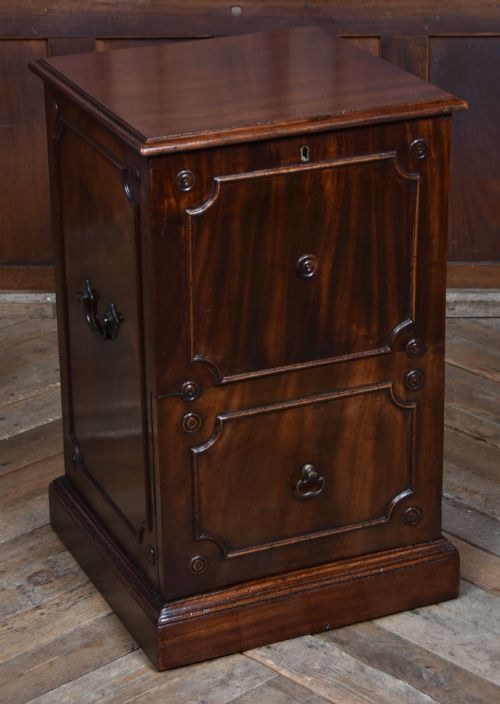
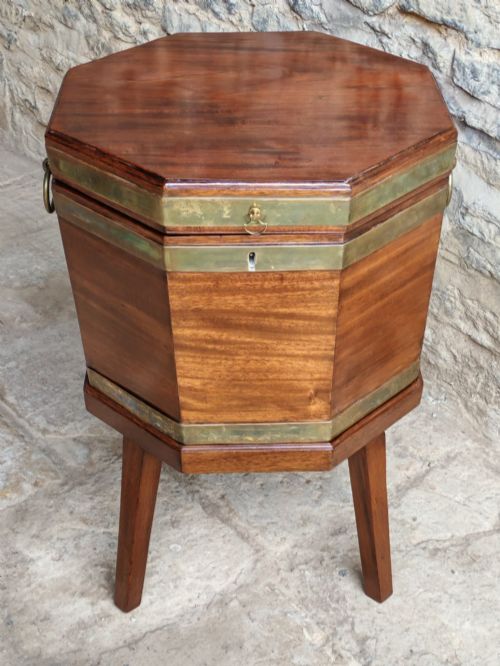
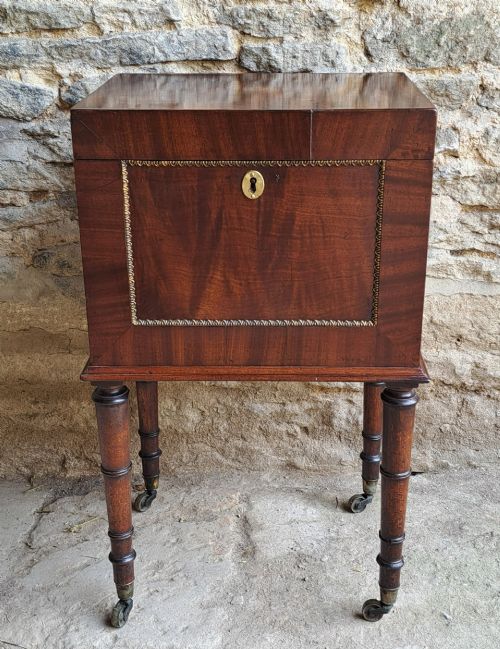
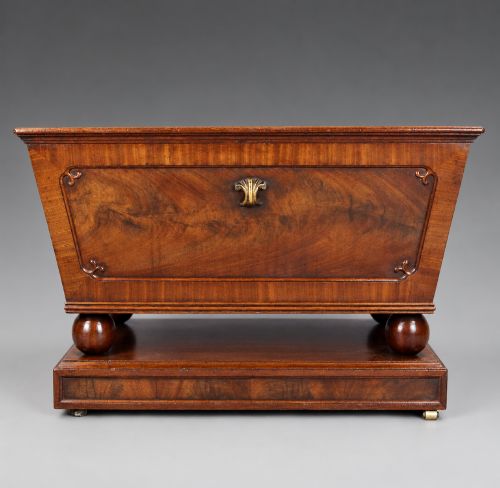
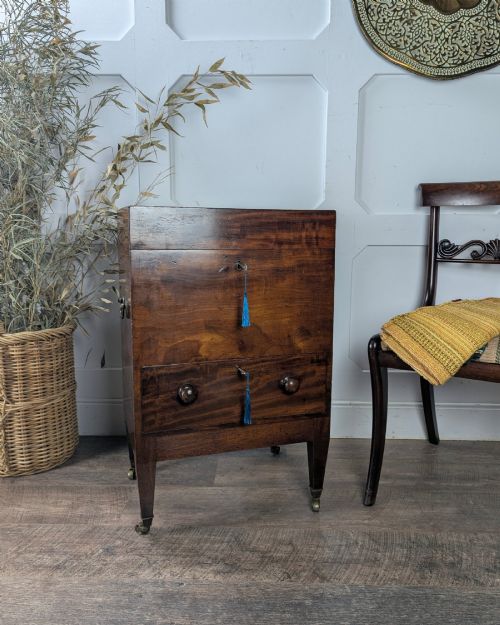
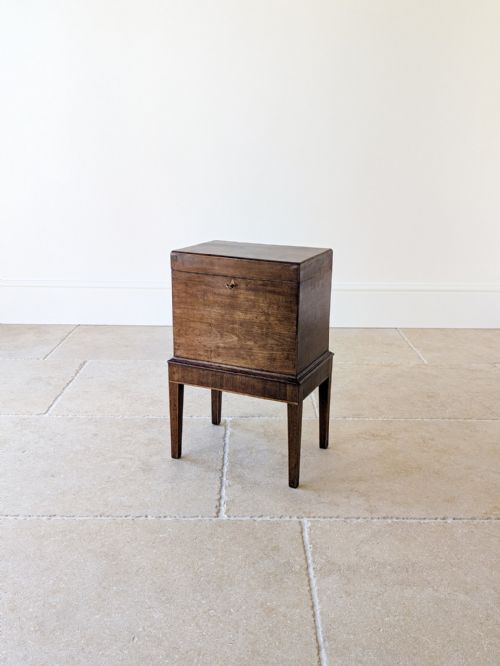
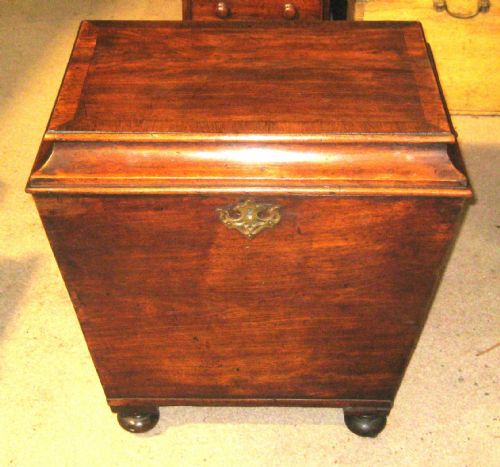
A mahogany box cooler, also known as a cellaret or wine cooler, is a sturdy timber container designed to hold bottles and ice during formal dining. These pieces emerge predominantly from the Georgian, Regency, and Victorian eras, reflecting the changing tastes in domestic entertaining.
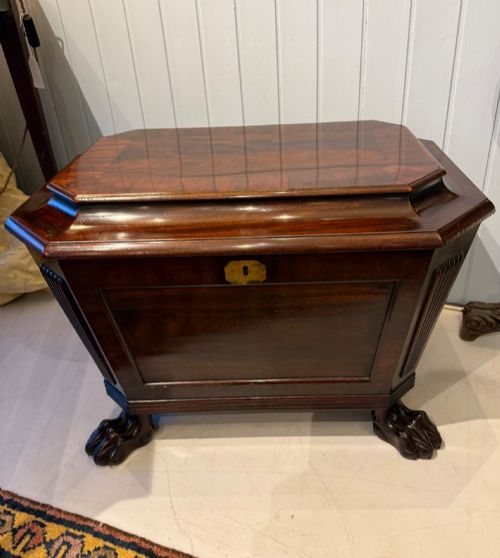
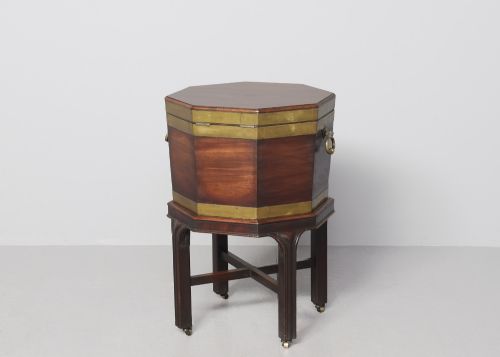
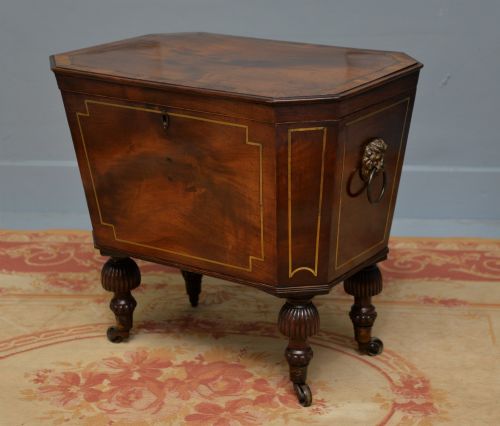
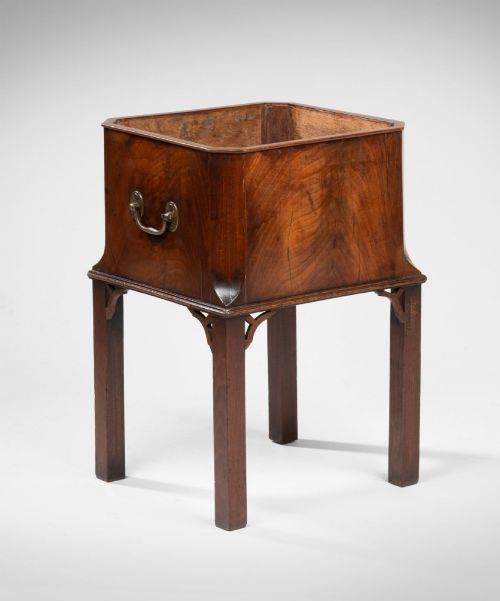
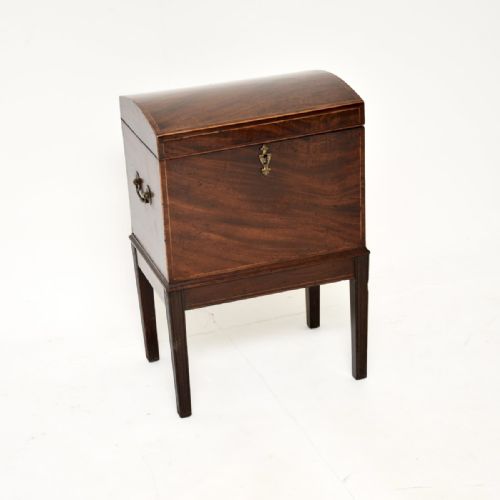
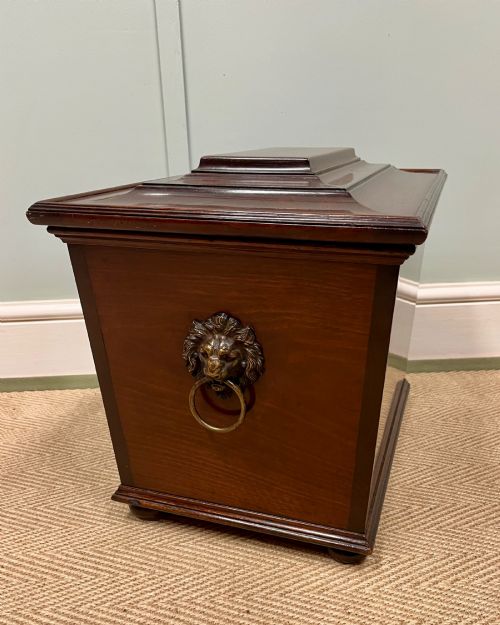
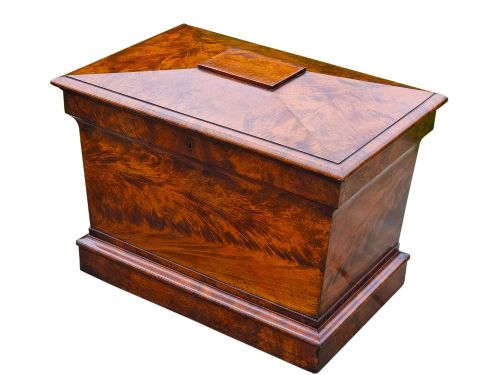
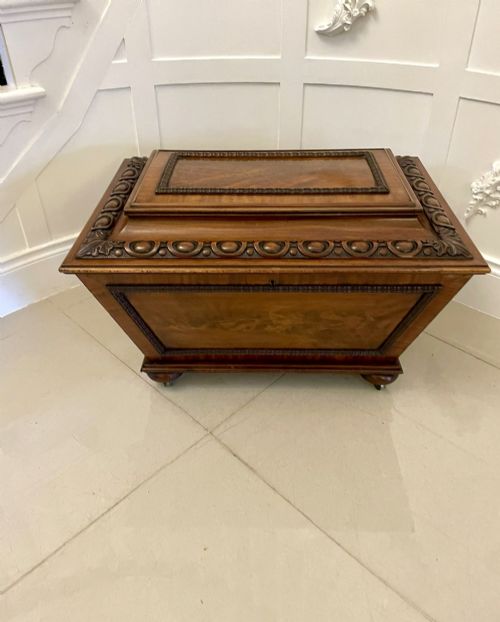
Buyers will encounter several distinct shapes on this page, ranging from octagonal containers on stands to sarcophagus forms with bold proportions. Many examples date from the late eighteenth century through the early nineteenth century, showcasing the period preference for rich cabinet-making.
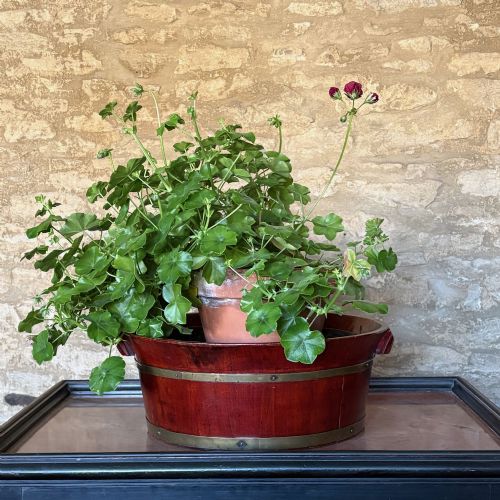
The primary forms serve specific functions, such as holding bottles upright in fitted interior compartments or lining metal containers for ice and water. Whether styled as an urn, a sarcophagus, or an octagonal box, each version fulfills the traditional requirement of bedside or dining room refreshment.
Evaluating craftsmanship
Quality rests heavily on the choice of timber and the precision of the cabinet-making, particularly in the selection of figured mahogany veneers. Pieces that retain original internal lead or zinc liners alongside fitted bottle divisions command greater appreciation.
The sophistication of the mounts and hardware distinguishes finer examples, where cast brass bands, ormolu details, and original stands demonstrate superior workshop standards. Finer proportioning and restrained carving set superior examples apart from plainer utilitarian boxes.
Mahogany Box Cooler Retail Price Guide 2026
Typical asking prices for mahogany box cooler among the pieces listed under this phrase on Sellingantiques today, from the lower quarter to the upper quarter. They describe what is for sale here now, not the wider market.
Edwards and Roberts·Gillingtons
The Mahogany Box Cooler Glossary
- Cellaret
- A lockable container used for storing wine and spirits within the dining room. These vessels often feature internal divisions to keep bottles separated.
- Flame mahogany
- A veneer cut from the fork of the mahogany tree where the branch meets the trunk. This produces a flickering, highly decorative grain pattern.
- Sarcophagus
- A monumental container shape with a peaked lid and flared sides, popular during the Regency period. This classical form often rests on paw feet or a plinth base.
- Ormolu
- Gilt bronze ornamentation applied to furniture, providing metallic contrast against dark woods. This decorative technique appears on finer Regency and French-influenced pieces.
- Brass bound
- Furniture secured with structural or decorative metal bands around the perimeter. This method reinforces stave-built octagonal and oval wooden coolers.
Mahogany Box Cooler: Frequently Asked Questions
What is a mahogany box cooler?
A mahogany box cooler is a timber chest built to hold wine bottles and ice during meals. These pieces functioned as portable cellars within the dining room.
Craftsmen constructed them from dense hardwoods to withstand moisture and heavy use. They remain sought after as decorative storage containers today.
How were these coolers used historically?
Servants filled the internal metal liners with ice and water to chill wine before serving it to guests. Bottles rested in fitted wooden slots inside the main compartment.
Lockable lids ensured that valuable spirits remained secure when the dining room was unattended. The vessels stood near the dining table for easy access during long meals.
How do I care for a mahogany box cooler?
Keep wooden surfaces away from direct sunlight and excessive heat sources to prevent the timber from splitting. Regular dusting with a soft cloth maintains the natural sheen of the polish.
Avoid placing wet items directly onto unprotected wood surfaces. Treat the antique finish with care by using appropriate beeswax rather than modern chemical sprays.
How can I tell a Regency cooler apart from a Georgian one?
Georgian coolers often feature straight sides, octagonal geometries, and delicate brass banding. Their design tends to emphasise balanced proportions and classical restraint.
Regency examples frequently adopt heavier sarcophagus shapes with bold feet, carved paw motifs, and prominent classical details. The choice of flame mahogany veneer also became more pronounced during the Regency period.