
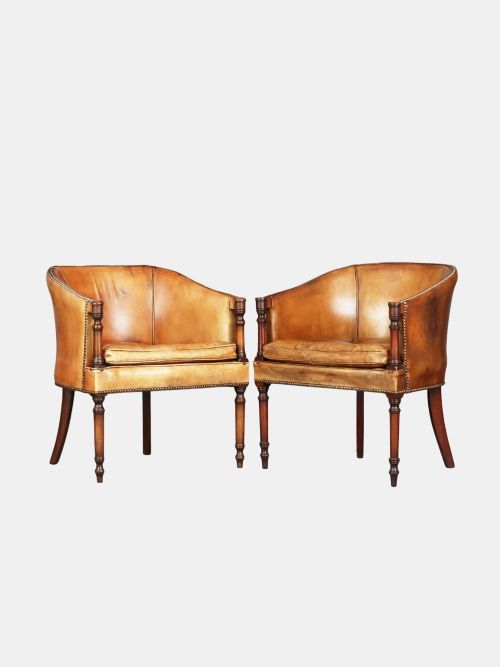


Mahogany Barrel Back Chairs
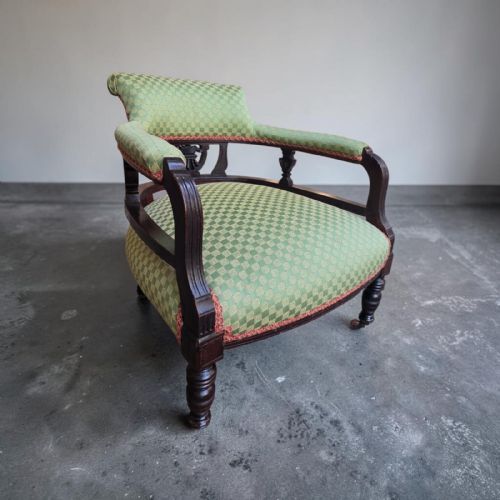
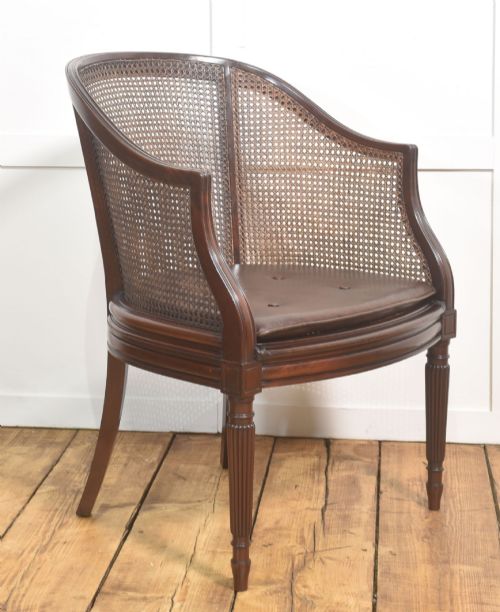
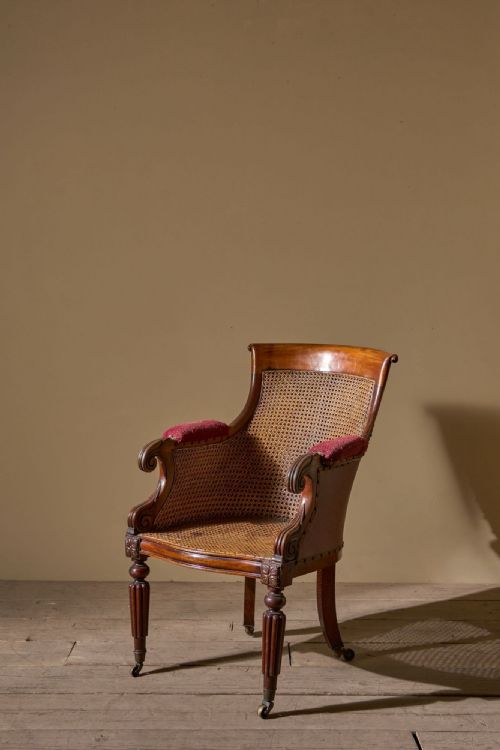
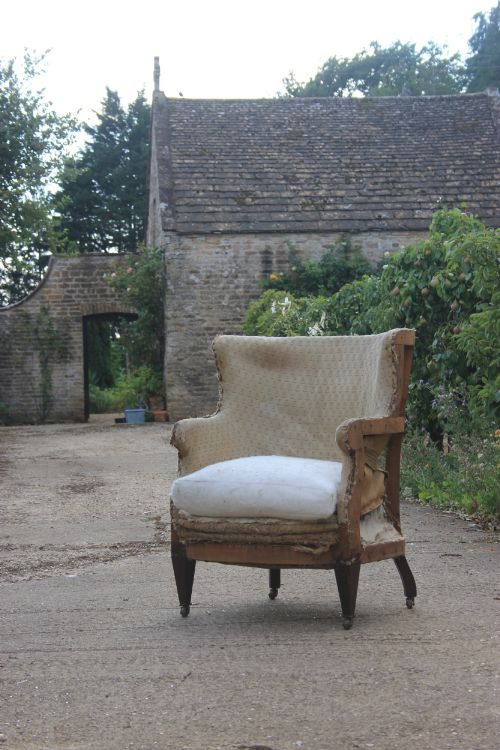
Mahogany barrel back chairs are curved seating forms offering deep comfort, and these examples range from Georgian origins to Edwardian and Victorian revivals.
Mahogany Barrel Back Chairs
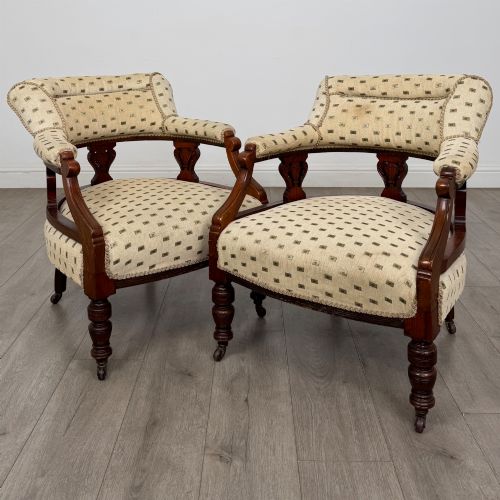
Mahogany barrel back chairs enclose the sitter with a continuous semicircular upholstered rail that flows directly into the arms. When searching for mahogany barrel back chairs, buyers encounter pieces spanning the Georgian, Victorian, and Edwardian periods.
The domestic interior shapes these forms, appearing as library chairs, parlour seating, or club armchairs. Victorian and Edwardian examples dominate the selection, often featuring enclosed tub forms supported on timber frames.
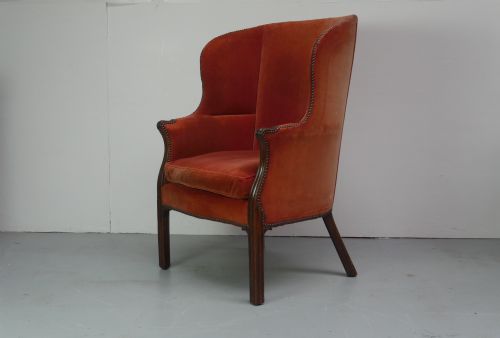
Earlier Georgian specimens also emerge alongside revival pieces, offering variations in scale from compact reading seats to large library armchairs. Upholstery treatments alter the silhouette, shifting between button-back padding, cane panels, and plain cloth.
How they were made
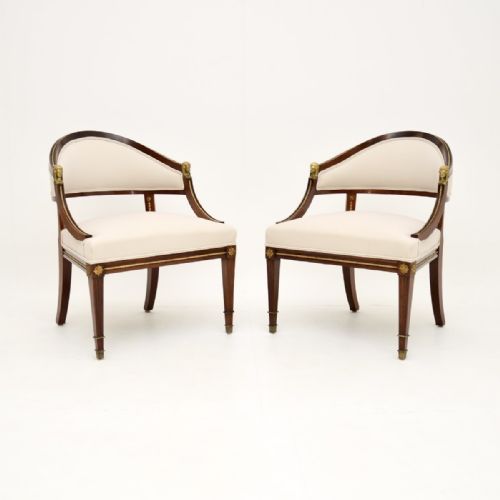
Cabinetmakers constructed the supportive frames primarily using mahogany, occasionally shaping the showwood to expose the polished grain around the curved backrest. Selected pieces incorporate brass fittings, ormolu mounts, and ebonised details to accent the structural timber.
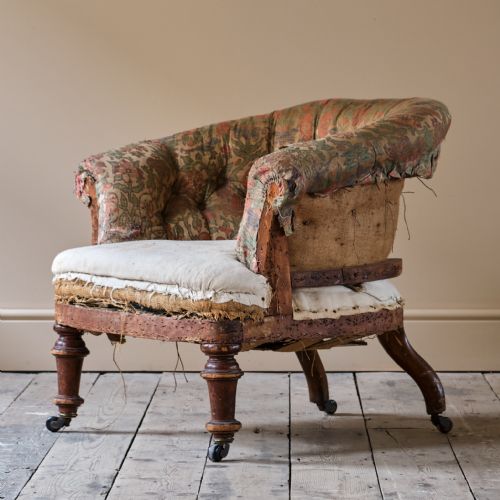
Upholstery techniques dictate the interior comfort, utilising traditional stuffing secured beneath leather, velvet, fabric, or hessian. Caned panels appear on lighter frames, while buttoning and ribbed stitching define the padding on heavier library seating.
What varies in quality
Construction integrity distinguishes the finer examples, particularly the rigidity of the curved back rail and the joinery where the arms meet the uprights. Superior frames maintain their structural tension despite the outward pressure placed upon the semicircular backrest over generations.
Material selection separates standard production from exceptional work, seen in the depth of the mahogany grain and the quality of the secondary woods. The execution of upholstery also influences the standing of a piece, from simple cotton coverings to fitted leather and detailed showwood carving.
The Mahogany Barrel Back Chairs Glossary
- Barrel back
- A seating form characterised by a semicircular upholstered backrest that flows continuously into the arms. This design wraps around the sitter to provide enclosed support.
- Tub chair
- An alternative term for a deep, curved seating piece with integrated sides. The enclosed upholstered shell resembles the shape of a traditional half-barrel.
- Showwood
- Timber framework left visible on an upholstered chair rather than being entirely covered by fabric. This allows the polished mahogany grain to frame the padded elements.
- Caning
- Woven rattan material used to form light backrests or seat panels. It provides a flexible yet sturdy surface that lightened the visual weight of Edwardian and Victorian seating.
- Button-back
- An upholstery method where depressions are created across the padded surface using tightly pulled stitches secured with buttons. This technique holds the internal stuffing firmly in place while creating a distinct geometric pattern.
Mahogany Barrel Back Chairs: Frequently Asked Questions
How do I date a tub chair?
Dating relies on examining the timber frame, upholstery style, and decorative details underneath the piece. Georgian examples show heavier proportions and simpler lines, while Victorian variants often incorporate buttoning or showwood carvings.
Edwardian iterations tend to be lighter in scale, sometimes utilising cane panels or inlaid mahogany. Comparing the construction methods against known period styles helps narrow down the decade of manufacture.
Where were these chairs used?
These chairs served primarily in domestic reception rooms, studies, and private libraries. Their enclosed form made them suitable for sitting near fireplaces or reading desks.
Larger library variants provided comfortable seating for long periods of study. Smaller parlour versions accommodated guests in drawing rooms and music rooms.
What materials are used in these chairs?
The primary structural material is mahogany, selected for its strength and rich grain. Supporting elements often include secondary woods hidden beneath the upholstery.
Coverings range from leather and velvet to cotton fabric, hessian, and cane. Additional decorative accents incorporate brass hardware, ormolu mounts, and ebonised finishes.
Are tub chairs and barrel back chairs the same?
The terms are frequently used interchangeably to describe deep, curved seating with integrated arms and backs. Both names refer to the enclosed, tub-like silhouette that wraps around the sitter.
Regional preferences and historical dealer terminology dictate which name appears on a listing. The underlying construction and curved form remain consistent across both designations.