
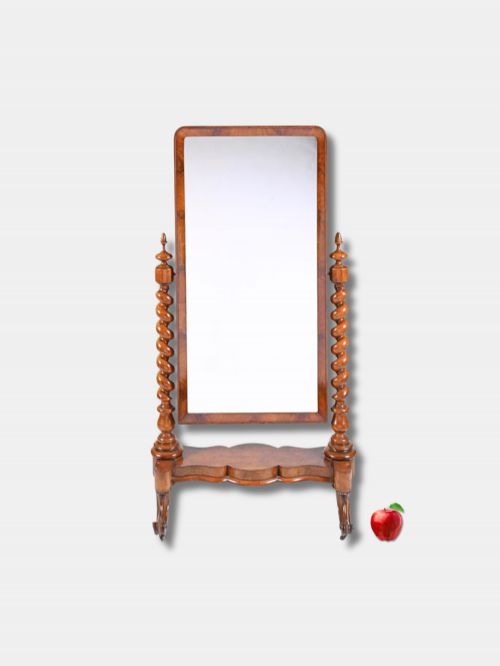
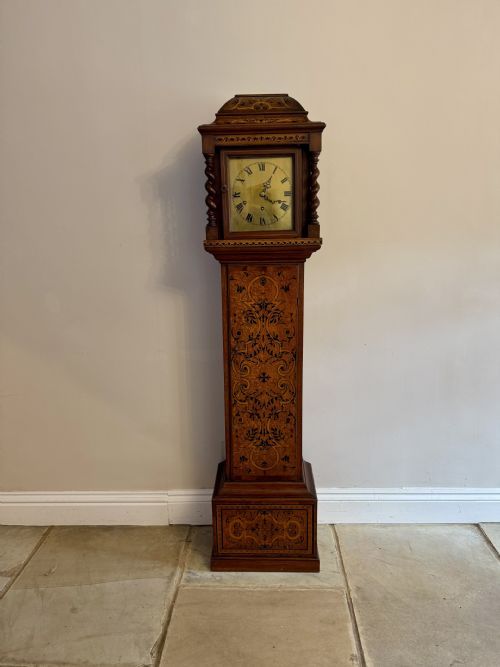


Mahogany Barley Twist Stand
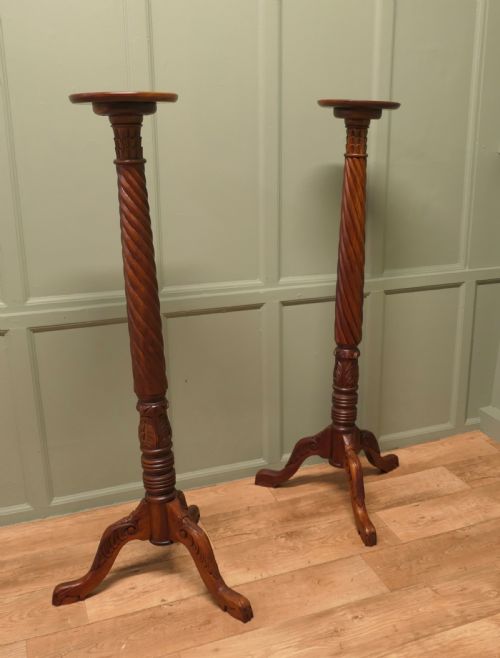
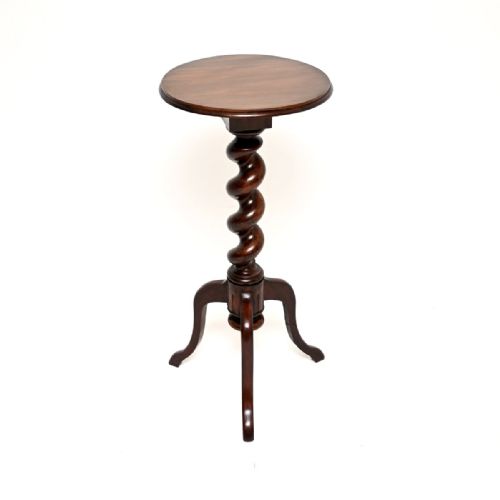
A mahogany barley twist stand brings sculptural turned timber and rich grain to a corner, holding a lamp, plant or sculpture.
Mahogany Barley Twist Stand
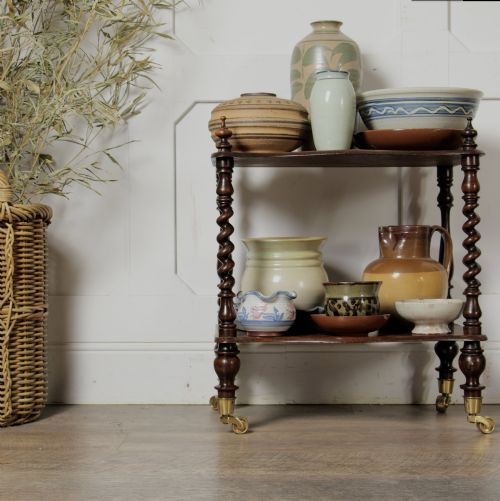
When searching for a mahogany barley twist stand, you encounter vertical forms turned with a helical spiral, derived from seventeenth-century joinery and revived strongly during the Victorian era. These pieces function primarily as torcheres, plant pedestals, or tall display columns, lifting objects into the room.
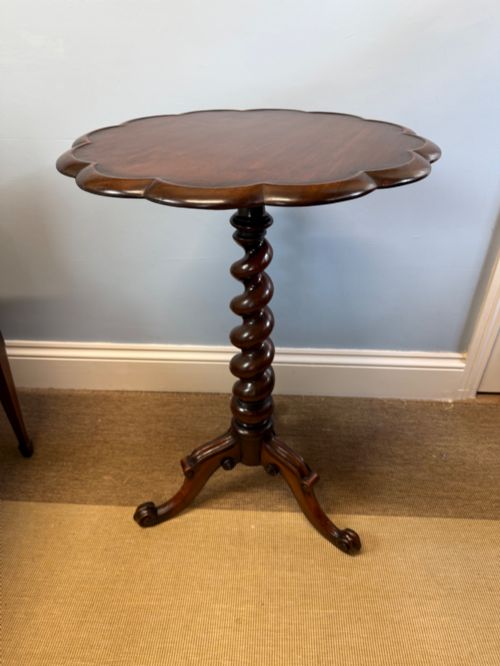
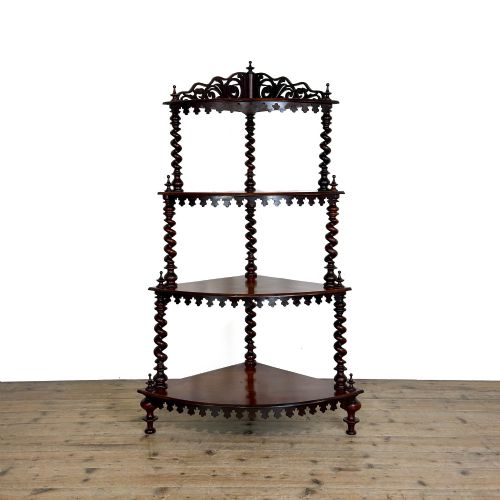
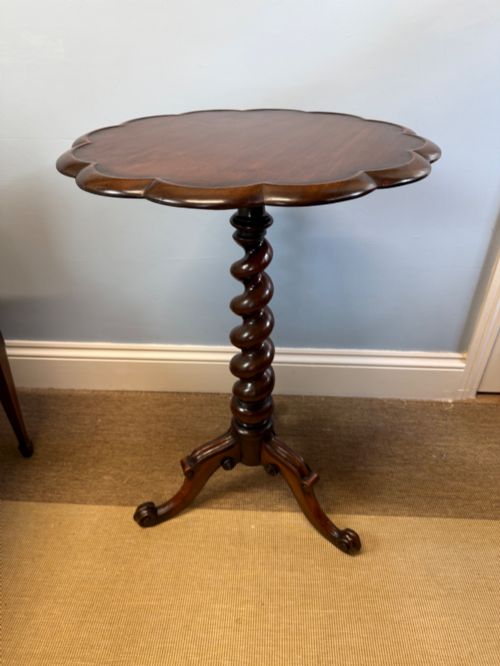
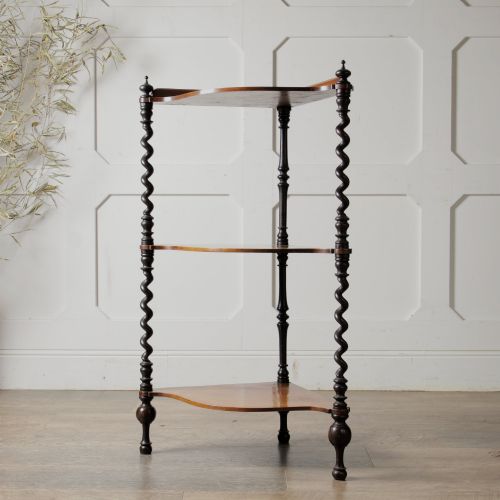
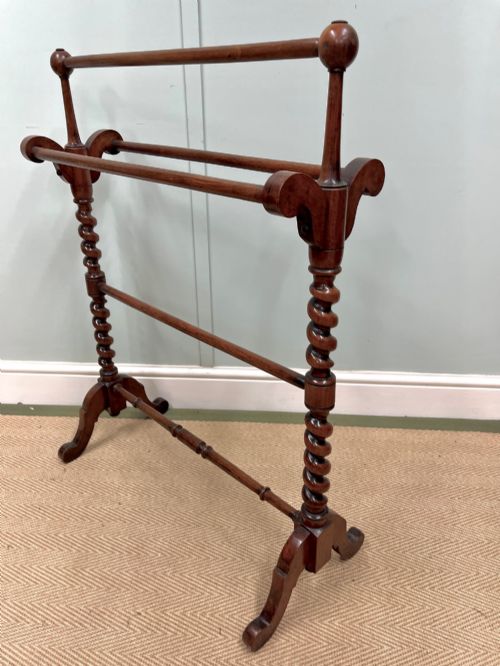
The selection here draws heavily from nineteenth-century examples, spanning side tables, occasional pieces, and multi-tiered whatnots that incorporate the characteristic spiral turning. Mahogany predominates, though related timber supports appear alongside brass fittings and occasional ebonised highlights.
Originating mostly from English workshops, these stands reflect domestic tastes from the early Victorian period through to Edwardian interpretations. The spiral shaft remains the defining visual anchor across tripod bases, circular tops, and columnar structures.
How they were made
Cabinet makers shaped the spiral columns by hand or on specialised lathes, cutting away timber to create the continuous rope-like twist characteristic of barley twist furniture. Solid mahogany provided the strength needed for slender shafts and tripod legs.
Surface finishing relied on hand-applied polish that brought out the deep reddish-brown tones and natural figure of the wood. Brass mounting plates, cast details, and occasional inlay work added functional contrast to the turned timber.
Turners cut these spirals so precisely that fingers naturally trace the continuous wooden rope up the column.
What varies in quality
Quality rests in the crispness of the spiral turning and the depth of the mahogany grain, where sharper, more fluid twists demonstrate superior carpentry. The stability of the tripod base and the weight distribution across the feet dictate how securely the stand holds an object.
Superior examples display balanced proportions between the slender twisted column and the supporting platform or dish top, avoiding clumsy joints or heavy-handed restorations. Patina also matters, as untouched aged surfaces reveal the true character of the timber.
The Mahogany Barley Twist Stand Glossary
- Barley twist
- A spiral turning resembling a twisted rope, popular in seventeenth-century furniture and revived during the Victorian era. It creates strong diagonal movement along furniture legs and columns.
- Torchere
- A tall stand designed to hold a lamp, candle, or decorative bust. These elevated pedestals place decorative objects at eye level.
- Whatnot
- An open shelving unit with multiple tiers used for displaying ornaments or books. Victorian examples often incorporate turned columns and barley twist supports.
- Tripod table
- A small table supported by three legs radiating from a central pillar. This construction prevents wobbling on uneven floors.
- Ebonised wood
- Timber treated with a dark stain or finish to imitate ebony. It provides stark contrast against warmer mahogany sections.
Mahogany Barley Twist Stand: Frequently Asked Questions
What is a barley twist stand used for?
These tall stands serve as pedestals for lamps, porcelain, or botanical specimens, elevating decorative items above floor level.
Their narrow footprint allows them to fit easily into corners or beside seating without crowding a room.
How do I date a mahogany stand?
Dating relies on timber characteristics, construction methods, and stylistic cues such as tripod base profiles or turning sharpness.
Victorian and Edwardian versions display distinct joinery and finish traits compared to earlier Georgian prototypes.
Are these stands stable?
Tripod bases and weighted pedestal designs provide reliable balance when placed on flat surfaces.
Heavier tops require careful centring of objects to maintain equilibrium across the narrow twisted shaft.
How should I care for mahogany furniture?
Keep wooden pieces away from direct heat sources and strong sunlight to prevent the timber from drying out.
Regular dusting with a soft cloth maintains the polished surface without the need for heavy chemical polishes.