




Mahogany Armchairs and Singles
Mahogany armchairs and singles are matched dining chair sets combining carvers for the hosts and single chairs for guests, prized for period character.
Mahogany Armchairs and Singles
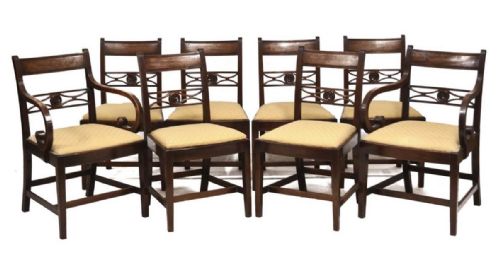
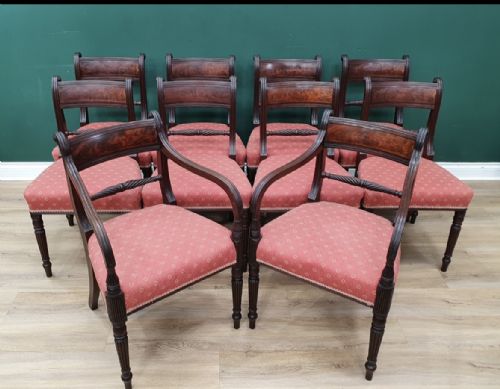
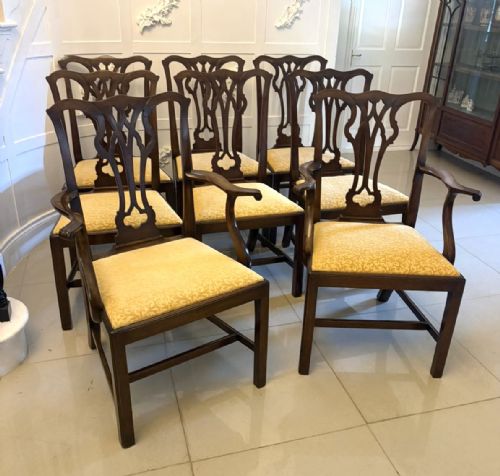
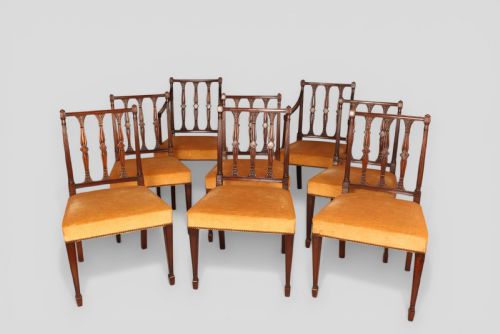
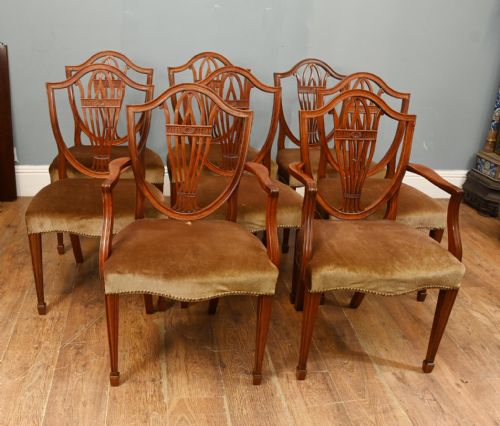
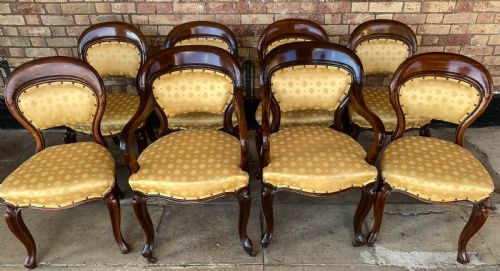
When you search for mahogany armchairs and singles, you are looking at matched dining sets that pair open or carver armchairs with matching single dining chairs. These sets primarily originate from the Georgian, Regency, and Victorian periods, often appearing in gatherings of eight or ten pieces.
The single chairs function as the standard seating around the dining table, while the armchairs anchor either end as carvers. Sets span distinct historical revivals, including Chippendale and Hepplewhite styles, alongside pieces dating directly to the eighteenth and nineteenth centuries.
The configurations on this page frequently group six single chairs with two armchairs, though larger sets of twelve or fourteen dining chairs also appear. Both individual carver chairs and full suites reflect the enduring demand for substantial hardwood dining furniture.
What varies in quality
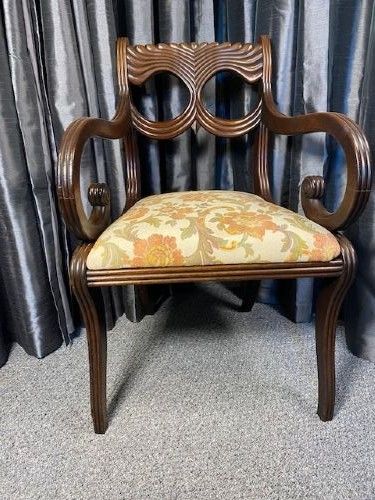
Quality in these dining sets rests on the crispness of the carving and the selection of the mahogany timber. Superior examples exhibit deep, well-defined detailing on the splats and legs rather than soft or shallow moulding.
The integrity of the matched set dictates desirability, as assembled groups differ from furniture built as a single unified suite from the outset. Timber figuring, particularly the rich chatoyancy of flame mahogany, elevates the visual presence of better pieces.
Armchairs were widened so eighteenth-century gentlemen in bulky coats could sit down without knocking their elbows.
The Mahogany Armchairs and Singles Glossary
- Carver
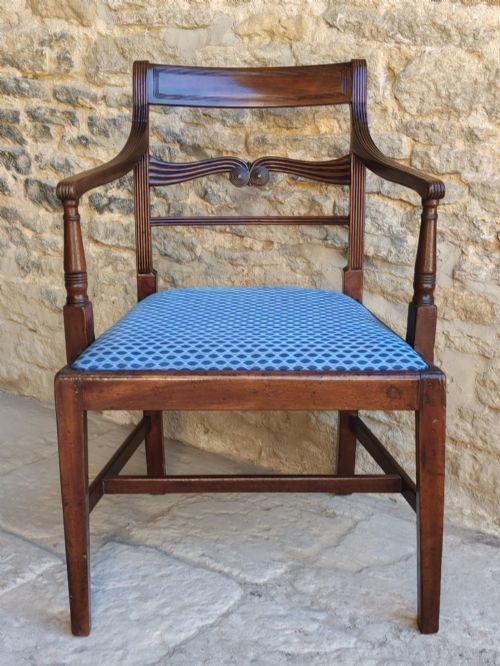
- An armchair designed specifically for use at the head of a dining table. These pieces feature open arms to accommodate sitting comfortably during a meal.
- Single chair
- A dining chair built without arms to allow multiple seats to fit neatly along the sides of a table. These form the numerical majority in standard dining sets.
- Flame mahogany
- A decorative veneer cut from timber where the branch meets the trunk, producing a distinctive fire-like grain pattern. Cabinetmakers reserved this wood for prominent surfaces like chair backs.
- Splat
- The vertical wooden slat placed centrally in the back of a dining chair. Carvers shaped and pierced these elements to define the prevailing style of the period.
- George III
- A British historical design period spanning the late eighteenth century, known for refined classical proportions and expert mahogany joinery.
Mahogany Armchairs and Singles: Frequently Asked Questions
What is the difference between carvers and singles?
Carvers are armchairs traditionally placed at the head and foot of a dining table for the hosts. Singles are armless chairs designed to line the sides of the table in greater numbers.
In historical dining sets, the carvers share the exact stylistic details, wood selection, and leg design of the accompanying single chairs to create a unified appearance.
How many chairs came in a standard set?
Dining sets varied considerably depending on the size of the household and the dining room. Sets of eight, consisting of six single chairs and two carvers, appear frequently.
Larger formal dining rooms often required sets of ten, twelve, or fourteen chairs to accommodate large gatherings, combining multiple single chairs with a pair of carvers.
How do I identify Georgian chairs?
Georgian chairs display classic proportions, restrained ornamentation, and dense mahogany construction. They often feature carved splats, straight or cabriole legs, and robust joinery.
Pieces from this era reflect the design influence of makers like Chippendale and Hepplewhite, focusing on structural balance combined with fine wood grain.
Can I mix carvers with different single chairs?
Historically, dining chairs were commissioned as a complete suite to ensure uniform wood colour and style. Mixing disparate pieces alters the visual harmony of a formal dining setup.
Matching sets maintain consistent timber patination and carved details across both the armchairs and the single chairs, preserving their intended aesthetic balance.