


Madonna and Child Art
These pieces of madonna and child art span centuries of religious devotion, capturing sacred figures in oil, carved wood, and gold.
Madonna and Child Art
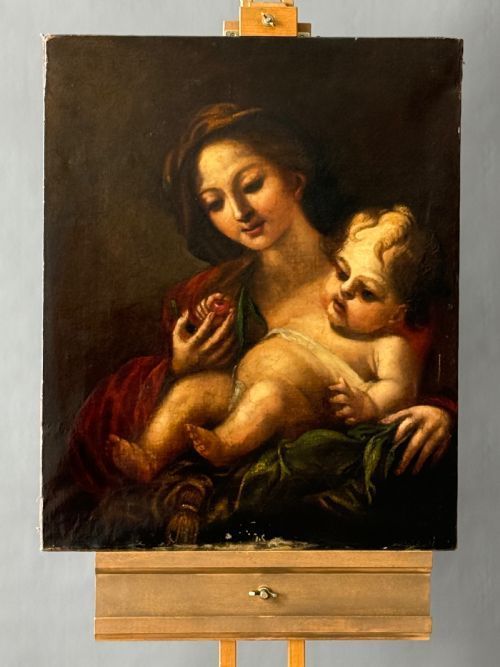
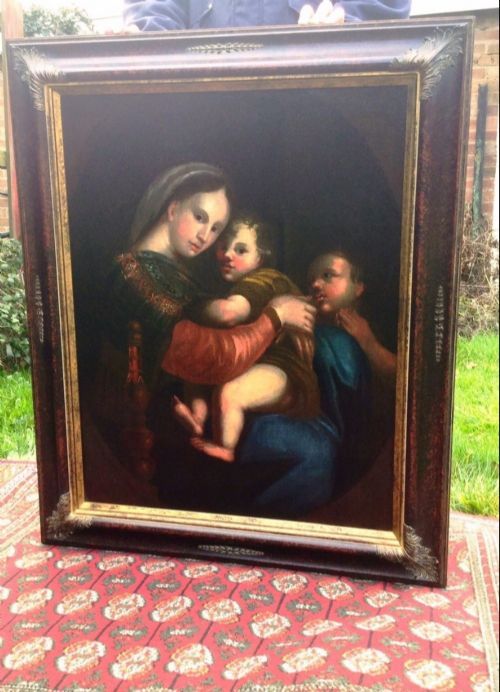
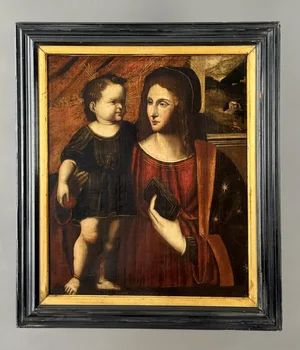
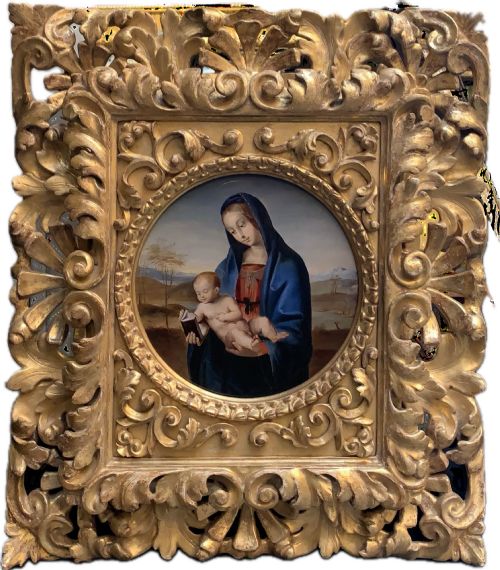
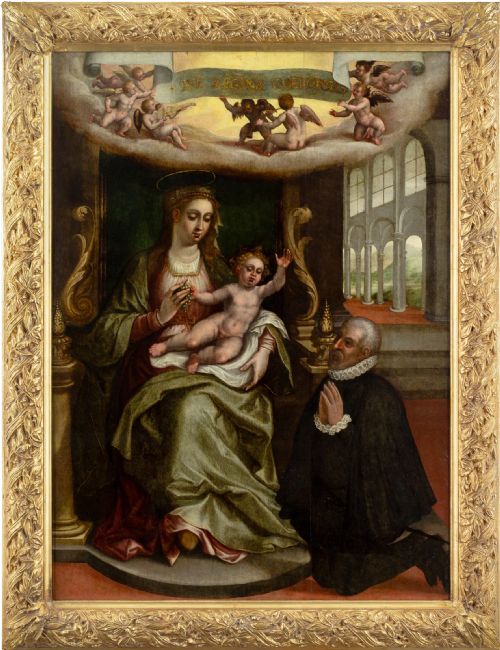
When you search for madonna and child art, you encounter a devotional subject that has inspired makers from the sixteenth century through to the mid-twentieth century. The selection ranges from ambitious oil paintings and old master studies after Raphael and Correggio to carved wooden figures, porcelain plaques, and gold charm pendants.
Oil paintings on canvas and panel form a prominent part of the selection, frequently reflecting Italian Renaissance and Baroque prototypes. Alongside these larger canvases, smaller personal devotional items such as French yellow gold pendants with plique-à-jour enamel and miniature prints appear regularly.
The materials span traditional artist canvases, carved wood, giltwood, porcelain, and eighteen-carat gold. Pieces stretch from sixteenth-century Italian school works up to twentieth-century folk art and outsider art sculptures.
How They Were Made
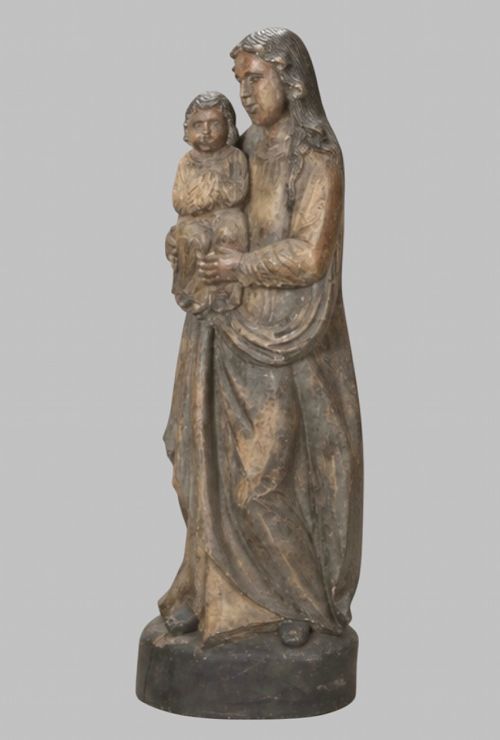
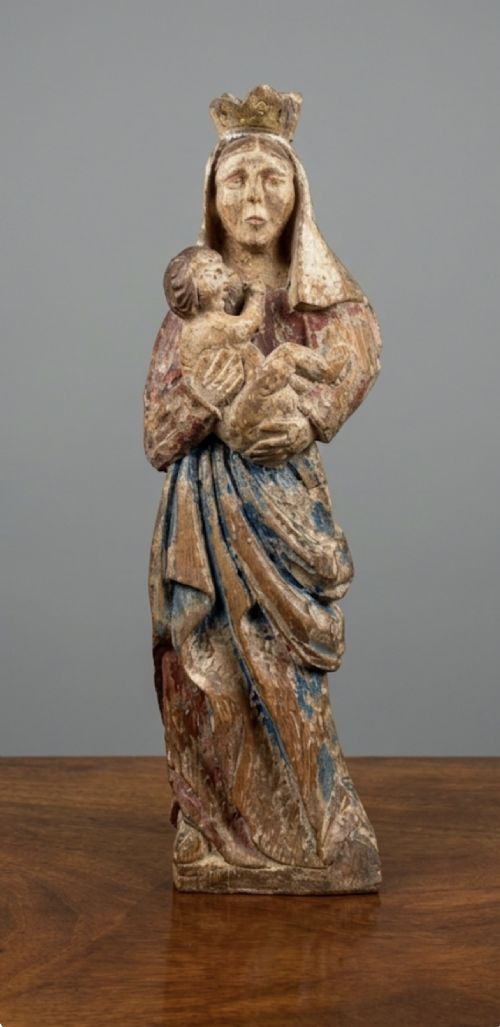
Canvas and wood panels serve as the primary supports for the paintings, layered with oil pigments to build deep tones and luminous flesh tones. Skilled hands also shaped devotional figures from solid blocks of wood, often applying paint and gilding directly to the carved surface.
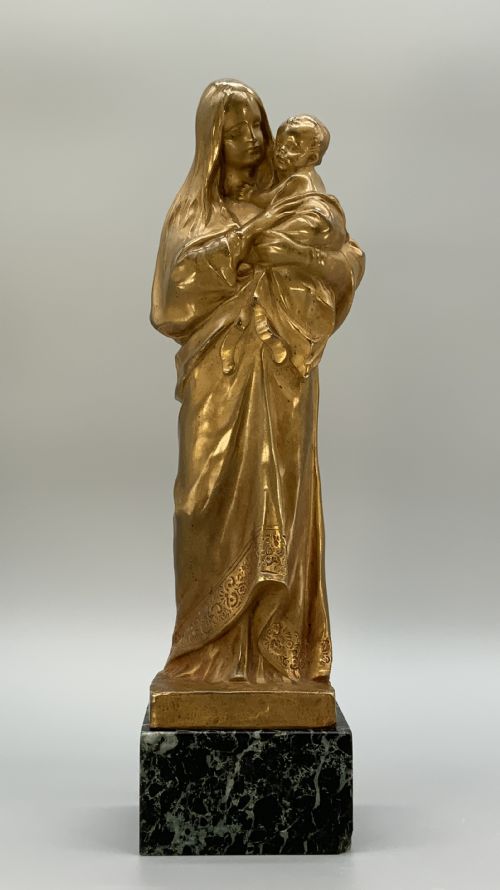
Gilt bronze and carved wood provide the structure for sculptural forms, while fine metalwork defines the gold pendants. Enamelling techniques such as plique-à-jour add translucent colour to small medals, catching light through delicate metal cells.
Several tiny gold pendants secretly house the Sacred Heart behind their miniature madonna portraits.
What Varies in Quality
The fidelity of the brushwork and the confidence of the draughtsmanship distinguish fine old master studies from standard decorative copies. In painted works, the treatment of drapery and the subtlety of expression reveal the hand of a more capable studio or follower.
Sculptural pieces rely on the depth of the carving and the preservation of original polychrome paint or gilding. Among gold pendants and medals, the intricacy of the metal stamping and the clarity of the enamel work dictate the finesse of the object.
Hans Müller·Miguel Barroso·Benvenuto Tisi·Francesco Solimena·Correggio·Bernardino Luini·Orsola Maddalena Caccia·Ambrious Benson·Bartolomé Murillo·Raphael·Lavrillier·Dropsy·George Kemper
The Madonna and Child Art Glossary
- Old Master
- A European painter of skill working before about eighteen hundred, or a painting by such an artist. Many pieces in this category reference these earlier traditions.
- Polychrome
- Painted in several colours, frequently seen on carved wooden devotional figures and saints. This technique brings depth and realism to carved garments and flesh.
- Plique-à-jour
- An enamelling technique where enamel is applied in cells without a backing, resembling stained glass. It allows light to shine through the coloured portions of gold pendants.
- Santos Figure
- A carved representation of a saint or religious figure used for decoration and worship in domestic or church settings. These wooden sculptures often show traces of historic paint.
- After Raphael
- A term used when a work is a copy or study based on an original composition by the Renaissance master Raphael. These tributes were popular across the eighteenth and nineteenth centuries.
Madonna and Child Art: Frequently Asked Questions
What is madonna and child art?
These pieces depict the Virgin Mary holding the infant Jesus, a central theme in Christian iconography. They appear as oil paintings, watercolours, prints, carved wooden figures, and gold pendants.
Created across various European traditions, the works range from grand altar-style canvases to intimate jewellery worn close to the heart.
How were these devotional pieces used?
Larger oil paintings and framed prints hung in domestic and religious spaces to aid contemplation and prayer. Sculptures and santos figures stood on domestic altars or shelves as focal points for daily devotion.
Smaller items like gold pendants and enamel medals were worn by individuals as personal expressions of faith and protection.
How do I date a piece?
Dating relies on material clues, framing styles, stretcher construction, and the type of canvas or wood panel used. Pigment analysis and the style of the brushwork also point towards specific periods like the Renaissance Revival or the Baroque era.
Maker marks, hallmarks on gold charms, and inscription styles help narrow down the decade of production.
Are these pieces original or copies?
The selection includes period original paintings, historic studio works, and dedicated studies after masters like Raphael and Correggio. Many nineteenth-century works explicitly record themselves as copies or homages to earlier Italian Renaissance masters.
Every piece carries its own history, whether created by a known follower in a historic workshop or produced as a fine art print in a later century.