
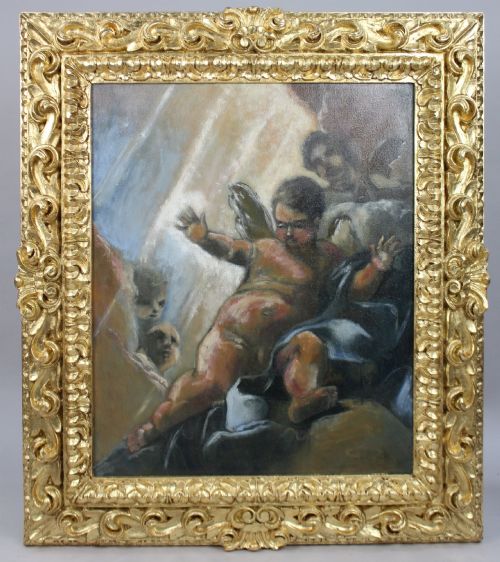
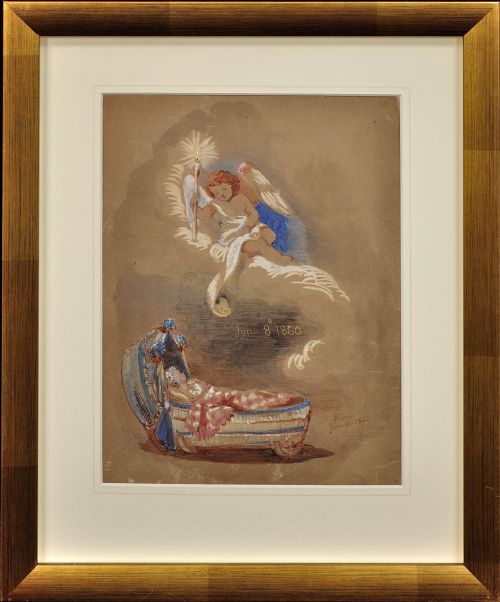


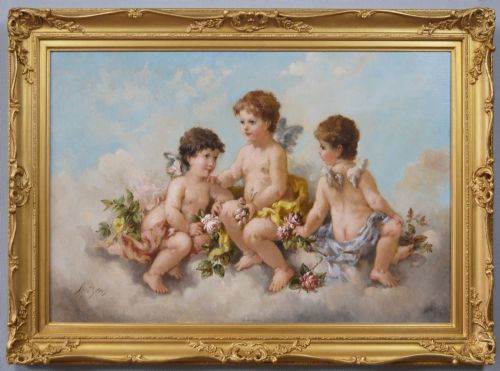


Cherub Frame Paintings
Cherub frame paintings bring celestial figures and elaborate woodwork together, offering a direct route to classical interior style.
Cherub Frame Paintings
When you search for cherub frame paintings, you encounter artworks depicting putti, angels, or mythological figures set within ornate surrounds, spanning from the seventeenth century through to the twentieth century. These pieces encompass oil on canvas, oil paint, watercolour, and paper, frequently presented in carved giltwood and wood frames.
You are most likely to meet nineteenth-century interpretations on this page, alongside earlier seventeenth and eighteenth-century examples that reflect Italian Baroque, Renaissance, and French Empire styles. The subjects range from religious scenes such as the Madonna and Child with angels to mythological depictions of cherubs and putti playing.
The assortment includes works attributed to specific schools and artists, such as Italian and French traditions, as well as pieces created after masters like Domenico Zampieri and Rosso Fiorentino. Wall art formats dominate the selection, varying from pairs of decorative oils to large-scale portraits and genre paintings.
Materials and construction methods
Painters utilised oil on canvas, oil paint, and watercolour on paper, applying pigments by hand to build up figurative compositions of cherubs, portraits, and religious scenes. Canvases are mounted on wooden supports, while watercolours are protected behind glass within dedicated surrounds.
One royal painter in the lineup is Queen Victoria's own daughter.
Assessing quality in cherub frame paintings
The execution of the painting itself determines the artistic merit, with masterly brushwork in the oil on canvas or watercolour demonstrating anatomical proportion and expressive depth in the figures. Pieces linked to named artists, recognised schools, or royal provenance carry distinct historical weight compared to decorative works of broader attribution.
Princess Alice Maud Mary·Domenico Zampieri·Jean Baptiste Isabey·Rosso Fiorentino·Orsola Maddalena Caccia·Charles Augustus Henry Lutyens
The Cherub Frame Paintings Glossary
- Giltwood
- Wood that has been coated with a thin layer of gold leaf or gilt powder. This finish provides a bright, reflective surface popular in classical framing.
- Putto
- A figure of a small chubby boy, often winged, found in classical and baroque art. These figures are frequently mistaken for cherubs or cupids.
- Oil on Canvas
- Pigments mixed with an oil medium and applied to a stretched woven fabric surface. This combination offers durability and rich colour blending.
- Trompe L'oeil
- An art technique that uses realistic imagery to create the optical illusion that the depicted objects exist in three dimensions. It plays with perspective to trick the eye.
- Italian Baroque
- A seventeenth-century stylistic movement characterised by drama, deep shadow, and exuberant ornamentation. Works from this tradition emphasise grand gestures and theatrical composition.
Cherub Frame Paintings: Frequently Asked Questions
What periods do these paintings come from?
The listings encompass works originating across several centuries, including seventeenth, eighteenth, and nineteenth-century examples alongside mid-twentieth-century creations. Styles span from Italian Baroque and Renaissance revivals to French Empire and Victorian periods.
Purchasers encounter various traditional interpretations, reflecting the shifting aesthetic preferences of European schools across different eras.
How do I identify the framing materials?
Frames are primarily constructed from wood, with many featuring giltwood finishes that apply a golden sheen over carved details. Examining the surface reveals whether the gold is applied via traditional leaf techniques.
Protective glass is also utilised on paper-based watercolours, separating them from bare canvas oil paintings that remain open to the room.
What subjects appear in these artworks?
Depictions commonly feature cherubs, putti, and mythological figures such as Cupid alongside religious subjects like the Madonna and Child with angels. Genre scenes and portraits also form part of the selection.
Some compositions reference earlier Old Master traditions, replicating or taking inspiration from Renaissance and Baroque painters.
Where should I hang a large oil painting?
Large wall art requires a sturdy wall capable of supporting the combined weight of the heavy canvas and the substantial wooden or giltwood frame. Placing the piece away from direct sunlight protects the oil paint and paper watercolours from fading.
Generous wall space allows the ornate framing and detailed figurative subjects to serve as a focal point within a room.