





Lyre Leg Table
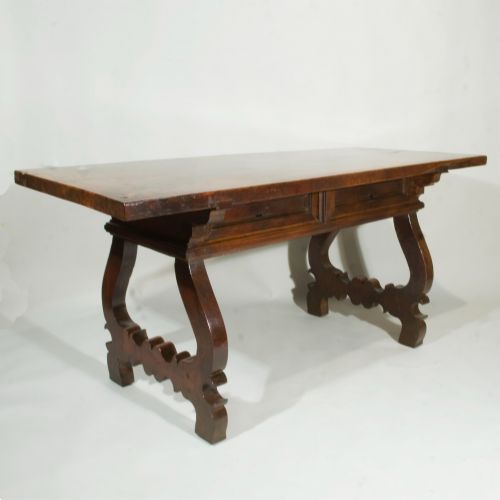
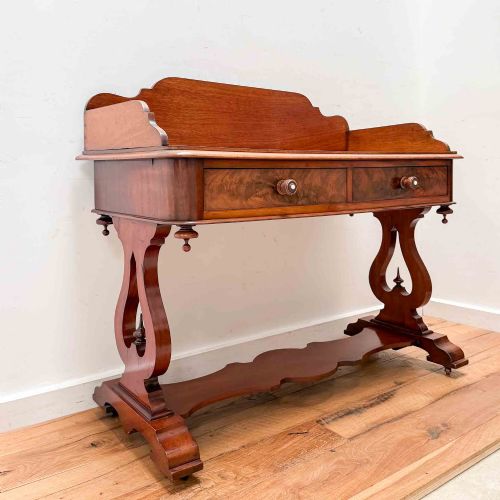
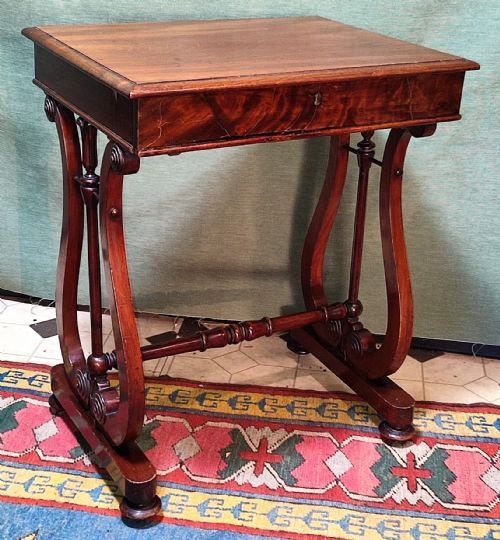
A lyre leg table brings unmistakable classical grace to a room, featuring the distinctive harp-shaped support that defined fine furniture from the Regency period onward.
Lyre Leg Table
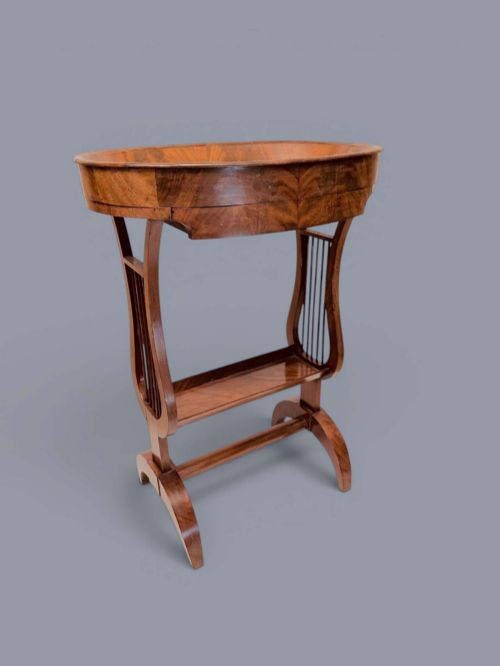
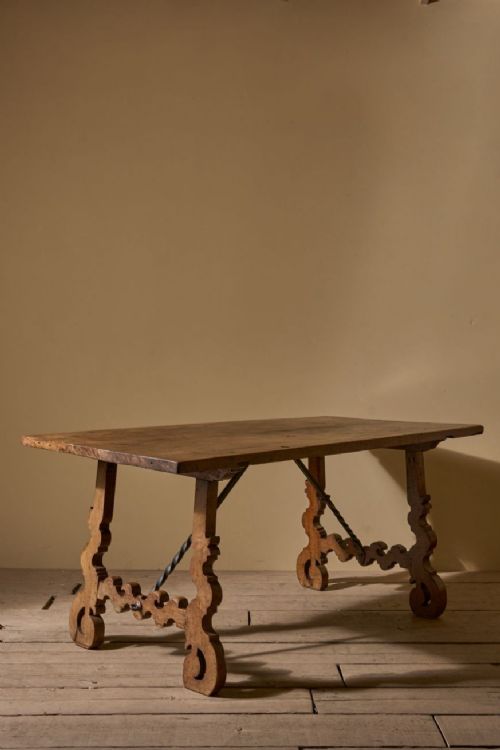
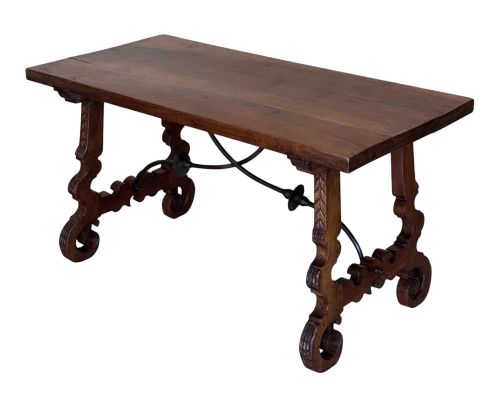
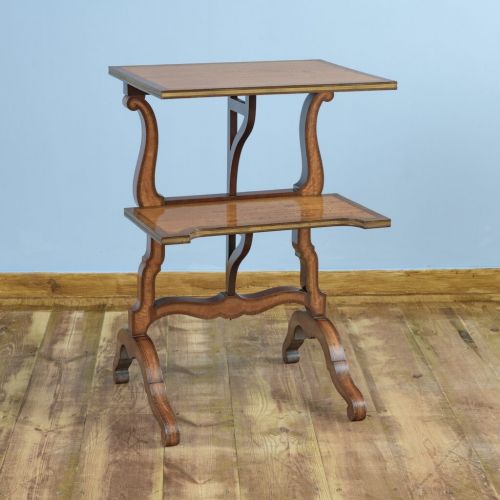
When you search for a lyre leg table, you are looking at functional surface furniture defined by its distinctive harp-shaped supports. These pieces appear across several distinct forms, including occasional tables, side tables, sofa tables, dining tables, and nests of tables.
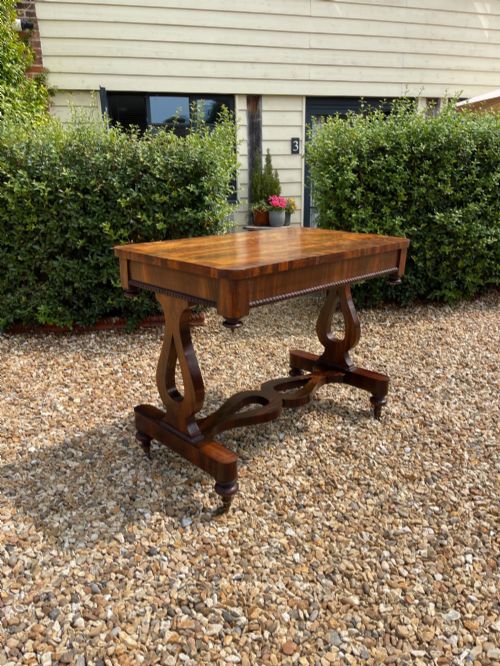
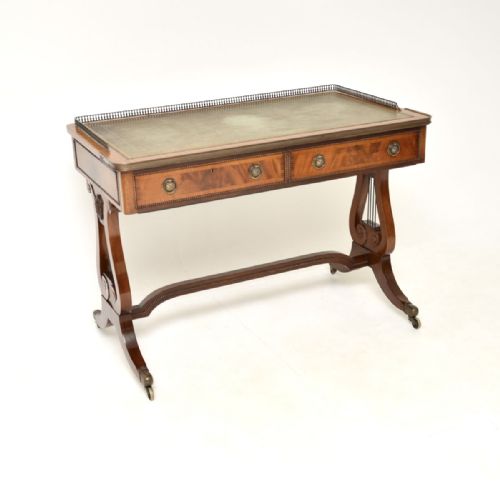
The version you are most likely to meet on this page is the nineteenth century mahogany or walnut occasional or sofa table. These often feature brass inlay, drop leaves, or leather tops, reflecting the enduring influence of Regency design on later Victorian and Edwardian makers.
How they were made
Cabinet makers utilised dense timber such as mahogany, walnut, rosewood, and satinwood to carve the sculptural curves of the lyre supports. These woods provided the necessary structural strength for slender forms while accepting fine polish and detail.
Makers embellished surfaces with brass inlay, wood inlay, and leather inserts. Structural joints relied on traditional cabinet-making techniques to secure the sweeping uprights to central stretchers and sturdy table tops.
Lyre Leg Table Retail Price Guide 2026
Typical asking prices for lyre leg table among the pieces listed under this phrase on Sellingantiques today, from the lower quarter to the upper quarter. They describe what is for sale here now, not the wider market.
Listings include occasional tables, side tables, dining tables, sofa tables, and nests of tables spanning the eighteenth to the twentieth centuries.
What varies in quality
The distinction between ordinary and exceptional pieces rests in the sharpness of the carving on the lyre supports and the selection of figured timber veneers. Superior examples display crisp definition in the wooden scrolls and harmonious grain patterns across the top.
Construction methods also separate the ranges, where heavier brass mounts, integrated stretchers, and careful joinery denote superior workshop production. Finer tables balance decorative detail with structural stability in the base.
Maison Giroux·Andrew Thomson & Sons
The Lyre Leg Table Glossary
- Lyre support
- A furniture leg or pedestal shaped in the silhouette of an ancient Greek lyre or harp. This motif found widespread favour during the Regency period and returned in later revivals.
- Sofa table
- A rectangular occasional table traditionally designed to stand in front of a sofa, typically featuring drop leaves on either end. These pieces often include drawers and sturdy pedestal or lyre bases.
- Occasional table
- A small, versatile table intended for periodic use around a room rather than a single fixed purpose. They appear in numerous forms including folding tea tables and games tables.
- Boulle-work
- An elaborate form of marquetry consisting of tortoiseshell and brass inlay developed in France. It decorates select luxury surface furniture of the nineteenth century.
- Pollard oak
- Timber taken from trees that have been pollarded, producing wood with a dense, highly figured burr grain. Cabinet makers prized this material for decorative table tops.
Lyre Leg Table: Frequently Asked Questions
What is a lyre leg table?
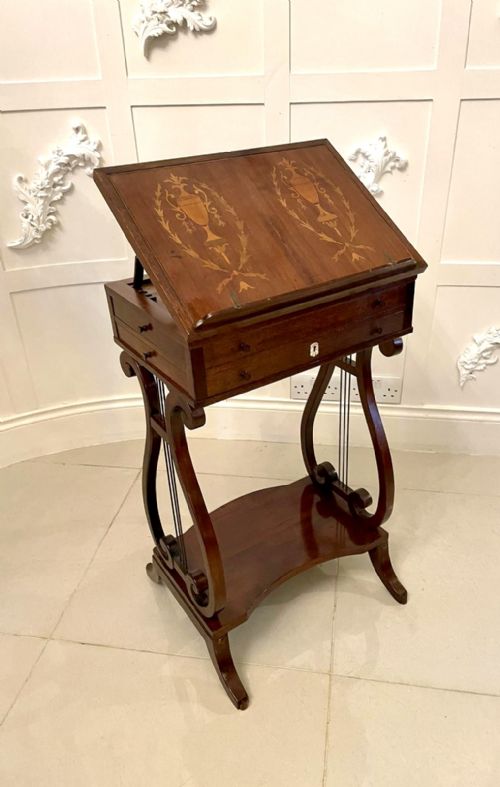
A lyre leg table is a piece of furniture supported by carved wooden pillars shaped like the ancient Greek musical instrument. These supports typically feature scrolls and sometimes brass stringing.
They appear in various formats such as card tables, sofa tables, and writing desks, bridging decorative design with everyday utility.
How do I date a lyre table?
Dating relies upon examining the timber species, secondary woods, construction methods, and stylistic cues. Regency and nineteenth-century examples often display richer veneers and heavier brass mounts.
Later Edwardian and early twentieth-century interpretations may show lighter construction or revival styling that matches the period of their manufacture.
Where should I place this table?
These tables suit placement as freestanding centre pieces, against a wall as a side table, or positioned near seating as a sofa table. Their decorative bases make them effective focal points in a drawing room or study.
Drop-leaf and folding variations offer flexibility for spaces where surface area needs to adapt throughout the day.
Are these tables sturdy?
Quality examples utilise dense hardwoods like mahogany and walnut joined with traditional cabinet-making methods to ensure stability. The central stretcher often found between twin lyre supports adds necessary reinforcement.
Careful placement away from extreme temperature shifts protects the timber joints and prevents veneer lifting over time.