





Lyre Leg Side Table
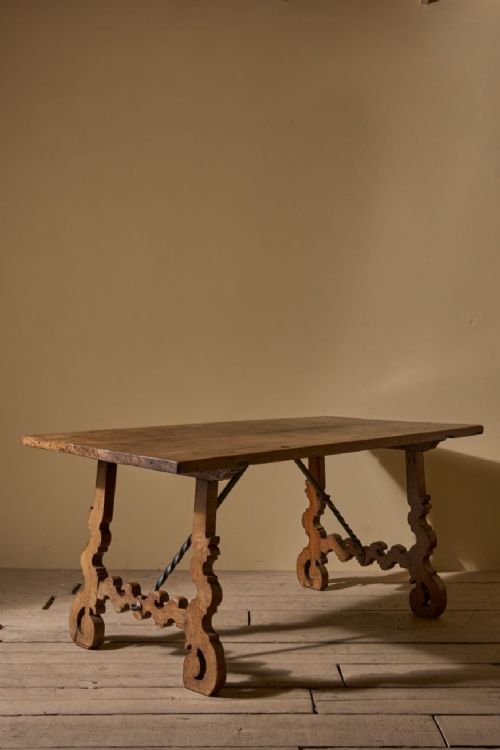
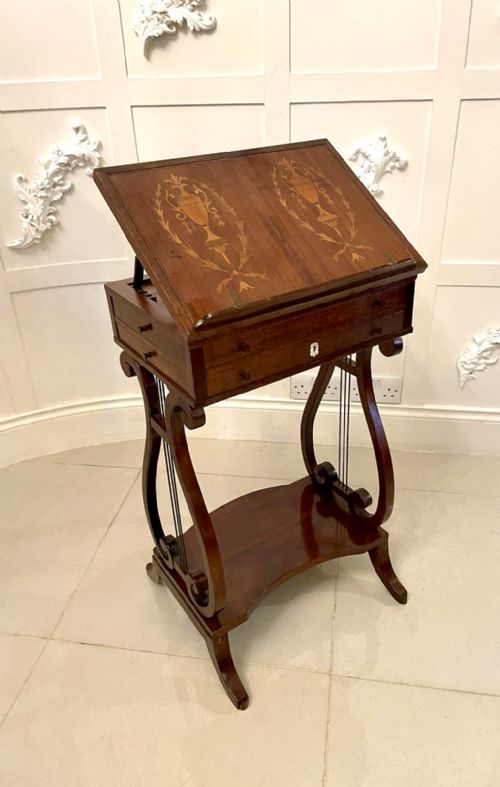
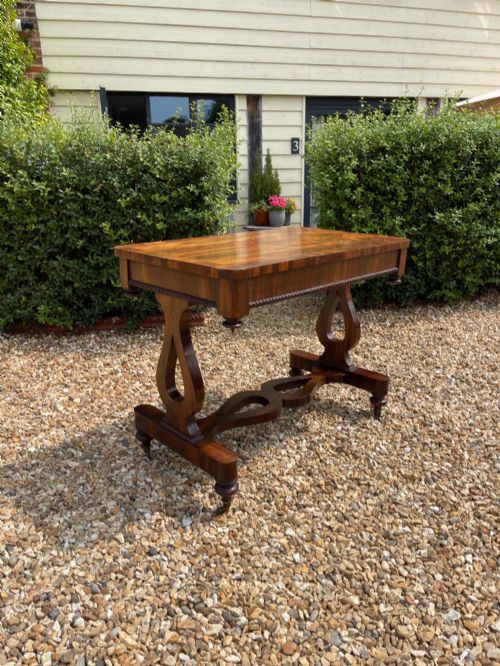
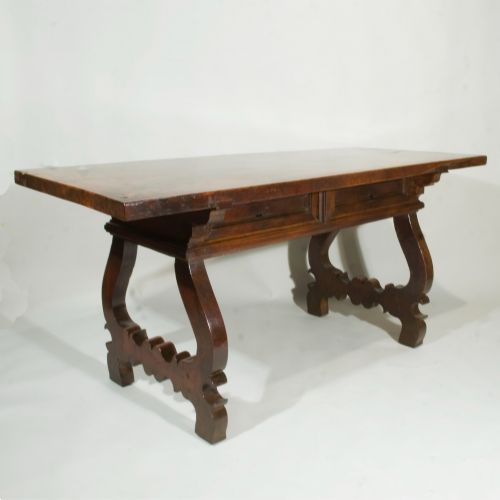
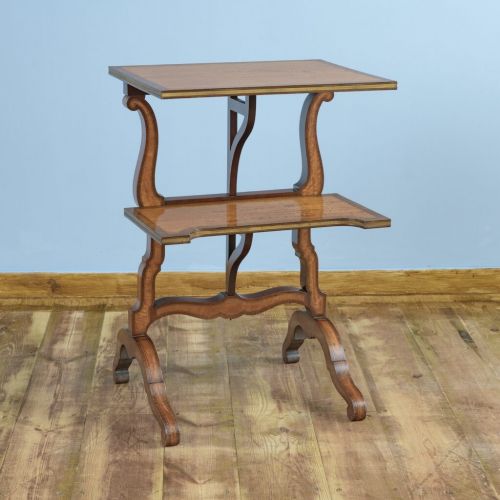
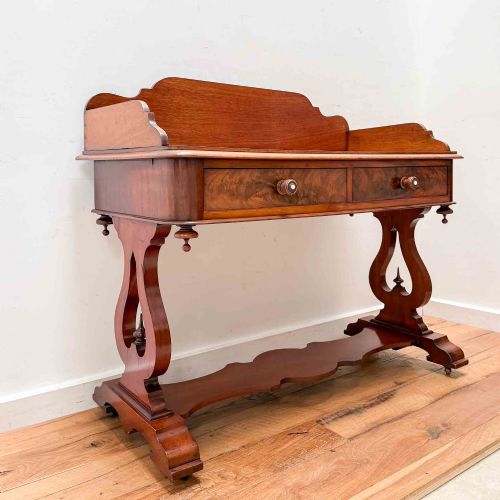
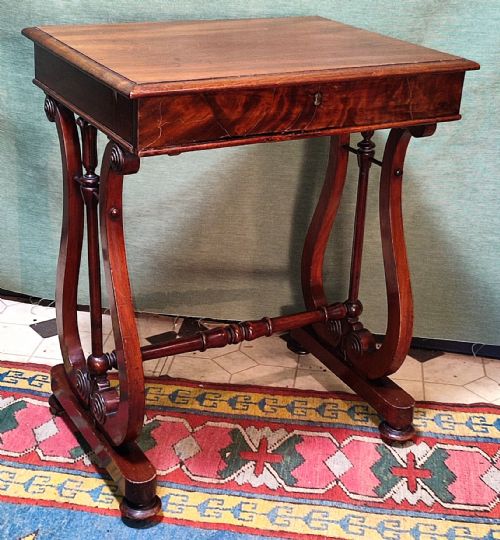
These lyre leg side table examples bring sculptural classical form to any room, offering surface space defined by graceful double-scroll supports.
Lyre Leg Side Table
A lyre leg side table uses distinctive lyre-shaped supports, mimicking the ancient stringed instrument, to hold up a compact surface. These pieces appear across multiple periods, including the Regency era, Victorian times, and the Edwardian period.
The form functions primarily as an occasional or sofa table, often featuring drop leaves or folding tops for versatility. Mahogany and walnut form the backbone of these pieces, alongside exotic timbers like satinwood and birds-eye maple.
Makers adapted this classical scroll motif for various settings, producing reading tables, card tables, and nests of four. The design draws heavily on historical revivals, spanning Spanish Baroque, French nineteenth-century, and Biedermeier styles.
How they were made
Cabinetmakers constructed these tables using dense hardwoods such as mahogany and walnut, frequently applying figured veneers like satinwood and pollard oak to the primary surfaces. Brass accents, stringing, and elaborate boulle-work enhance the structural timbers.
The signature lyre supports demand precise scrollwork and joinery to bear the weight of the tabletop securely. Craftsmen often incorporated stretchers between the twin lyre pedestals to provide additional stability.
One unexpected nineteenth-century table hides its cards behind intricate boulle-work and black lacquer.
What varies in quality
The refinement of the carved lyre scrolls dictates much of the visual success, where crisp detailing separates exceptional work from standard production. Timber selection also plays a role, with highly figured grains and contrasting boxwood inlay elevating the piece.
Construction integrity in the joints and folding mechanisms determines mechanical longevity. Tables retaining original brass mounts and uncompromised structural stability command greater appreciation.
Maison Giroux·Andrew Thomson & Sons
The Lyre Leg Side Table Glossary
- Lyre form
- A furniture support shaped like the ancient Greek musical instrument with two symmetrical curved sides connected by a central bridge. This motif gained immense popularity during the Regency and nineteenth-century classical revival movements.
- Sofa table
- A long, narrow table traditionally placed in front of or behind a sofa, frequently equipped with drop leaves. These pieces often incorporate drawers or trestle bases like the lyre configuration.
- Biedermeier
- A Central European style from the first half of the nineteenth century prioritising utilitarian comfort and clean lines over excessive ornamentation. Woods like birch and birds-eye maple feature prominently in this aesthetic.
- Boulle-work
- An elaborate form of marquetry consisting of tortoiseshell and brass inlay developed in France. It adds striking metallic contrast to dark wooden surfaces on decorative tables.
Lyre Leg Side Table: Frequently Asked Questions
What is a lyre leg?
A lyre leg is a furniture support shaped to resemble an ancient stringed instrument, featuring outward-curving scrolls that connect to a central base plate. Cabinetmakers favoured this design for its sculptural silhouette during classical revival periods.
In practice, these supports balance decorative elegance with sturdy weight-bearing capacity, often joined by a central stretcher to prevent lateral movement.
How do I date a side table?
Dating relies on examining the timber species, construction techniques, and decorative vocabulary visible on the piece. Earlier examples utilise solid native or imported hardwoods, while later Victorian and Edwardian pieces frequently employ machine-cut veneers and specific revival motifs.
Secondary woods inside drawers and the method of joint assembly also offer clear clues regarding the decade of manufacture.
Where should I place this table?
A lyre leg side table suits placement beside a sofa, against a hallway wall, or as an occasional surface in a reception room. Models with folding tops or drop leaves adapt well to changing space requirements.
Keep these tables away from direct heat sources and strong sunlight to protect vulnerable polished wood surfaces and delicate veneers.
What is a sofa table?
A sofa table is an elongated occasional table designed to stand adjacent to upholstery, frequently fitted with drop leaves to expand the surface area. They often feature twin pedestals or lyre supports linked by a stretcher.
Historically utilised for writing or holding candlesticks near seating areas, they now function flexibly in various living spaces.