
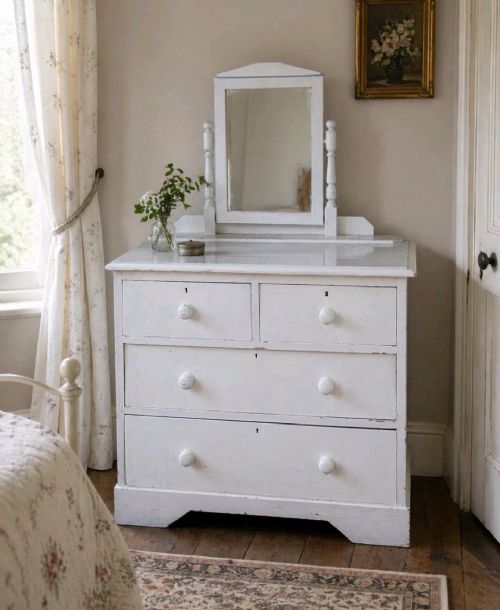
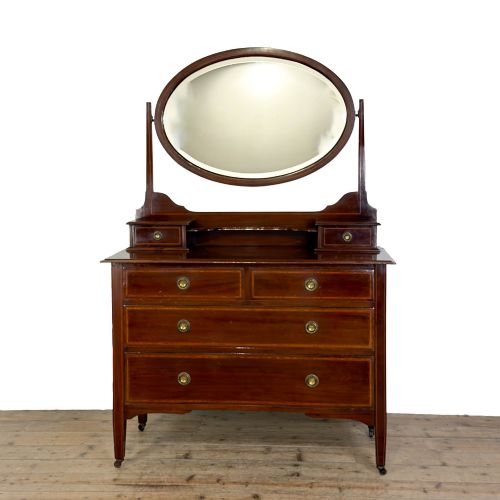


Antique Duchess Table
An antique duchess table brings grand Victorian elegance to a bedroom, offering a substantial vanity space complete with an adjustable mirror.
Antique Duchess Table
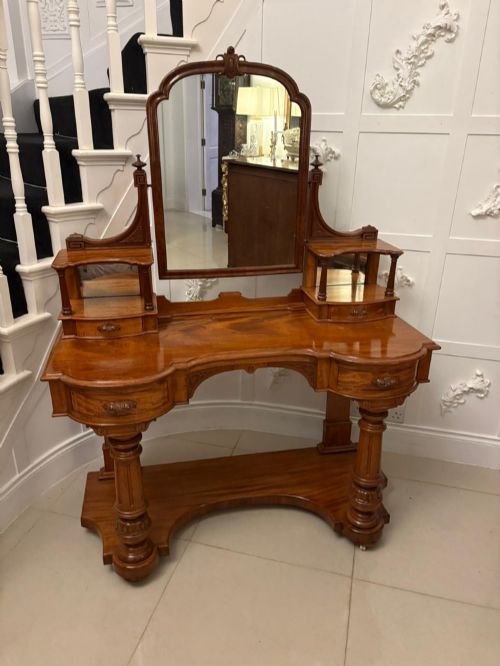
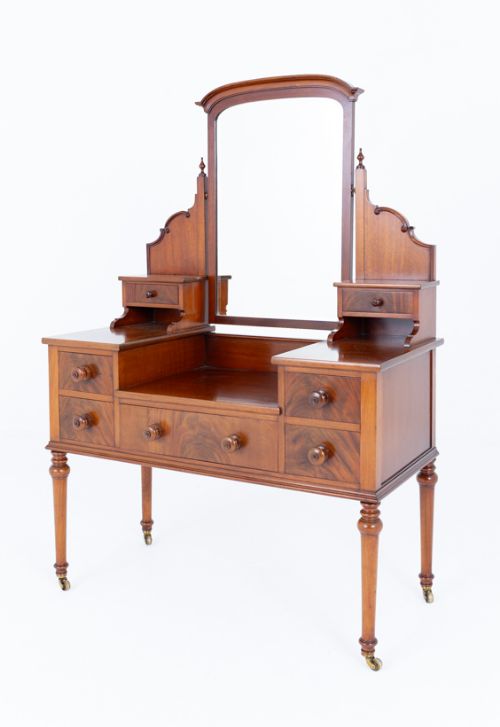
An antique duchess table is a large, elaborate dressing piece designed in the Victorian and Edwardian periods, combining a low writing surface with a raised central swing mirror and flanking jewel drawers.
Buyers most frequently encounter these vanity tables executed in rich mahogany or heavily figured burr walnut, reflecting the dominant tastes of the mid-to-late nineteenth century.
The form typically rests on pedestal bases or carved cabriole legs, occasionally incorporating small banks of drawers or a piano-top configuration beneath the main writing shelf.
Materials and Construction Techniques
Cabinet makers utilised solid timbers alongside finely cut veneers of mahogany, walnut, and exotic satinwood, laying them over secondary woods like pine to achieve striking grain patterns.
Structural embellishments rely heavily on hand-carved mahogany scrollwork, applied burr walnut panels, and occasional marquetry inlay or ormolu mounts.
Mirrors are mounted within heavy swivelling wooden frames, supported by carved scrolling arms that anchor securely into the superstructure of the dressing table.
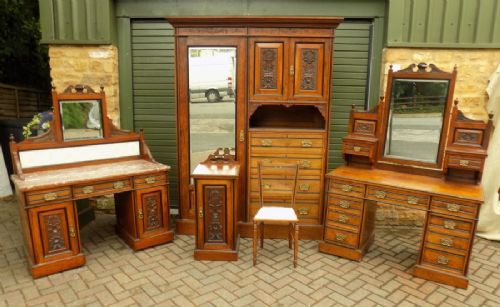
Listings feature duchess tables predominantly in Victorian mahogany and burr walnut, alongside Edwardian satinwood and pine.
Distinctions in Craftsmanship
The choice of veneer dictates the visual impact, with tightly figured burr walnut and flame mahogany commanding attention over plain or heavily stained secondary timbers.
Carved details reveal the hand of the maker, distinguishing deep, crisp foliate work and substantial scroll supports from shallow, machine-cut mouldings.
The presence of original bevelled mirror glass, intact brass hardware, and secondary compartments such as stationery wells or fitted trinket boxes separates standard examples from exceptional ones.
John Taylor of Edinburgh
The Antique Duchess Table Glossary
- Duchess table
- A grand Victorian dressing table featuring a low central writing surface and a large mounted mirror flanked by small drawers.
- Burr walnut
- A highly prized timber taken from the wart-like growths on walnut trees, yielding intricate, swirling grain patterns.
- Swing mirror
- An adjustable looking glass suspended between two upright arms allowing the user to alter the angle.
- Pedestal base
- A heavy supporting column or bank of drawers resting on the floor at either end of the dressing table.
- Ormolu
- Gilded bronze mounts applied as decorative ornaments to the corners and frames of French-influenced pieces.
Antique Duchess Table: Frequently Asked Questions
What is an antique duchess table used for?
These tables served as the primary dressing and grooming stations in Victorian and Edwardian bedrooms. The surface held perfumes, brushes, and cosmetics while the drawers stored jewellery and hairpins.
Today, they function well as grand bedroom vanities or unique hallway console tables, providing substantial surface space and practical drawer storage.
How do I date an antique duchess table?
Dating relies on observing the primary wood choice, hardware style, and construction methods. Mid-Victorian examples often utilise rich burr walnut and heavy carved mahogany, whilst Edwardian pieces tend to be lighter in scale.
The mirror frame fixings and drawer linings also offer clues, as machine-sawn timber became more common toward the end of the nineteenth century.
Are the mirror glasses usually original?
Many surviving duchess tables retain their original mercury or silvered glass mirrors, though some show characteristic age spotting or foxing around the edges.
Replacement mirrors do appear, so examining the backing boards and the fit within the carved wooden frame helps determine originality.
How do I care for burr walnut veneer?
Burr walnut requires gentle maintenance, avoiding direct sunlight to prevent the rich timber tones from fading or drying out over time. Regular dusting with a soft, dry cloth and occasional application of appropriate furniture wax keeps the polished surface nourished.