





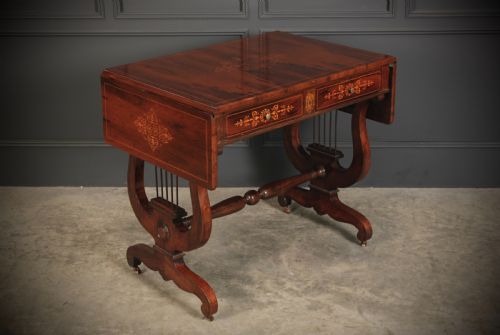

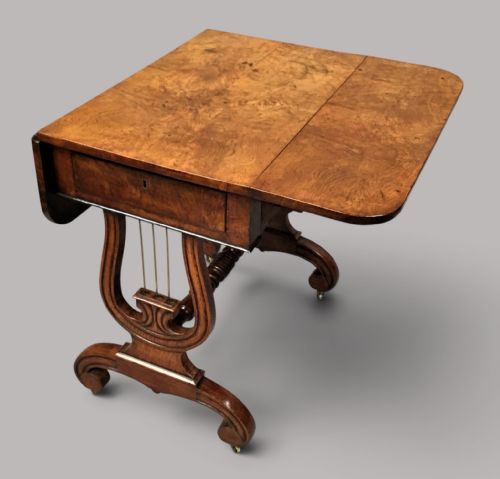


Lyre Base Table
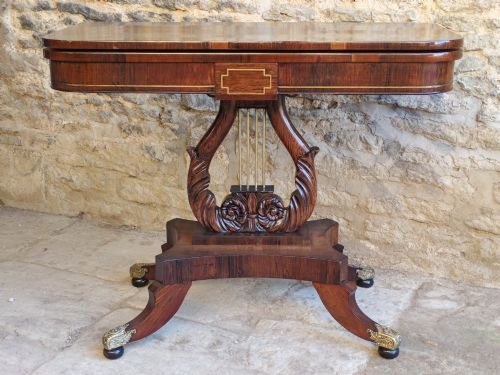
A lyre base table brings unmistakable classical grace to a room, using distinctive scrolled supports inspired by ancient Greek instruments.
Lyre Base Table
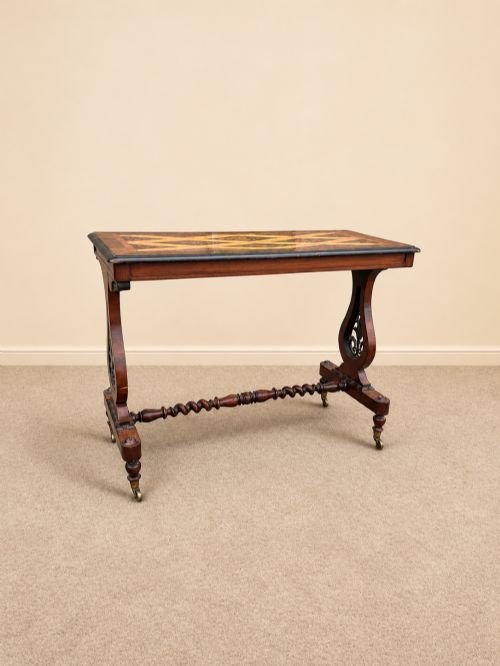
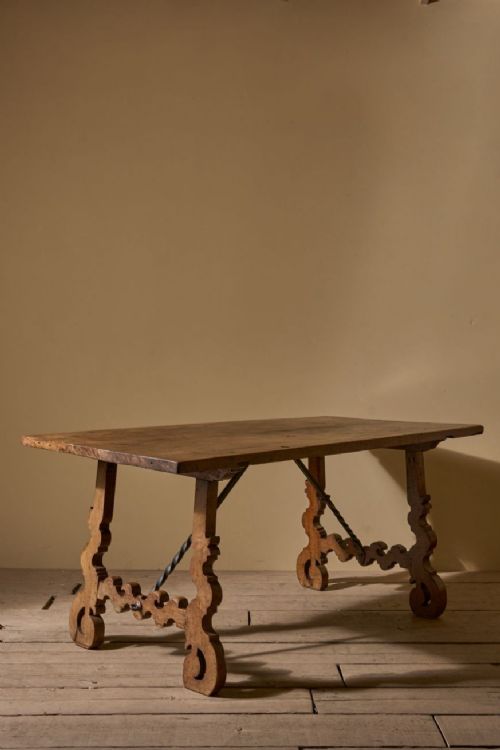
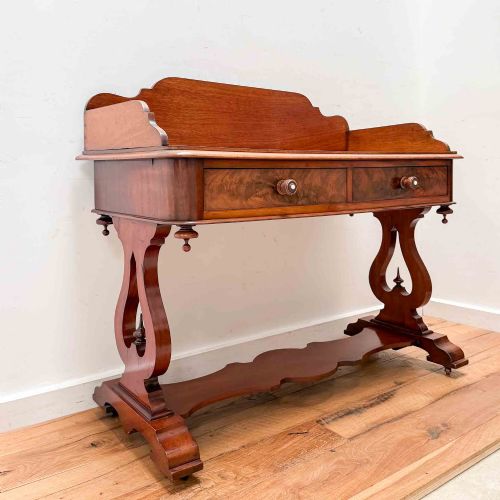
The selections span several periods, with Regency and Victorian examples appearing frequently alongside 18th century Spanish walnut pieces and 1920 bedside tables. These surfaces served various domestic purposes, functioning as tea tables, sewing tables, and occasional tables in period interiors.
Makers and craftsmen utilised classical proportions, often pairing the characteristic scrolled supports with stretcher rails or platform bases. The overarching aesthetic draws heavily from Regency, Georgian, and Biedermeier design vocabularies.
Materials and construction
Cabinet makers constructed these pieces primarily using dense timbers such as mahogany, walnut, and rosewood, frequently selecting figured veneers for visual depth. Hardwoods like birch and ebonised wood also appear among the records, providing varied surface textures.
Fine decorative detailing includes brass inlay and marquetry work embedded into the wood grain, particularly visible on top surfaces and pedestals. Wrought iron and solid brass components provide structural support and decorative contrast on specific regional or period forms.
Lyre Base Table Retail Price Guide 2026
Typical asking prices for lyre base table among the pieces listed under this phrase on Sellingantiques today, from the lower quarter to the upper quarter. They describe what is for sale here now, not the wider market.
Some sewing tables arrive fully stocked with period contents, offering a preserved glimpse into bygone domestic needlework hobbies.
Evaluating craftsmanship
Quality in these pieces depends on the precision of the joinery and the selection of timber veneers used across the top and the lyre supports. Superior examples display carefully matched wood grains and crisp carving on the scrolled elements rather than simplified mouldings.
The integration of brass inlay and decorative metalwork distinguishes finer productions from standard domestic furniture. Sound structural integrity in the central support column and stretcher assembly ensures the stability of the table over time.
The Lyre Base Table Glossary
- Lyre support
- A central or twin pedestal base shaped to imitate the ancient Greek stringed instrument. This architectural feature defines the structural silhouette of the furniture.
- Teapoy
- A small box or chest mounted on a central pillar or lyre base, originally used for storing loose tea leaves. These pieces often include internal compartments and folding tops.
- Sofa table
- An oblong occasional table designed to stand in front of or beside a sofa, typically featuring drop leaves on either side. They frequently incorporate twin pedestals connected by a stretcher.
- Marquetry
- The art of applying decorative patterns of wood veneer to a structural surface. Craftsmen use contrasting timbers to create complex geometric or floral pictures.
Lyre Base Table: Frequently Asked Questions
What is a lyre base table?
A lyre base table is a piece of furniture supported by pedestals shaped like the ancient Greek lyre instrument.
These tables span various forms including writing desks, sofa tables, and tea tables from the Georgian, Regency, and Victorian periods.
How were lyre base tables used?
These tables served multiple domestic functions in period homes, acting as writing surfaces, tea tables, and sewing stations.
Smaller versions functioned as bedside tables or occasional stands for lamps and decorative objects.
How do I identify a Regency lyre table?
Regency examples typically feature rich timbers such as mahogany or rosewood, often enhanced with brass inlay work.
The design draws heavily on classical antiquity, displaying clean proportions and characteristic scrolled wooden supports.
How do I care for antique wood tables?
Maintain antique timber surfaces by keeping them away from direct sunlight and sudden changes in room temperature.
Apply traditional beeswax occasionally to nourish the wood and preserve the depth of the grain.