



Carved Lyre Side Table
A carved lyre side table brings neoclassical elegance and graceful woodwork to a room, offering a functional surface shaped by nineteenth-century design.
Carved Lyre Side Table
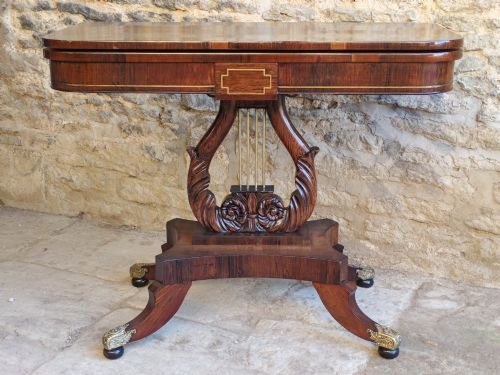
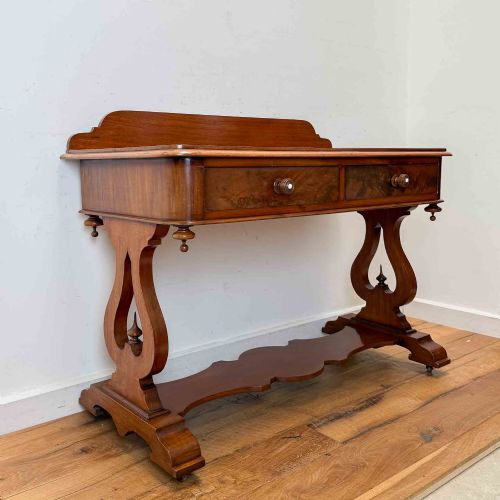
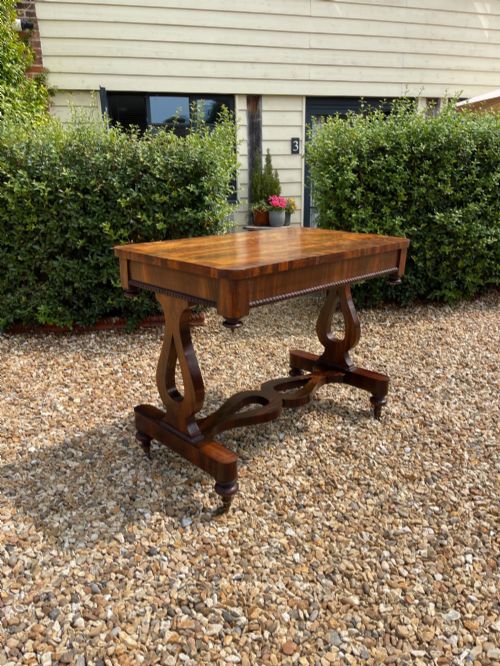
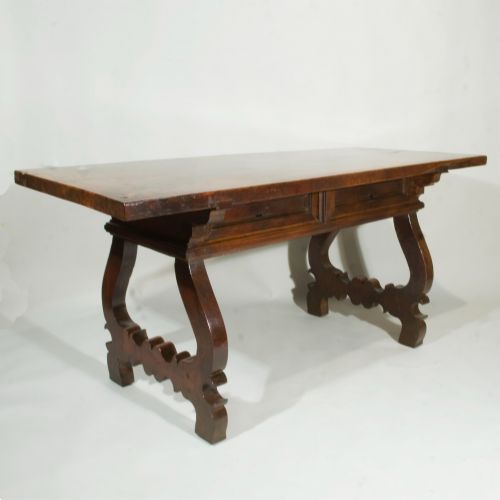
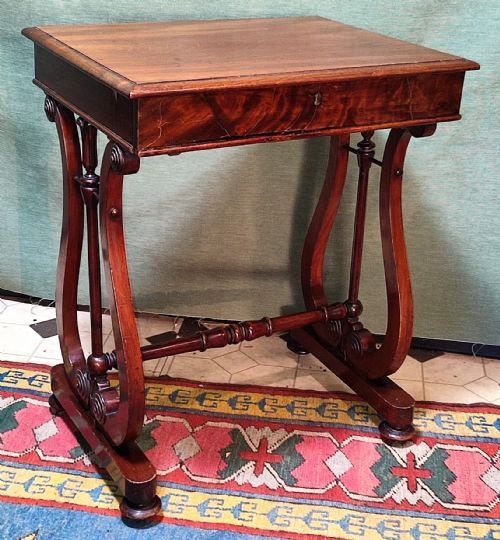
A carved lyre side table takes its name from the distinctive lyre-shaped support base that characterises the form during the Regency and Georgian periods. These pieces serve as functional tables in various rooms, appearing frequently in mahogany and walnut across the eighteenth and nineteenth centuries.
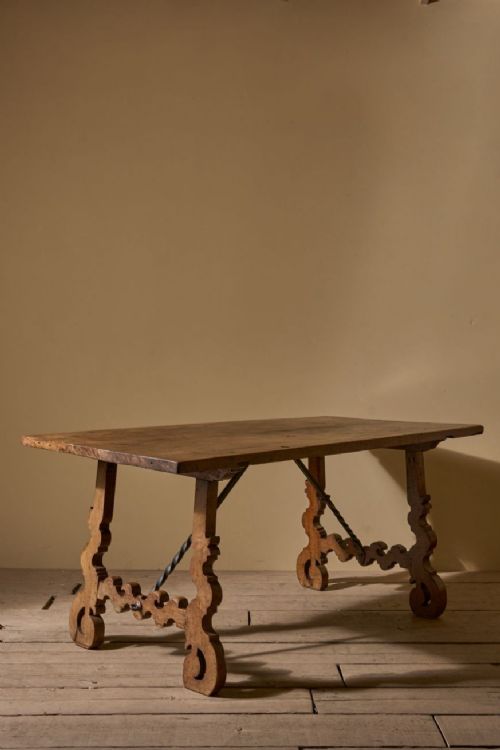
The selection ranges from fold-over tea tables and compact occasional pieces to library and single-drawer side tables. You will encounter forms spanning the Georgian, Victorian, and William IV eras, alongside occasional continental examples.
The defining characteristic remains the lyre base, often carved with considerable detail and occasionally paired with brass fittings or ebonised wood accents. These tables reflect the enduring popularity of classical revival motifs in domestic furniture.
How they were made
Cabinetmakers constructed these tables using dense hardwoods such as mahogany and walnut, frequently selecting flame mahogany veneer for decorative impact on table tops. Timber selection dictated both the visual weight and the structural stability of the piece.
The lyre supports required precise joinery and hand-carving to achieve the curved profile of the strings and frame. Brass mounts and restrained brass elements were sometimes integrated into the design to accent the woodwork.
Surface finishes included traditional polishing methods that highlighted the natural grain of the rosewood or ebonised wood. Construction techniques evolved across the periods represented, from eighteenth-century Spanish baroque traditions to nineteenth-century British workshop practices.
Carved Lyre Side Table Retail Price Guide 2026
Typical asking prices for carved lyre side table among the pieces listed under this phrase on Sellingantiques today, from the lower quarter to the upper quarter. They describe what is for sale here now, not the wider market.
Listings feature mahogany predominantly, alongside walnut, rosewood, and brass, spanning the eighteenth and nineteenth centuries.
What varies in quality
Quality rests primarily in the crispness of the hand-carving on the lyre base and the selection of timber used for the top and supports. Superior examples display deeply articulated wooden scrolls and balanced proportions.
The integrity of the veneers and the quality of the timber figure set finer pieces apart from standard workshop production. Selection of dense, well-figured mahogany or walnut indicates a higher tier of craftsmanship.
The Carved Lyre Side Table Glossary
- Lyre base
- A furniture support shaped in the stylized form of an ancient Greek lyre, commonly used in Regency and Georgian table design. It provides both structural stability and a distinct classical aesthetic.
- Flame mahogany veneer
- A thin layer of mahogany cut from the point where branches join the trunk, creating a fiery, undulating grain pattern. Cabinetmakers applied this to prominent surfaces for visual drama.
- Fold-over tea table
- A table featuring a hinged top that unfolds to double its surface area, designed originally for serving tea. Many examples in this form utilise a rotating top supported by a central pillar or lyre base.
- Ebonised wood
- Timber treated with a chemical stain or finish to imitate ebony. This dark, uniform treatment was often used to create contrast against lighter woods or gilt details.
- Occasional table
- A small, versatile table intended for light, intermittent use in a principal room. These pieces appear in various forms and timbers throughout the nineteenth century.
Carved Lyre Side Table: Frequently Asked Questions
How do I date a mahogany table?
Dating a mahogany table involves examining the timber selection, construction methods, and stylistic cues present in the woodwork. Pieces from the Georgian era often feature solid construction and hand-cut joinery.
Later Victorian examples may incorporate machine-sawn elements or different veneer applications while retaining the classical silhouette.
Where were these tables used?
These tables served various functions in period homes, acting as serving surfaces, display ledges, or writing desks. Their compact scale allowed them to fit easily against drawing room walls or in small reception spaces.
Fold-over variations were specifically built to accommodate tea service when opened for guests.
How do I care for antique wood?
Antique wood surfaces benefit from stable indoor humidity and protection from direct sunlight to prevent timber shrinkage and fading. Regular dusting with a soft, dry cloth preserves the polished finish.
Applying appropriate wax polishes sparingly helps nourish the grain without building up heavy residues over time.