
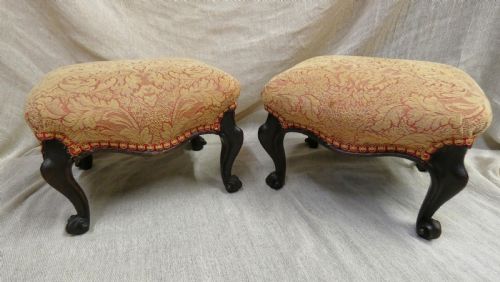
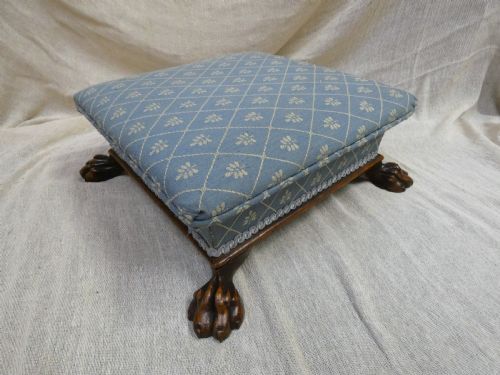
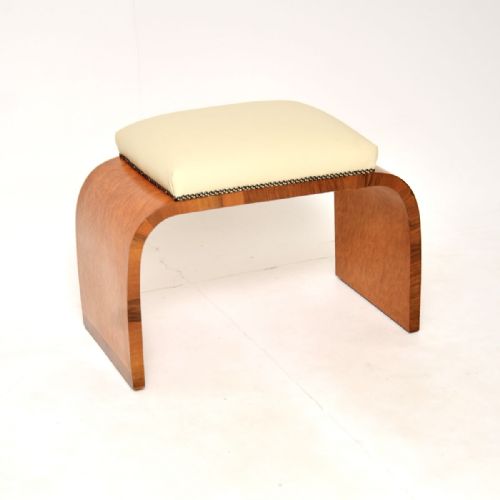

Low Upholstered Footrest
A low upholstered footrest offers timeless comfort, uniting period timber frames with tactile textile surfaces for fireside repose.
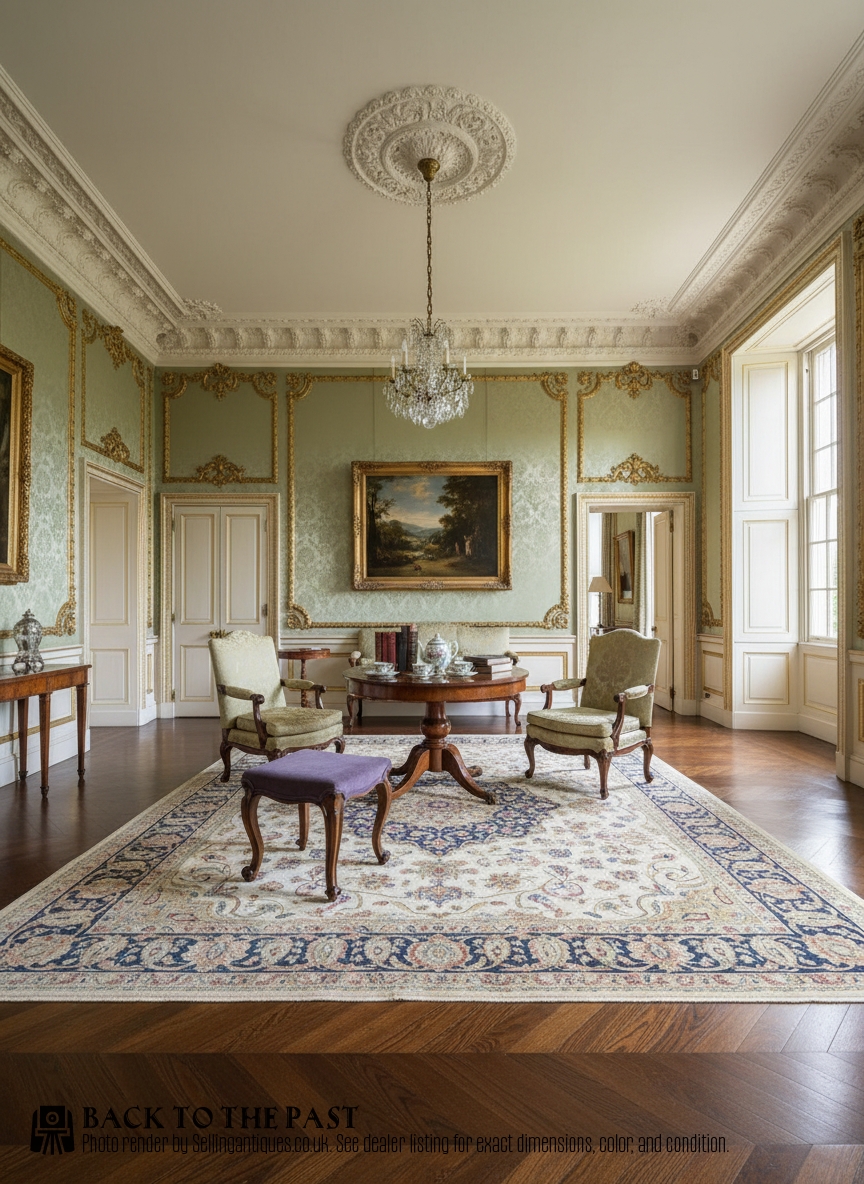
Low Upholstered Footrest
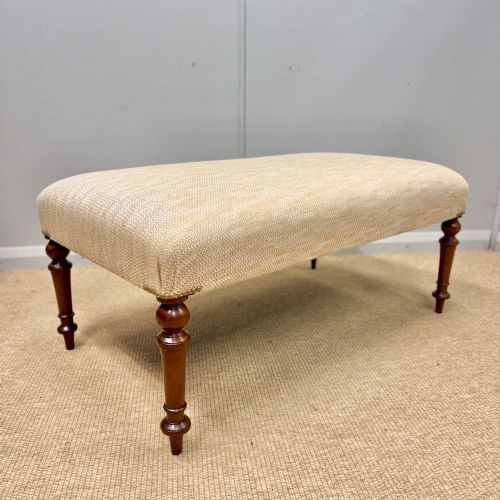
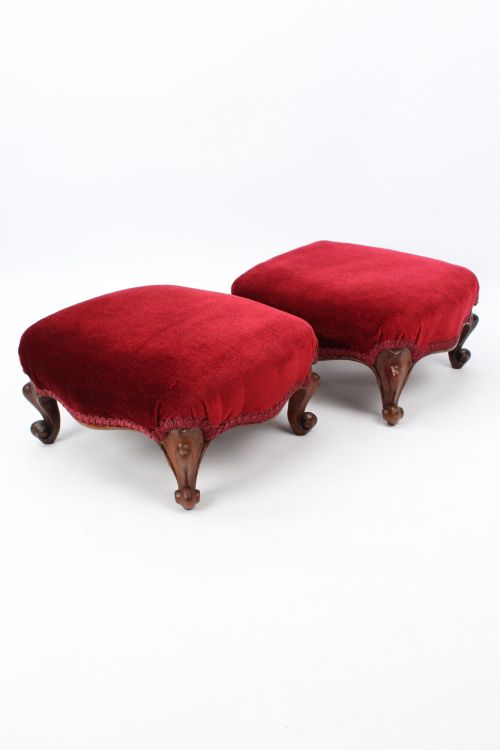
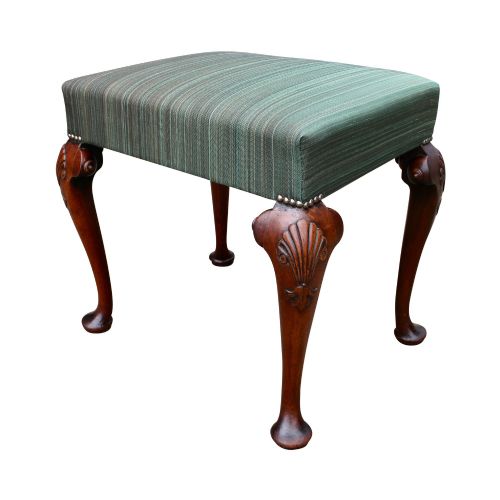
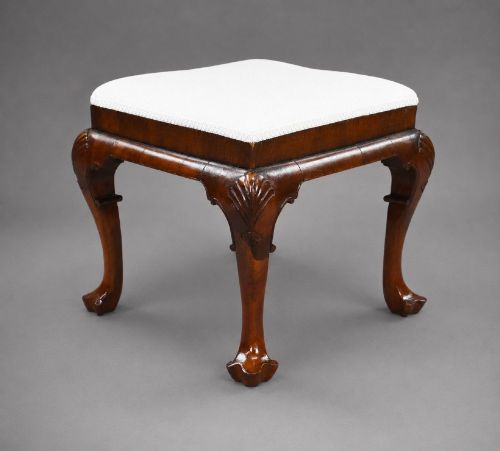
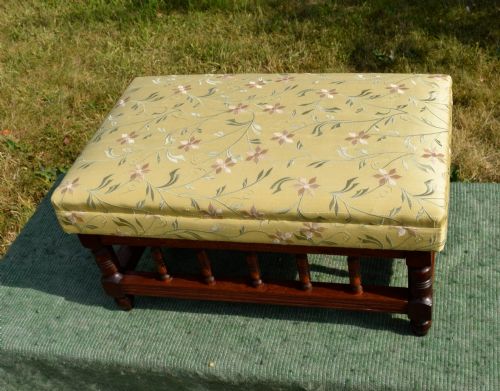
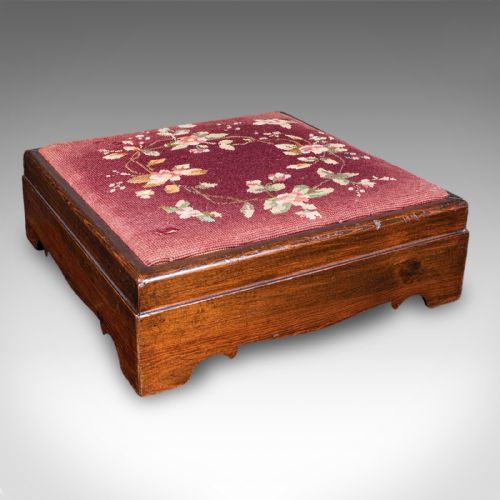
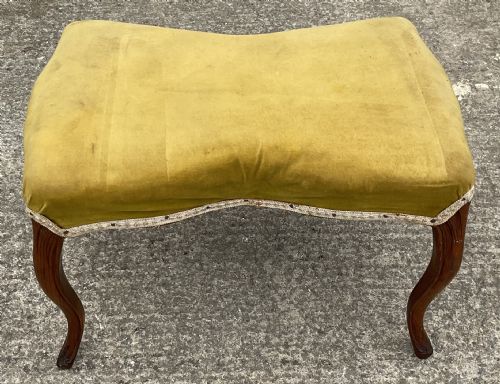
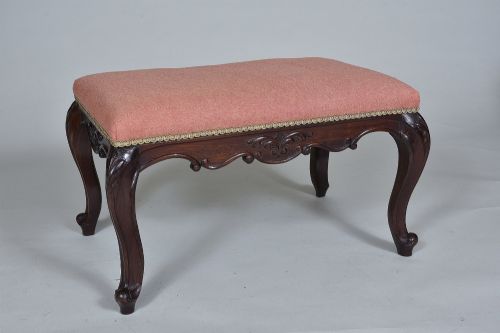
A low upholstered footrest primarily takes the form of a footstool or ottoman, designed to support seated occupants in parlours and drawing rooms. When searching for a low upholstered footrest, buyers encounter pieces spanning from the eighteenth century through the Victorian era into the early twentieth century.
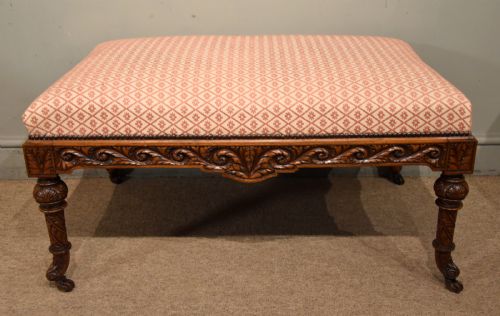
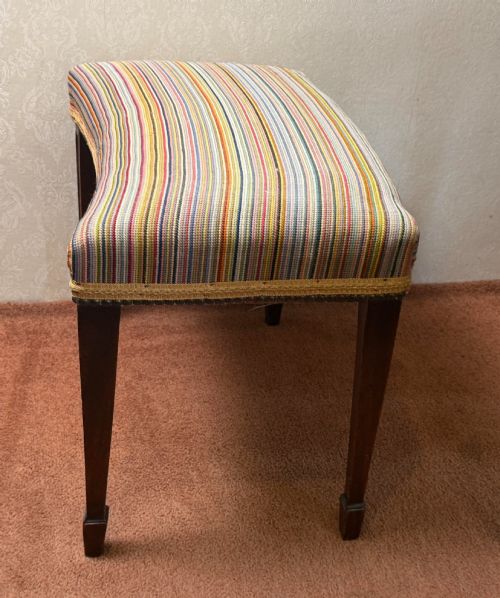
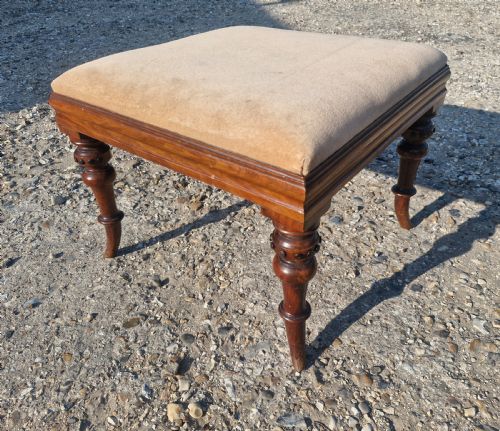
The selections on this page heavily feature nineteenth-century and Victorian examples alongside Edwardian and revival styles. These objects range from modest mahogany frames with simple square tapering legs to elaborately carved rosewood, walnut, and giltwood creations resting on brass castors.
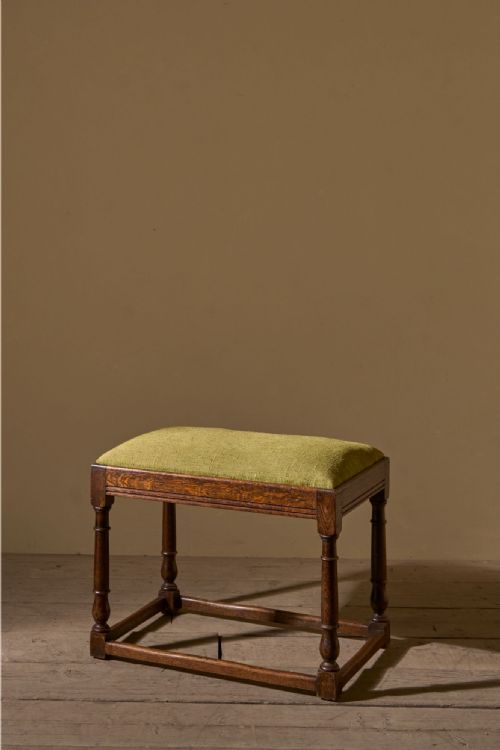
Makers and craftsmen adapted these low supports across various regional traditions, including Anglo-Indian and French designs. Whether upholstered in heavy green linen, antique tapestry, leather, or woven wool, each piece reflects the domestic seating habits of its specific period.
Materials and Construction
Makers constructed the timber frames of a low upholstered footrest using dense hardwoods such as mahogany, walnut, rosewood, oak, and pitch pine. Joinery methods relied on sturdy structural joints, sometimes reinforced by carved cabriole legs or square tapering supports.
Upholstery techniques combined traditional webbing and stuffing beneath top layers of textile, wool, leather, needlepoint, or heavy linen. Brass castors frequently assisted mobility on heavy carpets, while carved detailing or giltwood finishes added decorative distinction to the wooden chassis.
Some nineteenth-century footstools rolled on brass castors so owners could chase the moving warmth of the coal fire without lifting a finger.
Craftsmanship and Material Depth
Quality in a low upholstered footrest rests upon the integrity of the timber frame and the depth of its carved ornamentation. Superior examples display crisp hand-carved details on walnut, rosewood, or mahogany rather than soft or shallow moulding.
The selection of covering materials also distinguishes finer pieces, with robust original leathers, needlepoint, and heavy woven textiles demonstrating superior original investment. Structural rigidity in the joints and the balanced proportion of the low frame separate standard utility pieces from high-status workshop output.
Howard and Sons·Mathew Gregson·Loidrault Freres Paris
The Low Upholstered Footrest Glossary
- Cabriole leg
- A furniture leg that curves outward at the knee and inward at the ankle, mimicking an animal's limb. This style appears frequently on Victorian and Queen Anne revival stools.
- Joint stool
- A sturdy wooden stool constructed with mortise and tenon joints using wooden pegs. These early forms provide rigid, low platforms predating elaborate upholstery.
- Giltwood
- Timber coated with a thin layer of gold leaf or powder. French and Victorian salon stools often utilised this technique for opulent decorative effect.
- Needlepoint
- A type of canvas work embroidery executed with wool yarn. Many period footstools feature needlepoint upholstery depicting floral or geometric patterns.
- Castor
- A small wheel mounted on a swivel attached to the foot of a piece of furniture. Brass castors allowed heavy nineteenth-century footstools to move easily across floor coverings.
Low Upholstered Footrest: Frequently Asked Questions
What distinguishes a footstool from an ottoman?
A footstool generally provides a compact surface specifically intended for resting feet while seated in a chair. Dimensions remain modest to allow easy positioning near firesides or dressing tables.
An ottoman typically offers a larger surface area that can serve dual purposes as a seat or a low coffee table. Both forms share similar upholstered construction methods across various historical periods.
How do I date a wooden footrest?
Dating relies heavily on observing the timber species, leg geometry, and underframe construction techniques. Mahogany and walnut predominated in earlier eighteenth and nineteenth-century examples, while oak often signals revival or joined construction.
Secondary indicators include the presence of hand-cut joinery marks, brass castor types, and original tack holes beneath the upholstery webbing. Comparing these physical traits to known period styles confirms the approximate decade of manufacture.
Can I use an antique footstool daily?
Most antique footrests possess robust hardwood frames built from solid mahogany, oak, or walnut that withstand regular daily use. Checking the structural stability of the joints ensures the timber safely supports weight.
Textiles and internal stuffing may require professional reinforcement or reupholstering if original fabrics show significant thinning. Careful maintenance preserves the historic integrity while allowing functional placement in modern rooms.
What is a cabriole leg?
A cabriole leg is a curved furniture support that swells outward at the knee and tapers inward to an ankle or foot. This classical shape derives from animal forms and became a defining feature of eighteenth-century and revival seating.
Craftsmen carved these graceful curves directly from solid blocks of walnut or mahogany. The execution of the knee and foot carving often indicates the skill level of the maker.