


Low Side Cabinet
A low side cabinet brings compact storage and surface space to a room, drawing on periods from the Regency era through to the 1930s.
Low Side Cabinet
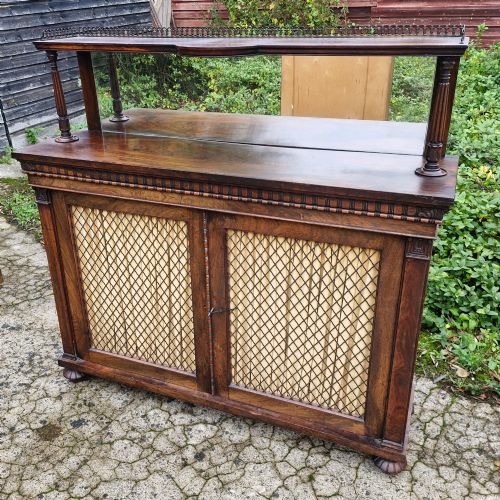
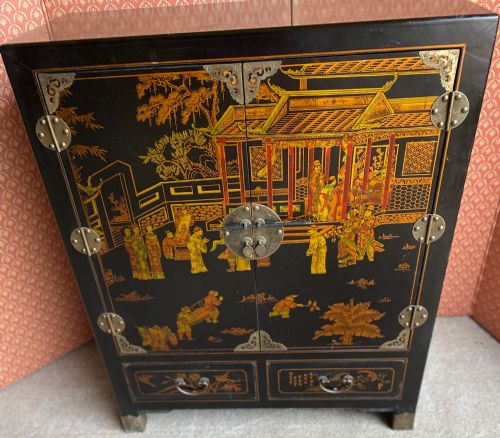
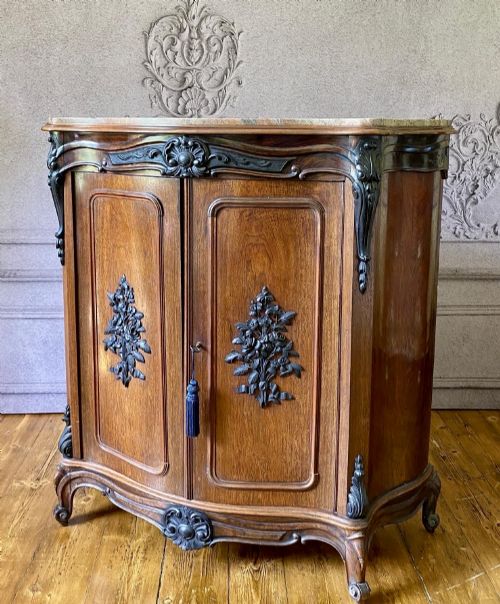
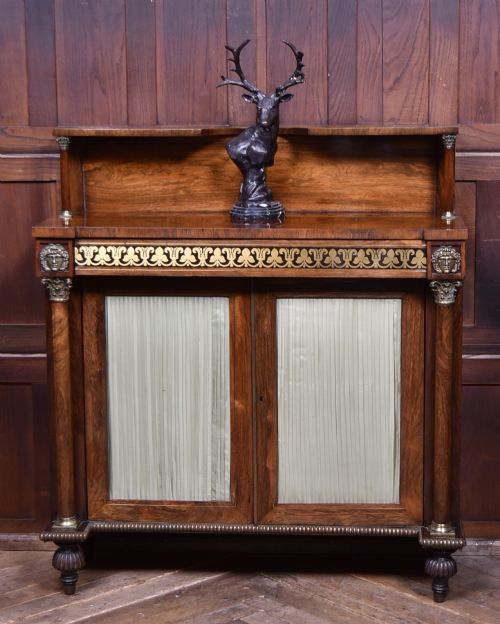
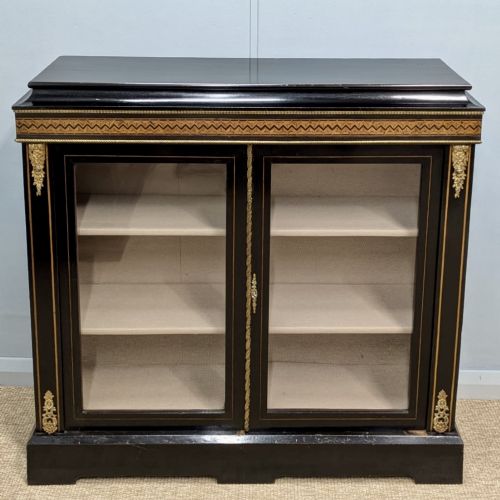
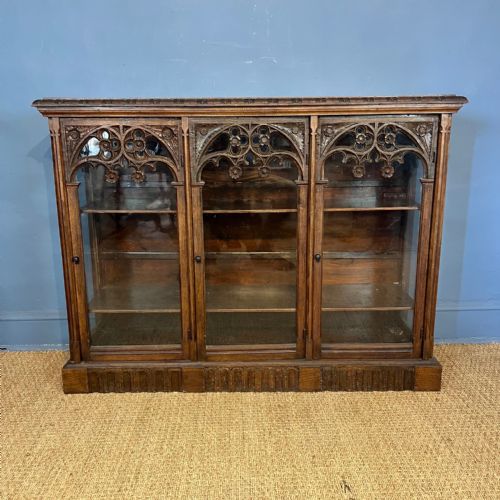
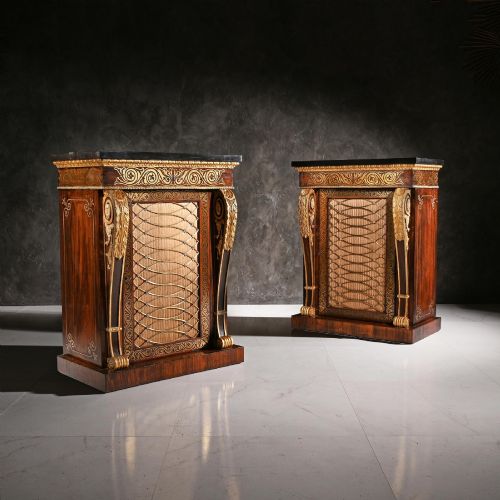
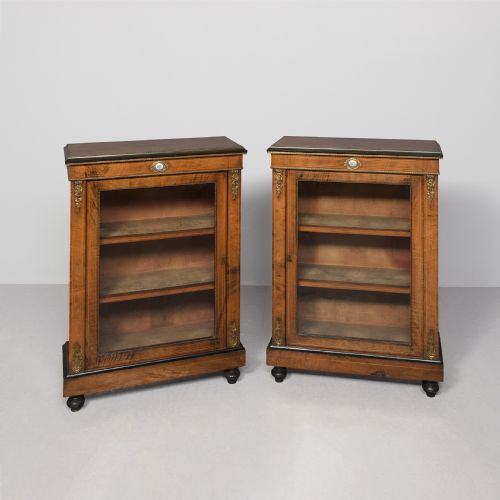
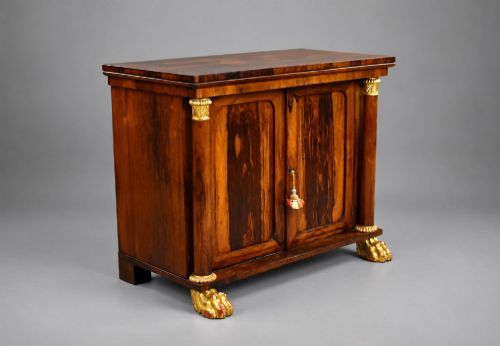
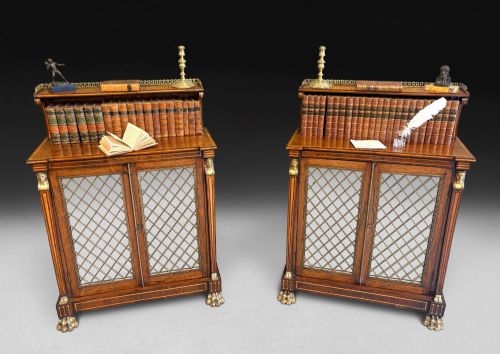
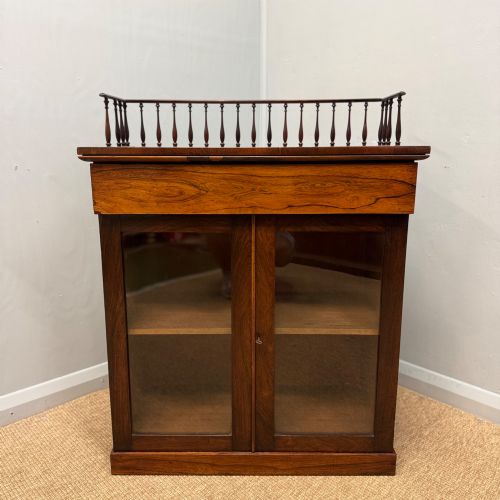
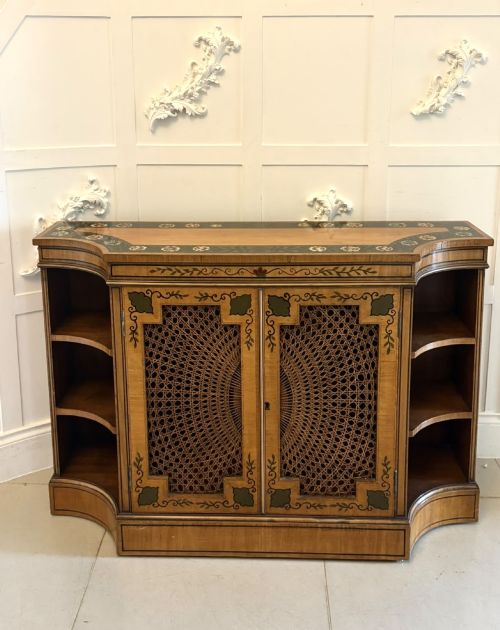
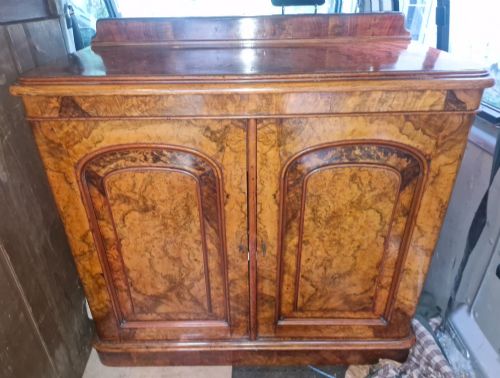
A low side cabinet covers a broad group of functional furniture designed for storage and display, appearing frequently across this selection in forms such as chiffoniers, pier cabinets, and small bookcases. These pieces originate from distinct design movements including Regency, Victorian, and William IV, reflecting changing domestic requirements for lower-profile furniture.
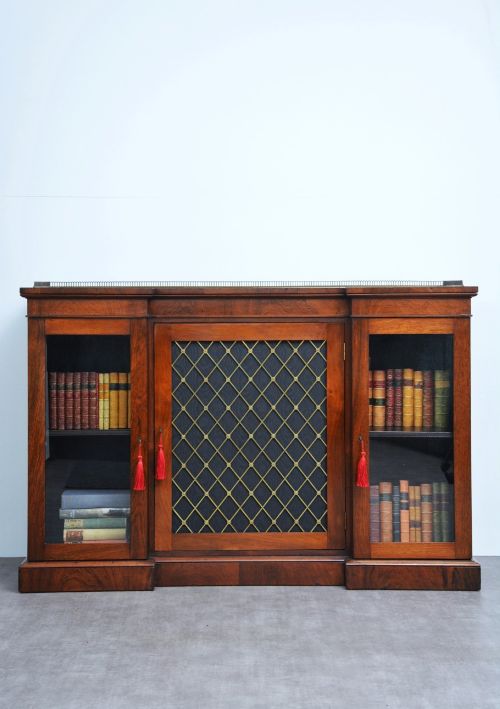
The version most commonly met on this page is the nineteenth-century mahogany or rosewood side cabinet, often featuring enclosed lower doors and sometimes upper shelving. Makers adapted these forms for specific rooms, resulting in variations like the breakfront bookcase display cabinet, the concave side cabinet, and the pier cabinet designed for narrow wall spaces.
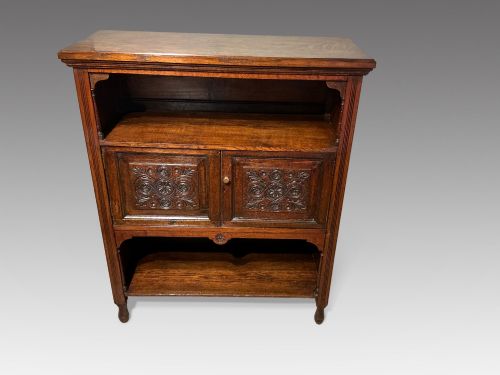
Beyond the standard mahogany and rosewood examples, the selection extends into twentieth-century production with Danish oak cupboards, Cotswold School pieces, and Arts and Crafts designs. Buyers encounter everything from formal brass-mounted Regency chiffoniers to simpler oak cupboards from the 1920s and 1930s.
Materials and Construction
Cabinet makers relied primarily on timbers such as mahogany, rosewood, walnut, and oak, often selecting figured veneers like flame mahogany or burr walnut for primary visual impact. Construction techniques involved solid carcases lined with secondary timbers, fitted with adjustable shelving, secret drawers, or panelled doors.
Metal mounts in brass and ormolu appear frequently, serving both structural and decorative functions on Regency and Victorian pieces. Inlay work in ebony or lighter woods, along with fabric panels and glass doors, completed the decorative surface treatments of the more elaborate examples.
Low Side Cabinet Retail Price Guide 2026
Typical asking prices for low side cabinet among the pieces listed under this phrase on Sellingantiques today, from the lower quarter to the upper quarter. They describe what is for sale here now, not the wider market.
Listings span the eighteenth century through to the 1930s, encompassing styles from Gothic Revival to Art Deco alongside traditional Regency and Victorian designs.
Distinctions in Quality
Quality in a low side cabinet rests on the selection of timber, the precision of cabinet-making, and the integration of decorative elements like brass inlay or carved mouldings. Superior pieces display carefully matched veneers and robust internal construction that has remained stable across generations.
The refinement of hardware, the smoothness of drawer operations, and the original condition of glass panels or marble tops further separate standard utilitarian cupboards from works produced by notable workshops or skilled cabinet-makers.
Johnstone and Jeanes·Whytock and Reid·Gillows
The Low Side Cabinet Glossary
- Chiffonier
- A low side cabinet equipped with enclosed cupboards below and often a shelf or superstructure above. This form developed during the Regency period and remained popular through the Victorian era.
- Pier cabinet
- A narrow cabinet designed specifically to stand against the wall space between windows. These pieces often feature glass doors and adjustable shelves for display.
- Breakfront
- A cabinet design where the central section projects forward from the flanking wings. This configuration adds architectural depth to bookcases and large side cabinets.
- Ormolu
- Gilded bronze used for decorative mounts and feet on high-status furniture. It provides a bright metallic contrast against dark timbers like rosewood and mahogany.
- Goncalo Alves
- A dense exotic hardwood with distinctive figuring, utilised occasionally for Regency cabinet-making. Its striking grain patterns make it easily identifiable among brown furniture timbers.
Low Side Cabinet: Frequently Asked Questions
What is a low side cabinet used for?
These cabinets provide convenient surface space for lamps or decorative objects while offering enclosed storage underneath for books or household items. Their lower height prevents them from overwhelming smaller rooms.
Historically, variations like chiffoniers and pier cabinets served specific functions in dining rooms and drawing rooms for storing tableware, linens, or reading material.
How do I tell a Regency cabinet from a Victorian one?
Regency pieces often exhibit cleaner classical lines, frequently utilising rosewood with delicate brass inlay, lattice grilles, or distinctive scrollwork. Proportions tend to be refined and architectural.
Victorian cabinets generally display heavier proportions, darker mahogany or walnut timbers, and more exuberant carved ornamentation, reflecting the changing tastes of the later nineteenth century.
Are shelves in antique cabinets adjustable?
Many nineteenth-century cabinets feature adjustable shelving supported by wooden ratchets or metal shelf studs. This allowed owners to alter the interior space for different book sizes.
Checking the interior reveals whether the shelf supports are original alterations or later additions made to accommodate modern storage needs.
How do I place a cabinet with marble tops?
Cabinets featuring marble tops provide a durable, heat-resistant surface suitable for serving drinks or displaying heavy bronze and ceramic objects. They require stable placement to support the weight of the stone.
Care should be taken to protect the polished stone surface from acidic liquids and to ensure the wooden base remains level.