



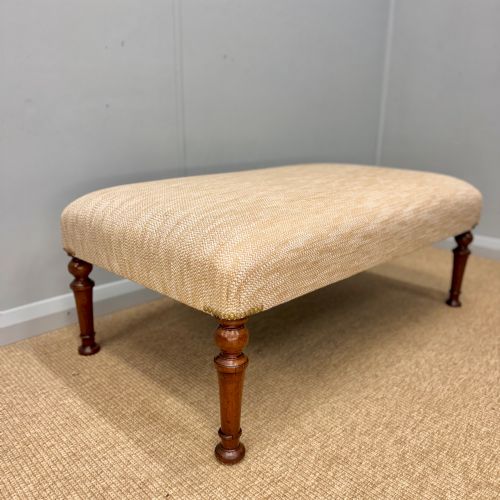
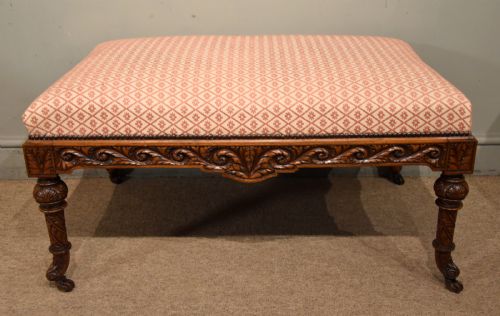
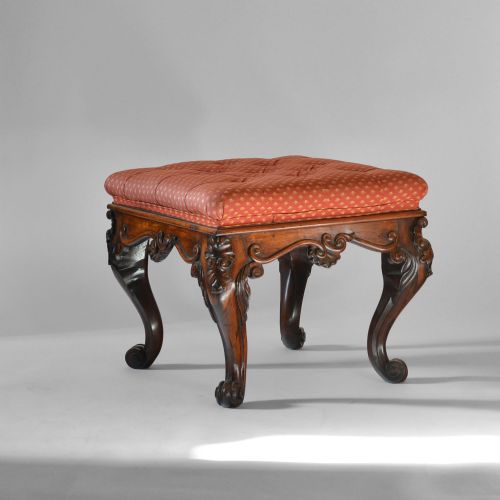
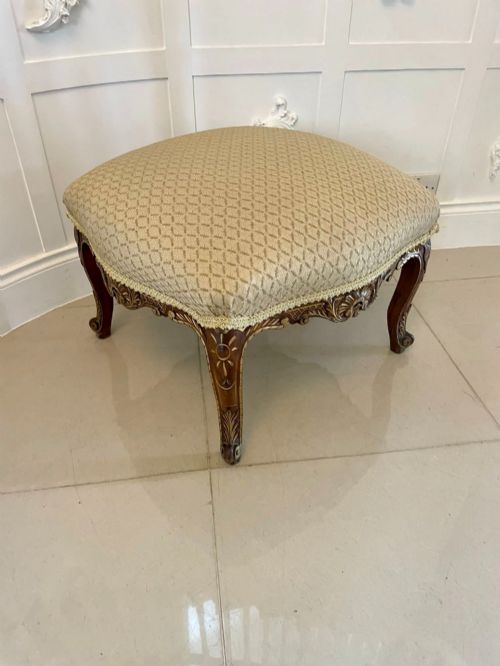
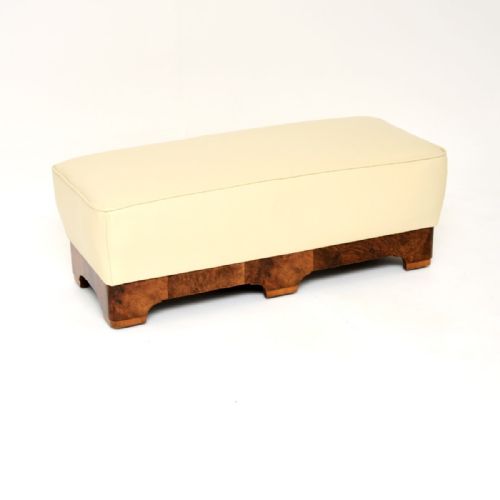

Low Ottoman Stool
A low ottoman stool is a versatile seat that grounds a room, bringing period character and comfort to firesides and dressing spaces.
Low Ottoman Stool
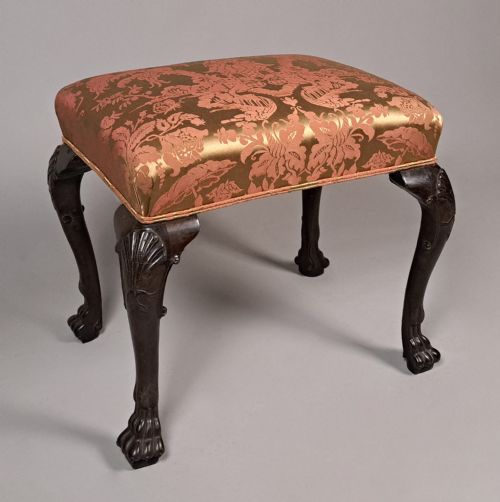
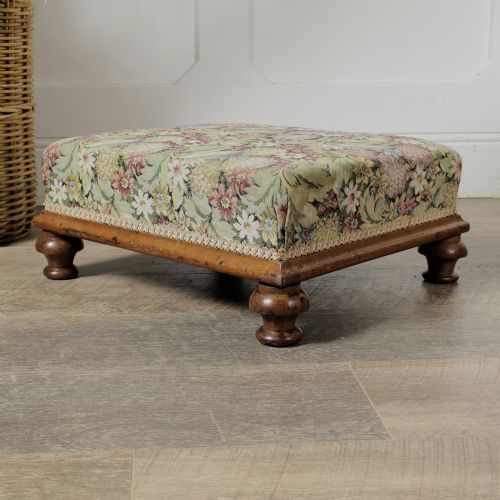
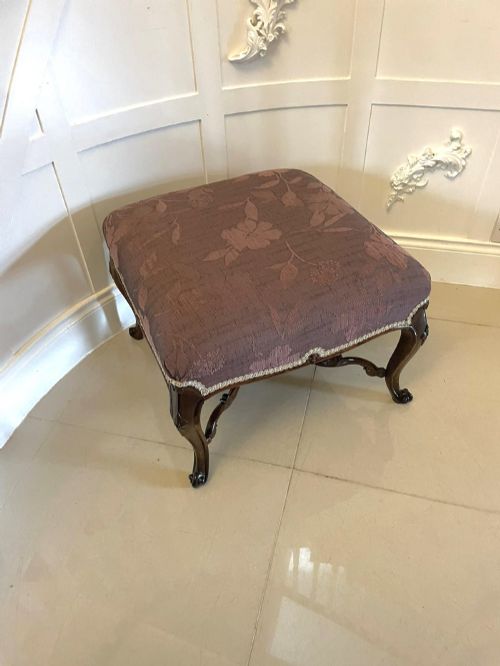
When you search for a low ottoman stool, you encounter a variety of forms including footstools, dressing stools, and small coffee tables designed for domestic utility. The Victorian period provides many of the examples seen here, often featuring carved walnut, mahogany, or rosewood frames.
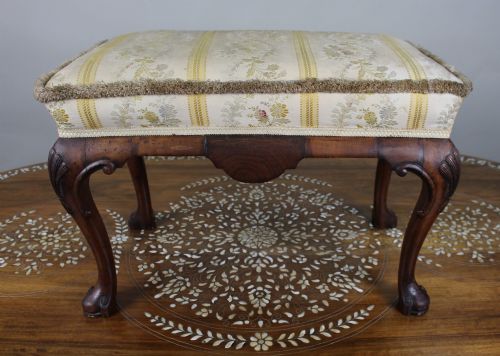
Stools range from simple oak box forms to grander Regency and Georgian iterations with parcel gilt or scroll tops. You will also find twentieth-century Art Deco interpretations in burr walnut and birds-eye maple alongside Edwardian pitch pine fireside seating.
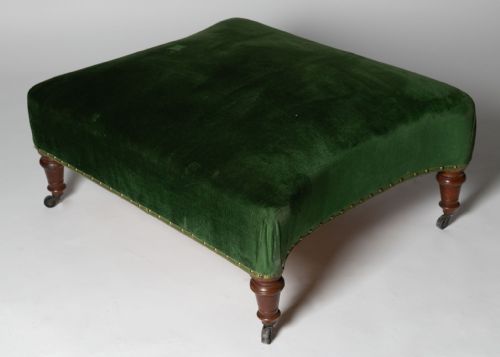
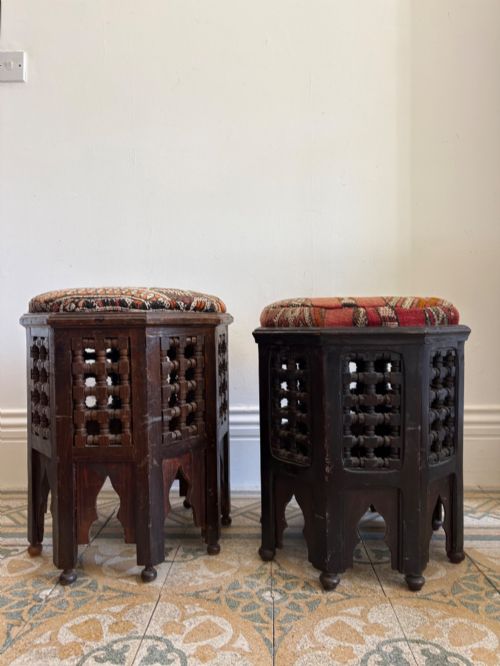
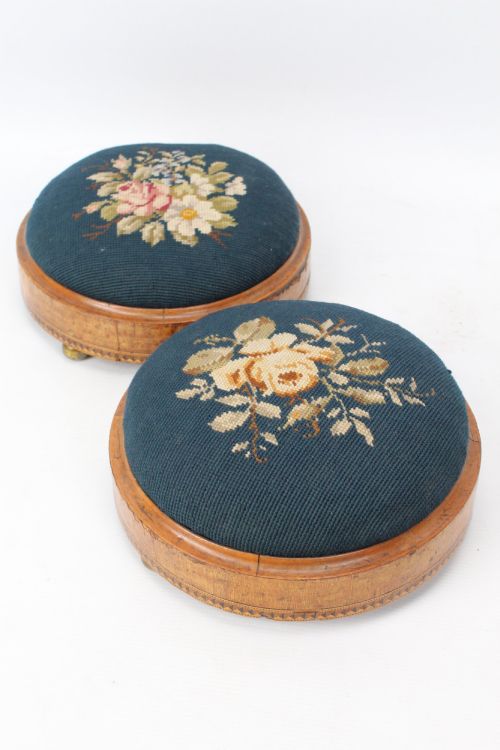
Origins stretch from English country houses to continental workshops and Anglo-Indian production, reflecting diverse aesthetic influences. Whether upholstered in needlepoint, leather, kilim, or heavy green linen, these pieces maintain a modest height suited to resting feet or casual seating.
Materials and construction methods
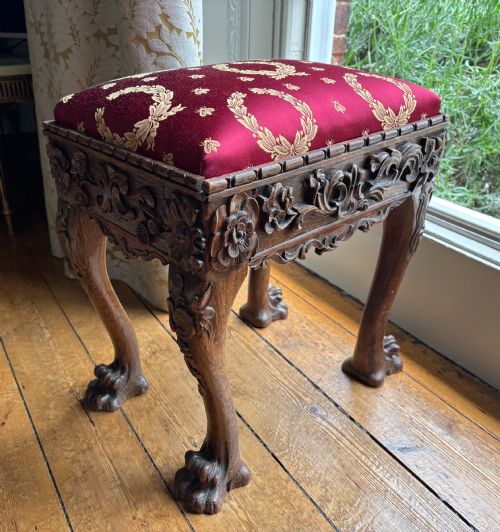
Makers utilised dense timbers such as mahogany, walnut, rosewood, and oak to construct sturdy frames capable of supporting everyday use. Decorative touches include Tunbridge ware inlay, parcel gilding, and intricate hand-carved details along the legs and rails.
Upholstery relies on traditional textiles including wool, chenille, tapestry, and hand-dyed buttoned leather secured over firm padding. Brass castors frequently appear on larger nineteenth-century examples to facilitate movement across heavy carpets.
Low Ottoman Stool Retail Price Guide 2026
Typical asking prices for low ottoman stool among the pieces listed under this phrase on Sellingantiques today, from the lower quarter to the upper quarter. They describe what is for sale here now, not the wider market.
Listings feature woods ranging from standard mahogany and walnut to exotic rosewood, oak, pitch pine, and birds-eye maple.
Differentiating quality across pieces
The distinction between standard domestic seating and superior examples rests upon the depth of the timber carving and the crispness of the joinery. Fine pieces display well-defined proportions and cohesive styling, whether adhering to Queen Anne Revival lines or specific regional designs.
Material selection dictates the upper tier of the range, visible in figured rosewood, burr walnut veneers, and specialised decorative elements like micro-mosaic inlay. Original upholstery fabric and intact period needlework add historical integrity, though many pieces receive sympathetic reupholstery to ensure ongoing utility.
Harry and Lou Epstein
The Low Ottoman Stool Glossary
- Tunbridge ware
- A form of nineteenth-century wood mosaic woodwork involving tiny tinted wooden tiles arranged to form pictorial or geometric surface designs. It is commonly found on small Victorian boxes and decorative footstools.
- Kilim
- A flat-woven carpet or rug originating from the Near East and Central Asia, utilised here as durable upholstery for seating covers. These textiles bring geometric colour and pattern to wooden frames.
- Parcel gilt
- A decorative technique where specific carved details or raised elements of a wooden frame are partially covered in gold leaf. This method highlights particular areas of Victorian and Georgian craftsmanship.
- Oyster-veneered
- A method of cutting branches or small trunks diagonally across the grain to produce circular or oval patterns resembling oyster shells. This decorative surface treatment appears on seventeenth and eighteenth-century inspired furniture.
- Barley-sugar legs
- Turned wooden furniture legs shaped into a helical twist resembling a column of twisted candy. This distinctive turning style is frequently associated with late seventeenth and eighteenth-century seating.
Low Ottoman Stool: Frequently Asked Questions
How were low ottoman stools used originally?
These pieces served primarily as footrests near fireplaces or as low seating in dressing rooms and parlours. Their modest height allowed users to recline comfortably in armchairs while keeping feet elevated away from drafty floors.
Over time, larger versions adapted into multi-purpose furnishings capable of doubling as low coffee tables or casual seats in busy domestic interiors.
How do I care for antique leather upholstery?
Hand-dyed leather requires gentle cleaning with a soft, dry cloth to remove dust and prevent surface abrasion. Avoid using harsh chemical cleaners that can strip natural oils from the hide.
Applying a specialist leather conditioner periodically helps maintain suppleness and protects the material from drying out under household heating.
How do I distinguish Victorian from Georgian stools?
Georgian stools often display restrained classical proportions, rectilinear frames, and timber choices like solid mahogany with subtle carving. They reflect architectural influences of the eighteenth century.
Victorian examples tend toward heavier ornamentation, bulbous turned legs, elaborate rosewood or walnut carving, and the frequent addition of brass castors for manoeuvrability.
Can I place a heavy item on an antique stool?
Most of these pieces were built to support human weight and function adequately as occasional seats or footrests. However, placing exceptionally heavy loads or heavy serving trays upon delicate needlework or fragile veneer surfaces requires caution.
Using a protective glass or wooden tray on top helps distribute weight evenly if you repurpose a low stool as a coffee table.