
Low Open Library Shelving
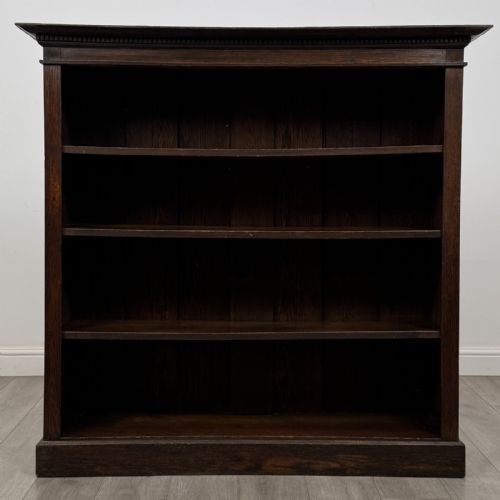
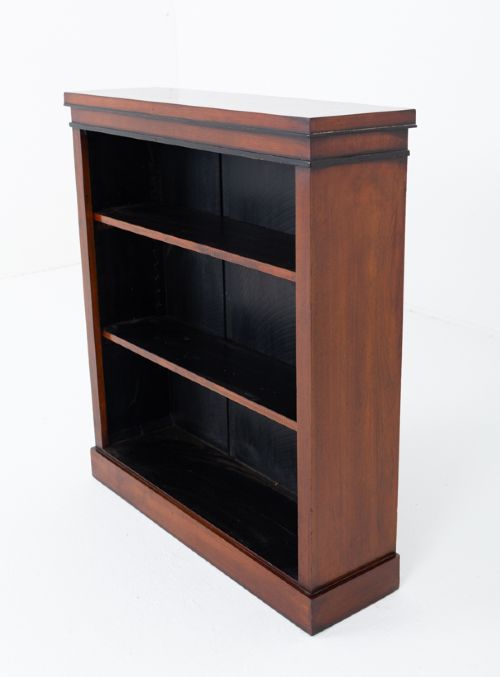
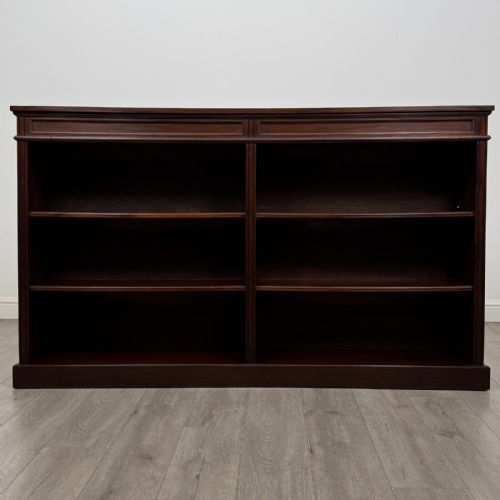
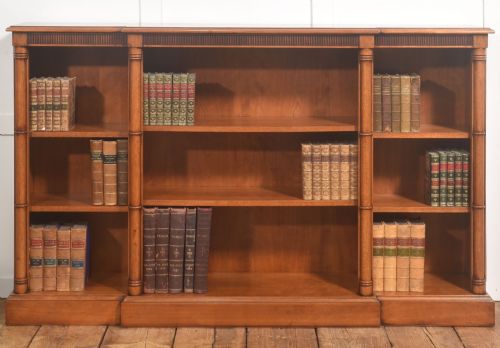
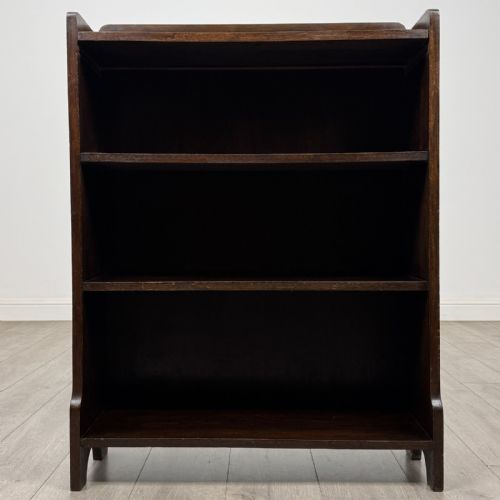
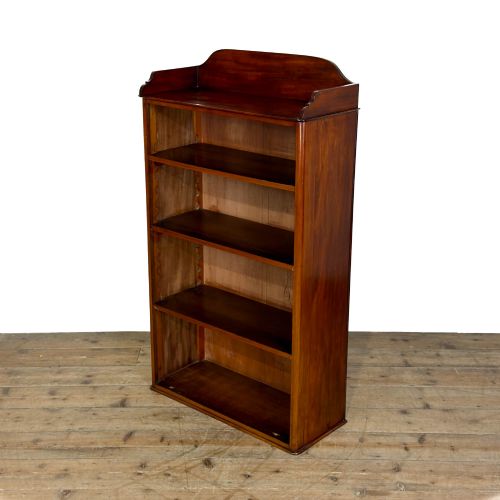
Low open library shelving brings accessible books and display space into a room without dominating the walls.
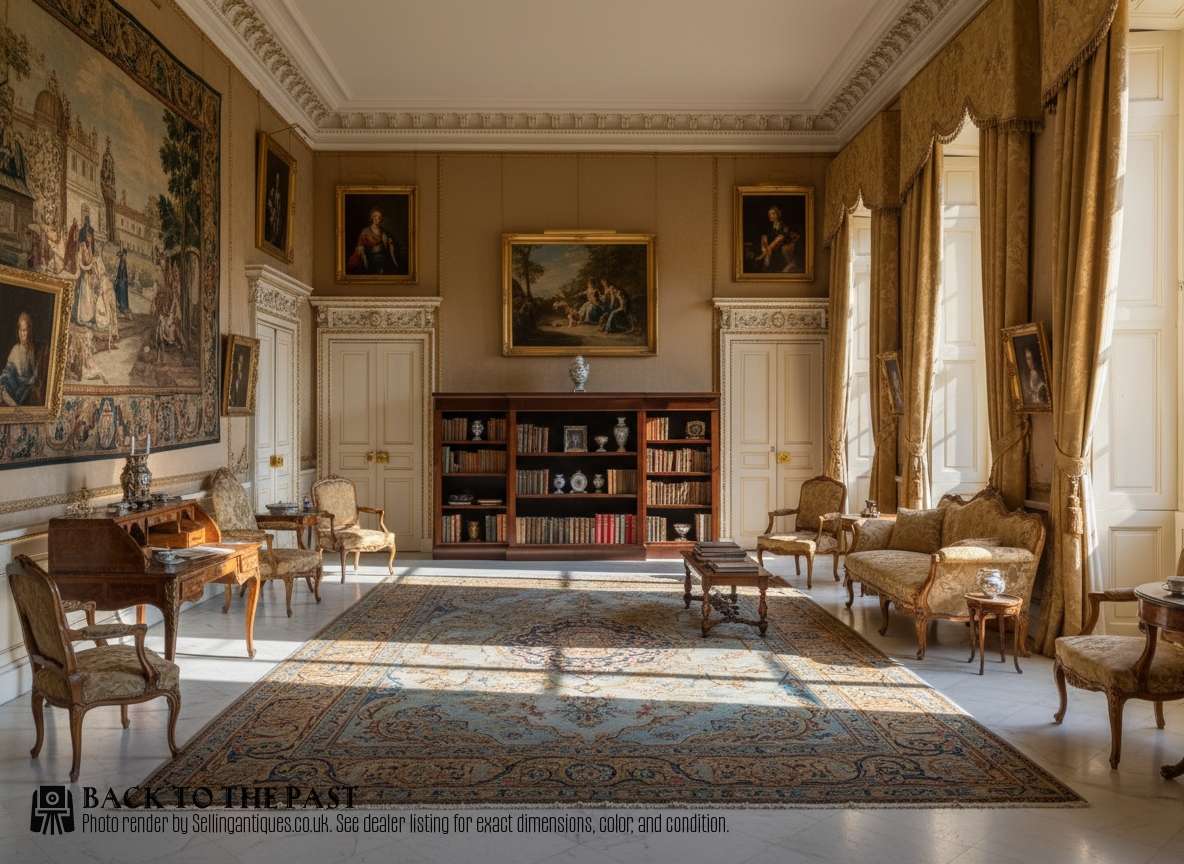
Low Open Library Shelving
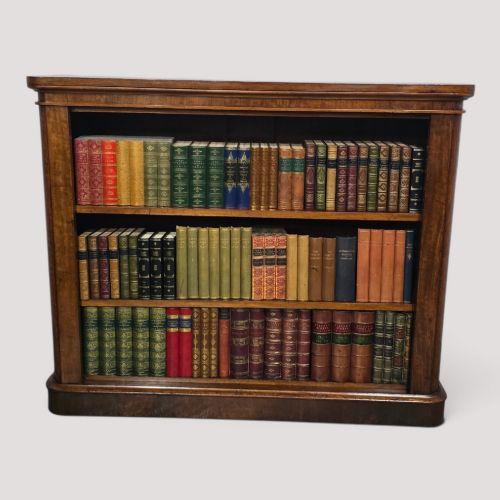
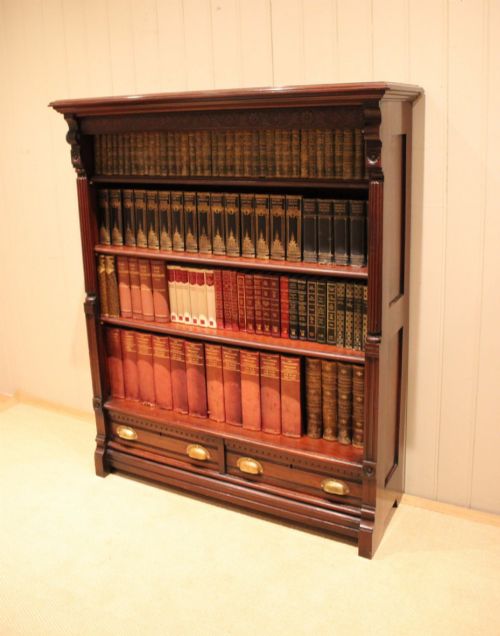
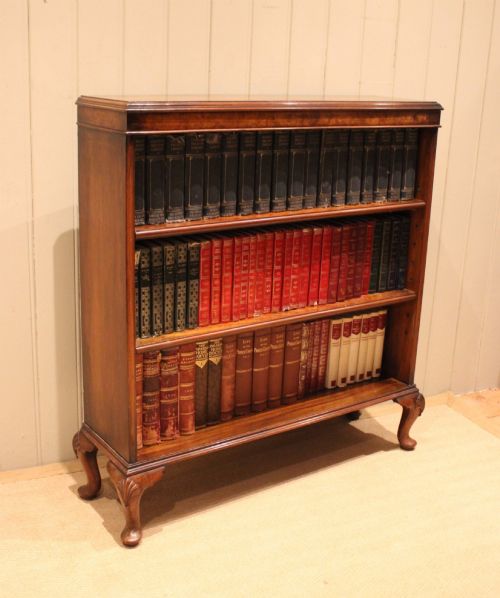
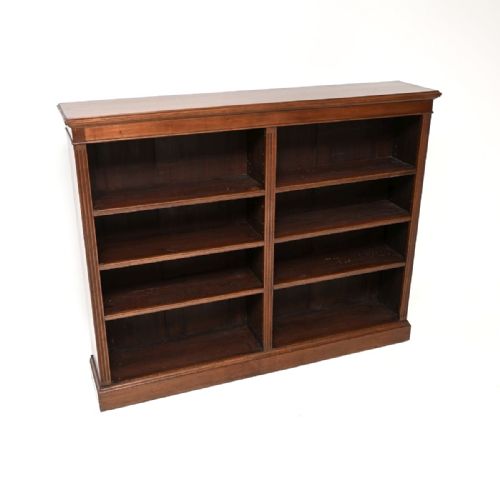
Low open library shelving comprises bookcases and shelving units designed to sit at a modest height while keeping book collections visible and reachable. Pieces meeting this description span the Victorian, Edwardian, and Regency periods, alongside styles such as William IV, Queen Anne Revival, and Empire.
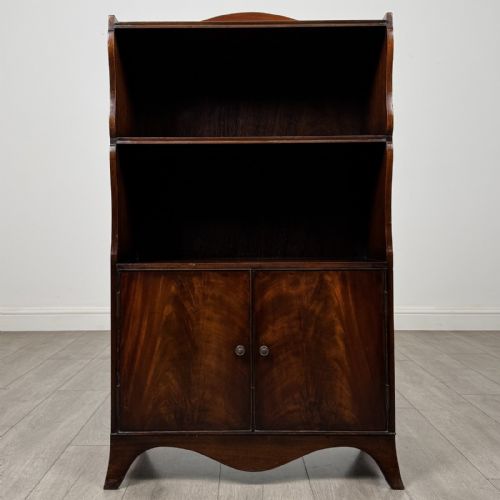
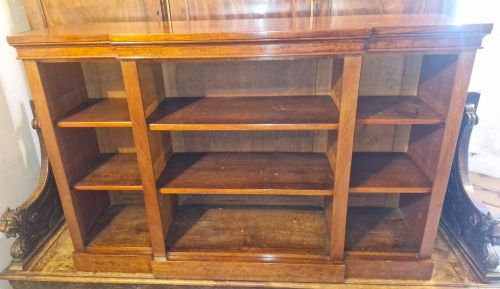
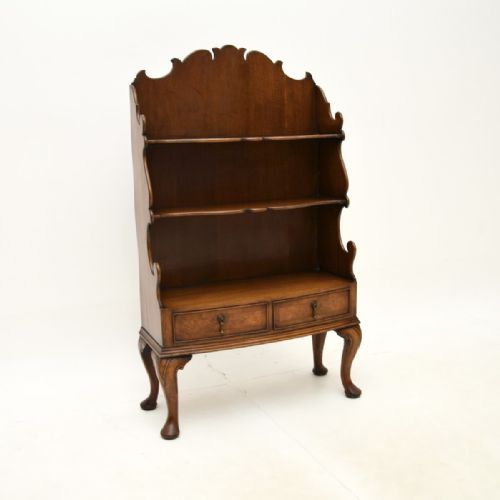
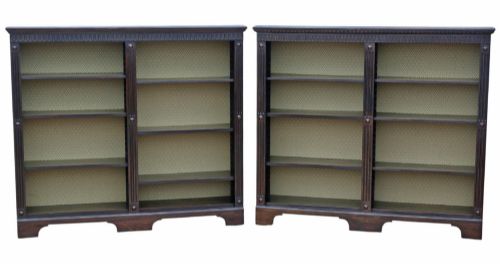
The format appears frequently in mahogany, oak, and walnut, with occasional examples in rosewood, pine, burr walnut, and ebonised timber. Many of these low bookcases incorporate adjustable shelves, while specific variants include waterfall bookcases and stepped or breakfront forms.
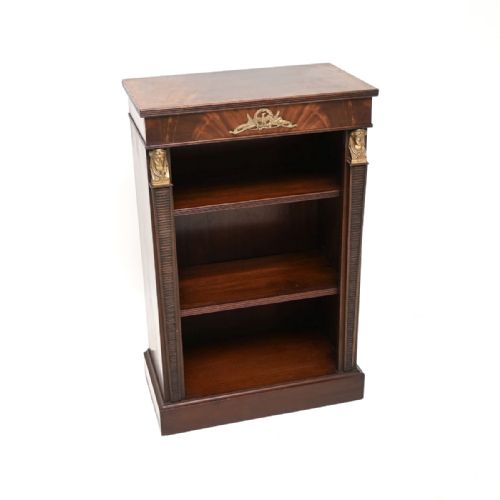
Makers and designers working across the nineteenth and early twentieth centuries produced these units for domestic libraries and studies. Surviving pieces range from compact dwarf bookcases to large library bookcase configurations mounted with brass or ormolu detail.
Materials and Construction
Cabinet makers utilised dense hardwoods such as mahogany, oak, and walnut to build sturdy frames capable of supporting heavy volumes. Flame mahogany and burr walnut veneers supplied rich surface grain, while softer timbers like pine often served for internal linings and backing boards.
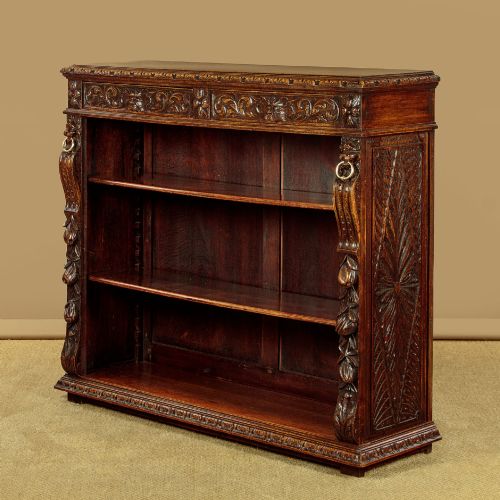
Construction techniques focused on stability and adaptability, integrating adjustable shelf mechanisms supported by brass pins or wooden rack-and-pinion tracks. Decorative enrichment included carved details, green man motifs, ormolu mounts, and ebonised finishes applied to the timber surface.
Listings for low open library shelving feature mahogany, oak, and walnut across Victorian, Edwardian, and Regency periods.
Judging Quality and Execution
Quality reveals itself in the selection of timber figures, such as the depth of grain in flame mahogany and burr walnut surfaces. Superior pieces employ finely figured veneers and thick cabinet timbers rather than simple flat boards.
The standard of internal construction distinguishes finer examples, particularly the precision of adjustable shelf mechanisms and the integration of cast brass or ormolu mounts. Refined carving, solid framing joints, and balanced proportions mark the upper tier of period library shelving.
Johnstone and Jeanes
The Low Open Library Shelving Glossary
- Low bookcase
- A shorter bookcase designed to sit below eye level, often leaving the wall space above free for pictures or mirrors.
- Open bookcase
- A bookcase without doors, allowing direct access to books and displaying their spines as part of the room's decor.
- Adjustable shelves
- Shelves that can be moved to different heights using internal vertical racks or peg supports, accommodating books of varying sizes.
- Ormolu
- Gilded bronze mountings applied to furniture surfaces for decorative effect, frequently seen on nineteenth-century walnut pieces.
- Waterfall bookcase
- A tiered shelving unit where each lower shelf steps forward from the one above, creating a cascading profile.
Low Open Library Shelving: Frequently Asked Questions
What is low open library shelving?
Low open library shelving consists of accessible bookcases built at a reduced height to hold books without obstructing wall space.
These pieces appeared in various timber styles throughout the nineteenth and early twentieth centuries, offering both storage and display functions.
Are the shelves usually adjustable?
Many period low bookcases feature adjustable shelving systems to accommodate books of different heights.
Makers achieved this using internal wooden tracks or brass support pins set into the sides of the bookcase interior.
Where should I place a low bookcase?
Low bookcases fit well in studies, living rooms, and hallways where taller furniture might overwhelm the available space.
Their reduced height also allows the top surface to serve as a display area for lamps, clocks, or decorative objects.