
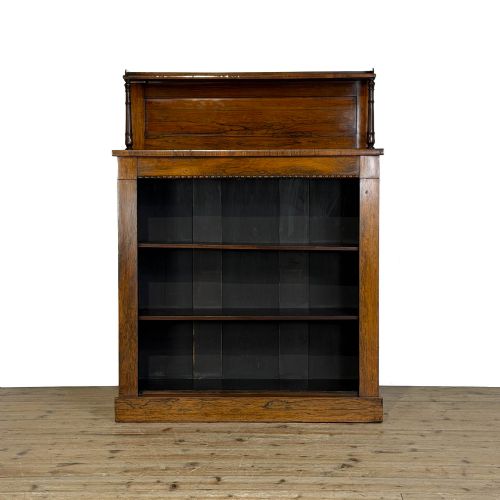
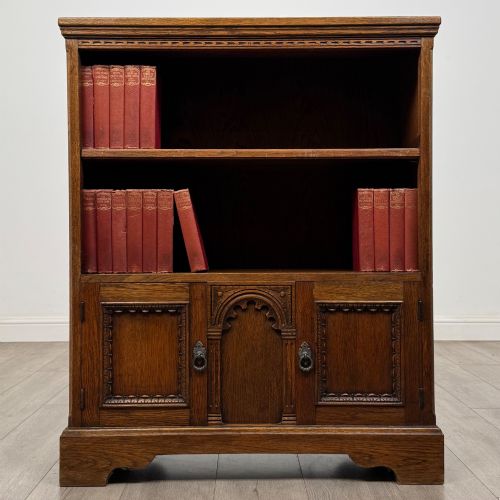
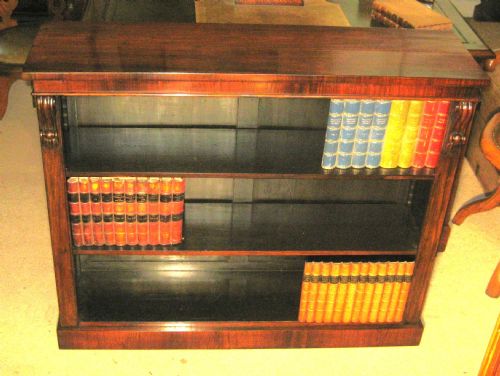
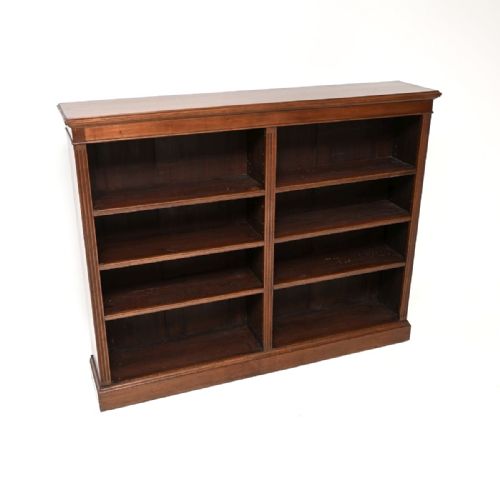
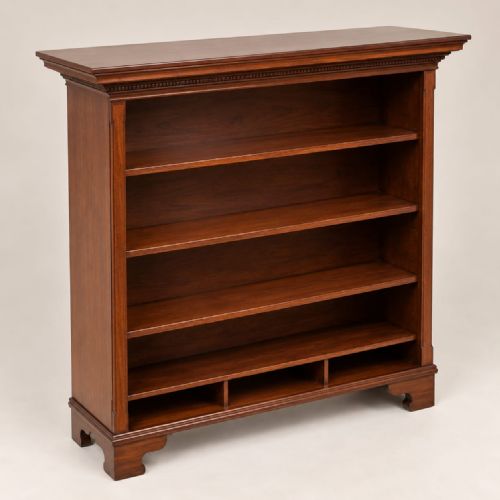
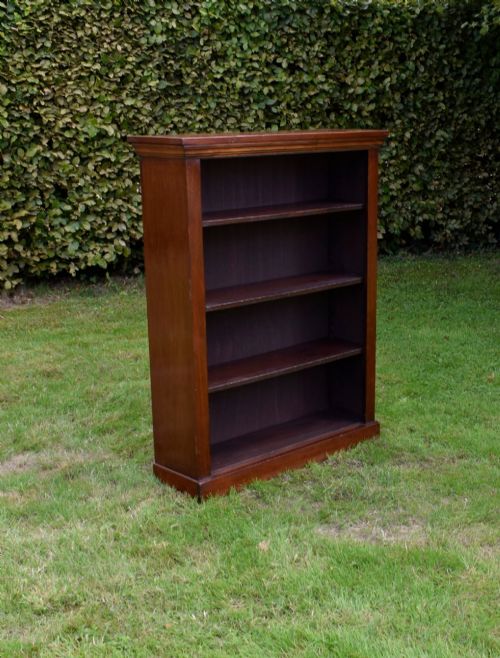
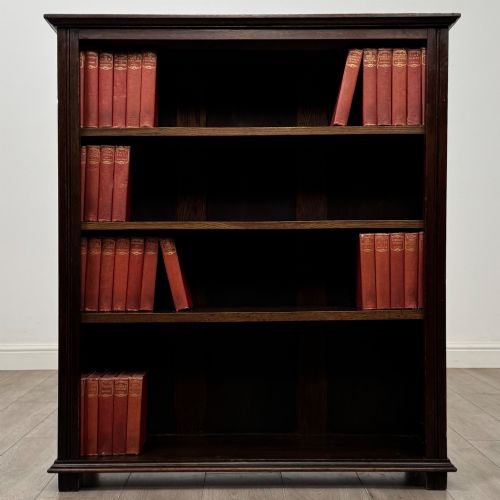
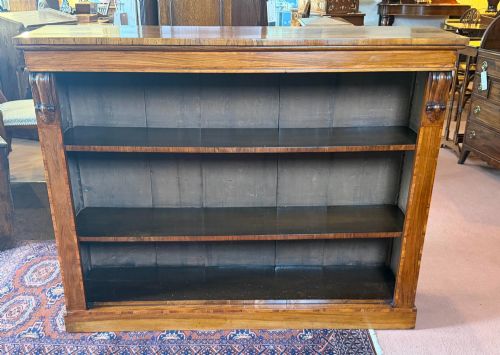
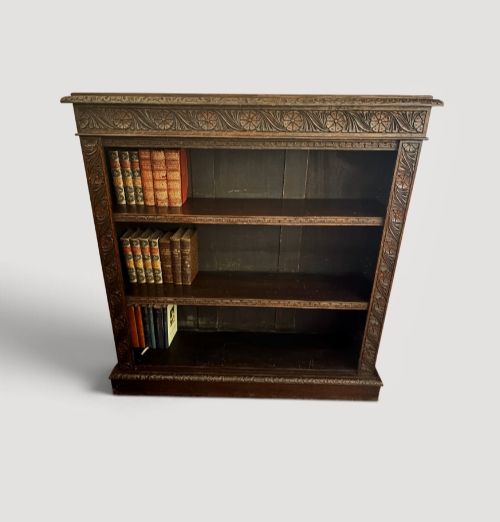
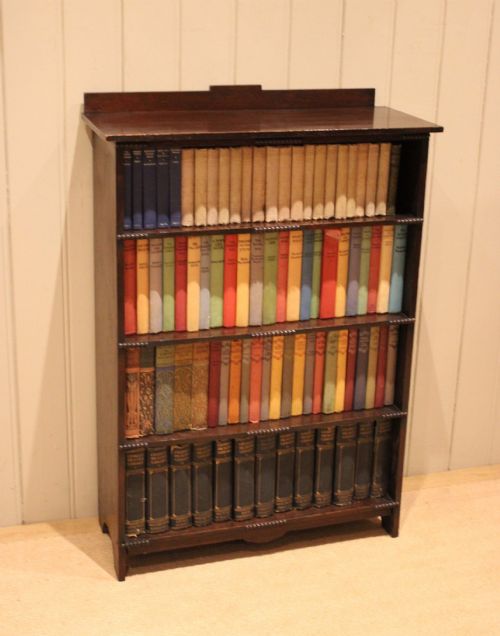
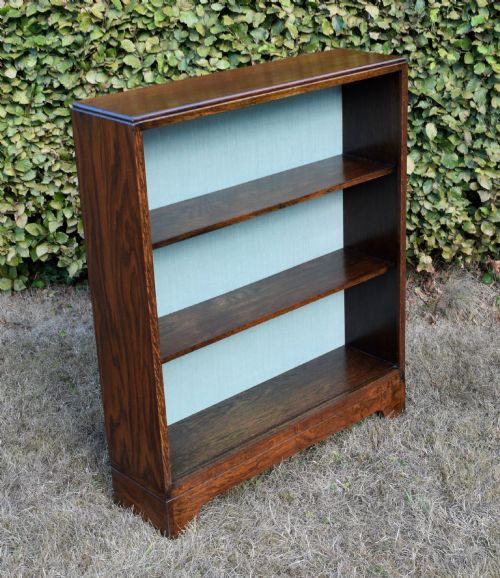
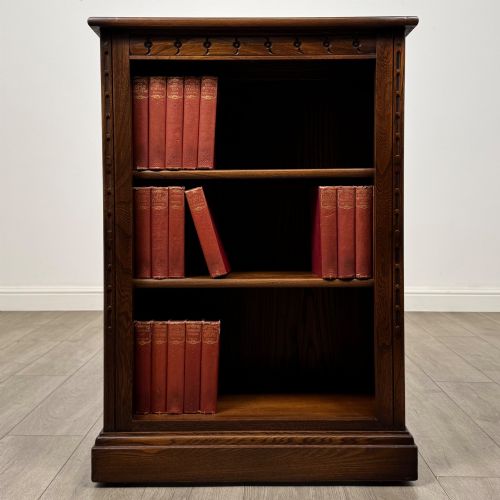
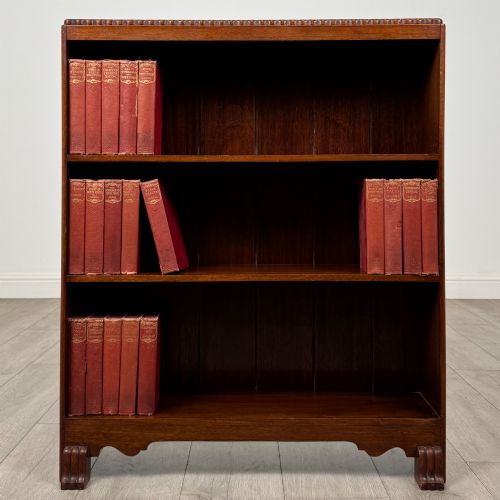
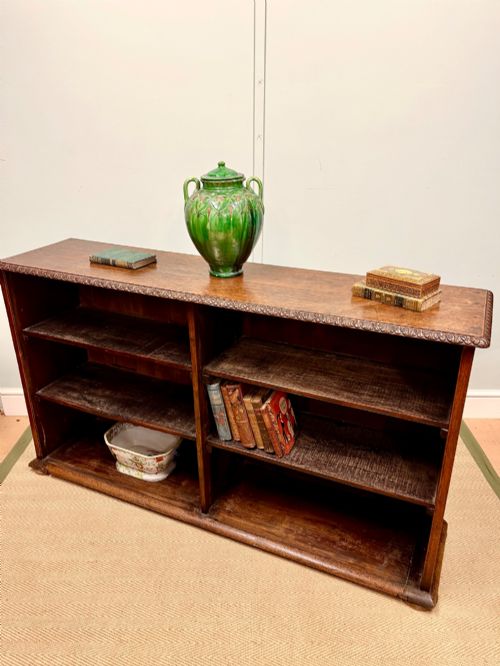
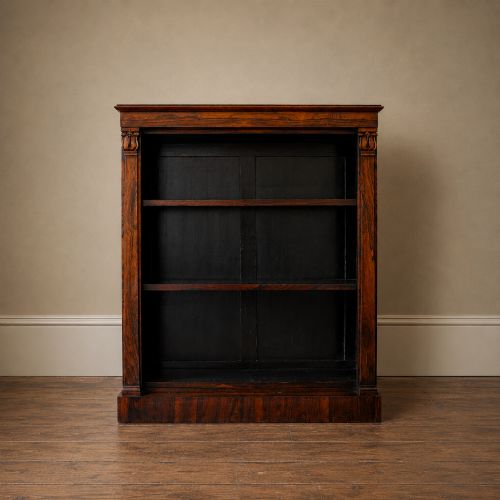
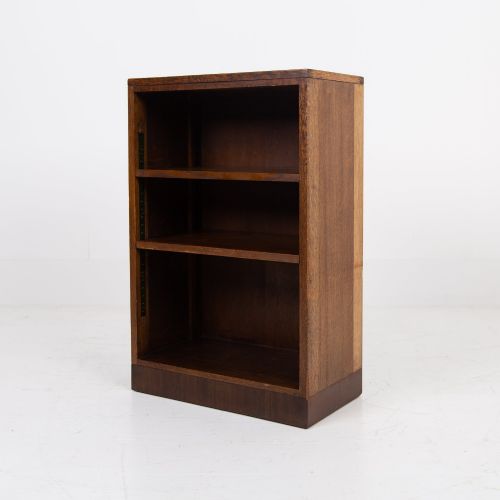
Low Open Book Cabinet
These low open book cabinets bring accessible shelving and display space into a room without dominating the walls.
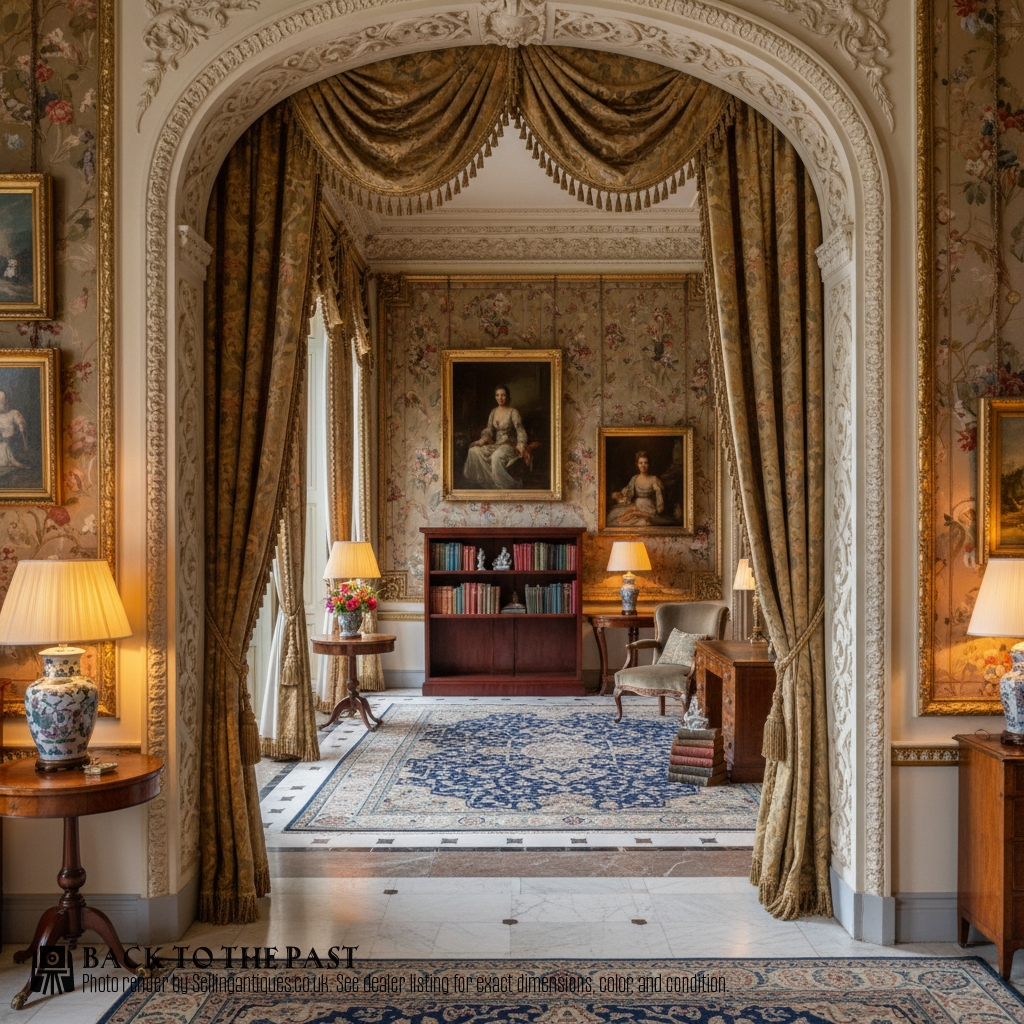
Low Open Book Cabinet
A low open book cabinet provides waist-height or chest-height shelving for everyday volumes, standing easily beneath windows or picture rails. These pieces emerge in styles ranging from Regency and Victorian to Edwardian and Art Deco, reflecting shifting interior fashions.
Most examples found here date from the nineteenth and early twentieth centuries, constructed in forms like standard bookcases, waterfall tiers, dwarf proportions, or break-front designs. Cabinets occasionally incorporate lower cupboards or drawers beneath the open shelves for concealed storage.
Makers fashioned these units in woods including mahogany, oak, rosewood, walnut, and pine, suiting both formal libraries and relaxed domestic parlours. Their low profile sets them apart from towering library bookcases by keeping ceilings visually clear.
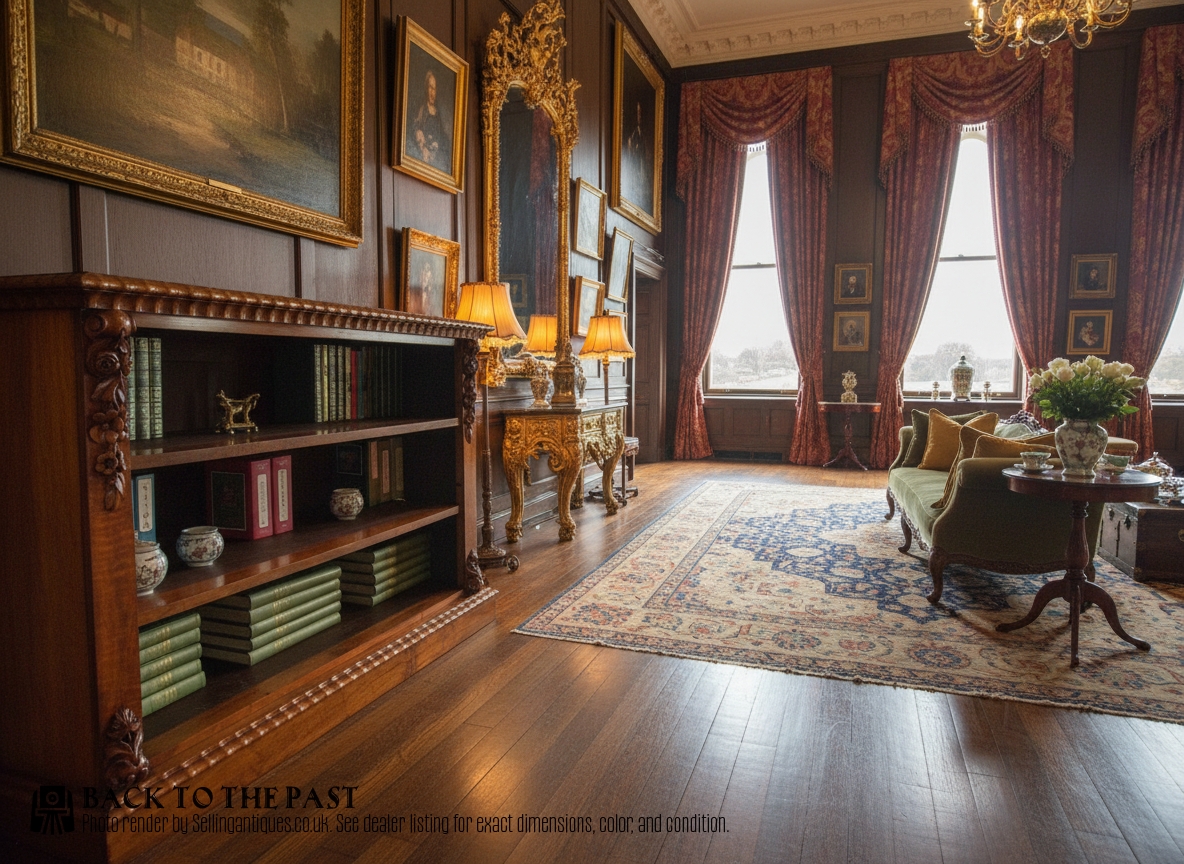
How they were made
Cabinet makers built these low open book cabinets using solid timbers and decorative veneers such as burr walnut, mahogany, and rosewood. Structural frames relied on durable hardwoods like oak, while fine surfaces often received hand-polished finishes to highlight natural grain patterns.
Many periods incorporated adjustable shelf mechanisms, allowing owners to alter interior heights using brass pins or wooden tracks. Details such as carved mouldings, inlaid friezes, beaded edges, and brass castors completed the construction.
What varies in quality
Quality reveals itself in the selection of timber veneers and the crispness of carved enrichment, such as Gothic tracery or classical mouldings. Superior examples use dense, figured woods and precise joinery that keeps shelves stable over decades of use.
The sophistication of internal hardware, including adjustable shelf supports and integrated drawers with dovetailed joints, distinguishes standard utility pieces from finer cabinet work.
The Low Open Book Cabinet Glossary
- Waterfall bookcase
- A tiered shelving unit where each upper shelf is narrower than the one below, creating a stepped profile.
- Dwarf bookcase
- A low-standing piece of furniture designed to sit beneath dado height, keeping books within easy reach.
- Break-front
- A piece of furniture where the central section projects forward from the flanking cabinets, adding architectural depth.
- Frieze
- The flat horizontal band situated beneath the top moulding, often decorated with inlay or carved motifs.
Low Open Book Cabinet: Frequently Asked Questions
Where should I place a low open book cabinet?
These cabinets suit living rooms, studies, and hallways where height restrictions prevent taller shelving units from fitting comfortably.
Their low top surfaces also serve well for displaying decorative objects, lamps, or small plant arrangements.
How do I adjust the shelves?
Many period cabinets feature adjustable wooden tracks or brass shelf supports set into the interior upright walls.
You simply lift the shelf, reposition the supports into the desired slots, and lower the board back into place.
Are these cabinets suitable for heavy books?
Solid hardwood versions in oak or mahogany easily support heavy volumes without sagging over time.
It remains wise to check the thickness of individual shelves and the condition of their internal supports before loading large reference sets.
How do I identify a Victorian piece?
Victorian low open book cabinets typically employ dense timbers like rosewood, walnut, or mahogany, often featuring rich hand-polished finishes.
They frequently display period characteristics such as carved oak enrichment, adjustable brass fittings, or applied decorative mouldings.