


Low Oak Ottoman
These low oak ottoman pieces combine sturdy timber frames with traditional upholstery to anchor a room.
Low Oak Ottoman
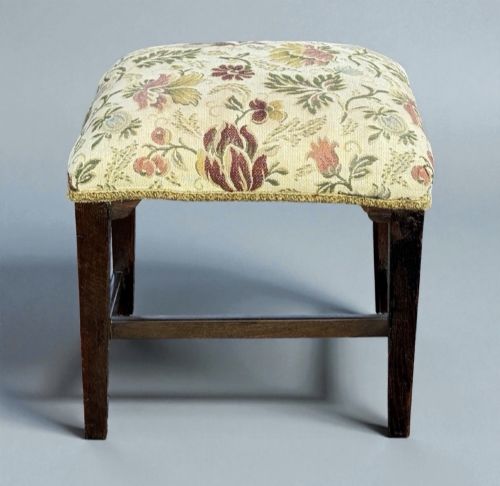
A low oak ottoman functions primarily as a footstool or seating piece, grounded by a solid timber framework. The evidence shows forms ranging from Georgian and William and Mary era examples to later Edwardian, Art Deco, and Arts and Crafts iterations.
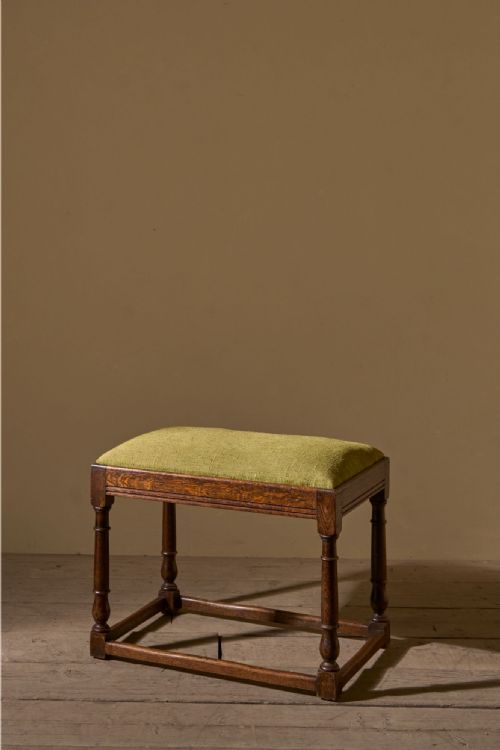
Buyers encountering this search phrase find low wooden stools and footstools framed in oak, frequently paired with textile upholstery such as green linen, tapestry, and leather. The proportions remain low to the floor, designed for rest or dressing.
Origins span the eighteenth, nineteenth, and early twentieth centuries, encompassing revival styles like Jacobean and Chippendale alongside French and English country house designs.
How they were made
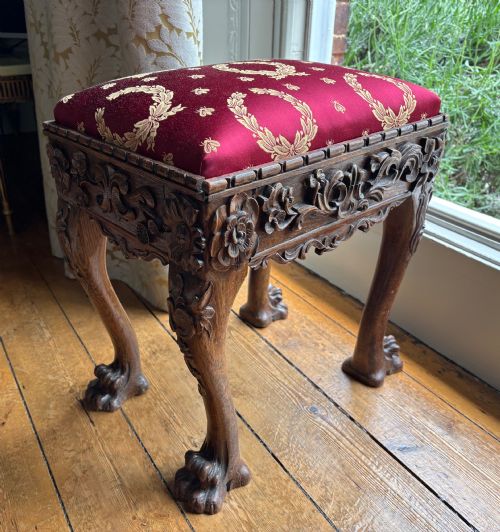
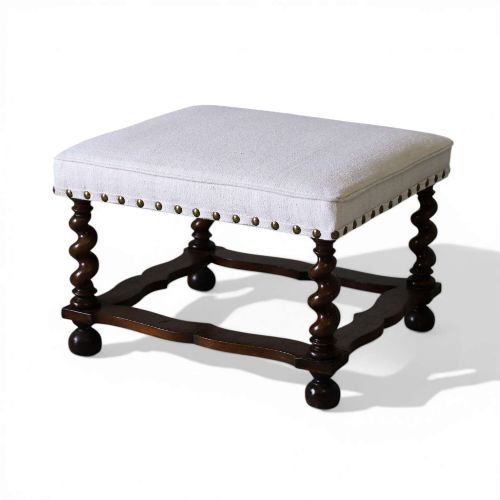
Construction relies heavily on solid oak for the structural frames, often enhanced by decorative elements like barley-sugar legs, lion head carvings, and oyster-veneered stretchers. Joinery techniques reflect the period of origin, from hand-carved nineteenth-century details to early twentieth-century Arts and Crafts assembly.
Upholstery materials recorded in the evidence include heavy green linen, leather, cane, and tapestry, secured over padded foundations. Brass details occasionally appear as structural or decorative accents on the timber frames.
Listings feature oak combined with fabric, brass, linen, leather, walnut, tapestry, and textile across multiple centuries.
What varies in quality
The degree of hand-carving and the sophistication of the timber work separate standard examples from finer ones. Pieces exhibiting specific historical references, such as William and Mary stretchers or intricate Chippendale style carving, demonstrate greater craftsmanship.
The selection of secondary materials, including the weight of the linen, the quality of the leather, or the inclusion of oyster veneers, distinguishes the character of each piece.
Harry and Lou Epstein·Simpson Kendall
The Low Oak Ottoman Glossary
- Oyster veneer
- Cut branches sliced transversely to reveal concentric annual rings, resembling oyster shells. This technique creates patterned wooden surfaces on stretchers or panels.
- Barley-sugar twist
- A spiral turning resembling a twisted column, commonly found on the legs of seventeenth-century and revival furniture. It adds vertical movement to heavy oak frames.
- Cane
- Woven rattan or split plant material used for seat panels or inserts. It provides a lighter texture against solid oak framework.
- Tapestry
- Hand-woven textile featuring pictorial or geometric designs used as upholstery. It appears on period footstools to add colour and texture.
Low Oak Ottoman: Frequently Asked Questions
What is a low oak ottoman used for?
These pieces serve primarily as footstools or low seats in living spaces and dressing rooms. Their compact proportions allow them to sit comfortably in front of armchairs or dressing tables.
The sturdy oak frames provide a durable base for daily use, while the upholstered tops offer a soft surface for resting feet or sitting.
How do I identify the period of an oak stool?
Dating relies on observing construction methods, decorative carvings, and stylistic traits like barley-sugar legs or oyster veneers. Earlier examples often show hand-tool marks and specific revival influences.
Comparing the upholstery materials and frame shapes against documented eras helps narrow down the century of manufacture.
Are these stools upholstered with original fabrics?
Upholstery materials vary widely, ranging from heavy green linen and leather to tapestry and cane inserts. Some pieces retain period textiles while others feature later coverings.
The fabric type often reflects the revival style or the decade in which the piece was constructed or restored.
Where were these low stools made?
The evidence points predominantly to English country house and workshop traditions, alongside specific Art Deco and Arts and Crafts movements. French provincial designs also appear within the selection.
Local timber selection and regional joinery traditions dictate the distinct appearance of each oak frame.