


Oak Hearth Footstool
An oak hearth footstool is a low, sturdy seat designed for warmth beside the fire, built to last generations in solid timber.
Oak Hearth Footstool
An oak hearth footstool brings enduring utility to a fireside, offering a sturdy low seat or rest fashioned from timber. When you search for an oak hearth footstool, you encounter forms that span several centuries of British cabinet-making and country craftsmanship. These pieces serve primarily to elevate feet from cold floors near a hearth.
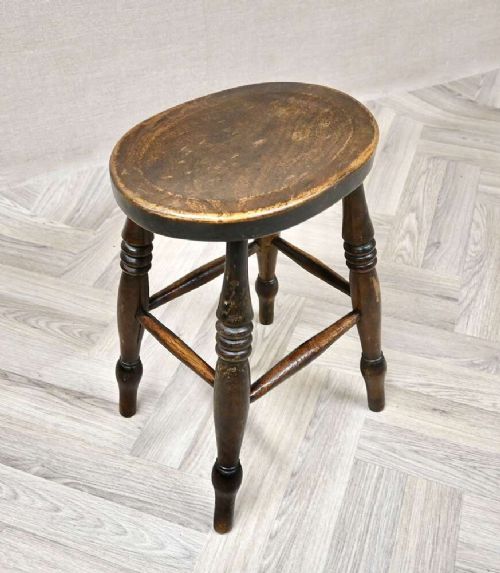
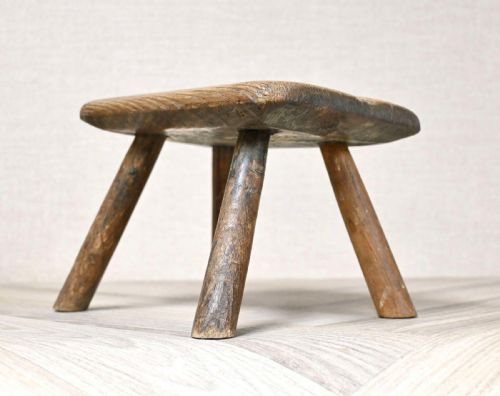
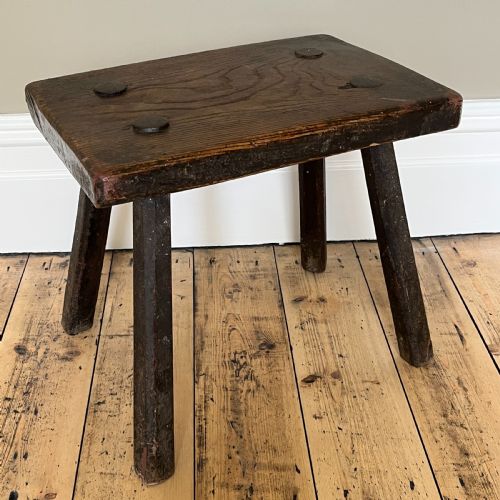
The versions most commonly met on this page range from simple rustic country forms to more formal revival styles. Periods represented stretch from the eighteenth century through the Edwardian era and into the early twentieth century. Common formats include low stools, long framed cane designs, slipper boxes, and oval seat country stools.
Makers often utilised local timbers such as elm alongside the principal oak framework. Seats vary from rush and leather to cane and upholstery. Each piece reflects the domestic habits of its period, whether primitive country utility or Gothic Revival ambition.
Materials and construction
The primary material across these pieces is solid oak, frequently paired with elm for seats or secondary framing. Joinery relies on traditional methods suited to load-bearing low furniture meant for daily fireside use. Timber is often left with a heavy, substantial presence.
Secondary materials introduce texture and comfort through rush seating, woven cane, brass details, and leather or fabric upholstery. These elements are integrated directly into the wooden frames to withstand the heat and heavy wear of a domestic hearth.
Object forms span basic low stools, slipper boxes with storage compartments, and matched suites of Gothic revival seating.
Assessing quality and character
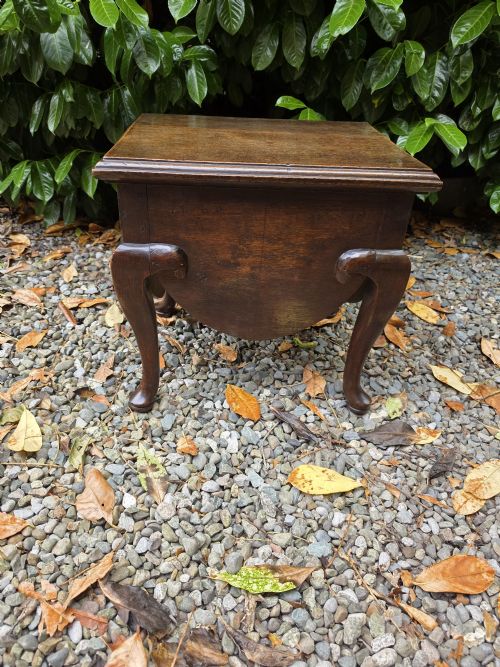
Quality in these pieces is dictated by the integrity of the timber and the honesty of the construction. Superior examples display thoughtful proportions, such as neat cabriole legs or balanced oval seats, rather than purely utilitarian bulk. The handling of joints and the selection of figured or heavy oak set finer examples apart.
Condition of original materials like rush, cane, and leather also influences the character of the piece. Untouched surfaces and patinated solid oak demonstrate longevity and careful past stewardship, whereas clumsy alterations diminish the integrity of older forms.
The Oak Hearth Footstool Glossary
- Hearth stool
- A low seat specifically proportioned for placement in front of a fireplace. These pieces typically sit lower than standard chairs to allow comfortable leg rest.
- Rush seat
- A traditional seating surface woven from dried marsh grasses. This technique creates a durable, textured pad common in country vernacular furniture.
- Cabriole leg
- A furniture leg that curves outward and then tapers inward. This form echoes animal legs and appears on more formal eighteenth-century styling.
- Slipper box
- A low storage stool designed to hold footwear near a hearth or bedroom area. The top often lifts to reveal a compartment inside.
- Gothic Revival
- A nineteenth-century style drawing inspiration from medieval architecture and design. Pieces often feature pointed arches, heavy framing, and ecclesiastical motifs.
Oak Hearth Footstool: Frequently Asked Questions
What is an oak hearth footstool used for?
These low stools were traditionally placed by a fireplace to rest feet or provide extra seating near the warmth. Their compact height kept users close to the floor where heat accumulated.
Today, they function well as decorative low tables, footrests, or compact seats in living spaces and hallways.
How do I date an antique oak stool?
Dating relies on examining construction methods, tool marks, timber shrinkage, and stylistic details such as leg shapes. Eighteenth-century pieces often show hand-carved elements and pegged joinery.
Later Victorian and Edwardian examples may incorporate machine-sawn components, specific revival styles, or different upholstery techniques.
Are rush and cane seats fragile?
Natural woven seats like rush and cane offer considerable strength when properly maintained, but they can dry out over time. Normal daily use by feet or sitting is generally well-supported.
Care involves keeping them away from direct excessive heat sources and avoiding sharp impacts that might snap individual strands.
What is the difference between primitive and revival styles?
Primitive country pieces reflect utilitarian making by local carpenters using available timber without strict adherence to fashionable rules. They prioritize function and simple construction.
Revival styles deliberately copy historical periods like Jacobean or Gothic, incorporating deliberate decorative elements and formal design vocabulary from the past.