
Low Mahogany Shelving
Low mahogany shelving brings open display and accessible storage to a room, drawing on periods from the Regency era through to the early twentieth century.

Low Mahogany Shelving
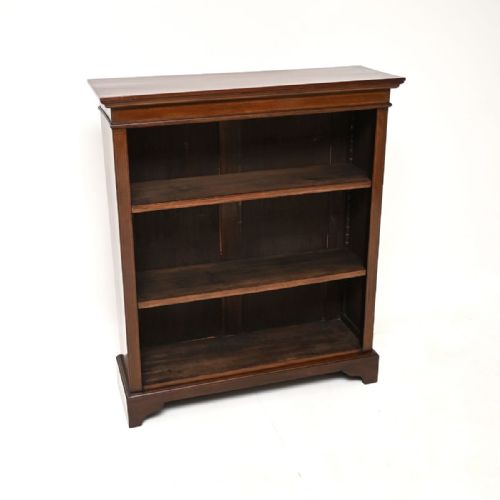
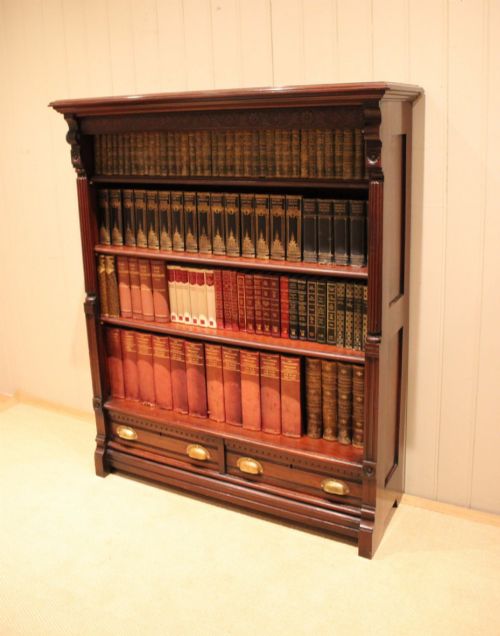
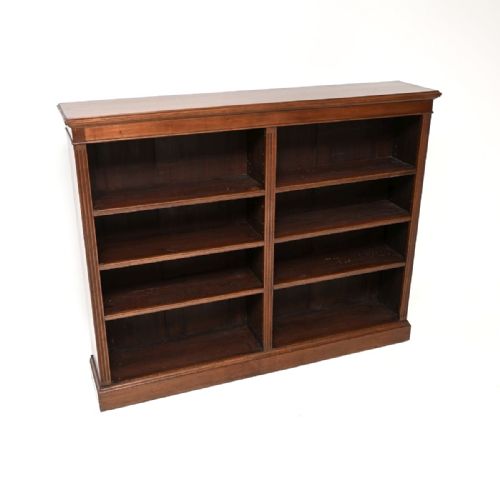
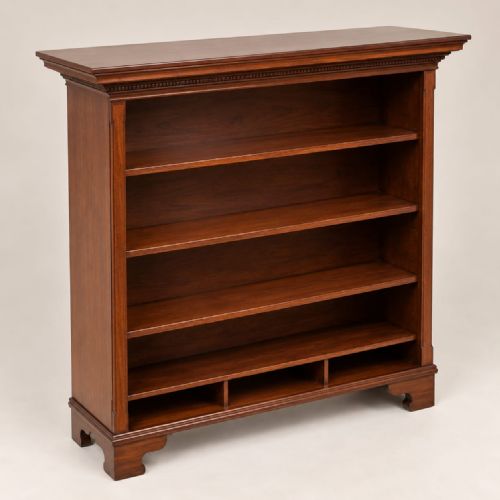
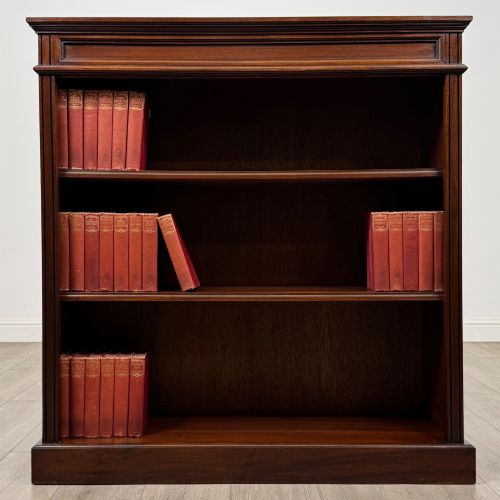
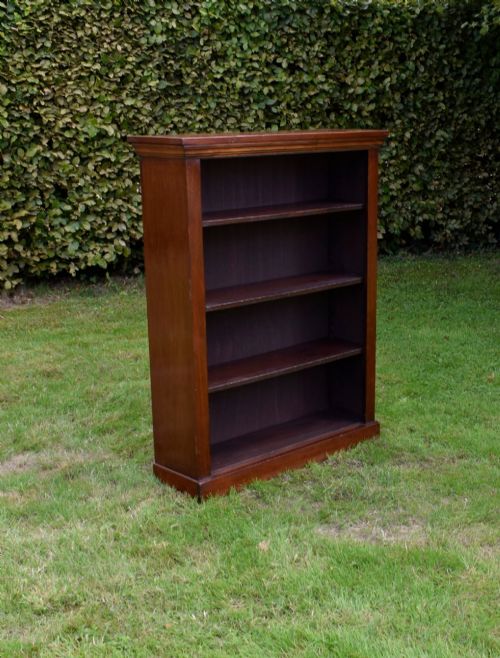
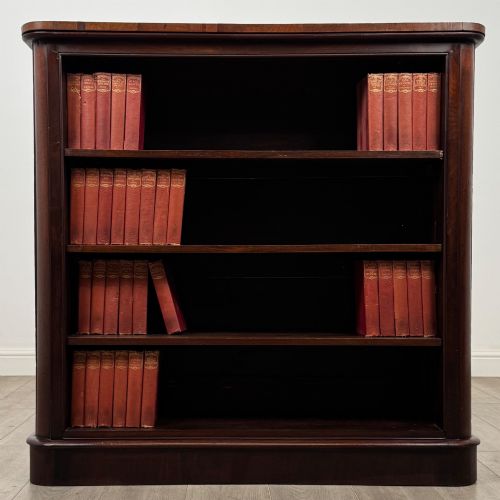
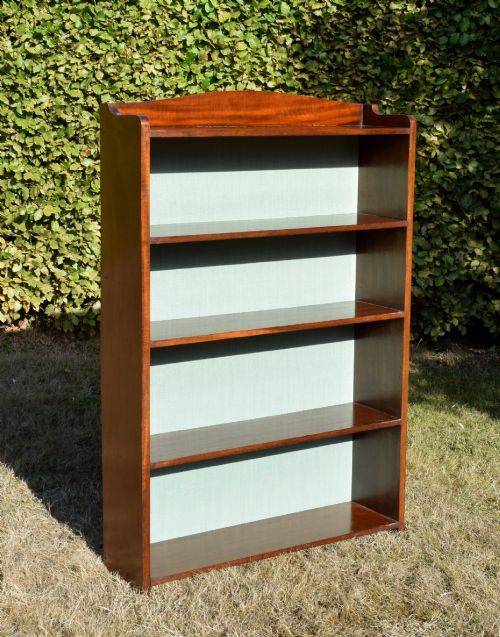
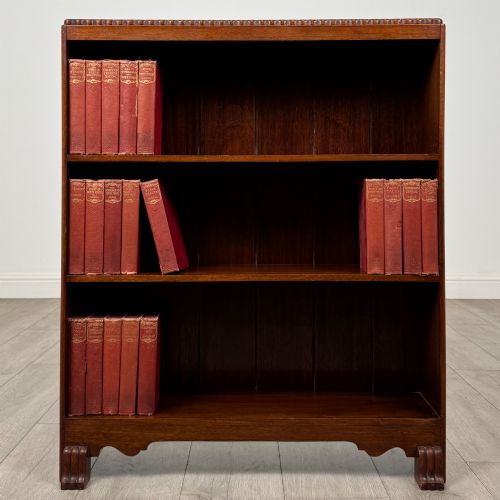
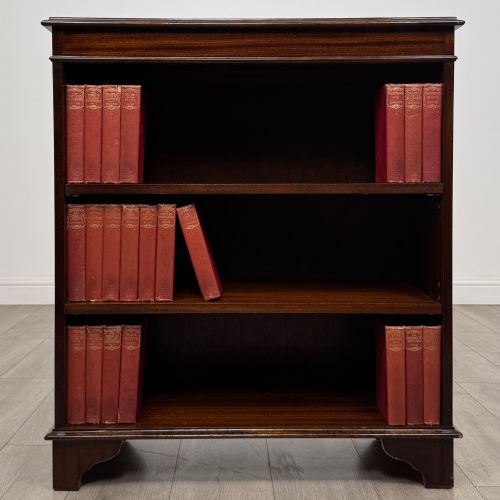
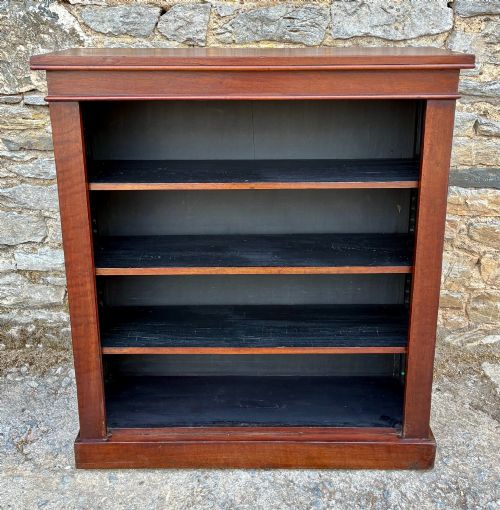
Low mahogany shelving encompasses open bookcases, dwarf bookcases, and waterfall bookcases designed to keep volumes and decorative objects within easy reach. These pieces stand at heights that allow the top surface to function as an additional display area, often positioned beneath windows or along partition walls.
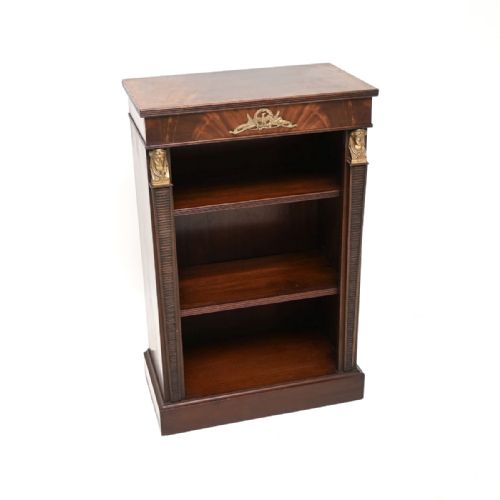
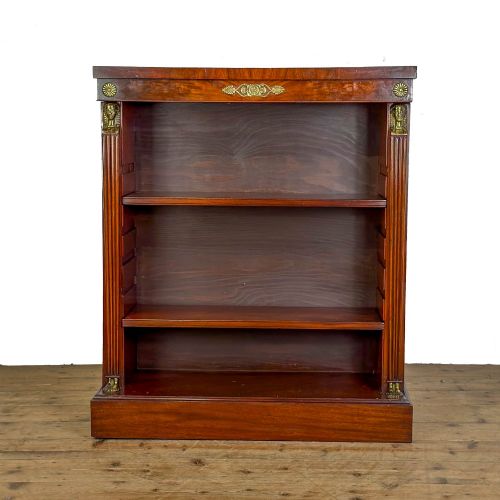
The selections span distinct historical periods, including the Regency, Victorian, and Edwardian eras, alongside later interpretations in Georgian and French Empire styles. Victorian examples frequently feature adjustable shelves, while Edwardian pieces often incorporate delicate satinwood inlay or narrow proportions suitable for compact rooms.
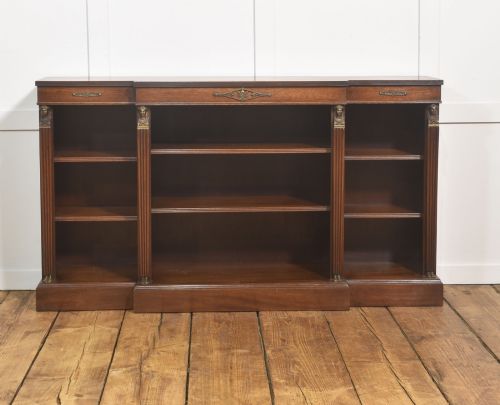
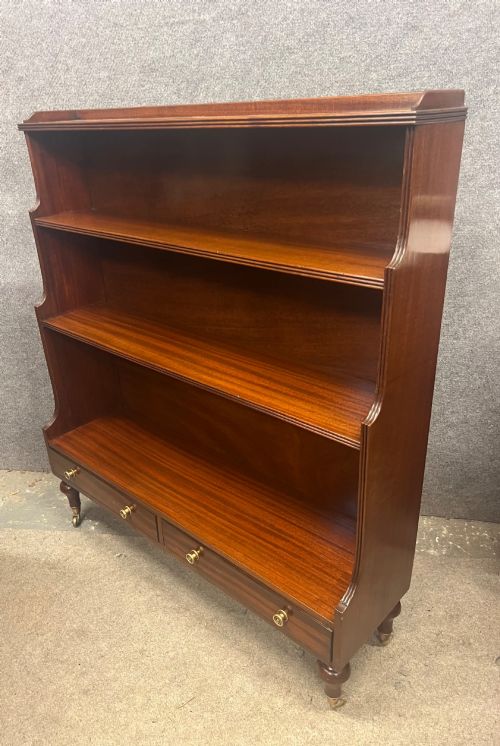
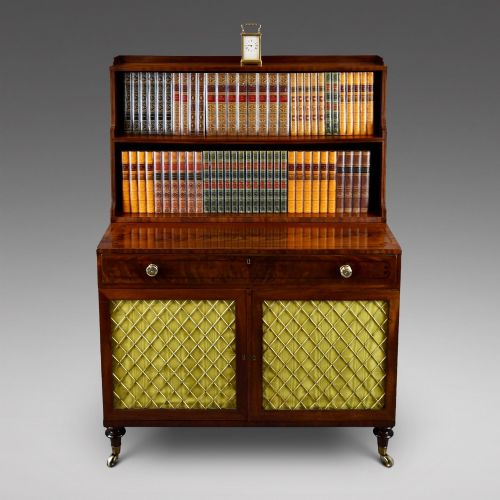
Breakfront forms and waterfall tiers appear alongside simpler open designs, reflecting diverse storage needs from extensive libraries to modest domestic spaces. Brass castors and ormolu mounts occasionally accent the cabinetry, marking pieces intended for formal reception rooms rather than working studies.
Factors of Quality
Quality rests in the selection of the timber, particularly the choice of figured flame mahogany for prominent surfaces and the crispness of any inlaid woodwork. Finer pieces demonstrate careful grain matching across breakfront sections and cabinet doors, ensuring the visual rhythm of the wood remains uninterrupted.
Construction details such as adjustable shelving mechanisms and the integrity of brass castors separate standard utility pieces from finer commissions. Workshops paid close attention to internal joints, backboards, and the proportion of decorative mouldings, ensuring structural durability alongside refined appearance.
Low Mahogany Shelving Retail Price Guide 2026
Typical asking prices for low mahogany shelving among the pieces listed under this phrase on Sellingantiques today, from the lower quarter to the upper quarter. They describe what is for sale here now, not the wider market.
Some waterfall bookcases arrive equipped with brass castors, ready to roll across the parlour floor at the owner's absolute whim.
Lamb of Manchester
The Low Mahogany Shelving Glossary
- Breakfront
- A piece of furniture where the central section projects forward from the flanking wings. This architectural arrangement creates depth and shadow across the shelving facade.
- Waterfall bookcase
- A set of open shelves that diminishes in depth from bottom to top, creating a stepped profile reminiscent of cascading water. These pieces often date from the Regency and Victorian periods.
- Flame mahogany
- A veneer cut from the point where a branch joins the main trunk, producing a distinctive fire-like pattern. Cabinet makers used this timber on prominent surfaces for maximum visual impact.
- Ormolu
- Gilded bronze mounts applied to furniture for decorative enrichment, frequently seen on pieces executed in continental and revival styles. The metal adds metallic contrast to the dark mahogany surface.
- Dwarf bookcase
- A low open shelving unit standing at roughly table height, designed for domestic libraries and parlours. They allow books to be stored conveniently beneath eye level.
Low Mahogany Shelving: Frequently Asked Questions
What periods do these pieces come from?
The selection spans the Regency, Victorian, and Edwardian periods, stretching into the early twentieth century alongside revival styles.
Craftsmen across these eras adapted traditional forms like breakfront and waterfall bookcases to suit changing domestic tastes.
How were low bookcases used originally?
These pieces provided accessible storage for frequently read volumes and displayed decorative objects on their top surfaces.
Their reduced height allowed them to sit beneath windows without blocking light or obstructing wall space.
Are the shelves adjustable?
Many Victorian and Edwardian examples feature adjustable shelving systems to accommodate books of varying heights.
This practical addition allowed libraries to reconfigure shelf spacing as collections expanded.
How do I identify a Regency style piece?
Regency and Regency style pieces often display classical restraint, clean lines, and architectural proportions derived from ancient models.
Details such as brass fittings and flame mahogany veneers reinforce the classical influence of the period.